Artwork
The First Confession
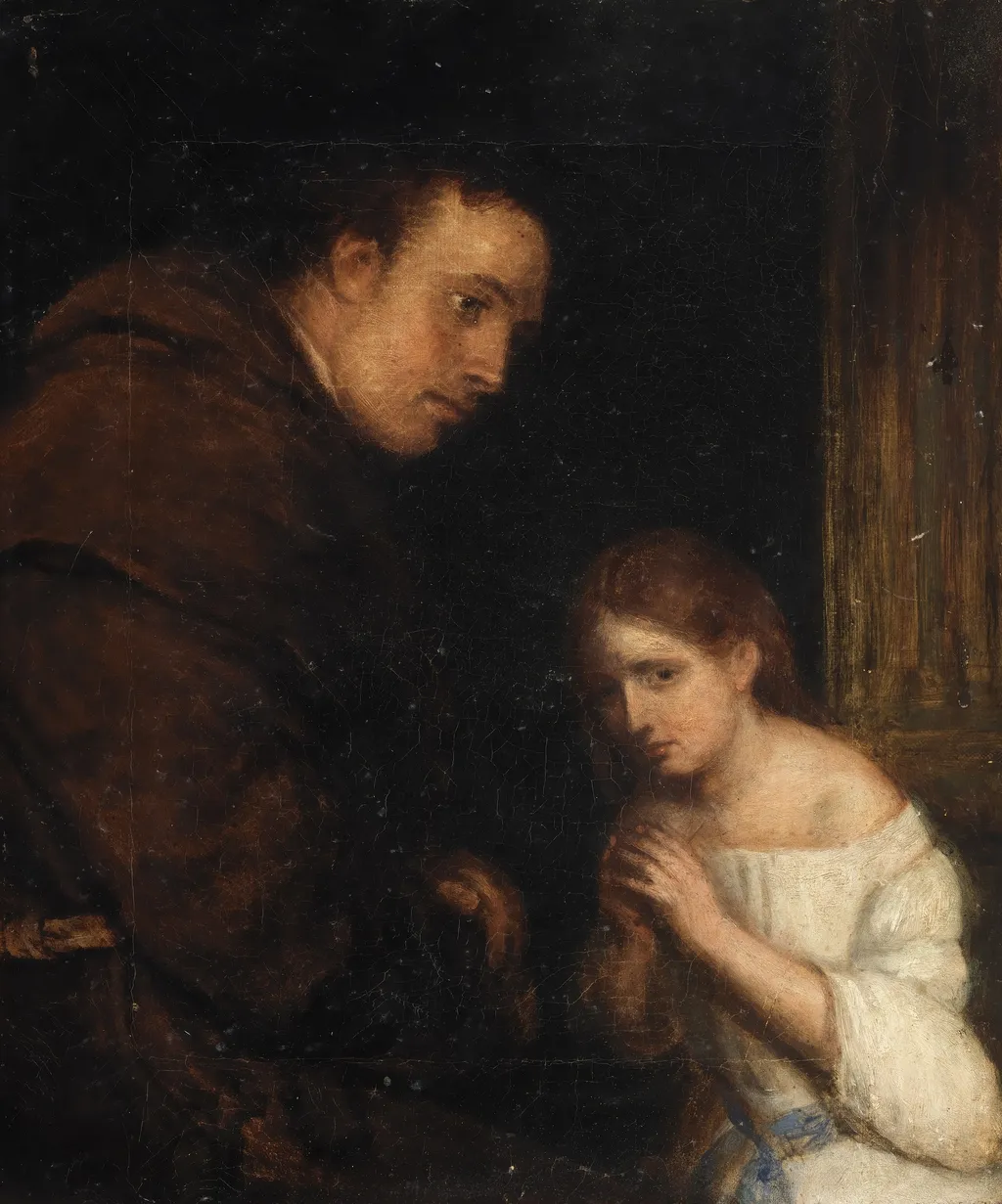
The First Confession is an oil painting by Joseph Patrick Haverty. It dates from 1839 and is held in the collection of the National Gallery of Ireland.
About this work
Overview
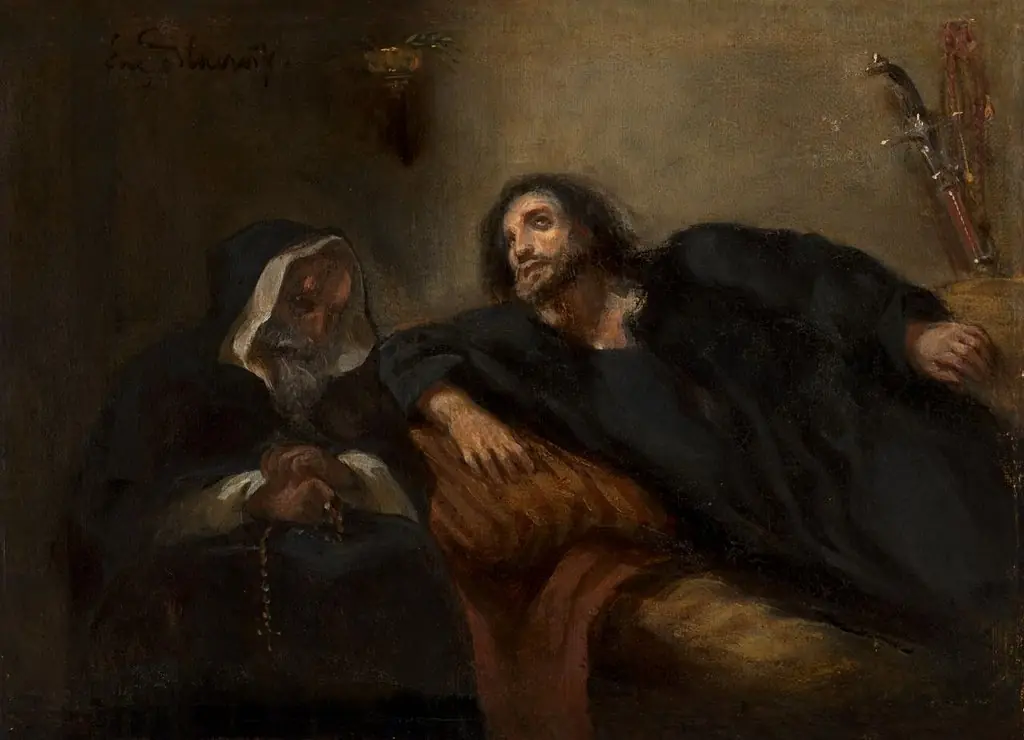
Joseph Patrick Haverty’s oil painting The First Confession, executed around 1839, is part of the National Gallery of Ireland’s collection. The work presents a quiet, intimate moment in which a young girl kneels before a priest, both figures rendered against a dimly lit interior that emphasizes the solemnity of the encounter.
Subject & Meaning
The composition centers on a girl in a white dress, her hands clasped and eyes lowered, suggesting reverence and penitence. Opposite her, a priest in dark vestments leans forward, his outstretched hands offering guidance. The subdued expressions and gestures convey a contemplative atmosphere, inviting viewers to reflect on themes of confession, humility, and spiritual instruction.
Technique & Style
Haverty employs a restrained palette and strong chiaroscuro to model the figures, allowing light to fall on the girl’s dress and hands while the surrounding space recedes into shadow. The subtle rendering of textures—such as the wood paneling hinted at on the right—adds depth without detracting from the central emotional focus.
History & Provenance
Created in the late 1830s, The First Confession entered the National Gallery of Ireland’s holdings, where it remains on display. Its acquisition reflects the institution’s interest in 19th‑century Irish genre painting and the work’s representation of everyday religious practice.
Context
The painting belongs to a period when Irish artists frequently depicted domestic and devotional scenes, often using modest settings to explore moral narratives. Haverty’s choice of a private confession scene aligns with contemporary interests in portraying personal piety within the broader social fabric of Ireland.
Artist & collection

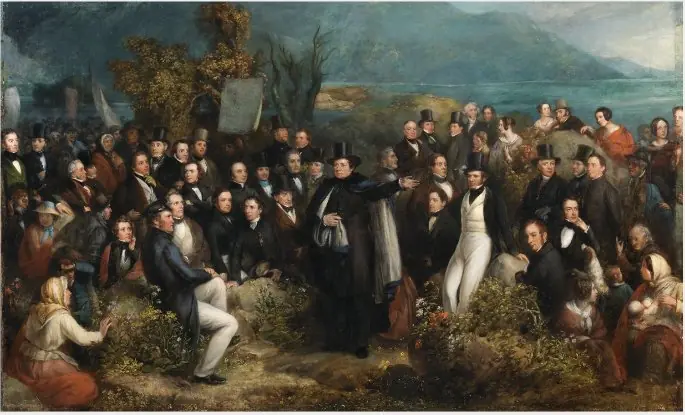
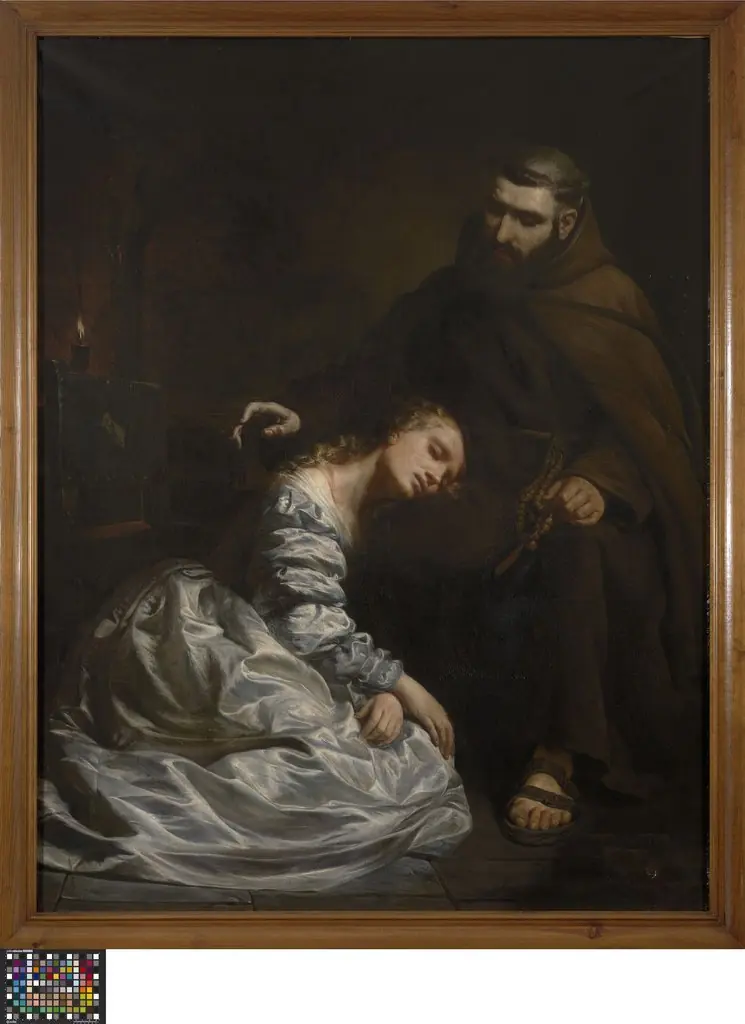 De laatste troost
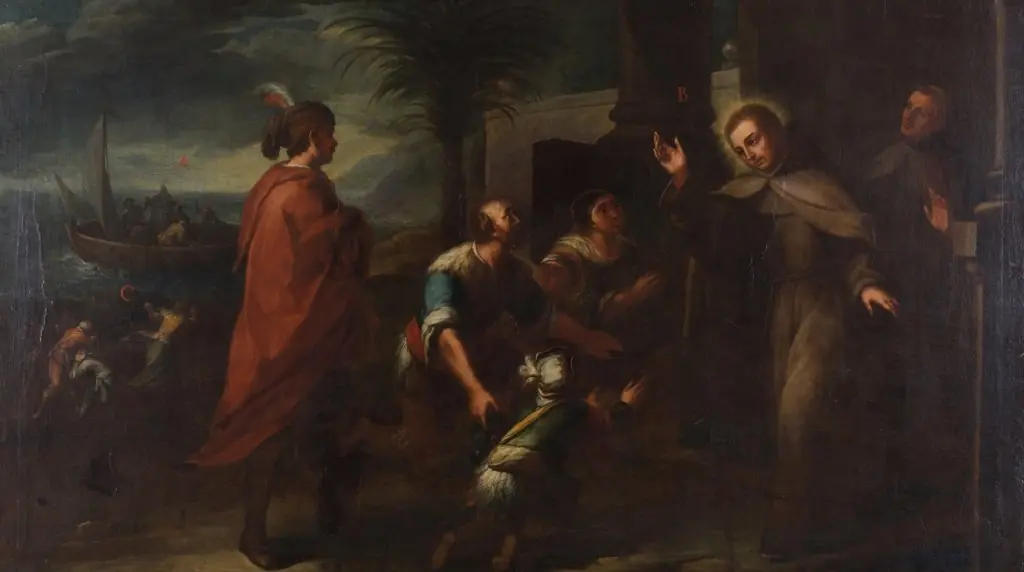 San Diego de Alcalá en las islas Canarias
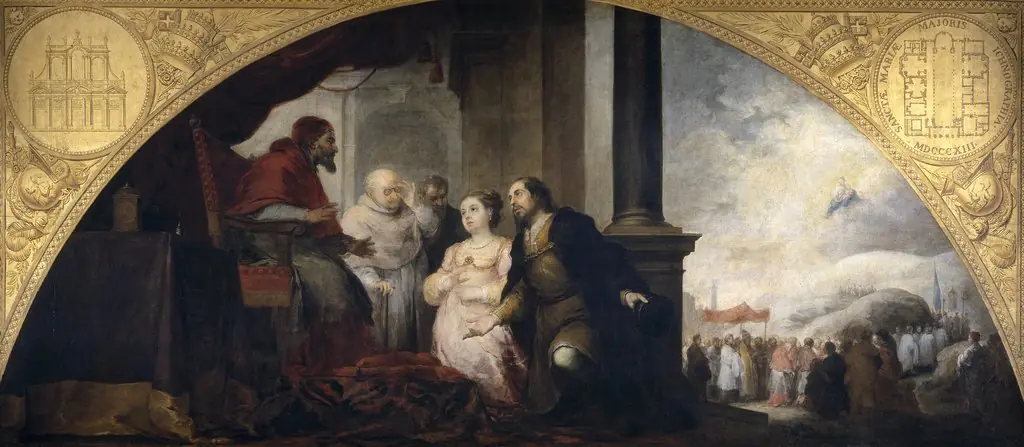 The Foundation of Santa Maria Maggiore in Rome. The Patrician recounts his Dream to the Pope
 Vater und Tochter
 Brother Luce, the Hermit, with the Widow and her Daughter
 A Nobleman's Family and a Monk
 The Miracle of Saint John of Capestrano
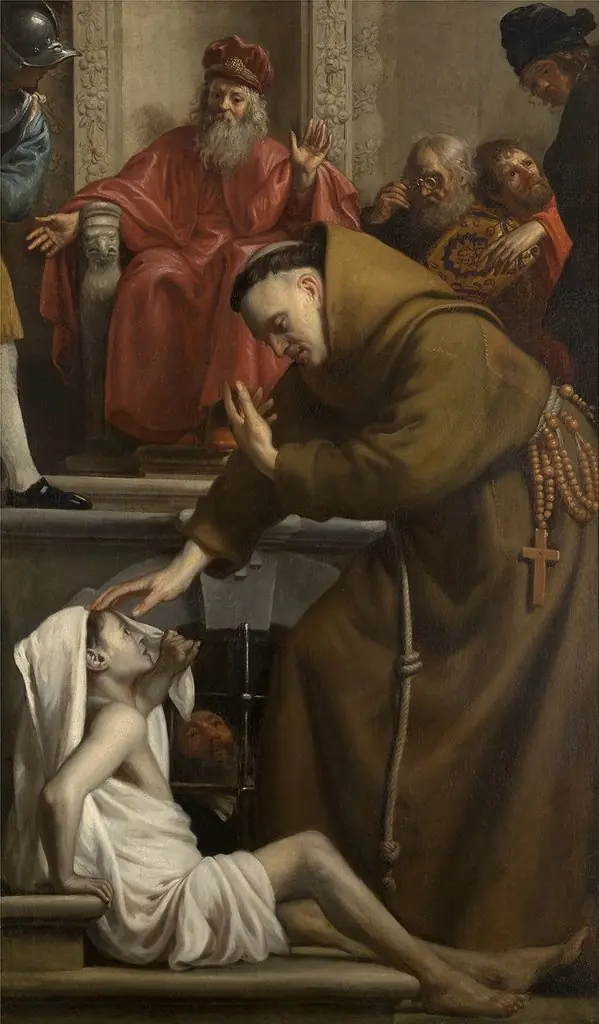 Saint Antony raising a Man from the Dead
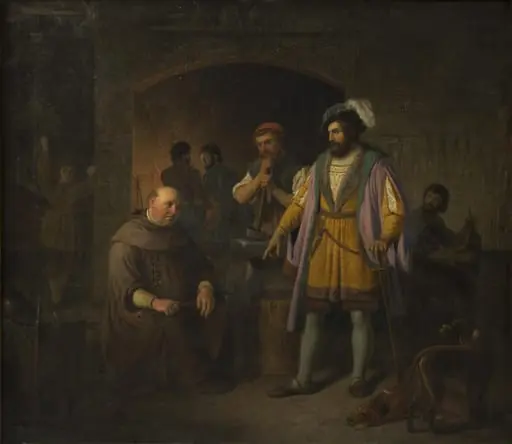 Jens Holgersen Ulfstand kurerer abbeden til Bækkeskov for hans fedme ved at tvinge ham til at arbejde i sin smedie
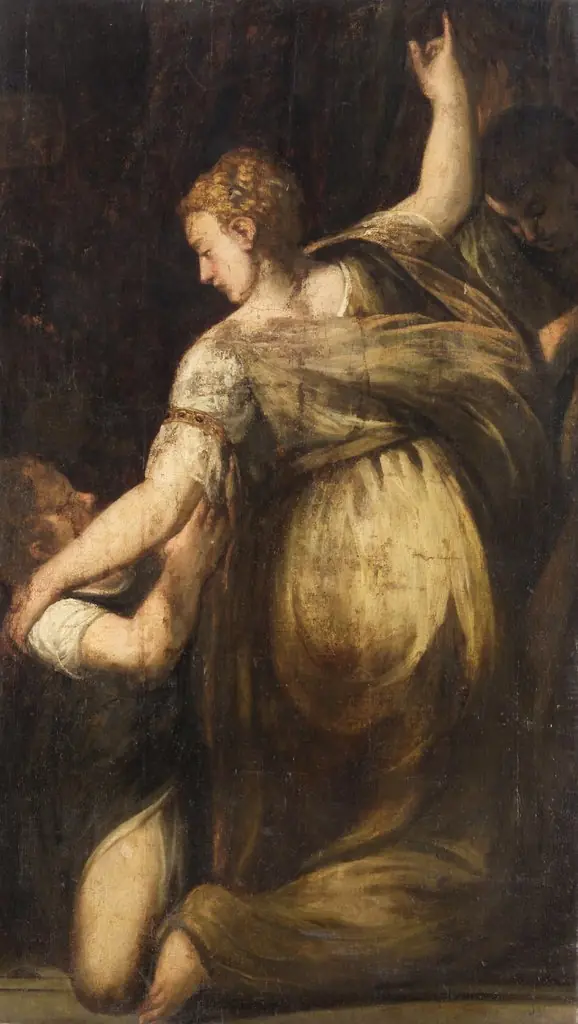 Kneeling Woman with Child
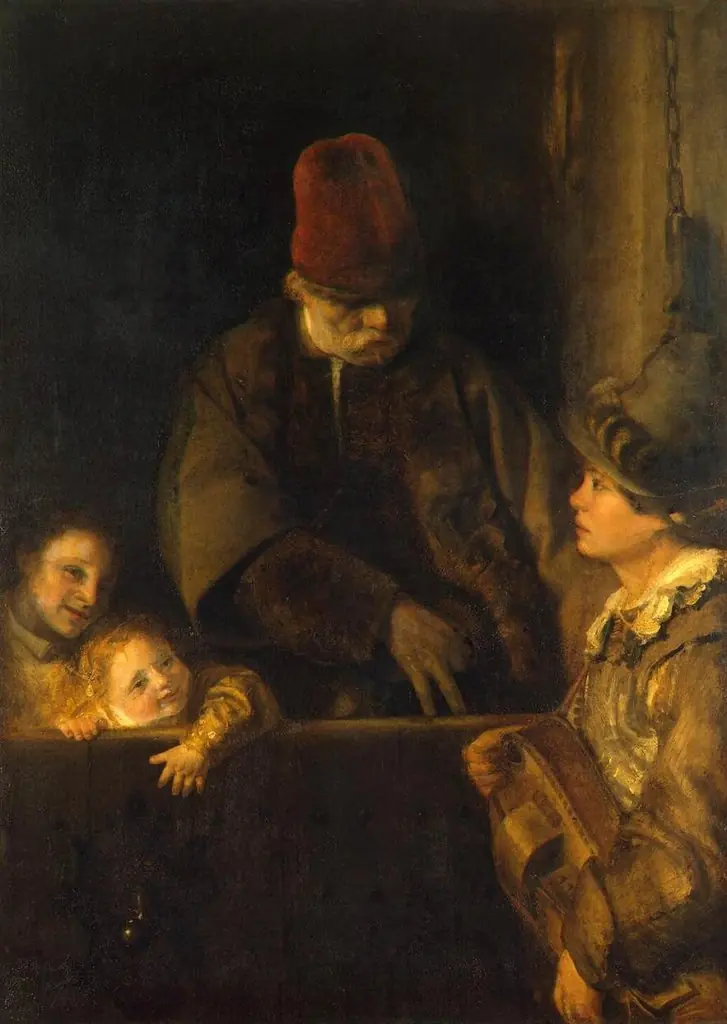 Wandering Musician
 The confession of the Giaour