Artwork
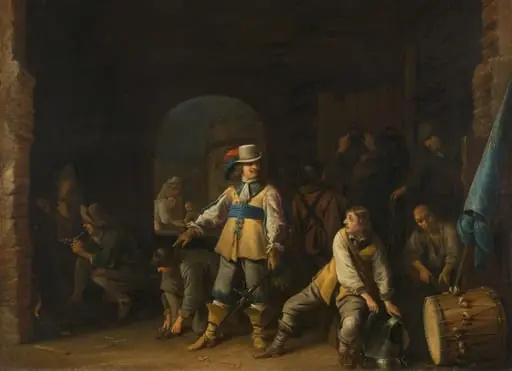
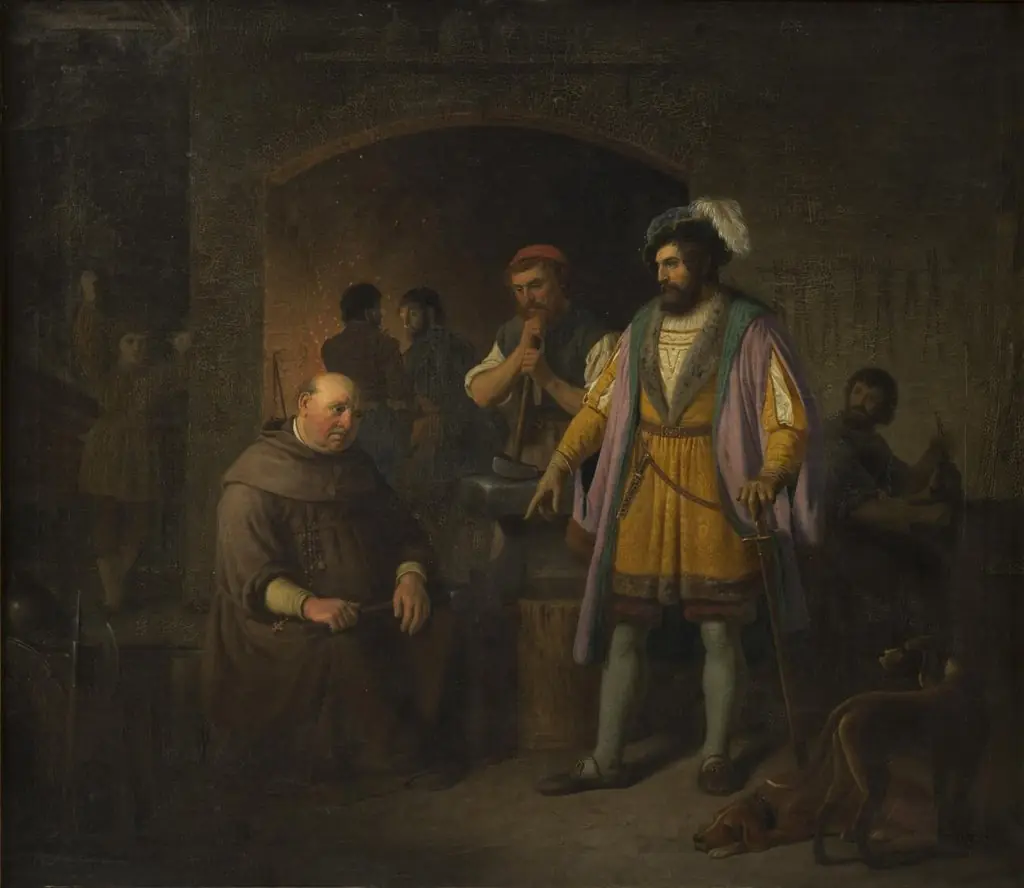
Jens Holgersen Ulfstand kurerer abbeden til Bækkeskov for hans fedme ved at tvinge ham til at arbejde i sin smedie
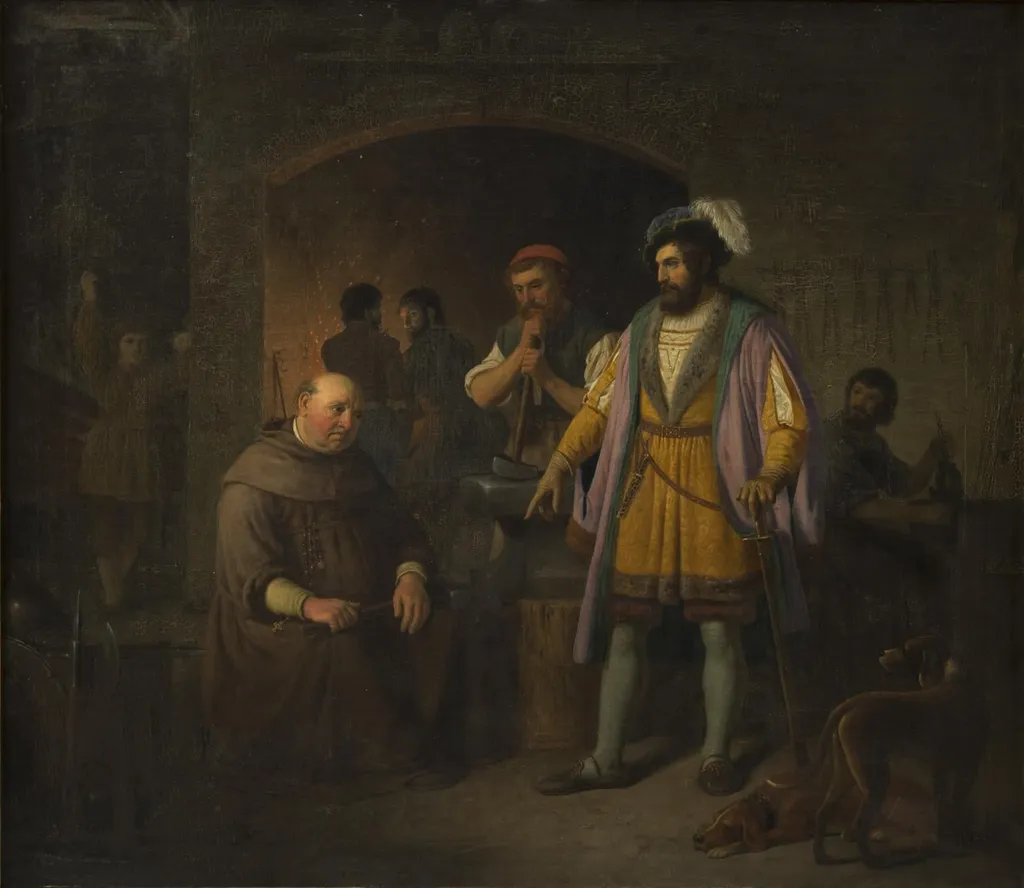
Jens Holgersen Ulfstand kurerer abbeden til Bækkeskov for hans fedme ved at tvinge ham til at arbejde i sin smedie is a photography by the Romanticist artist Unknown. It dates from 1845 and is held in the collection of the Statens Museum for Kunst. Painted in 1845, this work depicts a moment of forced labor involving a monk and a nobleman in a dimly lit smithy.
About this work
Overview
Painted in 1845, this work depicts a moment of forced labor involving a monk and a nobleman in a dimly lit smithy.
Painted in 1845, this work depicts a moment of forced labor involving a monk and a nobleman in a dimly lit smithy. The scene captures a physical and psychological confrontation, framed by stark contrasts of light and shadow. The artist, identified only by a number in records, rendered the moment with intense realism, emphasizing power dynamics through posture and expression rather than narrative detail.
Subject & Meaning
The painting illustrates a punitive intervention: a wealthy nobleman compels an overweight abbot to labor in a forge as a cure for gluttony. The abbot’s downcast gaze and clasped hands suggest resignation, while the nobleman’s commanding stance and pointed finger convey authority. The presence of onlookers and a small dog reinforces the public nature of the punishment, reflecting historical attitudes toward bodily discipline and moral correction.
Technique & Style
The artist employs chiaroscuro to heighten emotional tension, directing light onto the faces and rich fabrics while plunging the background into shadow. Brushwork is precise, particularly in the rendering of textiles and metal tools, lending texture and weight to the scene. The composition is tightly framed, focusing attention on the central figures and their interaction, minimizing extraneous detail to sustain narrative intensity.
History & Provenance
The painting entered the collection of the Museum of Ethnography in the late 19th century, though its earlier ownership remains undocumented. It was cataloged under a numerical artist identifier, suggesting limited biographical information survived. Its acquisition likely coincided with broader European interest in moralizing genre scenes from the recent past, though its specific origins in Danish or Nordic artistic circles are unclear.
Context
In 19th-century Denmark, religious figures were sometimes depicted in secular or corrective roles, reflecting tensions between ecclesiastical authority and emerging social norms. The theme of using physical labor to correct moral failings resonated with contemporary reform movements. This work aligns with a broader trend of genre painting that dramatized everyday moral conflicts, often with a didactic undertone.
Legacy
Though not widely exhibited beyond institutional collections, the painting remains a rare visual record of how bodily discipline was imagined in 19th-century Nordic society. Its unidealized portrayal of power and resistance offers insight into cultural attitudes toward health, morality, and class. It continues to be referenced in studies of religious satire and social control in Scandinavian art.
Artist & collection

 Domestic Scene
 Giacomo and Cardinal Marco, investing Andrea, Abbot of San Zeno, with his Benefice
 The Nymph of Fontainebleau
 Portrait of a Woman
 Madonna and Child with Saints in the Enclosed Garden
 Venus and Minerva
 Family Group of Four on Sofa
 Wall painting from Room H of the Villa of P. Fannius Synistor at Boscoreale
 Christopher Columbus in the Convent of La Rábida
 Joseph interpreting the dreams of the baker and the butler
 San Francisco ante el sultán de Egipto Malec-el-Kamal
 Untitled
 La última comunión de San Diego de Alcalá
 King Christian II in Prison
 San Francisco recibiendo un cesto de peces
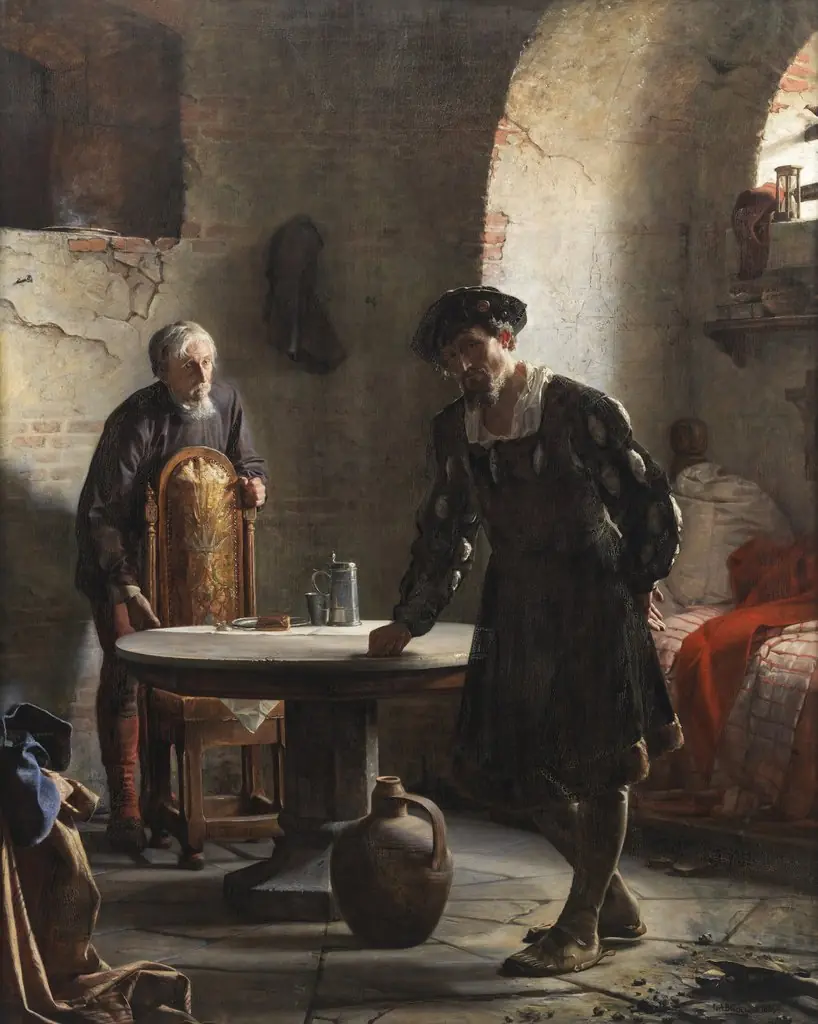 Christian II i fængslet på Sønderborg Slot
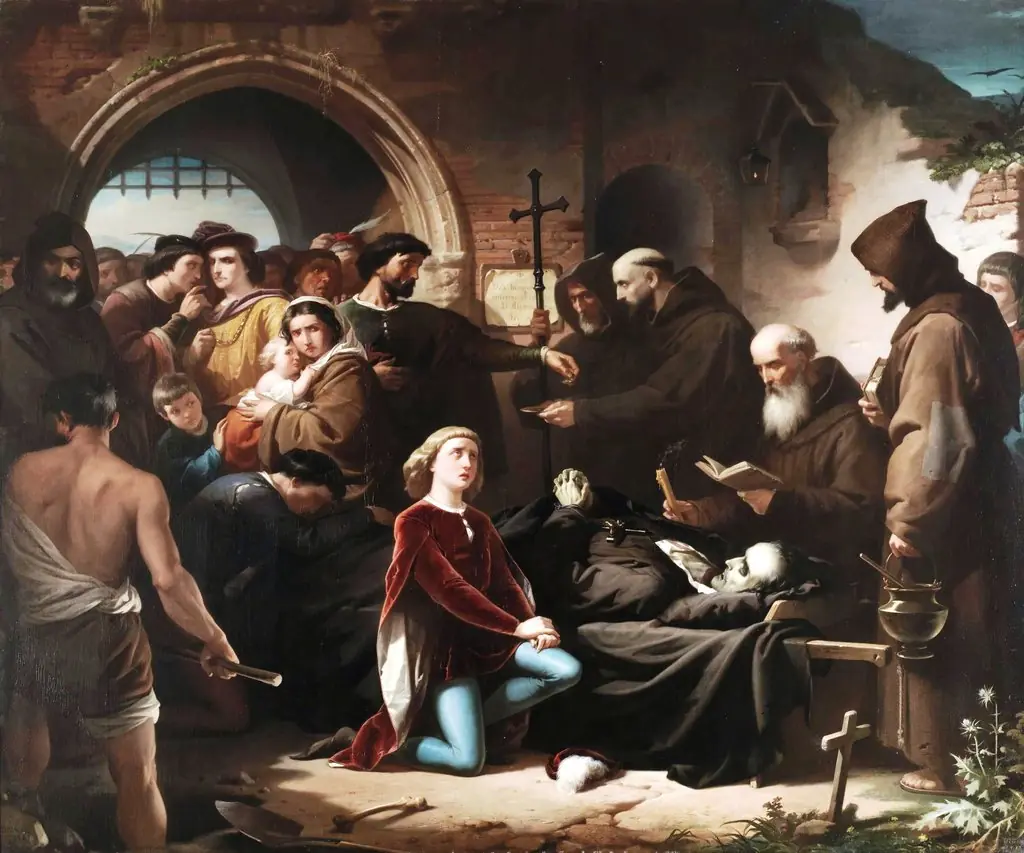 Don Álvaro de Luna condestable y favorito del rey D. Juan II de Castilla decapitado públicamente en la Plaza Mayor de Valladolid el 2 de junio de 1453 es enterrado de limosna en el cementerio de los ajusticiados extramuros de dicha ciudad
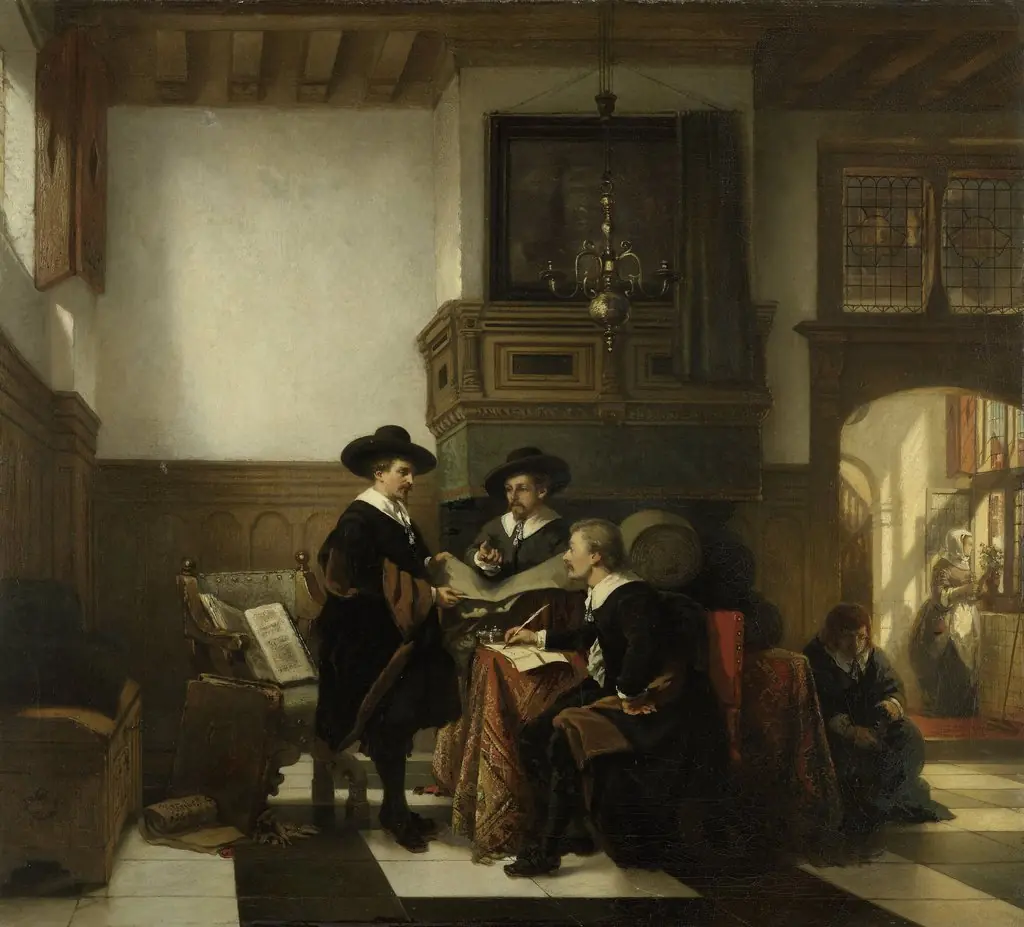 Syndics of the Leiden
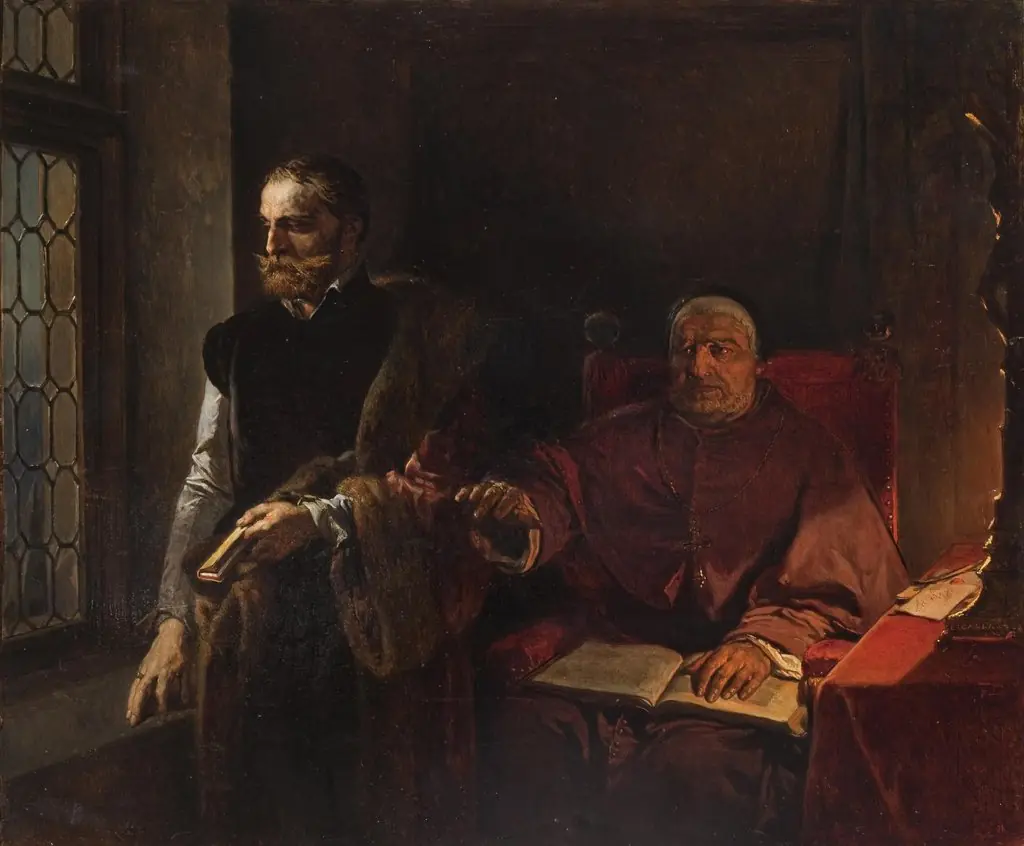 The Last Moments of Count Egmont (Count Egmont Before His Death)
 Jens Holgersen Ulfstand kurerer abbeden til Bækkeskov for hans fedme ved at tvinge ham til at arbejde i sin smedie