Artwork
Death of the Virgin
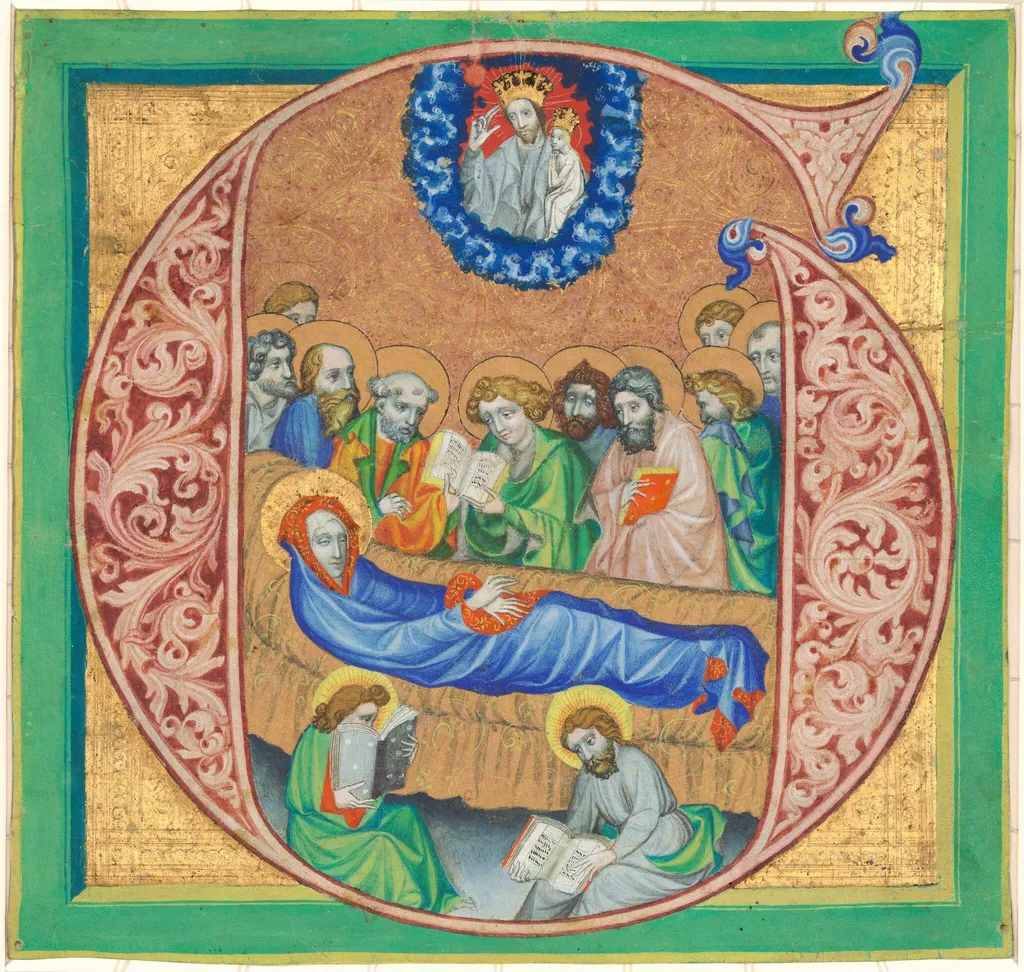
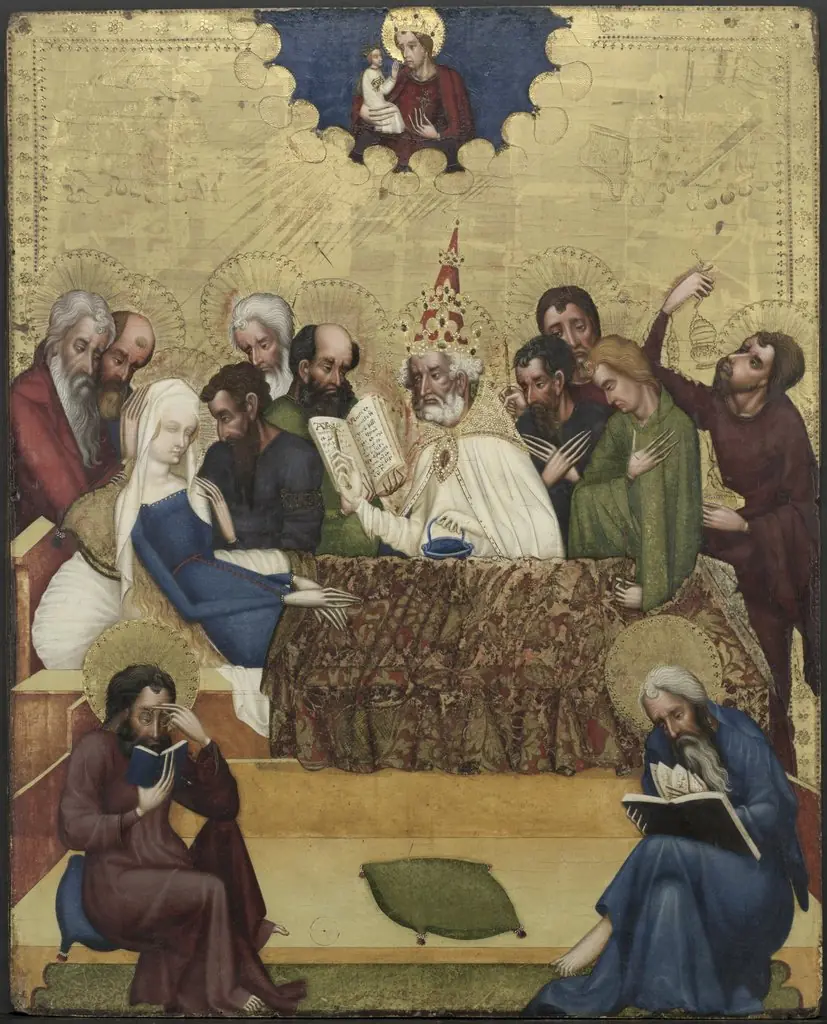
Death of the Virgin is a drawing by the Renaissance artist Joshua Master. It dates from 1410 and is held in the collection of the National Gallery of Art.
About this work
Overview
Created around 1410, this miniature on vellum depicts the death of the Virgin Mary. Executed by an artist known as Joshua Master, the work is part of a devotional manuscript tradition. Its small scale—measuring only a few inches—demands close viewing, revealing intricate details rendered with precision. The medium, vellum, was favored for its smooth surface and durability in illuminated texts.
Subject & Meaning
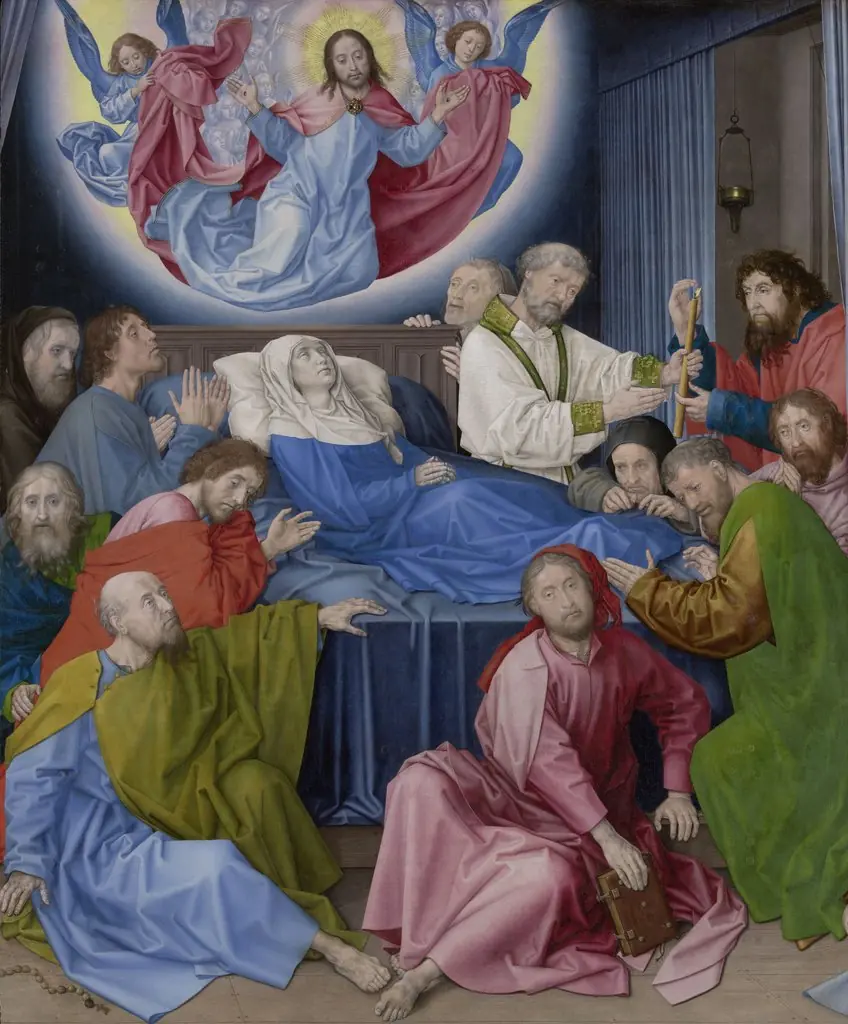
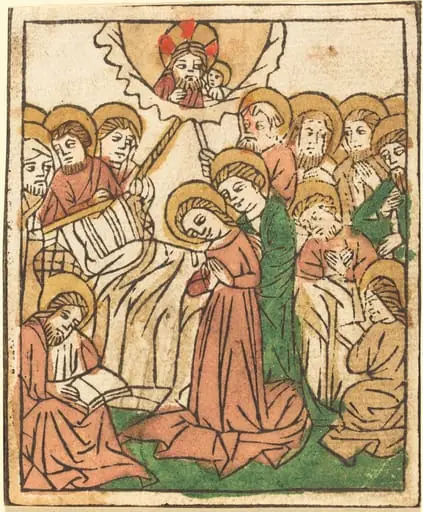
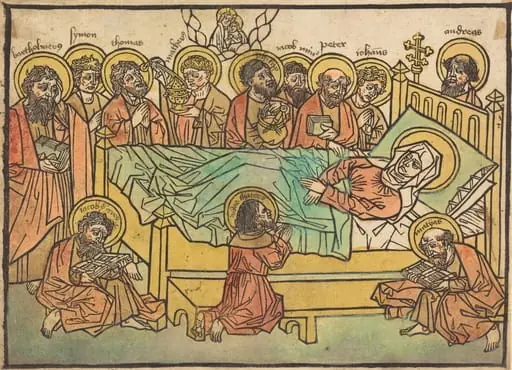
The scene portrays the Virgin Mary at the moment of her passing, surrounded by apostles and mourners. Her reclining form, calm and serene, contrasts with the grief expressed in the faces of those around her. This subject, known as the Dormition, was a common theme in medieval Christian art, emphasizing Mary’s peaceful transition to eternal life and her role as intercessor.
Technique & Style
The artist employed fine brushwork and limited pigments to achieve clarity within a constrained palette. Lines are deliberate and controlled, defining forms without heavy shading. Unlike later Renaissance techniques such as chiaroscuro, this work relies on flat color and linear detail, characteristic of late medieval illumination, where symbolic clarity outweighed naturalistic depth.
History & Provenance
The miniature likely originated in a private devotional book, possibly commissioned by a noble or clerical patron. Its survival suggests it was carefully preserved, perhaps in a monastic library or aristocratic collection. No definitive record of its early ownership exists, but its style aligns with manuscripts produced in northern Europe during the early 15th century.
Context
This work emerged during a period when devotional imagery was increasingly personalized for lay audiences. Miniatures like this one were used in prayer and meditation, offering intimate access to sacred narratives. The emphasis on emotional response and detailed figures reflects broader trends in late medieval piety, where the humanity of biblical figures was deeply felt.
Legacy
Though not widely known today, this miniature exemplifies the craftsmanship of late medieval illuminators. Its preservation offers insight into how religious narratives were visually encoded for private devotion. It stands as a quiet testament to the skill of artists working in small formats, whose contributions shaped spiritual experience before the rise of large-scale altarpieces.
Artist & collection


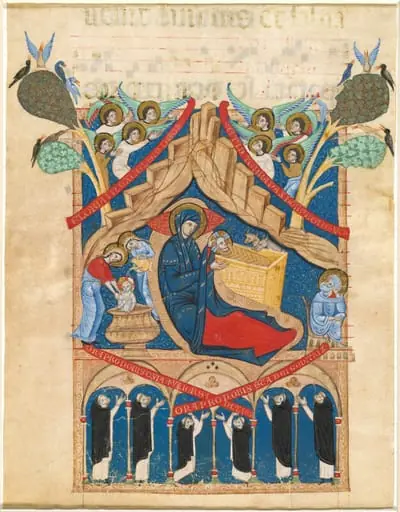 The Nativity with Six Dominican Monks
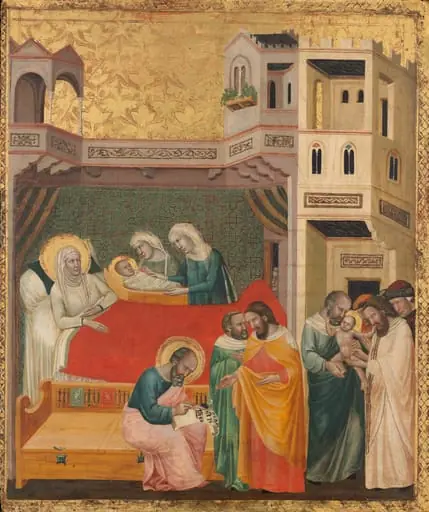 The Birth, Naming, and Circumcision of Saint John the Baptist
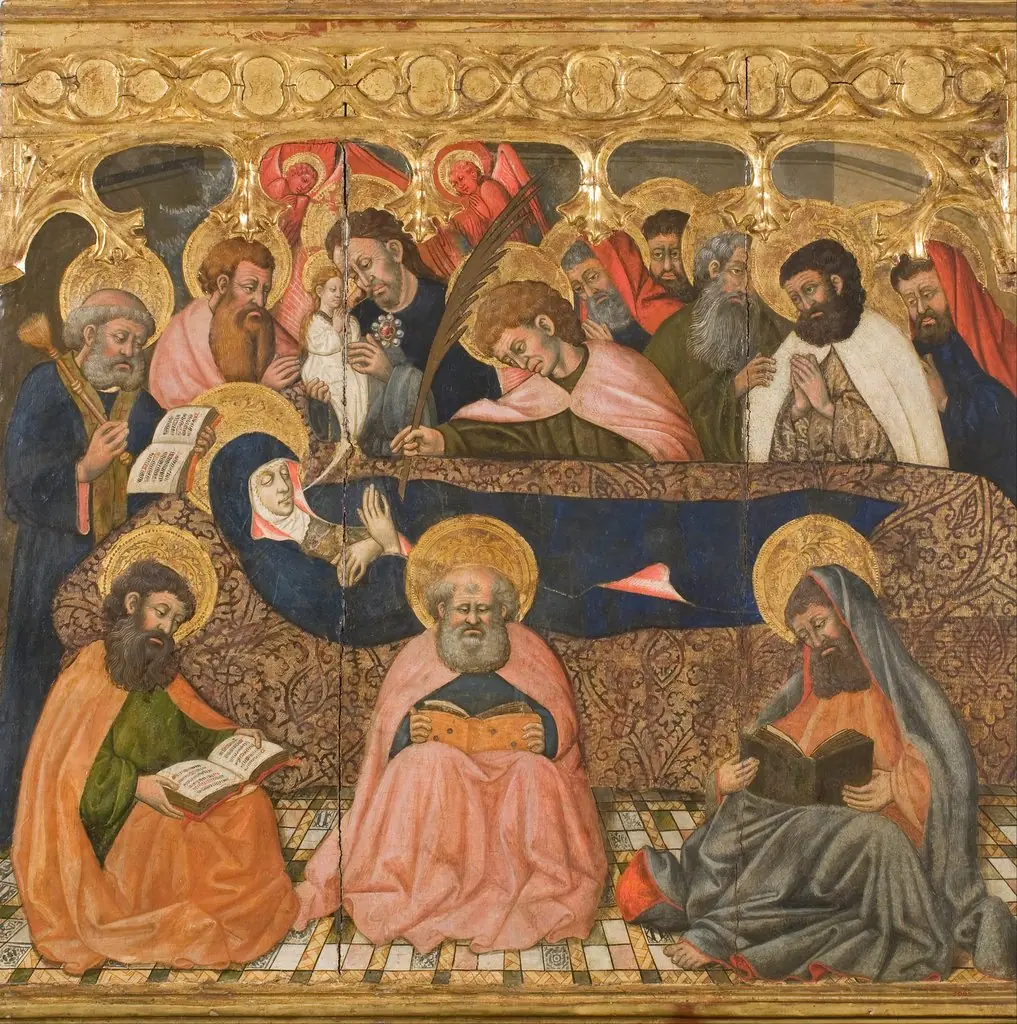 Dormition of the Virgin
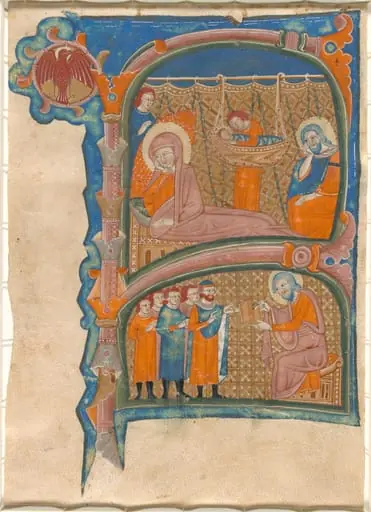 Birth and Naming of John the Baptist
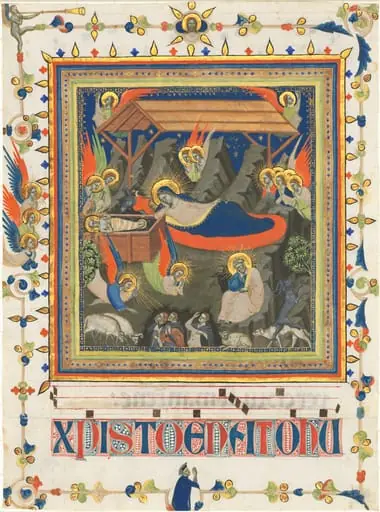 The Nativity with the Annunciation to the Shepherds
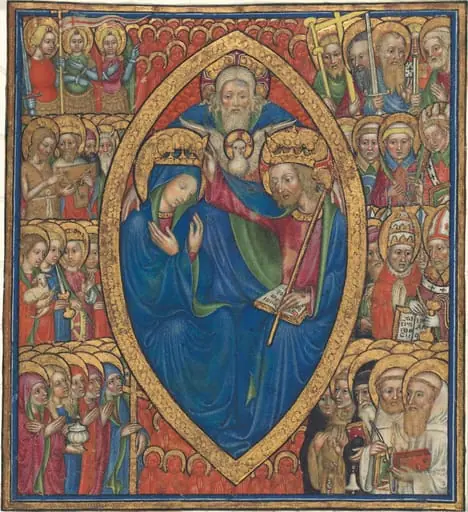 Coronation of the Virgin with the Trinity and Saints
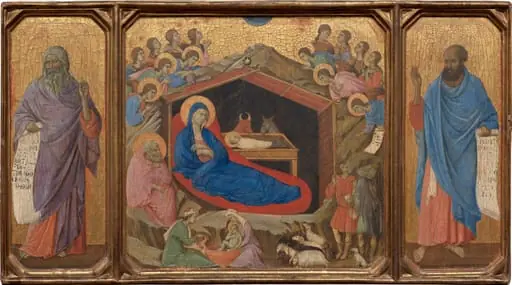 The Nativity with the Prophets Isaiah and Ezekiel
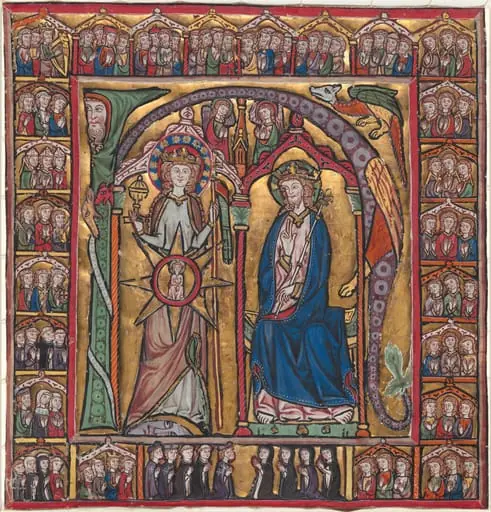 The Triumph of the Church