Artwork
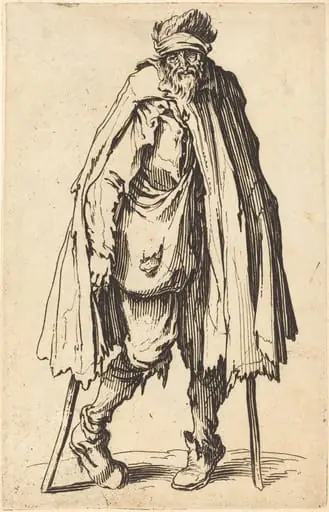
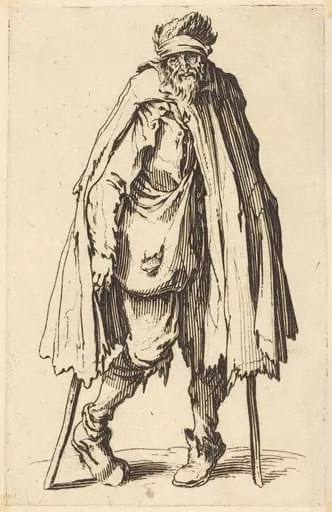
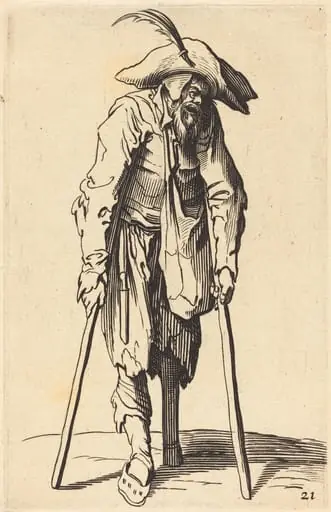
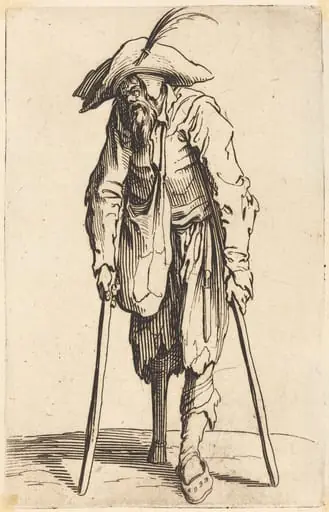
Beggar with Crutches and Sack
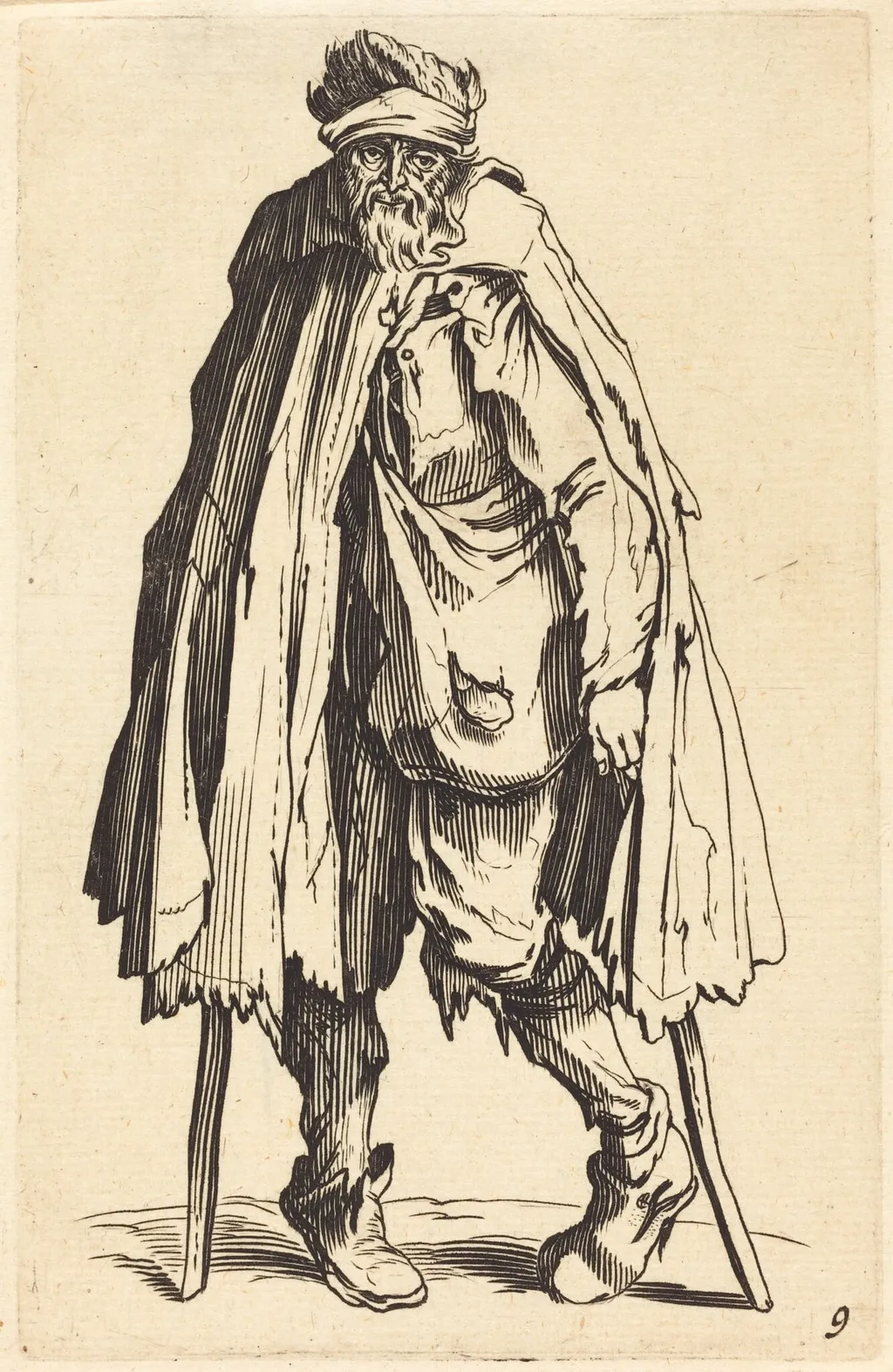
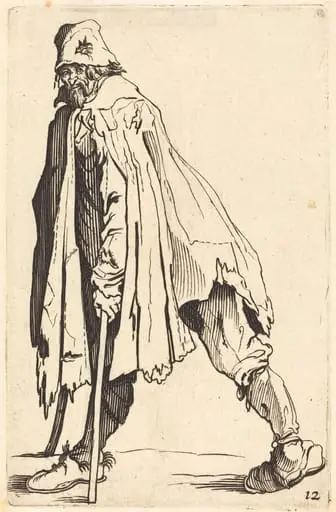
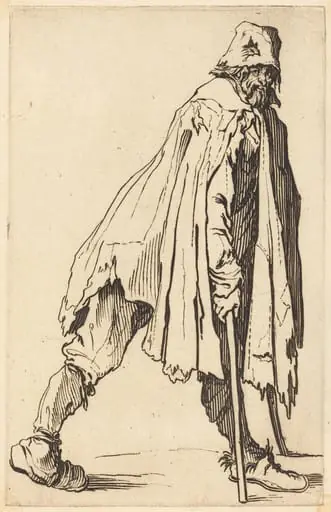
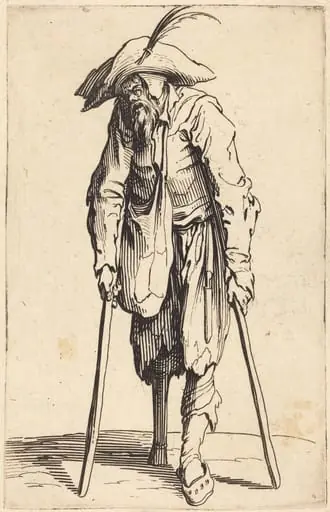
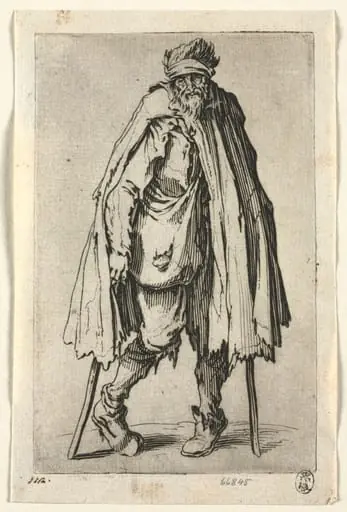
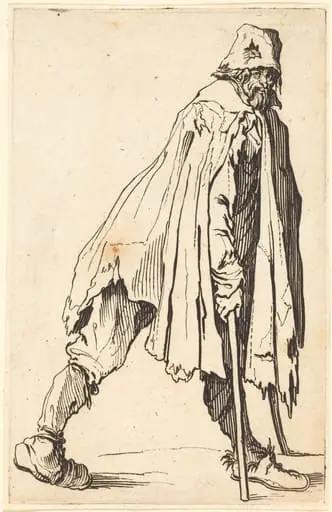
Beggar with Crutches and Sack is an ink print by the Baroque artist French 17th Century. It dates from 1622 and is held in the collection of the National Gallery of Art. This etching depicts an elderly beggar leaning on two crutches, his posture weary and his clothing worn.
About this work
Overview
This etching depicts an elderly beggar leaning on two crutches, his posture weary and his clothing worn. Rendered on laid paper with a textured surface, the work captures the figure in a moment of stillness, burdened by a heavy sack and the weight of age. The artist employed rapid, uneven lines to suggest fatigue and roughness, characteristic of spontaneous draftsmanship in printmaking.
Subject & Meaning
The figure represents a marginalized member of society, rendered without sentimentality or idealization. His lowered cap and clasped hand suggest withdrawal or resignation, while the sack implies dependence on charity. The absence of context or narrative detail focuses attention on the physical and emotional toll of poverty, inviting quiet contemplation rather than dramatic appeal.
Technique & Style
The artist used etching to carve lines into a metal plate, which were then inked and pressed onto paper. The rough, gestural strokes convey texture and movement, emphasizing the man’s weathered skin and sagging garments. The paper’s natural grain enhances the tactile quality, reinforcing the raw, unpolished character of the image and the subject it portrays.
History & Provenance
The work originates from a period when printmaking was widely used to document everyday life, particularly among the poor. Though the artist’s identity is not specified here, similar subjects appear in 17th-century Northern European prints, often circulated as studies or small-scale observations rather than commissioned pieces.
Context
During the early modern period, images of beggars and the impoverished were common in print culture, serving as both social record and moral reflection. This piece aligns with a tradition of observational art that valued authenticity over idealization, reflecting broader societal awareness of urban hardship and economic disparity.
Legacy
As a modest but direct study, the etching contributes to a broader visual archive of marginalized lives in pre-industrial Europe. Its unembellished style influenced later realist traditions in printmaking, where the dignity of ordinary subjects was rendered with quiet precision rather than theatricality.
Artist & collection

Artist
Seventeenth-century French printmakers turned ink into story. Their tools were burin and acid, paper their stage. Look at the Beggar Woman with Rosary (1622), etched on laid paper, her hands folded around faith, or The…