Artwork
Cană cu gât lung, cu buza evazată și o toartă. Este smălțuită în interior și în exterior. Prezintă decor pe toată suprafața cu motive fitomorfe, motive florale stilizate și motive geometrice: linie, linie ondulată, punct, tablă de șah. Pe toartă scrie ”Jozsa Janos”, iar pe corp, chiar lângă toartă, scrie ”Korond 1974”. Cromatică: fond: alb; motive: bej, maro, verde, negru.
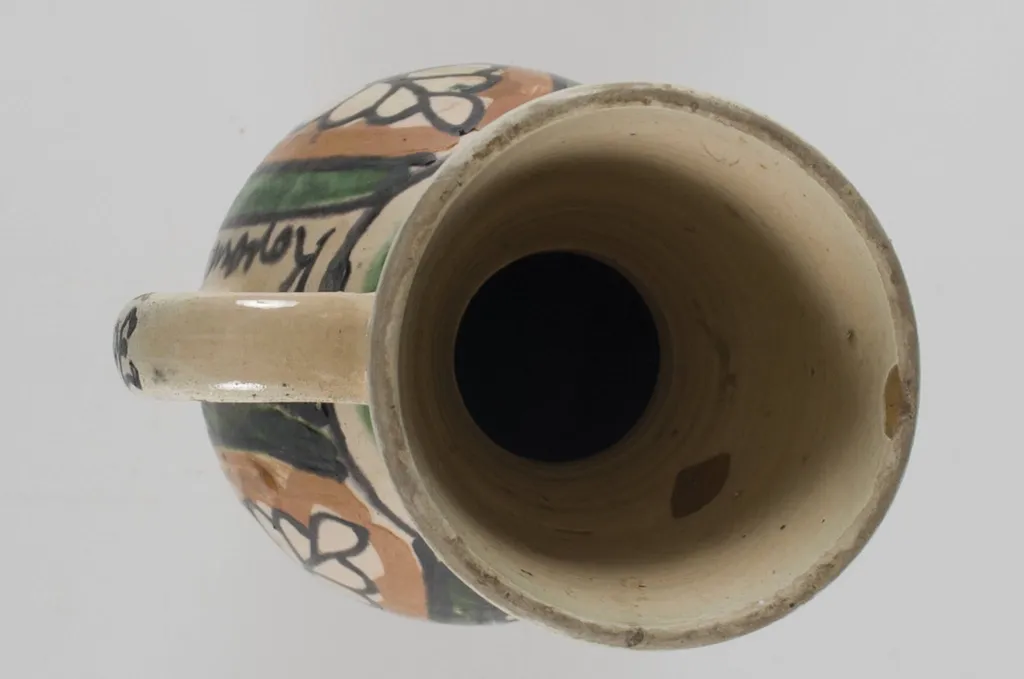
Cană cu gât lung, cu buza evazată și o toartă. Este smălțuită în interior și în exterior. Prezintă decor pe toată suprafața cu motive fitomorfe, motive florale stilizate și motive geometrice: linie, linie ondulată, punct, tablă de șah. Pe toartă scrie ”Jozsa Janos”, iar pe corp, chiar lângă toartă, scrie ”Korond 1974”. Cromatică: fond: alb; motive: bej, maro, verde, negru. is a photography by Jozsa Janos. It dates from 1986 and is held in the collection of the ASTRA National Museum Complex. This ceramic vessel features a slender neck and a broad, flaring lip, typical of functional pottery adapted for decorative expression.
About this work
The outside is covered in painted designs—swirls, leaves, and simple shapes like dots and wavy lines.
This is a clay pot with a long neck and a wide, flaring rim. The outside is covered in painted designs—swirls, leaves, and simple shapes like dots and wavy lines. The colors are mostly earthy: browns, greens, and blacks on a white background. Inside, the pot is smooth and glossy, almost like glass.
The pot has two names written on it: *"Jozsa Janos"* near the rim and *"Korond 1974"* on the body. These might hint at who made it or where it came from, but the details are unclear.
If you like this kind of decorated pottery, check out the Museum of Ethnography for more examples.
Overview
This ceramic vessel features a slender neck and a broad, flaring lip, typical of functional pottery adapted for decorative expression. Both interior and exterior surfaces are glazed, creating a smooth, glass-like finish. The piece is marked with two inscriptions: 'Jozsa Janos' on the handle and 'Korond 1974' near the body, suggesting authorship and possible origin or date of production.
Subject & Meaning
The decoration combines stylized botanical forms with abstract geometric patterns—wavy lines, dots, and checkerboard motifs—suggesting a synthesis of natural observation and formal design. These elements do not convey a specific narrative but reflect a personal visual language rooted in folk traditions, where ornamentation serves both aesthetic and cultural continuity.
Technique & Style
The vessel is hand-thrown and coated in a white slip, over which pigments in beige, brown, green, and black were applied before firing. The brushwork is deliberate yet unrefined, emphasizing rhythm over realism. The glaze seals the surface uniformly, enhancing durability and giving the piece a subtle sheen that contrasts with the matte quality of the painted motifs.
History & Provenance
The inscription 'Korond 1974' likely refers to a village in Romania, indicating regional origin, while 'Jozsa Janos' identifies the maker. Though dated 1974, the piece may have been produced or finalized around 1986, suggesting later modification or documentation. Its survival reflects the persistence of rural ceramic practices in Transylvania during the late 20th century.
Context
This piece emerges from a tradition of Hungarian and Romanian village pottery, where household vessels were often personalized with hand-painted designs. Unlike mass-produced ceramics, such items carried individual signatures and local motifs, blending utility with artisanal identity. The use of earth tones and repetitive patterns aligns with broader Central European folk aesthetics of the period.
Legacy
The vessel stands as a quiet testament to individual craftsmanship within a fading rural tradition. Its inscriptions preserve the maker’s name and a temporal anchor, offering rare personal documentation in an often anonymous craft. It contributes to the material record of postwar folk art in Eastern Europe, valued for its authenticity rather than commercial appeal.
Artist & collection

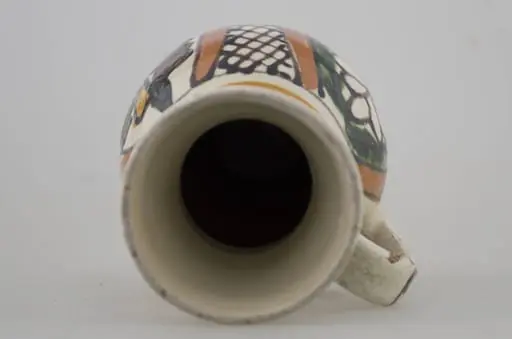 Vas de formă bitronconică, cu baza plată și bombat în zona „pântecelui”, prezintă o toartă ce pornește din zona gâtului și se termină în zona diametrului maxim al vasului. Vasul este smălțuit în interior și exterior. Decorul este compus din două registre picturale. La baza obiectului sunt pictate linii orizontale și sinusoidale. Primul registru este încadrat de două benzi, și cuprinde crenguțe cu frunze intercalate de benzi și linii paralele și perpendiculare formând romburi. Cel de-al doilea registru pictural a fost decorat cu patru motive florale stilizate. Ambele registre picturale sunt încadrate de linii concentrice de culoare maro, galben și verde. Pe toarta recipientului a fost inscripționat textul: „Korund 1974”, iar pe fund este scris numele meșterului ”Jozsa Janos”. Cromatică: fond: crem; motive: verde; maro; galben.
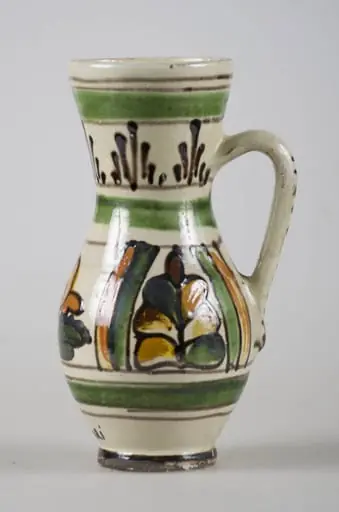 Vas de formă bitronconică; cu fundul plat din care pornește pântecul bombat, de formă ovală ce se îngustează în partea superioară, cu gâtul lung și evazat, buza largă. De la locul de întâlnire al gâtului cu corpul vasului pornește toarta arcuită ce se prinde în zona diametrului maxim al vasului. Este smălțuit în interior și exterior. Decorul este împărțit în două registre: unul situat pe gâtul vasului și este format din motive florale și vegetale stilizate realizate din linii, încadrate între două linii orizontale circulare, celălalt bombat albastru este format din trei flori separate între ele de câte două benzi verticale de culoare verde și cărămiziu, mărginite de câte o linie maro, întreg acest ansamblu fiind încadrat de câte o linie circulară maro. Deasupra primului registru vasul este decorat cu două linii maro urmate de o bandă verde. Cele două registre sunt separate de o bandă circulară de culoare verde. Sub al doilea registru este pictată o bandă de culoare verde încadrată de două linii de culoare maro urmată de o altă linie maro. Baza vasului este și ea pictată cu maro. Pe toartă este inscripționat „Korond 1974”, iar pe fundul vasului numelel meșterului ”Jozsa Janos”. Cromatică: fond: crem: motive: maro; verde; portocaliu.
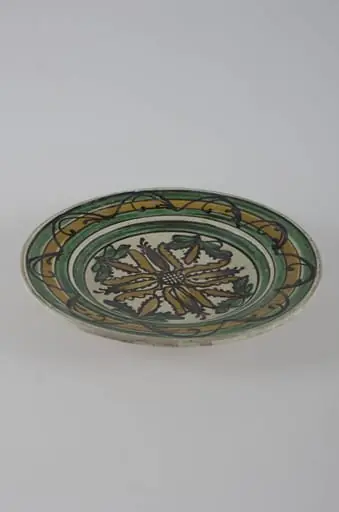 Vas de formă tronconică aplatizat cu decor amplasat pe toată suprafața; ordonat în registre; decor geometrizant; motive geometrice propriu-zise: cercul, semicercul; motive fitomorfe: frunza; motive florale: lalea stilizată. Cromatică: fond: alb; motive: verde; portocaliu.
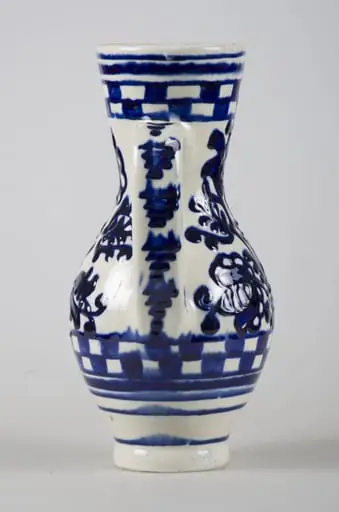 Vas ovoidal cu pântecul proeminent și relativ jos, cu gâtul înalt ce se lărgește spre buza evazată. Toarta pornește de la nivelul gâtului și se unește cu corpul în zona diametrului maxim al vasului. Este smălțuit în interior și exterior. Decorul este format din două vaze cu câte cinci lalele încadrate de motive geometrice: tabla de șah și câte două linii concentrice. Baza vasului este decorată cu două linii circulare. Toarta este decorată cu motive vegetale stilizate. Pe fundul vasului apare scris numele meșterului ”Jozsa Janos” și ”Korond”. Cromatică: fond: alb; motive: albastru.
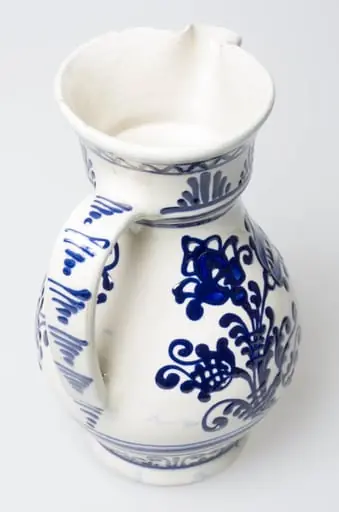 Vasul este puțin înalt, cu pântecul proeminent și relativ jos, cu gâtul și buza largă, prevăzut cu un cioc de scurgere al lichidului în partea opusă toartei. Motivele decorative sunt dispuse în felul următor: între două benzi geometrice (una spre bază și alta pe gâtul vasului) există ornamente florale, în trei buchete, prefigurând pomul vieții. Cromatică: fond: alb; motive: albastru.
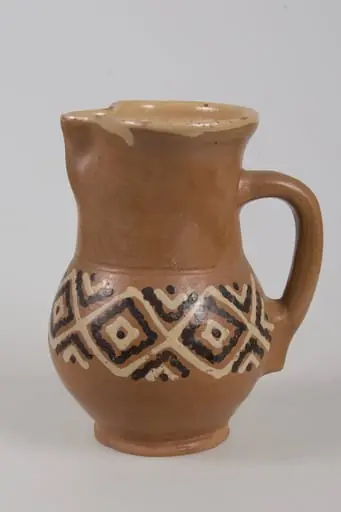 Vas din lut de formă sferoidală cu inel la bază, gât înalt și drept, cu toartă prinsă între gât și mijlocul vasului. Capătul inferior al toartei are un pinten. Angobat in interior cu smalț la exterior și interior. Decor cu motive geometrice: brâu de romburi pictat cu corn in hume naturale; două dungi imprimate cu piaptănul. Prezintă cioc de scurgere. Cromatică: fond: alb-crem în interior; cărămiziu în exterior; motive: alb; negre.
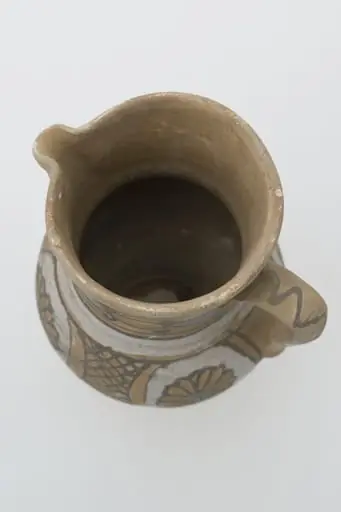 Cană de vin de formă bitronconică cu gâtul lung și buză dreaptă cu cioc. Registrele ornamentale se succed de jos în sus, delimitate de cercuri concentrice, și prezintă pe corpul vasului motive florale și geometrice sub formă de hașură întrerupte de partea de sus de o zonă cerc alb mai gros și mai apoi continuat cu cercuri concentrice ce delimitează de mijloc și de sub buză două cercuri albe groase (angoba). Cromatică: fond: alb; cărămiziu; motive: maro; gri; albastru.
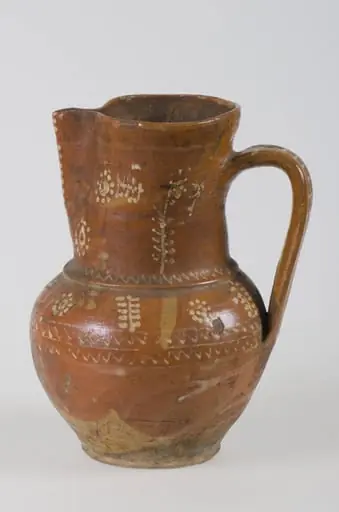 Cană înaltă cu o toartă și gura ovoidală terminată cu un cioc pe partea opusă torții. Toarta pornește de sub gură și se termină sub diametrul maxim al vasului. Smălțuită exterior. Decorată pe toată suprafața cu motive florale stilizate, motive fitomorfe (frunze stilizate) și motive geometrice: linie, linie ondulată, punct. Cromatică: fond: maroniu; motive: alb.
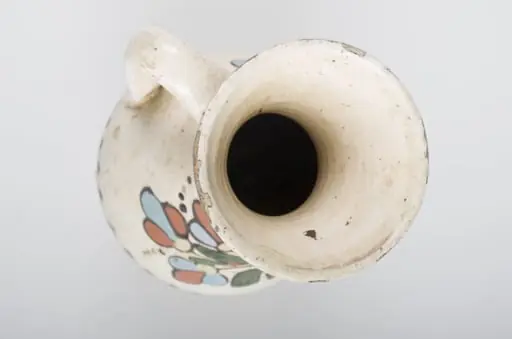 Vas bitronconic, cu gât arcuit spre interior și gura evazată spre exterior. O toartă unește mijlocul gâtului de mijlocul corpului. Vasul este decorat cu motive vegetale și florale prin pictare. Registrul decorativ principal este reprezentat de o floare cu petale și frunze alungite. Gâtul vasului este decorat cu motive geometrice (triunghiuri, arcuri de cerc, puncte, linie vălurită). Partea inferioară a vasului este decorat în aceeași manieră ca și gâtul. Vasul prezintă smălțuire. Cromatică: fond: alb; motive: roșu; albastru; verde; galben.
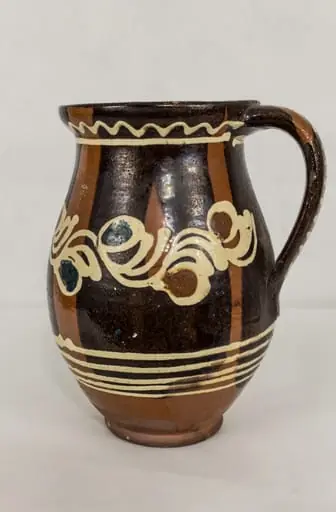 Vas cu corpul ușor curbat în partea centrală, prevăzut cu toartă laterală prinsă în două puncte, cu buza ușor răsfrântă spre exterior, smălțuit în exterior și interior, decorat pe toată suprafața în mai multe registre: pe gâtul piesei, un motiv circular peste care se suprapune motivul geometric valul; pe pântecul piesei, un motiv floral stilizat (ramură cu flori și frunze); spre baza piesei, o succesiune de cinci motive circulare concentrice; pe toartă, motive punctiforme. Cromatică: alb, albastru, cărămiziu, maro.
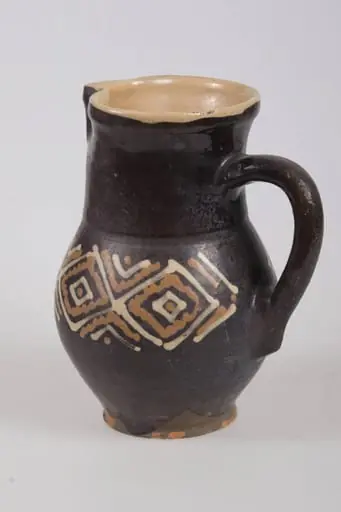 Cană de formă sferoidală cu inel la bază, gât înalt și drept cu gura bilobată. Toarta este fixată de la gât la mijlocul vasului. La capătul inferior al toartei avem un pinten. Gura este dreaptă cu buza ușor răsfrântă. Angobat, smălțuit în interior și în exterior. Decor format din motive geometrice: brâu de romburi colorate realizat cu cornul. Cromatică: fond: maro închis; motive: alb; galben; negru.
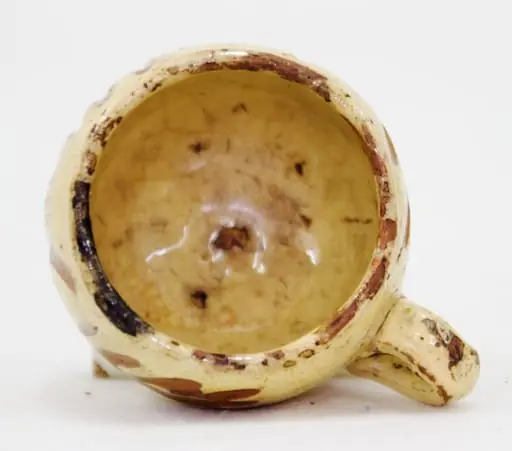 Piesa are o formă relativ cilindrică cu toartă. Are fundul îngustat și buza răsfrântă spre interior. Decorul este realizat prin incizie și pictare cu motive vegetale (crenguțe). Cromatică: galben lămâie (fondul), maro închis (decorul).