Artwork
Vas din lut de formă sferoidală cu inel la bază, gât înalt și drept, cu toartă prinsă între gât și mijlocul vasului. Capătul inferior al toartei are un pinten. Angobat in interior cu smalț la exterior și interior. Decor cu motive geometrice: brâu de romburi pictat cu corn in hume naturale; două dungi imprimate cu piaptănul. Prezintă cioc de scurgere. Cromatică: fond: alb-crem în interior; cărămiziu în exterior; motive: alb; negre.
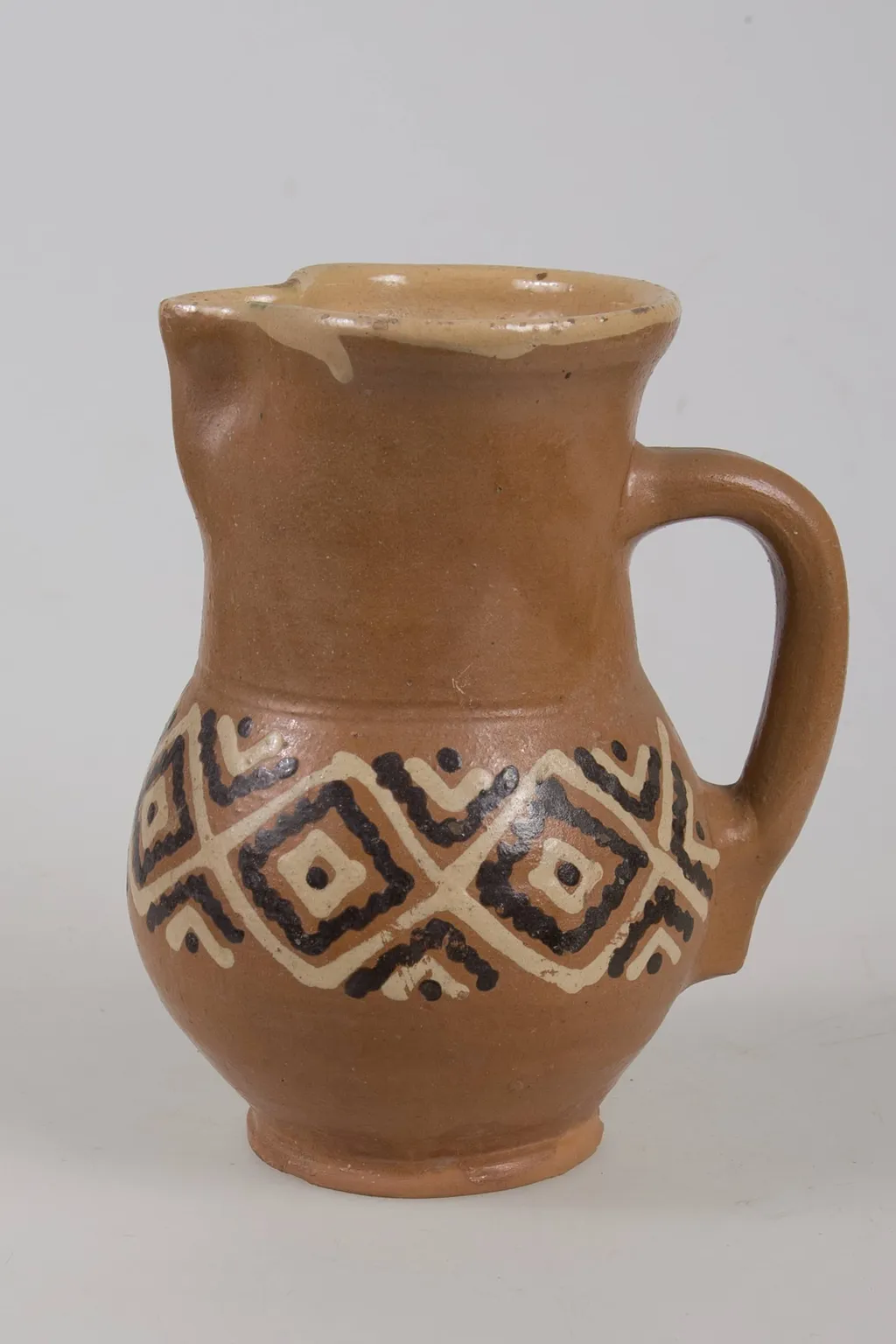
Vas din lut de formă sferoidală cu inel la bază, gât înalt și drept, cu toartă prinsă între gât și mijlocul vasului. Capătul inferior al toartei are un pinten. Angobat in interior cu smalț la exterior și interior. Decor cu motive geometrice: brâu de romburi pictat cu corn in hume naturale; două dungi imprimate cu piaptănul. Prezintă cioc de scurgere. Cromatică: fond: alb-crem în interior; cărămiziu în exterior; motive: alb; negre. is a photography by Toc Gheorghe. It is held in the collection of the ASTRA National Museum Complex.
About this work
Overview
This spherical clay vessel features a tall, straight neck and a handle attached between the neck and midsection, terminating in a small pointed spur.
This spherical clay vessel features a tall, straight neck and a handle attached between the neck and midsection, terminating in a small pointed spur. A spout at the base allows for controlled pouring. The surface is coated with slip on the interior and glaze externally, suggesting functional use for liquid storage. Its form and finish indicate a practical design, likely used for everyday transport or serving.
Subject & Meaning
The vessel’s geometric decorations—diamond bands and comb-impressed stripes—serve no representational purpose but reflect a cultural preference for structured, repetitive ornamentation. These patterns may have signaled group identity or ritual use, though no symbolic narrative is evident. The design emphasizes order and craftsmanship over storytelling, aligning with utilitarian traditions in early ceramic production.
Technique & Style
The vessel was formed from hand-modeled clay, then smoothed and coated with slip internally and glaze externally. Decorative elements were applied using natural pigments: white and black pigments painted diamond motifs, while parallel lines were impressed with a toothed tool. The color contrast—creamy interior, reddish-brown exterior—enhances visual definition, demonstrating deliberate control over material and surface treatment.
History & Provenance
This object belongs to a regional ceramic tradition from the late Neolithic or early Bronze Age, likely produced in the Carpathian Basin. Similar vessels have been recovered from settlement sites in present-day Romania and Moldova. Its preservation suggests it was not ceremonial but domestic, possibly discarded after use. No specific excavation context is documented, but typological parallels place it within broader Balkan pottery networks.
Context
Produced during a period of expanding agricultural communities, this vessel reflects the standardization of domestic ware in settled societies. Its form—rounded body, narrow neck, and spout—mirrors contemporaneous containers used for storing and dispensing liquids. The absence of elaborate iconography distinguishes it from ritual vessels, situating it firmly within the realm of daily life and household economy.
Legacy
Though unremarkable in isolation, this vessel contributes to understanding the evolution of ceramic technology in prehistoric Eastern Europe. Its combination of functional design and restrained decoration influenced later regional styles. Collections in institutions like the Museum of Ethnography preserve such objects as evidence of early material culture, offering insight into the rhythms of everyday life in ancient communities.
Artist & collection
Artist
Gheorghe Toc made earthenware jugs, bowls, and pitchers with geometric or floral patterns and rich colors like brick red, cream, and green.

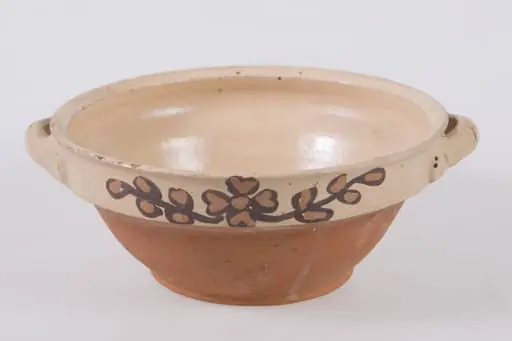 Castron mic de formă tronconică, cu baza marcată printr-un inel proeminent. Buză cu contur rotund în exterior și ascuțit în interior. Decorul floral ce constă dintr-o floare pictată cu cornul în interior, pe fundul vasului. Cromatică: fond: alb-crem; motive: galben; negru; verde.
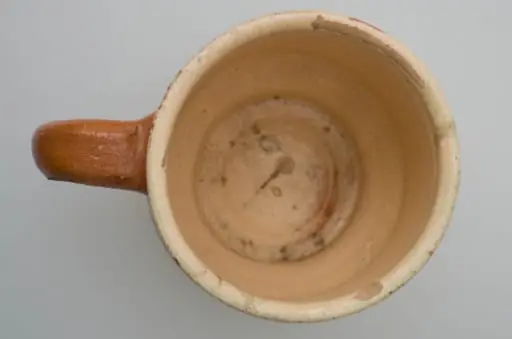 Cană de formă ușor tronconică cu inel răsfrânt în exterior. Prezintă toartă ce pleacă de sub buză și se unește cu corpul spre bază. Smălțuită în interior și exterior. Decor: floare cu patru petale realizată cu cornul din hume naturale; brâu de dungi scurte. Cromatică: fond maro; motive: alb; negru; verde.
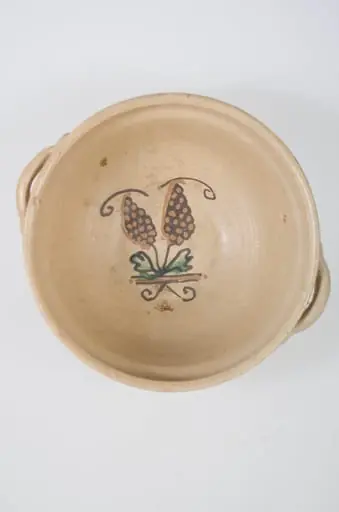 Farfurie de formă tronconică cu buza răsfrântă. Vasul este smălțuit atât la interior cât și la exterior. Decorul este amplasat pe fundul vasului motive florale (buchet) și motive fitomorfe (vrej). Cromatică; fond: alb-crem; motive: galben; negru; verde.
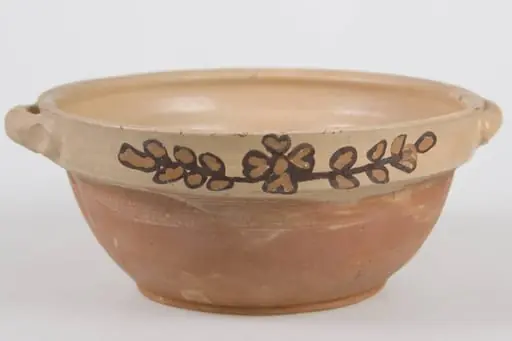 Vas tronconic cu buza răsfrântă. Prezintă două toarte mici fixate diametral opus la nivelul buzei. Decorul este poziționat într-un registru central format din motive florale (buchet) și motive fitomorfe (vrej). Cromatică: fond: crem; motive: maron deschis; maron închis; verde.
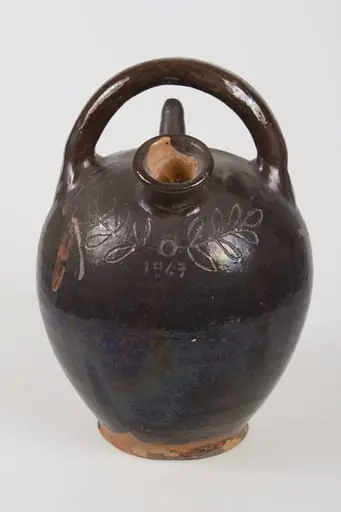 Recipient din lut de formă sferică, prevăzut cu două orificii la partea superioară și toartă. Sub gură, frontal, sunt incizate motive vegetale - o creangă cu frunze și anul ”1967''. La capătul opus, țuțul subțire este încadrat de două flori incizate cu tulpini și frunze. Cromatică: brun închis.
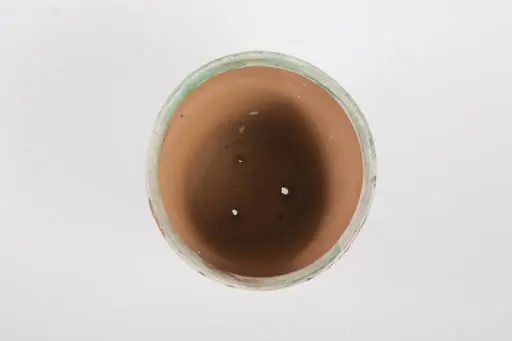 Vas de mici dimensiuni de formă tronconică cu baza mai mică; manșon sub gură lat de 4 cm, decorat cu motive geometrice: șir de romburi înscrise realizate cu cornul. Fund perforat pentru scurgerea apei. Cromatică: fond: cărămiziu; motive: galben; negru.
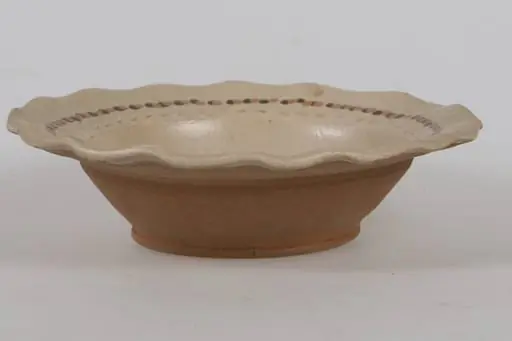 Farfurie de formă tronconică cu baza marcată printr-un inel proeminent perforat pentru atârnare pe perete cu buza lată, mult înclinată în afară și ondulată. Decorată cu un motiv central: floare; brâu alveolat pe buză realizat cu unghia si un alt brâu de puncte realizate cu cornul. Smălțuită la interior și la exterior. Cromatică: fond: bej; motive: maron închis; maron deschis.
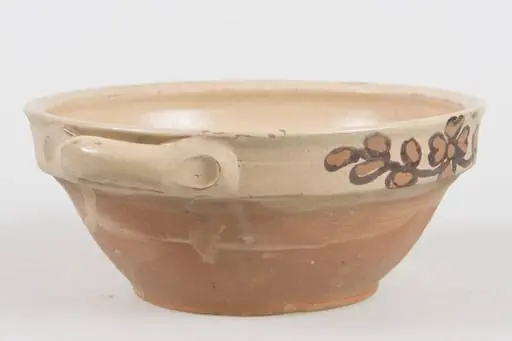 Vas de formă tronconică, cu baza marcată printr-un inel proeminent, buza ușor răsfrântă continuată cu o bandă lată, de care sunt fixate două torți dispuse orizontal ce au la capete impresiuni alveolate, rămase de la lipirea lor prin apăsare cu degetul. Cromatică: fond: crem; motive: verde; maron deschis; maron închis.
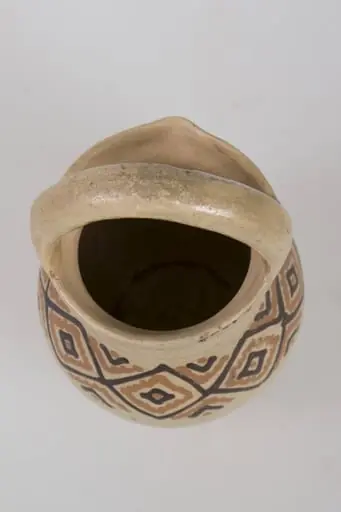 Mănușar cu corp sferoidal și gura largă. Prezintă o toartă peste gură. Decorul este geometric: linii drepte și ondulate pictate alternant în culorile crem și maro reprezentând litera ”V” și ”V” întors, puncte maro, și motivul rombului. Prezintă cioc ușor reliefat. Smălțuit la interior și exterior. Cromatică: fundal alb; maro deschis, maro închis.
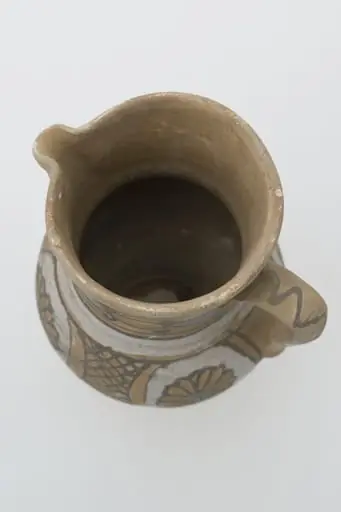 Cană de vin de formă bitronconică cu gâtul lung și buză dreaptă cu cioc. Registrele ornamentale se succed de jos în sus, delimitate de cercuri concentrice, și prezintă pe corpul vasului motive florale și geometrice sub formă de hașură întrerupte de partea de sus de o zonă cerc alb mai gros și mai apoi continuat cu cercuri concentrice ce delimitează de mijloc și de sub buză două cercuri albe groase (angoba). Cromatică: fond: alb; cărămiziu; motive: maro; gri; albastru.
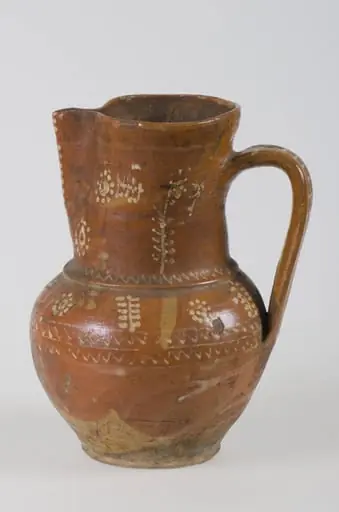 Cană înaltă cu o toartă și gura ovoidală terminată cu un cioc pe partea opusă torții. Toarta pornește de sub gură și se termină sub diametrul maxim al vasului. Smălțuită exterior. Decorată pe toată suprafața cu motive florale stilizate, motive fitomorfe (frunze stilizate) și motive geometrice: linie, linie ondulată, punct. Cromatică: fond: maroniu; motive: alb.
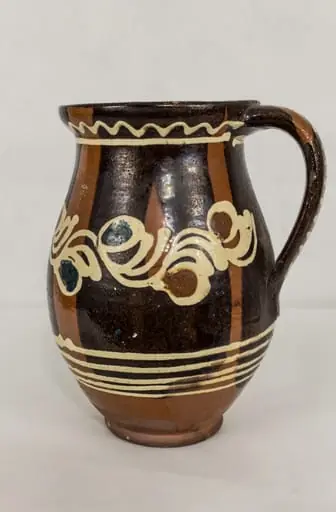 Vas cu corpul ușor curbat în partea centrală, prevăzut cu toartă laterală prinsă în două puncte, cu buza ușor răsfrântă spre exterior, smălțuit în exterior și interior, decorat pe toată suprafața în mai multe registre: pe gâtul piesei, un motiv circular peste care se suprapune motivul geometric valul; pe pântecul piesei, un motiv floral stilizat (ramură cu flori și frunze); spre baza piesei, o succesiune de cinci motive circulare concentrice; pe toartă, motive punctiforme. Cromatică: alb, albastru, cărămiziu, maro.
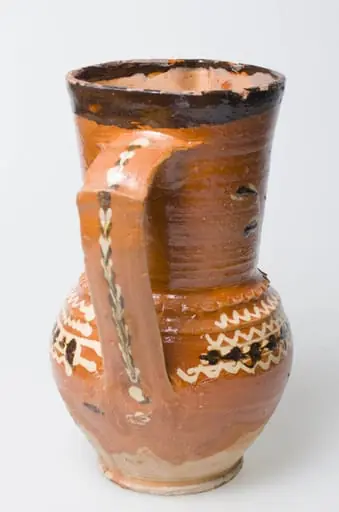 Vasul este confecționat din lut, având forma bitronconică, cu gura largă. Acesta este prevăzut cu o toartă pentru prindere fixată, în partea superioară de margine, iar în partea inferioară de zona bombată a vasului. Obiectul este decorat cu linii vălurite și motive florale. Cromatică: fond: maro; decor: alb; negru.
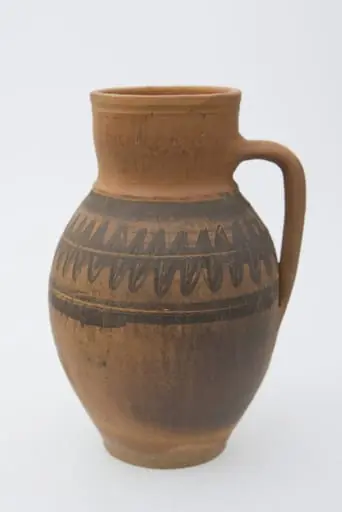 Recipient sferoidal, bombat în partea mediană, gât puțin adunat și gura largă. Prezintă toartă laterală ce leagă partea inferioară a gâtului cu partea de diametru maxim al ulciorului. Decor în partea superioară a vasului compus din linii orizontale dintr-o bandă zimțată neagră ce ilustrează motivul ”dintelui de lup'' (linie frântă în unghi ascuțit), încadratată de două linii dispuse circular. Peste linia zimțată se suprapune o linie trasată în humă, precum și incizii superficiale ce urmăresc conturul motivului decorativ. Cromatică: fond: rosu-cărămiziu; motive: negru.
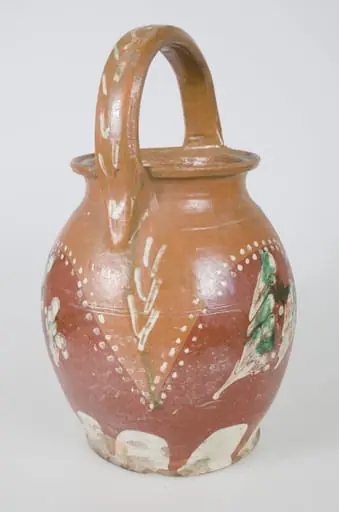 Vas smălțuit de formă ovoidală, bombat la mijloc, gât scurt cu buza dreaptă și evazată. Prevăzut cu o toartă semicirculară care pornește din buză, peste gură, și se prinde diametral opus (mănușar). Pe toartă este prezent motivul bradului realizat din linii albe unite în forma literei ”V”, înșiruite una după alta. Pe corpul vasului se găsesc trei registre circulare convexe, conturate cu câte două șiruri de puncte albe. În interiorul registrelor sunt decorații cu motive florale-vegetale stilizate. Între registre se găsesc câte trei decorații cu motivul bradului. La bază este conturat cu un șir de semicerucri pline. Cromatică: fond: cărămiziu; motive: brun; verde; alb.