Artwork
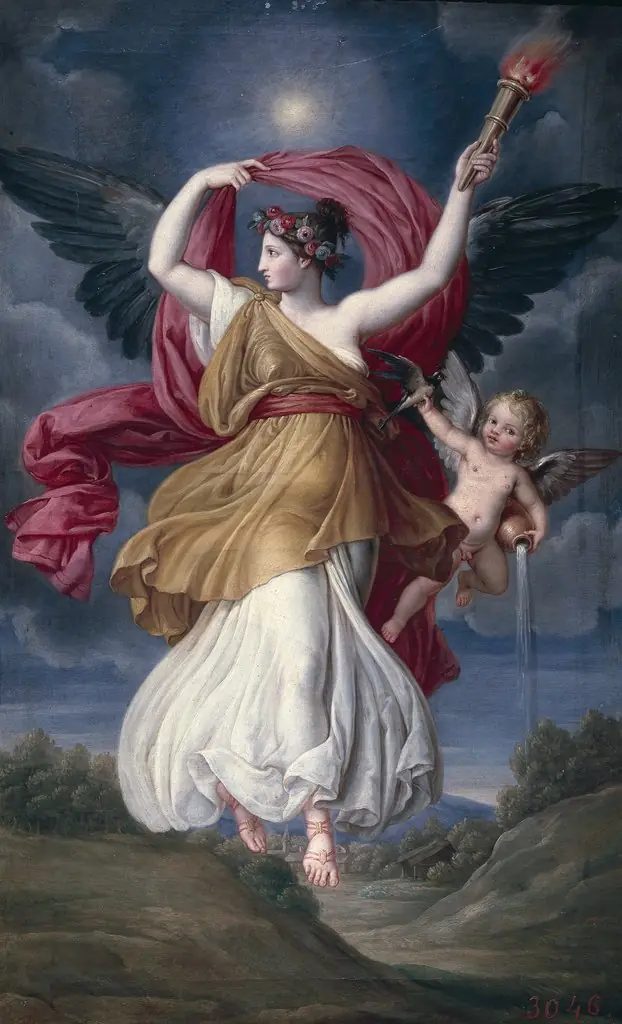
Allegory of Night
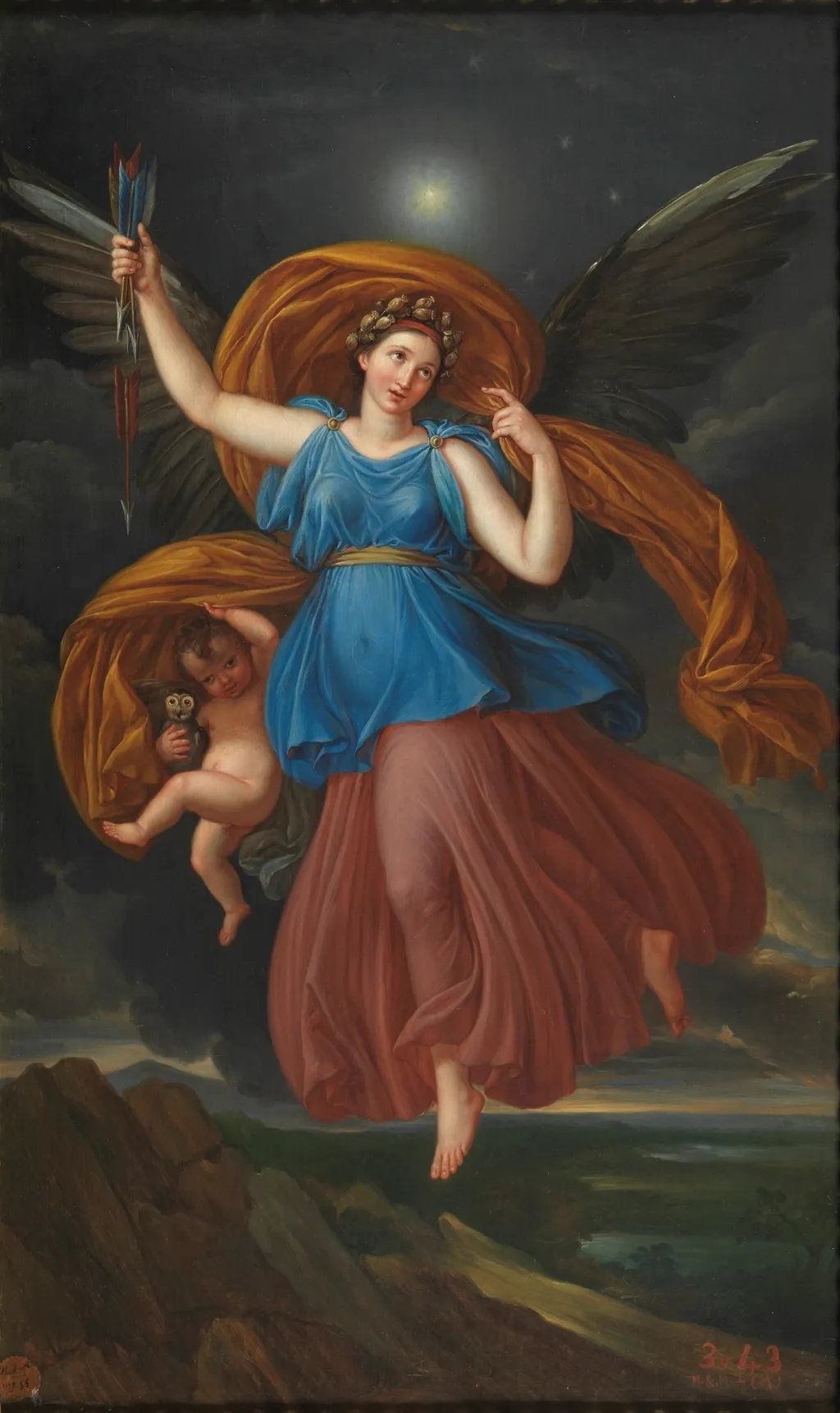
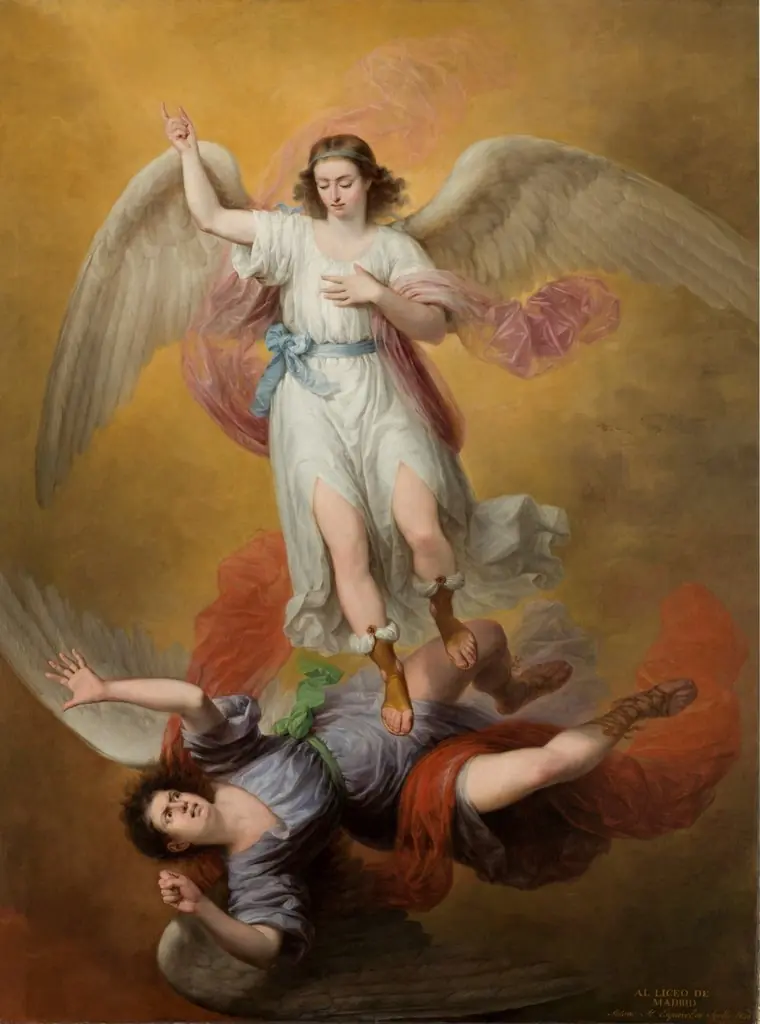
Allegory of Night is an oil painting by Juan Antonio de Ribera. It dates from 1819 and is held in the collection of the Museo del Prado.
About this work
Overview
Juan Antonio de Ribera painted *Allegory of Night* in 1819 using oil on canvas. The work is part of the permanent collection at the Museo del Prado in Madrid. Ribera, active during the early 19th century, was a Spanish artist whose output included historical and allegorical subjects. This painting exemplifies his engagement with symbolic themes common in academic traditions of the period.
Subject & Meaning
The figure represents Night personified, depicted as a winged woman with a luminous halo, suggesting divine or celestial authority.
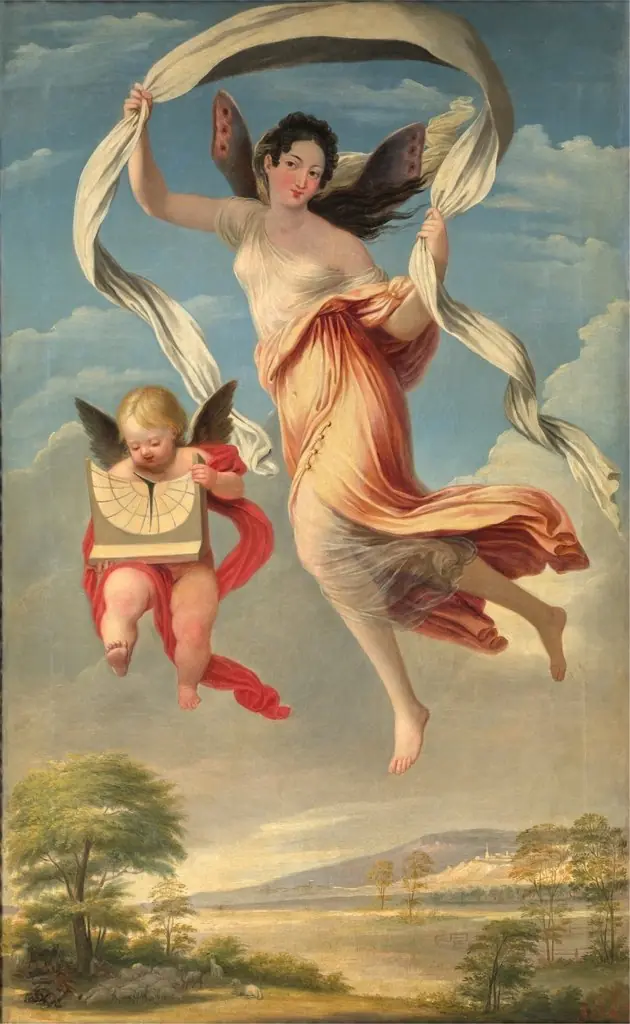
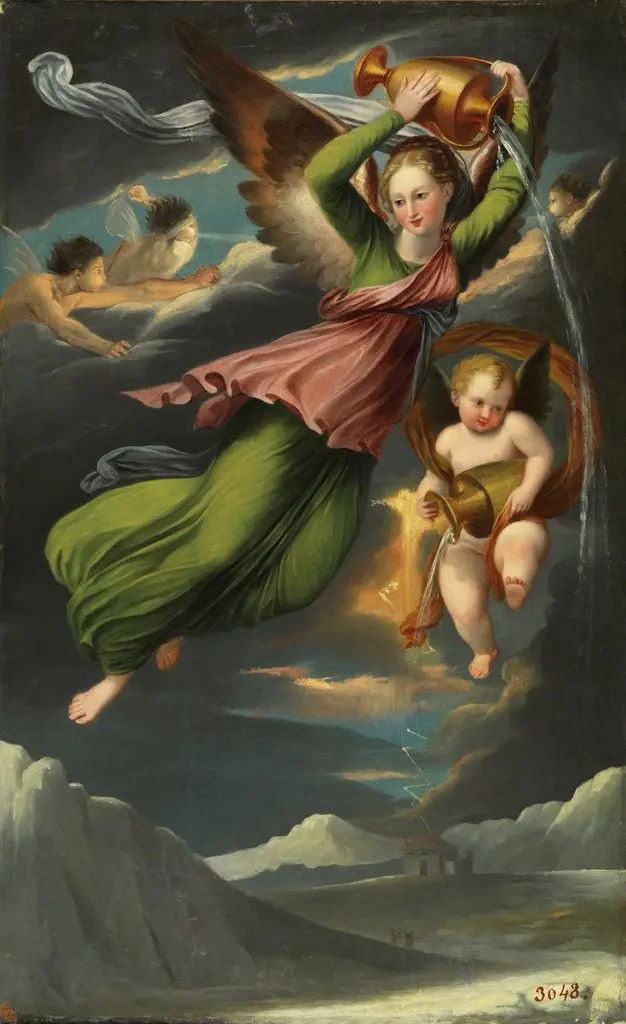
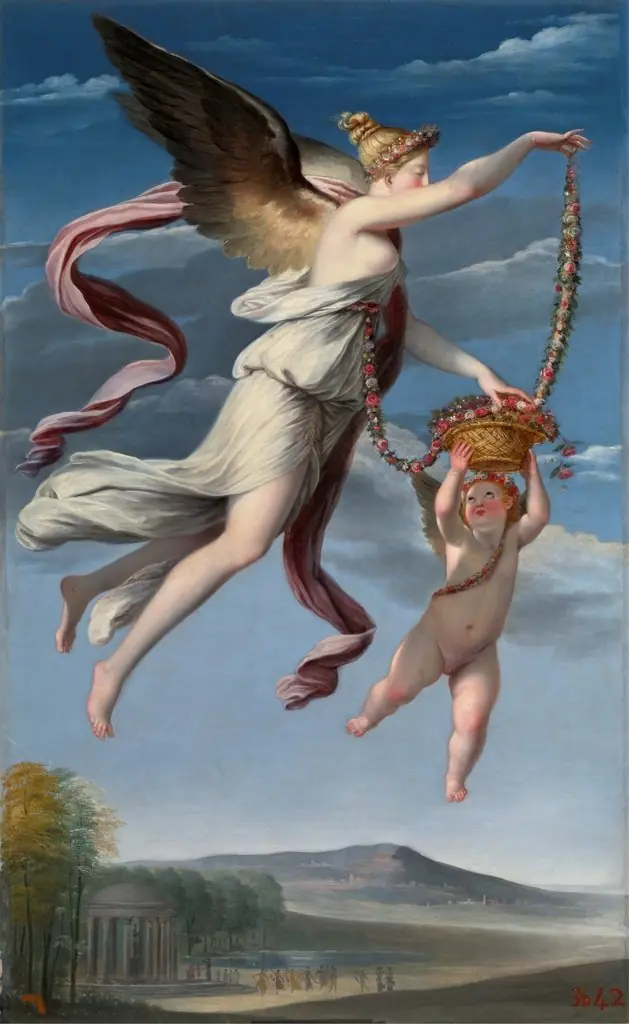
The figure represents Night personified, depicted as a winged woman with a luminous halo, suggesting divine or celestial authority. She holds a quill and parchment, linking night to contemplation and intellectual labor. A child clinging to her dress, accompanied by an owl, evokes the association of night with wisdom and the unseen. The composition suggests night as a time of quiet creation rather than mere absence of light.
Technique & Style
Ribera employed chiaroscuro to define the figure against a deep, star-speckled background, enhancing the sense of depth and mystery. The flowing drapery and expansive wings are rendered with dynamic brushwork, suggesting motion. Impasto is used selectively to highlight the glow around the head and the texture of fabric, adding tactile presence without overwhelming the somber tone of the scene.
History & Provenance
Completed in 1819, the painting entered the Museo del Prado’s collection shortly after its creation. It remained within Spanish institutional holdings, reflecting its recognition as a representative work of early 19th-century Spanish academic art. No significant changes in ownership or major restorations are documented, preserving its original condition and intent.
Context
In the post-Napoleonic era, Spanish art increasingly turned to allegory as a means of expressing cultural identity and intellectual ideals. Ribera’s work aligns with this trend, drawing on classical motifs filtered through contemporary academic training. The emphasis on night as a realm of thought reflects broader European interests in Romanticism’s fascination with introspection and the sublime.
Legacy
Though not widely known outside Spain, Ribera’s *Allegory of Night* remains a notable example of academic allegory from the early 1800s. It contributes to the understanding of how Spanish artists adapted classical symbolism within a national context. The painting continues to be studied for its synthesis of technical precision and symbolic depth within the Prado’s broader collection of 19th-century works.
Artist & collection
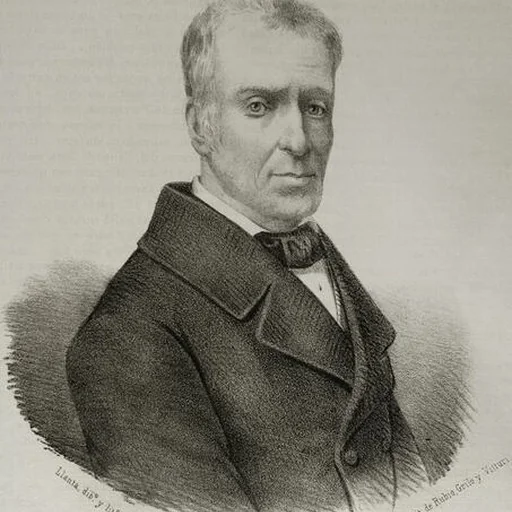
Artist
Juan Antonio Ribera Fernandez (also known as Juan Antonio de Ribera; May 27, 1779 – June 15, 1860) was a Spanish painter.