Artwork
Saint John the Evangelist in Patmos
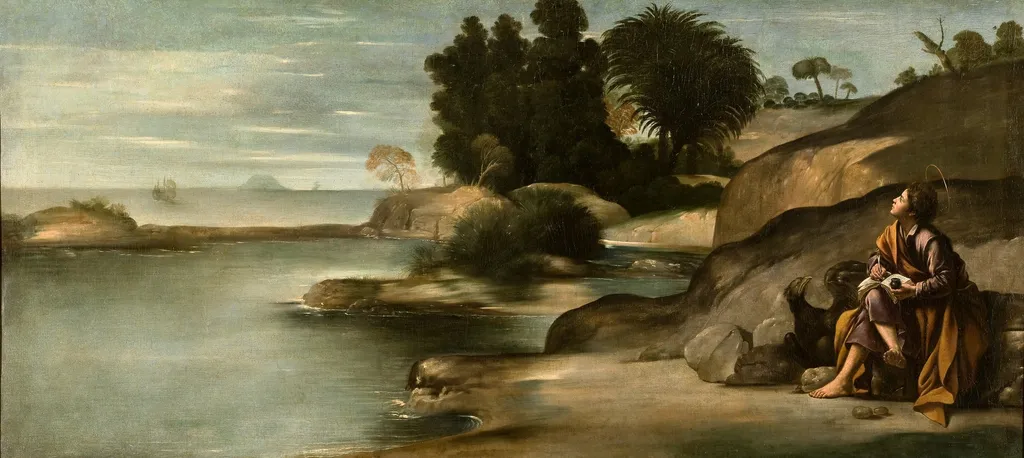
Saint John the Evangelist in Patmos is an oil painting by the Early Baroque Italian artist Juan Bautista Maíno. It dates from 1612 and is held in the collection of the Museo del Prado.
About this work
Overview
The artwork captures a moment of profound contemplation, presenting the saint in a serene, solitary setting.
Juan Bautista Maíno's oil painting, *Saint John the Evangelist in Patmos*, was completed in 1612. This religious work depicts John the Evangelist during his period of exile on the island of Patmos, a location traditionally associated with his composition of the Book of Revelation. The artwork captures a moment of profound contemplation, presenting the saint in a serene, solitary setting. It is currently part of the collection at the Museo del Prado.
Subject & Meaning
The painting portrays Saint John the Evangelist seated alone on a rocky coastline, his figure wrapped in a simple brown robe. His posture, with his head resting on his hand and his gaze directed downwards, conveys a state of deep thought or spiritual introspection. The presence of a book beside him signifies his role as an evangelist and author, particularly in relation to the biblical texts believed to have been written during his time on Patmos.
Technique & Style
Maíno utilizes a pronounced chiaroscuro effect, employing strong contrasts between light and shadow to shape the scene and emphasize the figure. The artist meticulously renders the play of light on Saint John's face and robe, creating a luminous quality that emerges from the darker background. This technique not only adds dramatic depth but also underscores the quiet intensity and isolated nature of the saint's experience, contributing to the painting's overall peaceful yet slightly melancholic mood.
Artist & collection