Artwork
The Pentecost
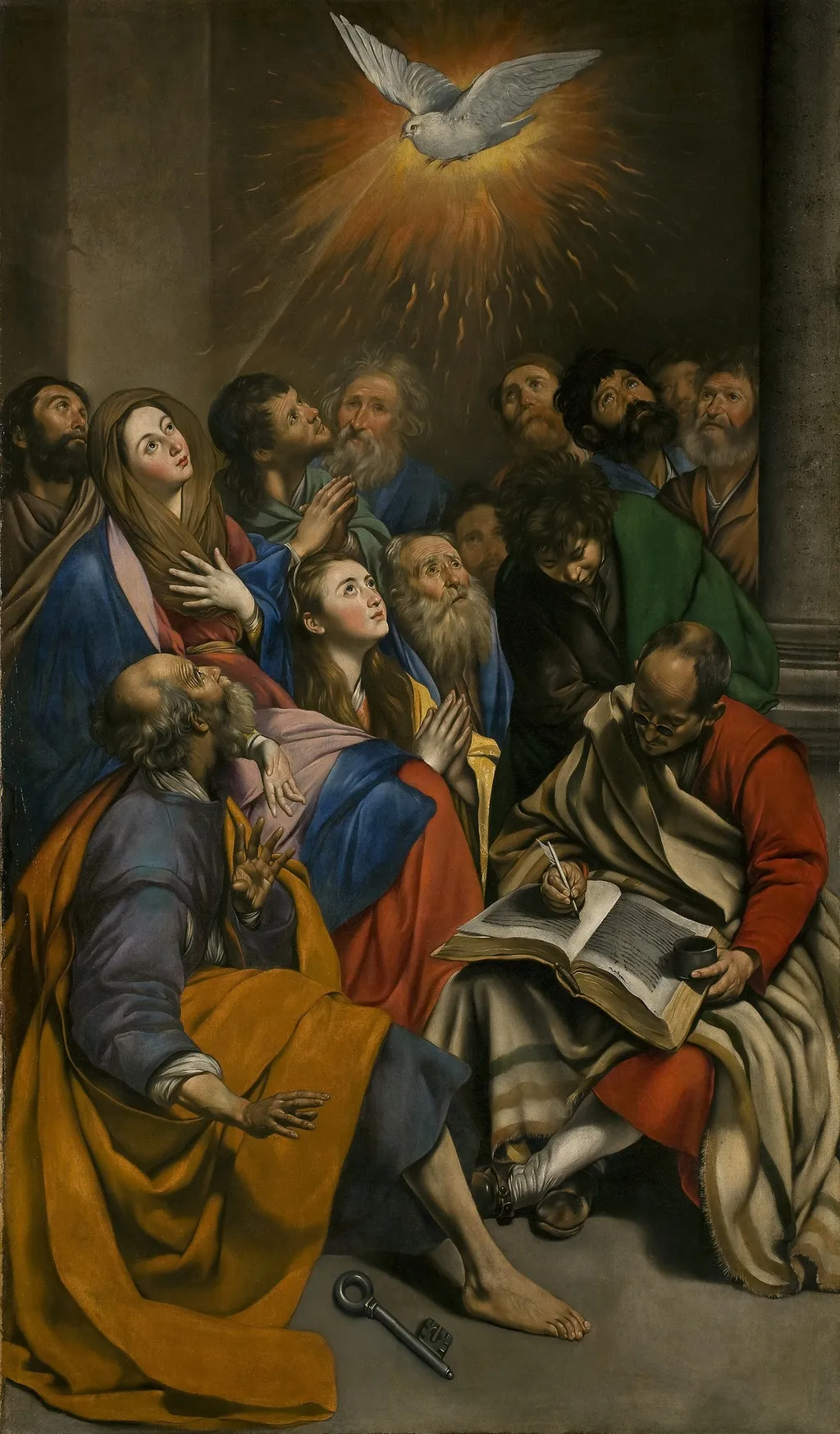
The Pentecost is an oil painting by the Early Baroque Italian artist Juan Bautista Maíno. It dates from 1612 and is held in the collection of the Museo del Prado.
About this work
Overview
The setting is an interior space defined by stone walls and classical columns, lending the scene a solemn, monumental atmosphere.
Juan Bautista Maíno’s oil on canvas, dated 1612, portrays the biblical episode of Pentecost. A congregation of figures, arrayed in vivid robes of blue, red, yellow and green, looks upward toward a white dove whose wings are outstretched amid a radiant burst of light and flame. The setting is an interior space defined by stone walls and classical columns, lending the scene a solemn, monumental atmosphere.
Subject & Meaning
The work visualizes the descent of the Holy Spirit, symbolized by the dove, onto the apostles and early disciples. The varied gestures—raised hands, prayerful postures, and the holding of books and a key—suggest reception of divine inspiration and the transmission of ecclesiastical authority. The composition emphasizes collective awe and spiritual awakening within the Christian tradition.
Technique & Style
Maíno employs chiaroscuro, contrasting deep shadows with luminous highlights to model the figures and accentuate the celestial light surrounding the dove. The interplay of bright colors in the garments against the darker architectural backdrop creates depth and drama, while the precise rendering of textures—stone, fabric, and flame—reflects the early Baroque sensibility emerging in Spain.
History & Provenance
Completed in 1612, the painting entered the collection of the Spanish royal court before being transferred to the Museo del Prado, where it remains on display. Its attribution to Maíno has been consistently affirmed by scholarly catalogues, and the work has been referenced in inventories of the 17th‑century Spanish royal art holdings.
Context
Created during a period when Spanish art was absorbing influences from Italian Caravaggio and Flemish realism, the painting illustrates the Counter‑Reformation emphasis on vivid, emotionally resonant religious imagery. Maíno, trained in Italy, integrates these international currents with a distinctly Spanish devotional tone, aligning the work with contemporary ecclesiastical commissions intended to inspire piety.
Own this work as a print
Artist & collection