Artwork
Crucifixión
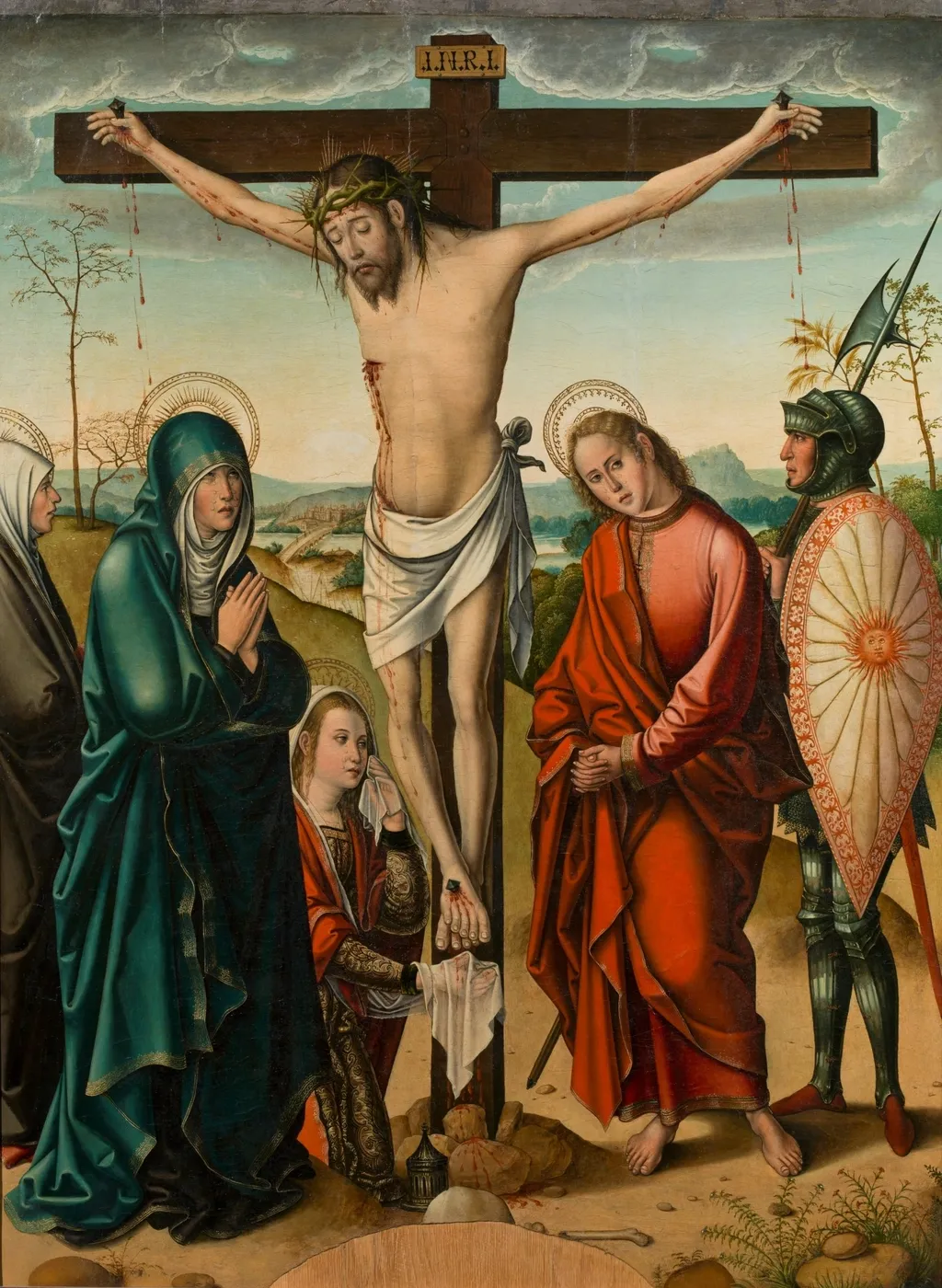
Crucifixión is an oil painting by the Northern Renaissance artist Master of Astorga. It dates from 1501 and is held in the collection of the Museo del Prado.
About this work
Overview
‘Crucifixión’ is an oil painting executed in 1501 by the anonymous artist known as the Master of Astorga. The work measures roughly a typical devotional panel and is part of the collection of the Museo del Prado in Madrid. It presents a conventional depiction of the crucifixion, arranged within a modestly detailed landscape that frames the central figure.
Subject & Meaning
Their varied postures—standing, kneeling, and observing—suggest a narrative of mourning, devotion, and the presence of authority at the moment of execution.
The composition centers on a nailed Christ on a wooden cross, his arms outstretched in a gesture of sacrifice. Flanking the cross are four figures: a woman in a dark blue hood, a figure in bright red robes, a young girl in brown, and an armored soldier. Their varied postures—standing, kneeling, and observing—suggest a narrative of mourning, devotion, and the presence of authority at the moment of execution.
Technique & Style
The painter employs chiaroscuro to model the body of Christ, allowing light to carve out a three‑dimensional form against a relatively flat background. The palette balances bright accents, such as the red garment, with cooler, muted tones of sky and foliage. Brushwork remains smooth, emphasizing the solemnity of the scene while still rendering the surrounding trees and distant landscape with a soft atmospheric quality.
History & Provenance
Created at the beginning of the sixteenth century, the work was likely intended for a local chapel or private devotion in the Asturian region. It entered the national collection of Spain in the twentieth century, ultimately being assigned to the Museo del Prado, where it has been displayed as part of the museum’s holdings of early Iberian religious art.
Context
The painting reflects the devotional trends of late Gothic and early Renaissance Spain, where the crucifixion motif served both liturgical and didactic purposes. The inclusion of a soldier in armor alongside mourners aligns with contemporary iconography that juxtaposes earthly power with divine suffering, a theme common in Spanish religious art of the period.
Own this work as a print
Artist & collection
Artist
This anonymous 16th-century Spanish painter created vivid, gold-backed religious scenes.

 Kreuzigung Christi
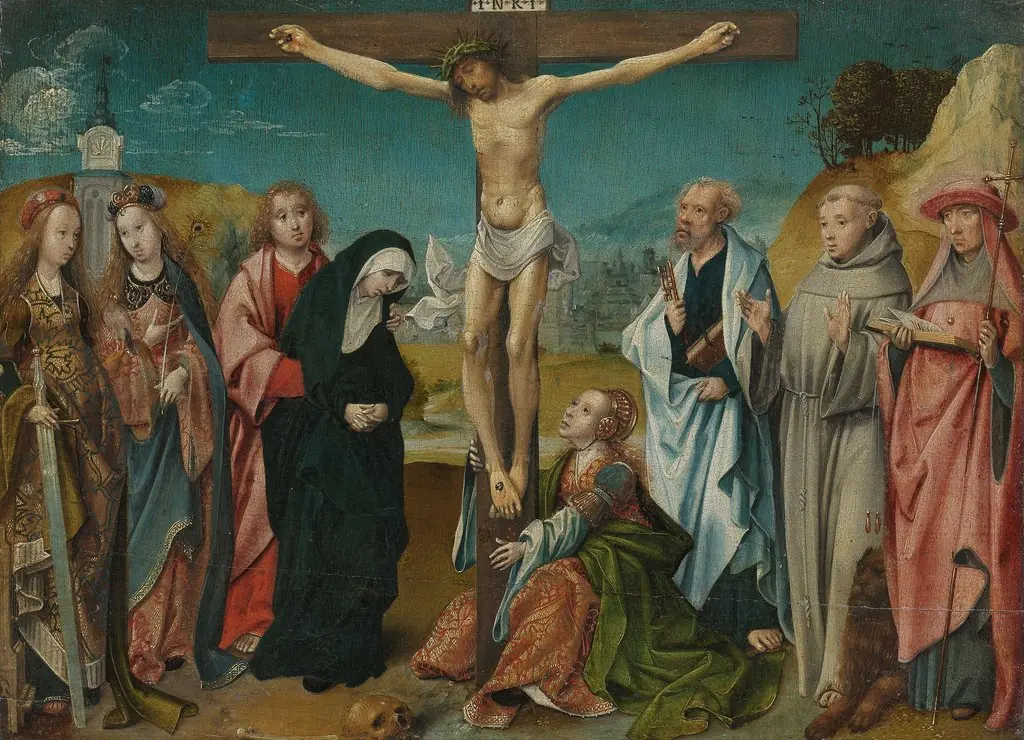 Christ on the cross with the Virgin, St John the Evangelist, Mary Magdalen, and Sts Cecilia and Barbara (left), and Sts Peter, Francis and Jerome (right)
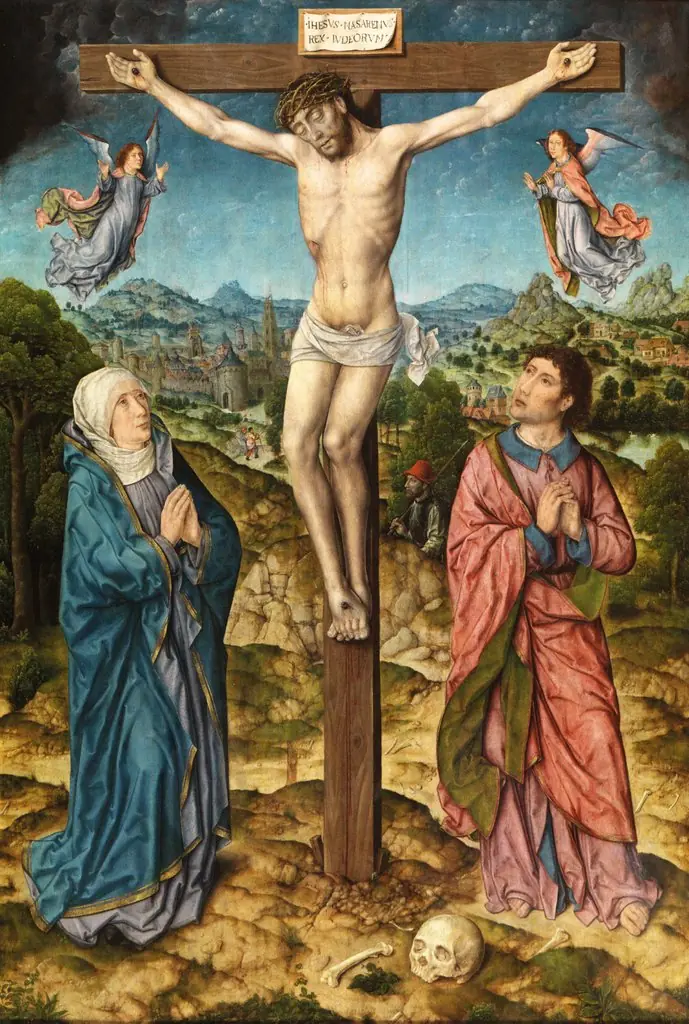 The Crucifixion
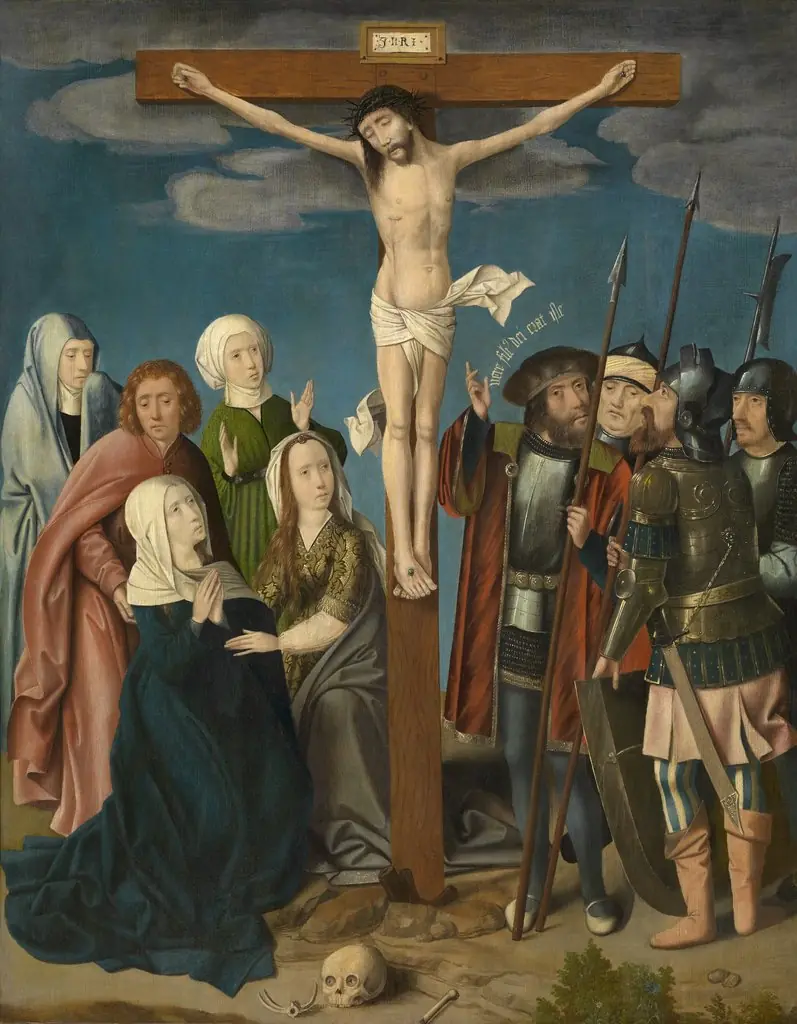 Calvary
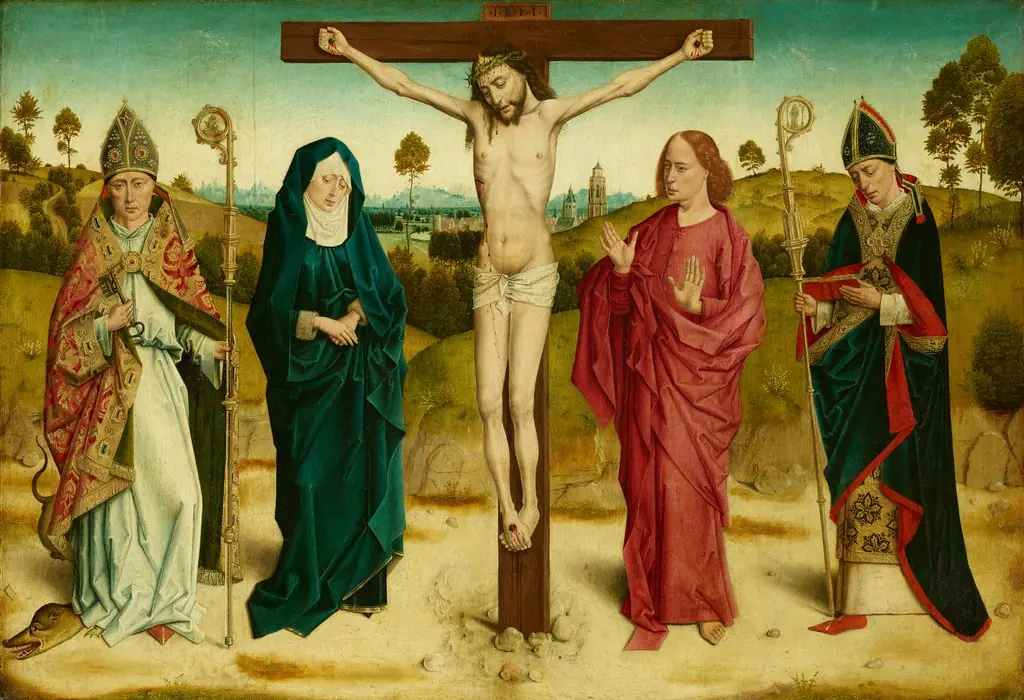 Christ crucified between Mary and John the Evangelist and the saints Adolphus and Ambrosius
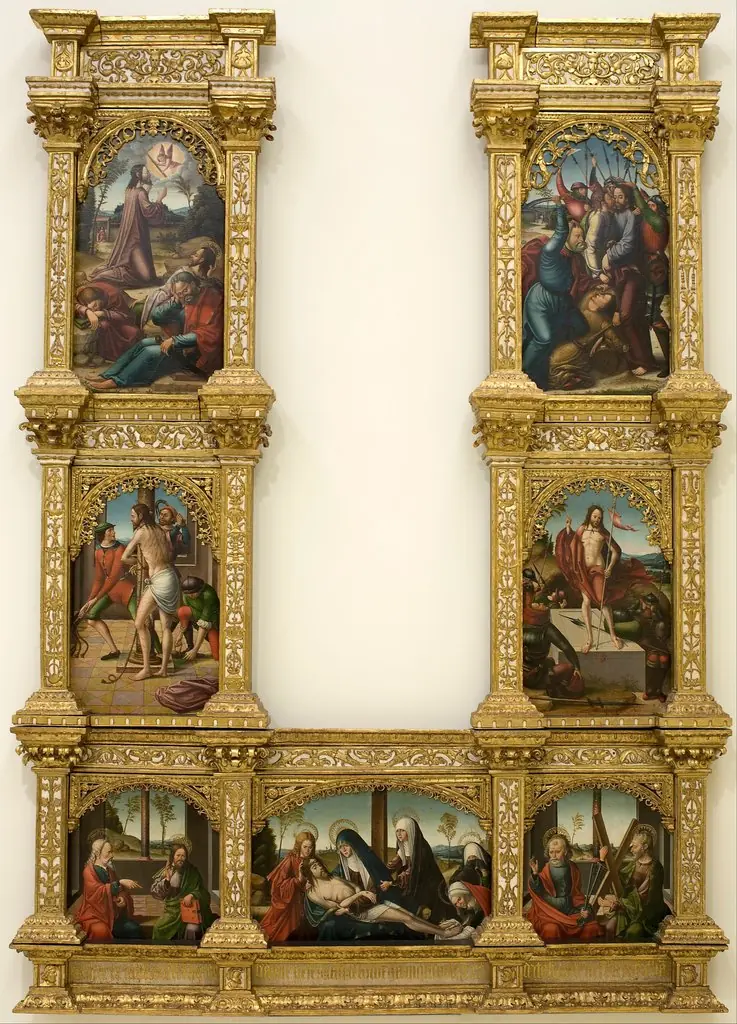
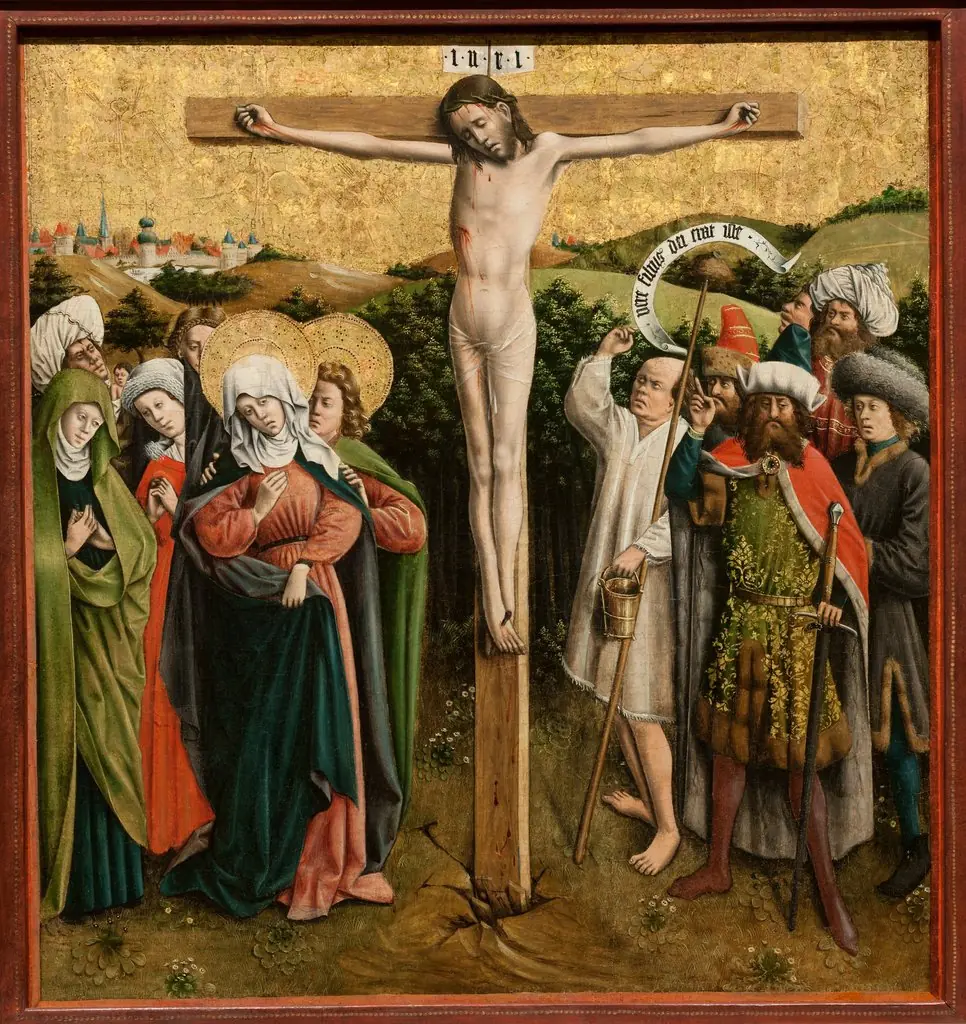 Altarpiece with The Passion of Christ
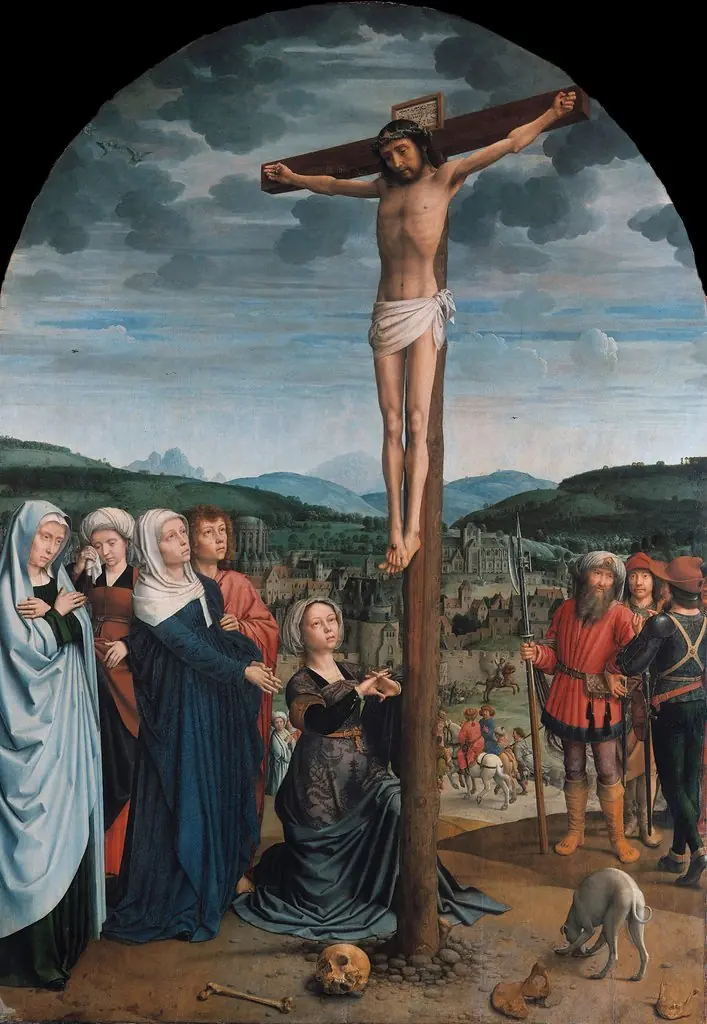 Christ on the Cross
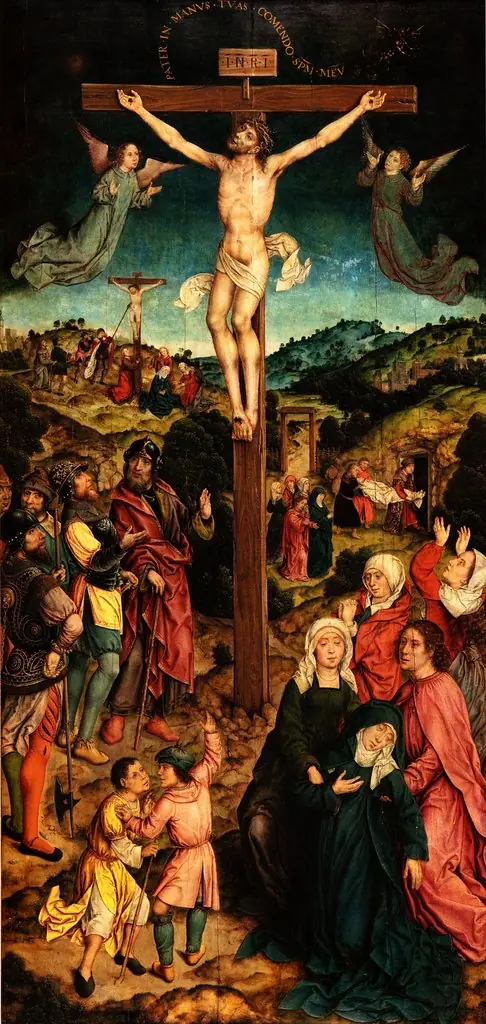 Crucifixion
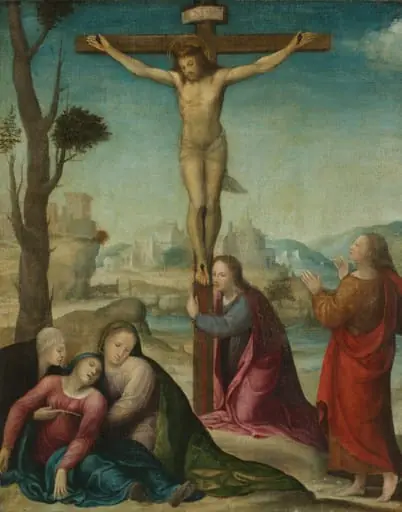 The Crucifixion
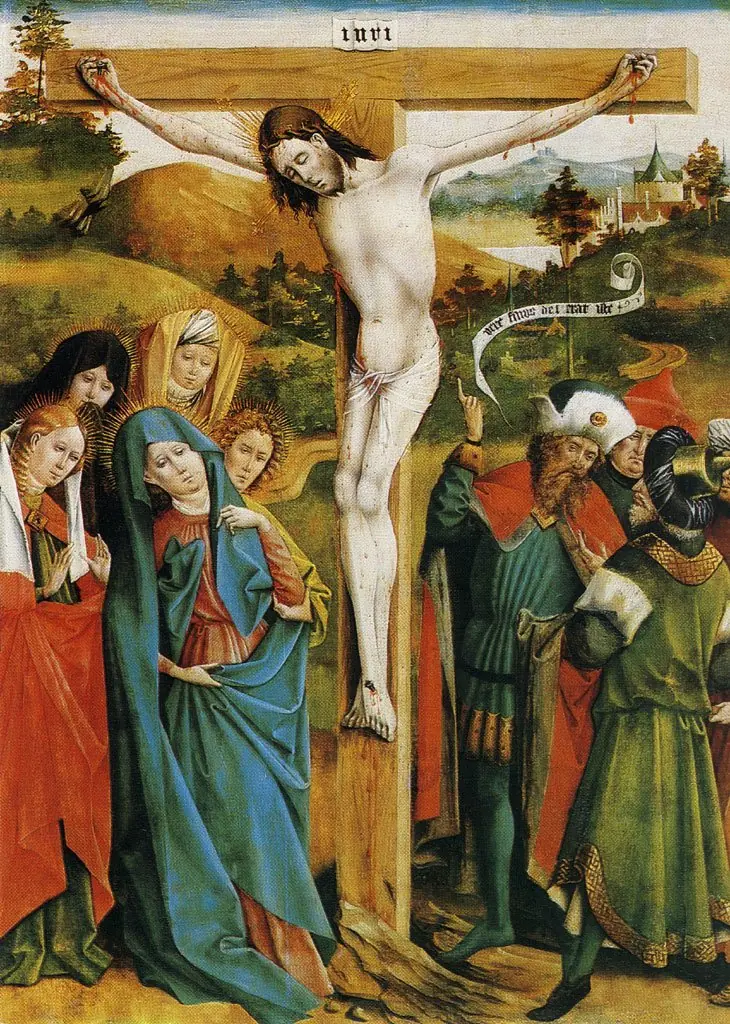 Crucifixion of Christ
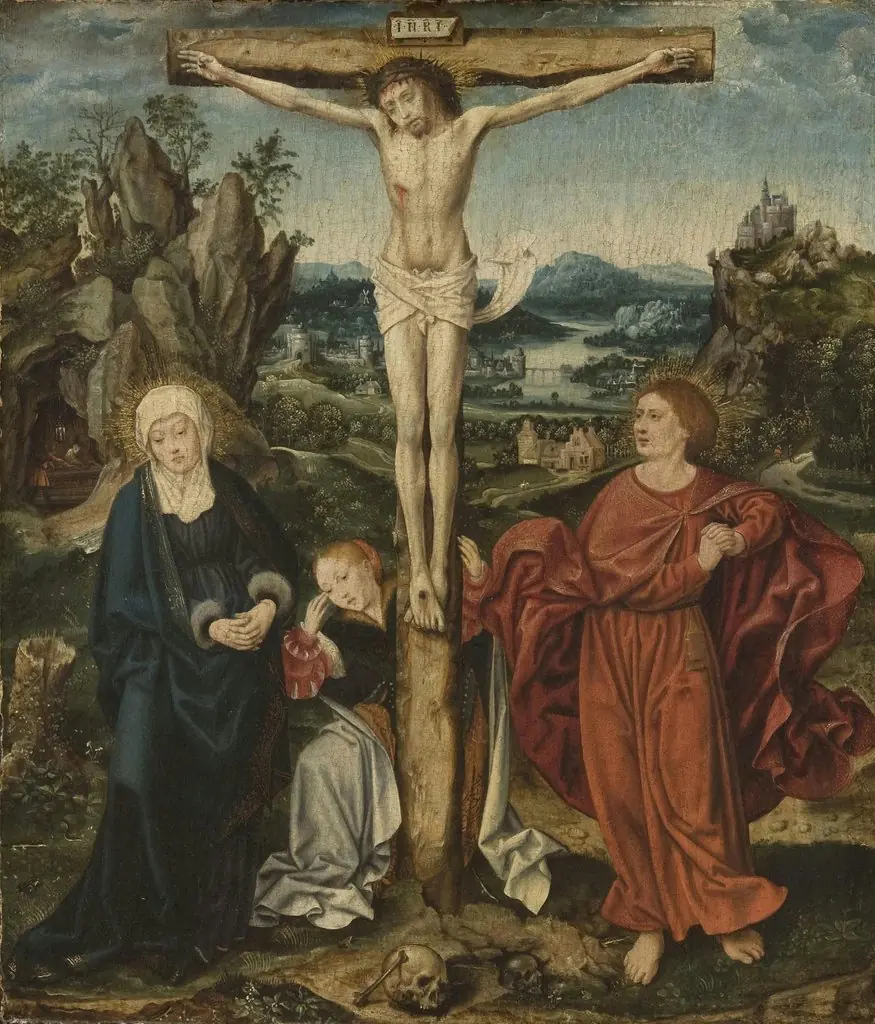 Crucifixion
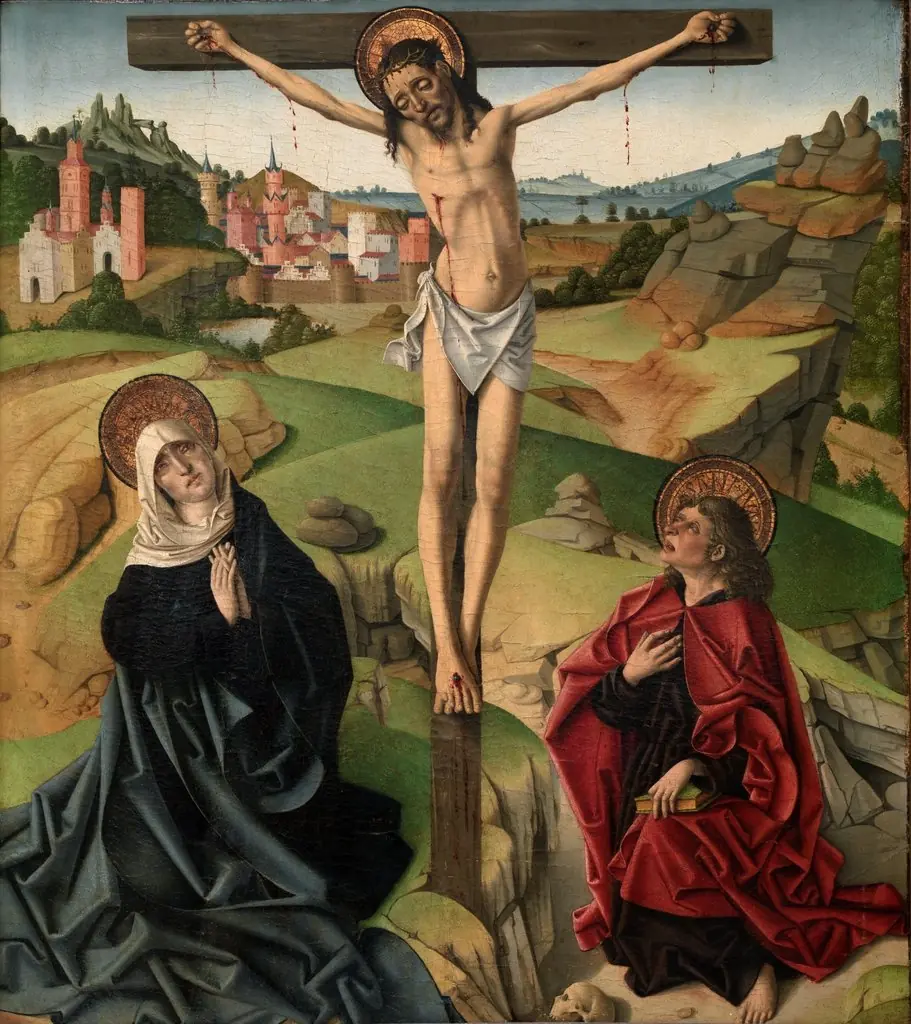 The Crucifixion