Artwork
The Birth and Naming of John the Baptist
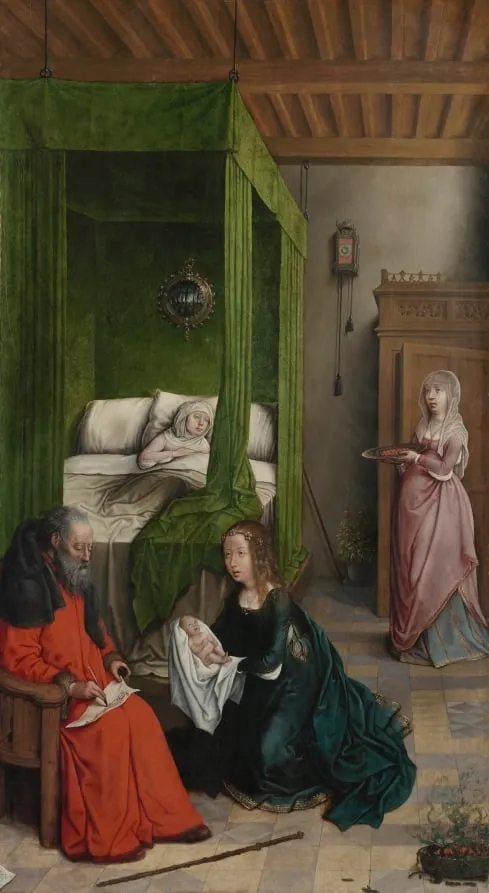
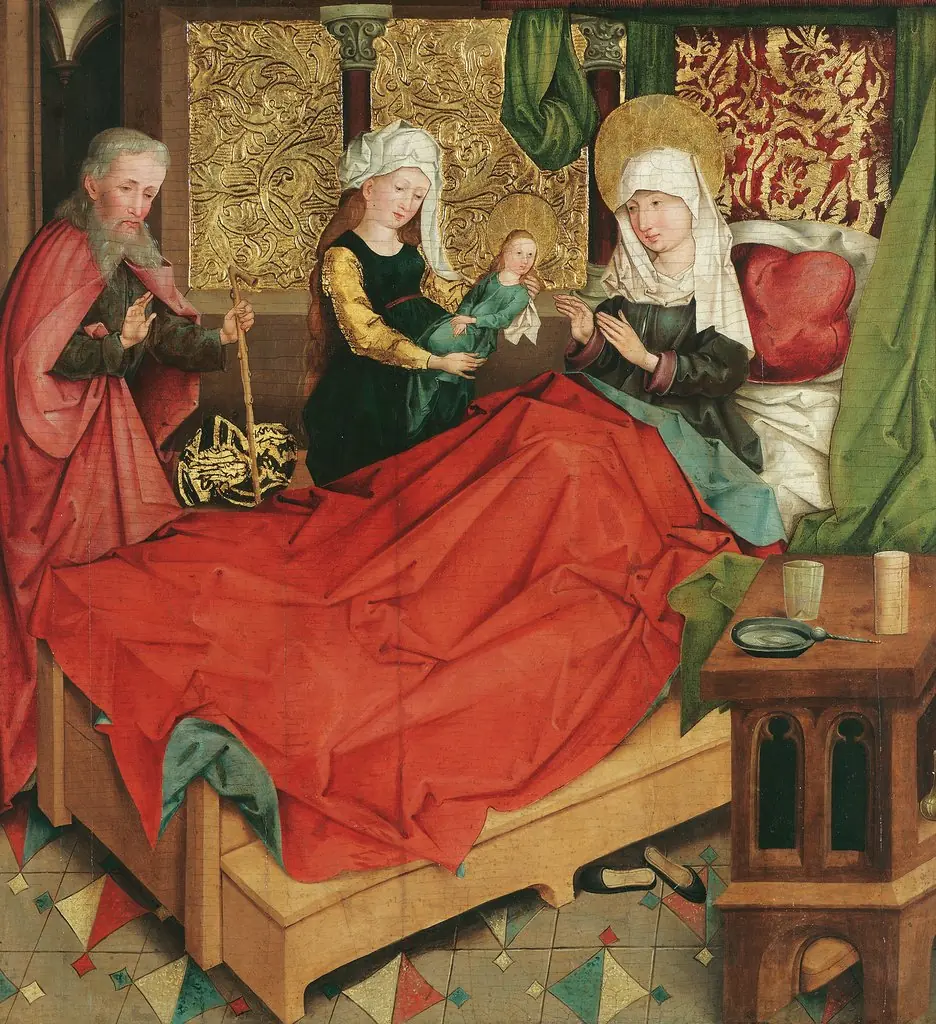
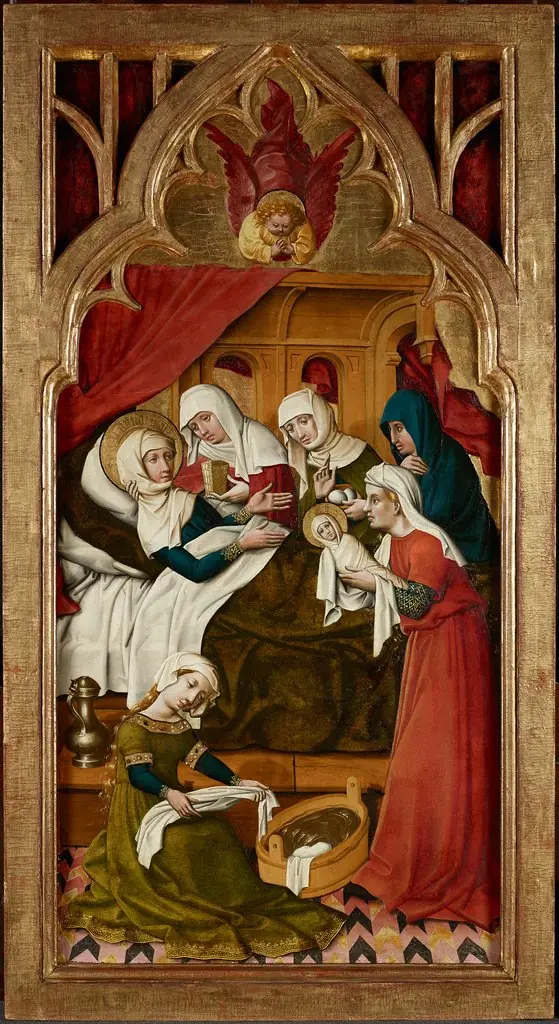
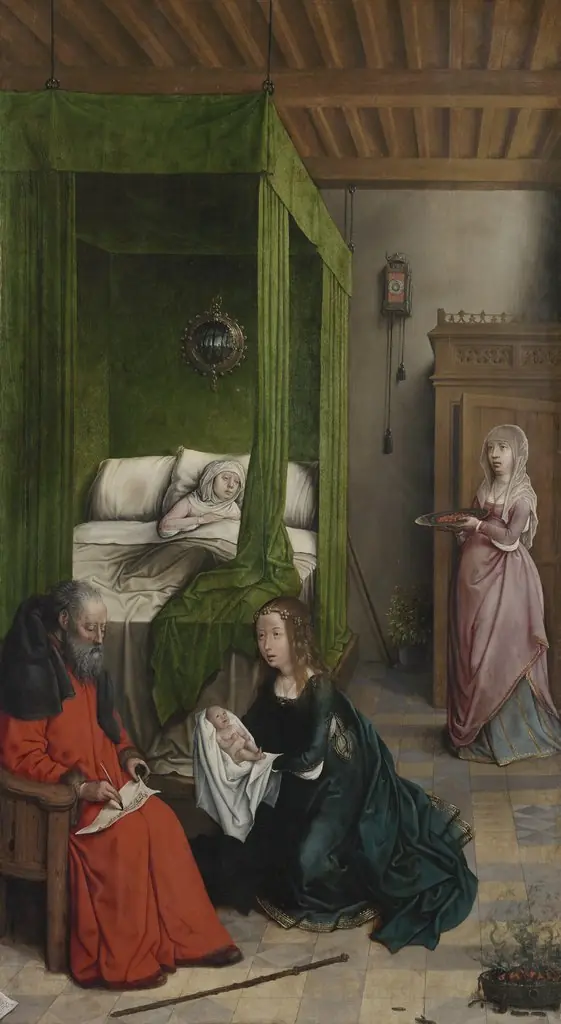
The Birth and Naming of John the Baptist is an unspecified painting by the Northern Renaissance artist Juan de Flandes. It dates from 1498 and is held in the collection of the Cleveland Museum of Art. This painting depicts the moment of John the Baptist’s naming, set within a modest domestic interior typical of late 15th-century Flanders.
About this work
This painting shows a quiet room where Elizabeth rests after giving birth.
This painting shows a quiet room where Elizabeth rests after giving birth. Her cousin Mary holds the newborn John the Baptist. Zacharias sits nearby, writing the baby’s name because he can’t speak yet.
The artist catches this moment right after the miracle. Zacharias’ restored voice isn’t shown—but you feel it in the stillness. Flemish homes like this often framed Bible stories in everyday life.
The room’s wooden beams and simple furniture make it feel real. See how the light falls just right on the figures.
Look up Juan de Flandes (Netherlandish, c. 1460–1519).
Overview
This painting depicts the moment of John the Baptist’s naming, set within a modest domestic interior typical of late 15th-century Flanders. The scene captures the quiet aftermath of Elizabeth’s childbirth, with Mary presenting the infant to Zacharias, who regains his speech as he writes the child’s name. The composition emphasizes stillness and intimacy, avoiding dramatic spectacle in favor of restrained emotional resonance.
Subject & Meaning
The narrative draws from the Gospel of Luke, where Zacharias, struck mute for doubting the angel’s prophecy, reclaims his voice by affirming the child’s name. The act of writing becomes the conduit of divine restoration. Mary’s presence underscores the connection between the two sacred births—John and Jesus—while Elizabeth’s restful posture conveys physical exhaustion and spiritual fulfillment.
Technique & Style
The artist employs fine brushwork to render textures of fabric, wood, and skin with quiet precision. Light falls naturally across the figures, modeling forms without theatrical contrast. Interior details—timber beams, ceramic vessels, woven textiles—are rendered with observational clarity, grounding the sacred event in a tangible, lived environment characteristic of Netherlandish devotional painting.
History & Provenance
Commissioned by Queen Isabella I of Castile for a monastery near Burgos, the work originally formed part of a larger altarpiece. Its inclusion in a royal religious project reflects the Spanish monarch’s devotion to biblical narratives and her patronage of Northern European artists. The painting’s journey from Spain to its current location traces the movement of devotional art across early modern Europe.
Context
In late 15th-century Flanders, biblical stories were often rendered in domestic settings to invite personal contemplation. Artists like Juan de Flandes blended sacred themes with everyday interiors, making divine events feel immediate and accessible. This approach aligned with broader devotional trends that emphasized emotional identification over grandeur.
Legacy
The painting exemplifies the quiet intensity of Netherlandish religious art, where spiritual transformation is conveyed through gesture and atmosphere rather than spectacle. Its preservation and study contribute to understanding how devotional imagery functioned in royal and monastic contexts, bridging Northern European technique with Iberian piety.
Artist & collection

Artist
Juan de Flandes was a Flemish painter active in Spain from 1496 to 1519. His actual name is unknown, although an inscription Juan Astrat on the back of one work suggests a name such as "Jan van der Straat". Jan…