Artwork
The Annunciation
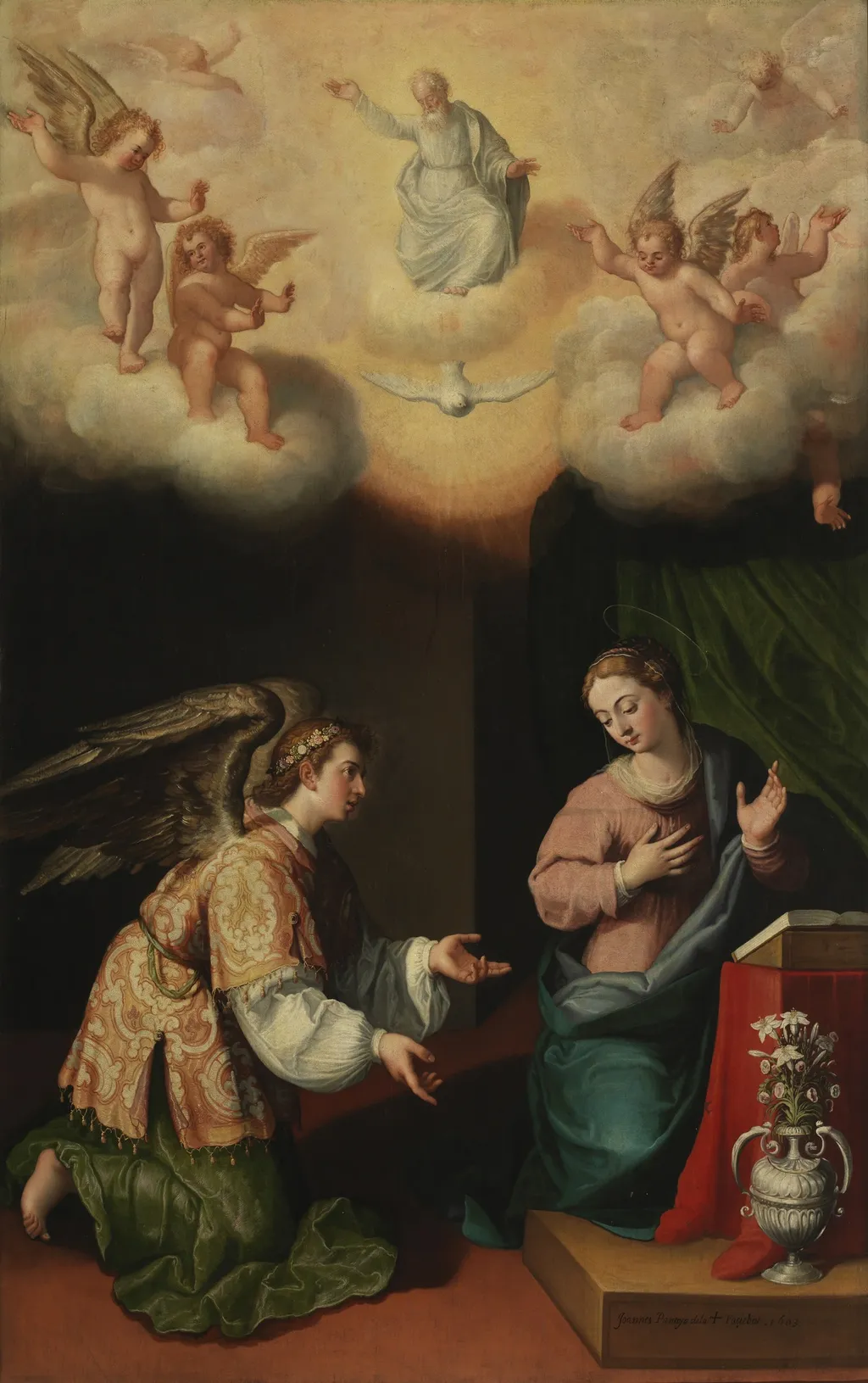
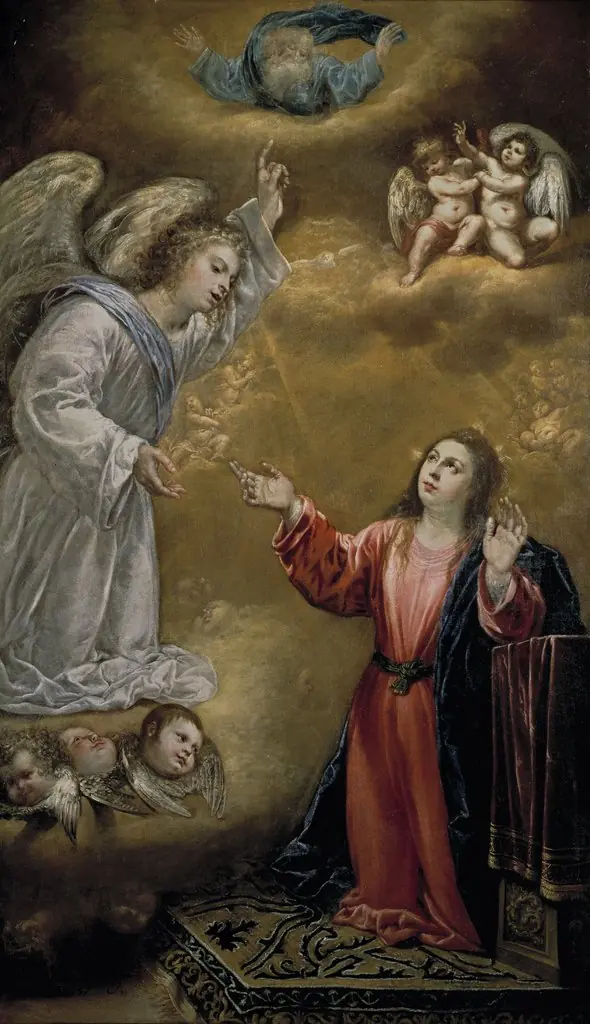
The Annunciation is an oil painting by the Early Baroque Italian artist Juan Pantoja de la Cruz. It dates from 1603 and is held in the collection of the Museo del Prado.
About this work
Overview
The composition balances solemnity with quiet grace, reflecting the transition from Mannerism toward early Baroque sensibilities in Spain.
Painted in 1603 by Juan Pantoja de la Cruz, this oil on panel work depicts the Annunciation, a key moment in Christian theology. As a principal painter to the Spanish Habsburg court, Pantoja de la Cruz typically produced formal portraits, yet this religious subject reveals his engagement with broader European trends. The composition balances solemnity with quiet grace, reflecting the transition from Mannerism toward early Baroque sensibilities in Spain.
Subject & Meaning
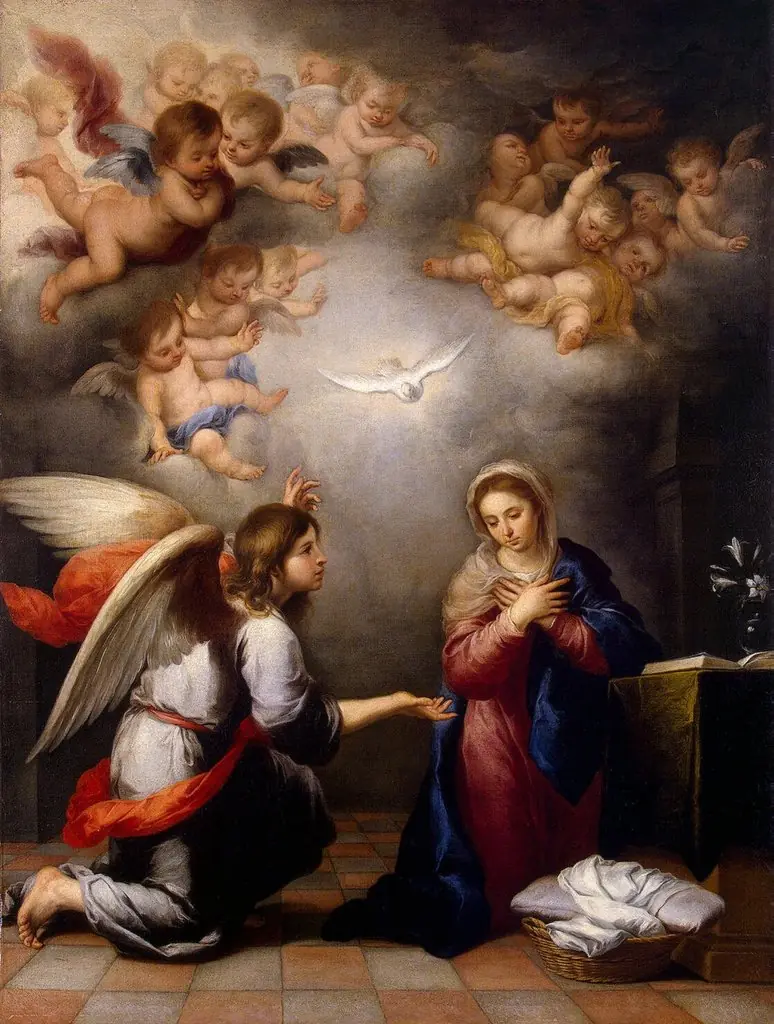
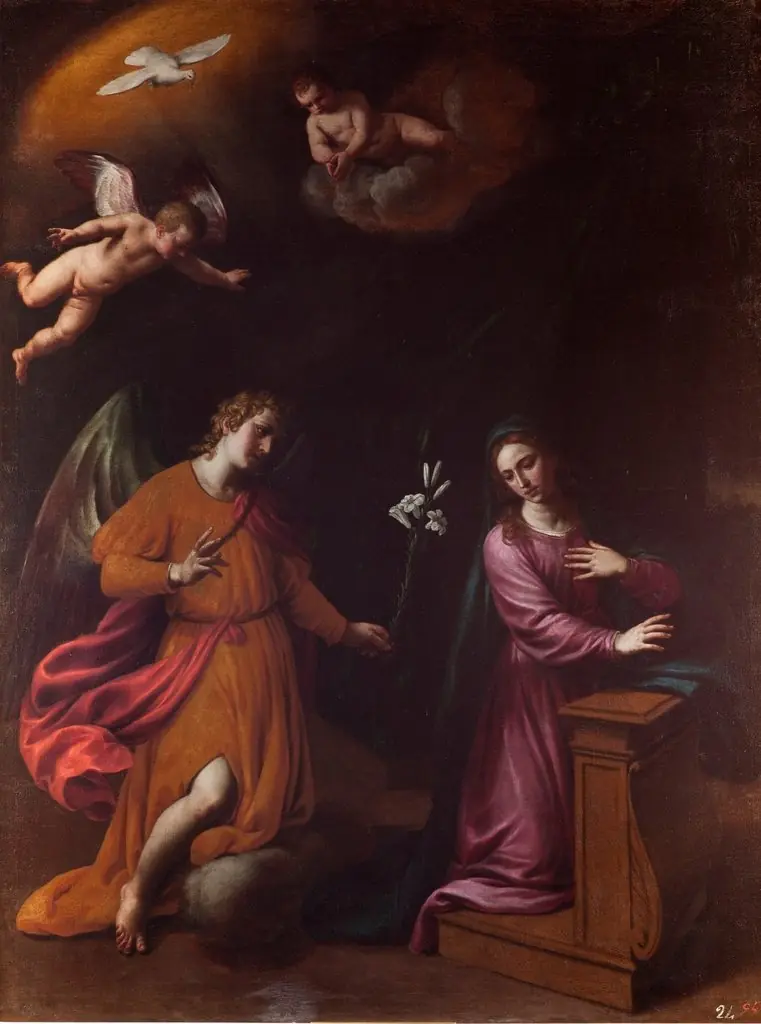
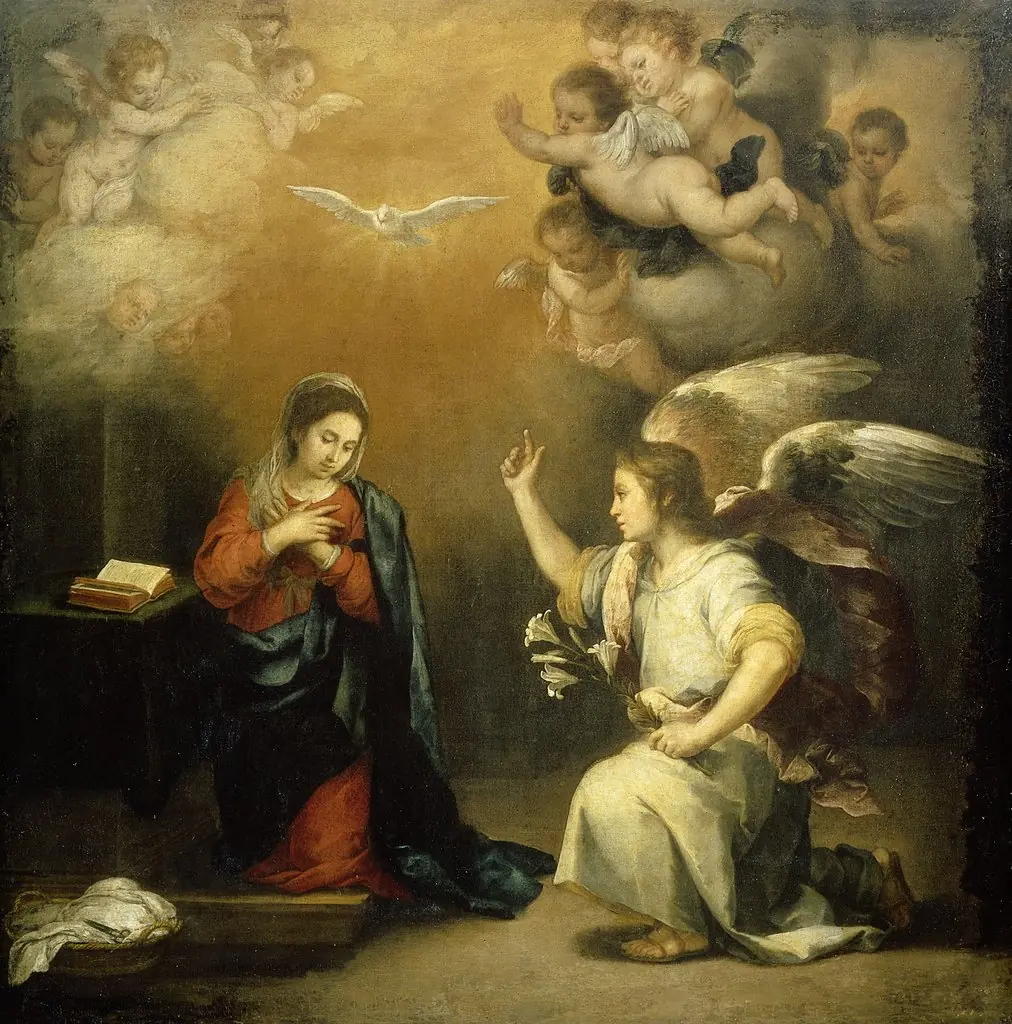
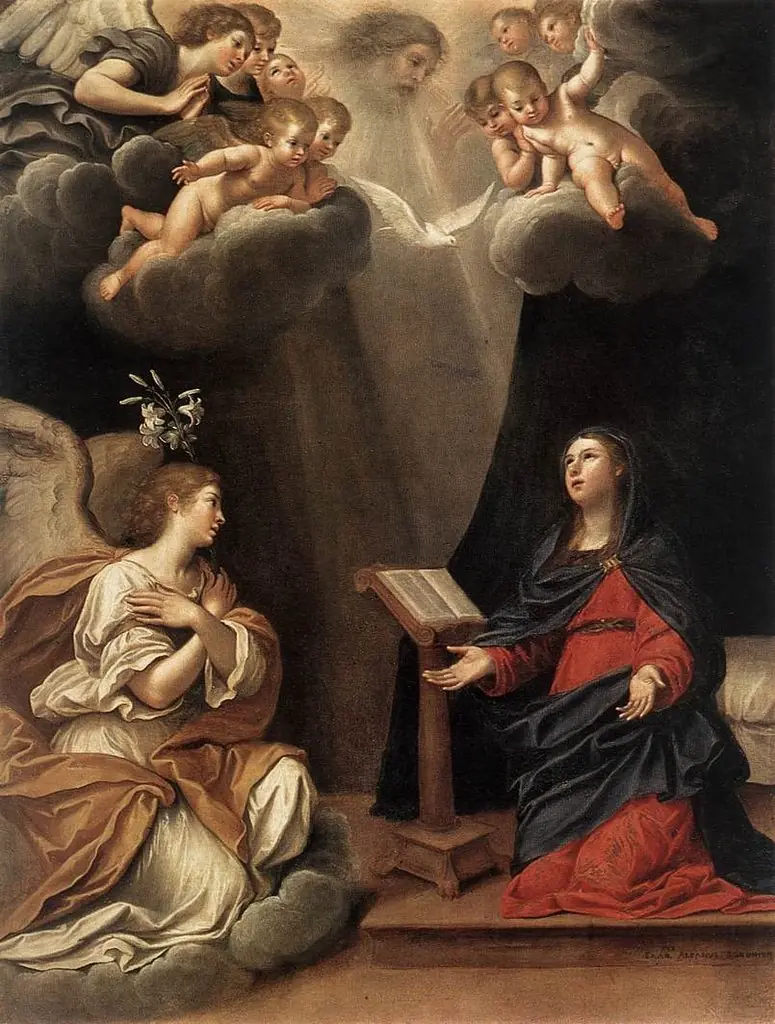
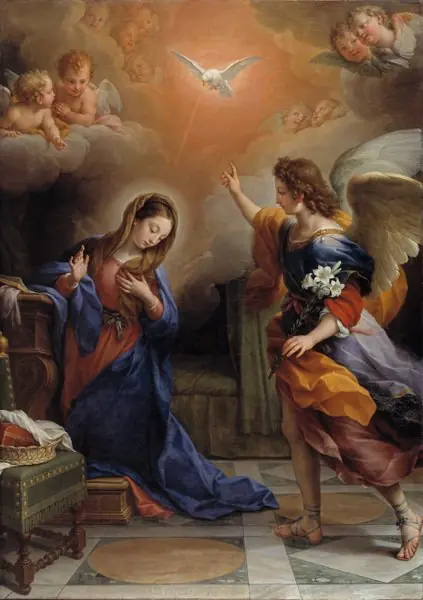
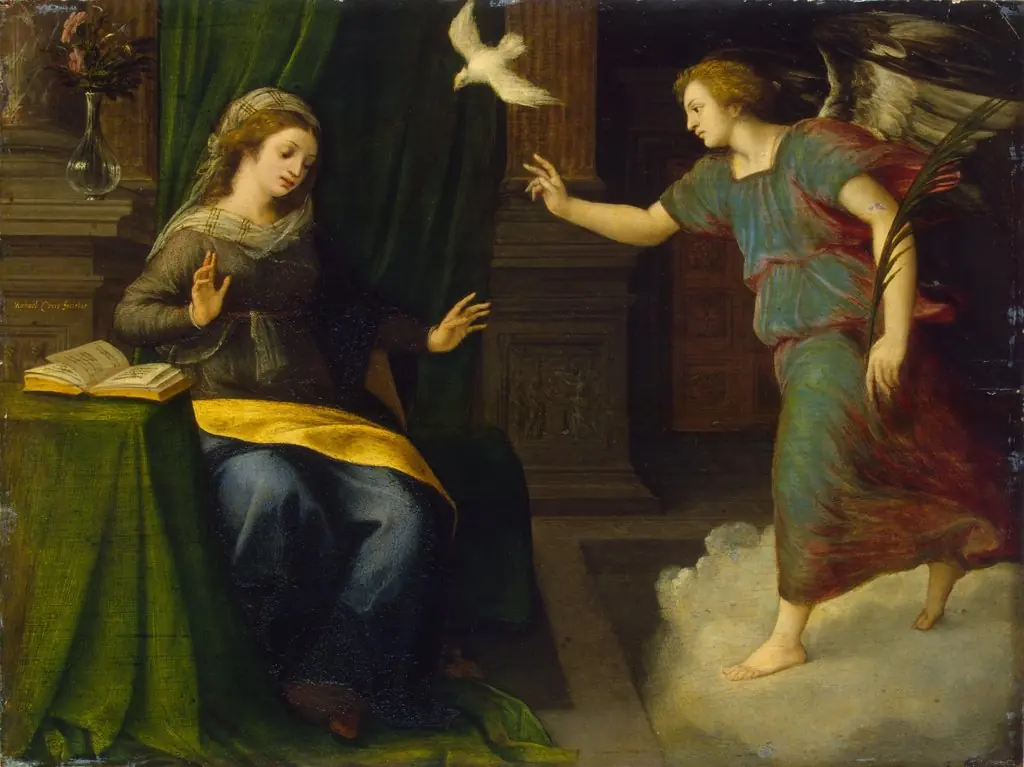
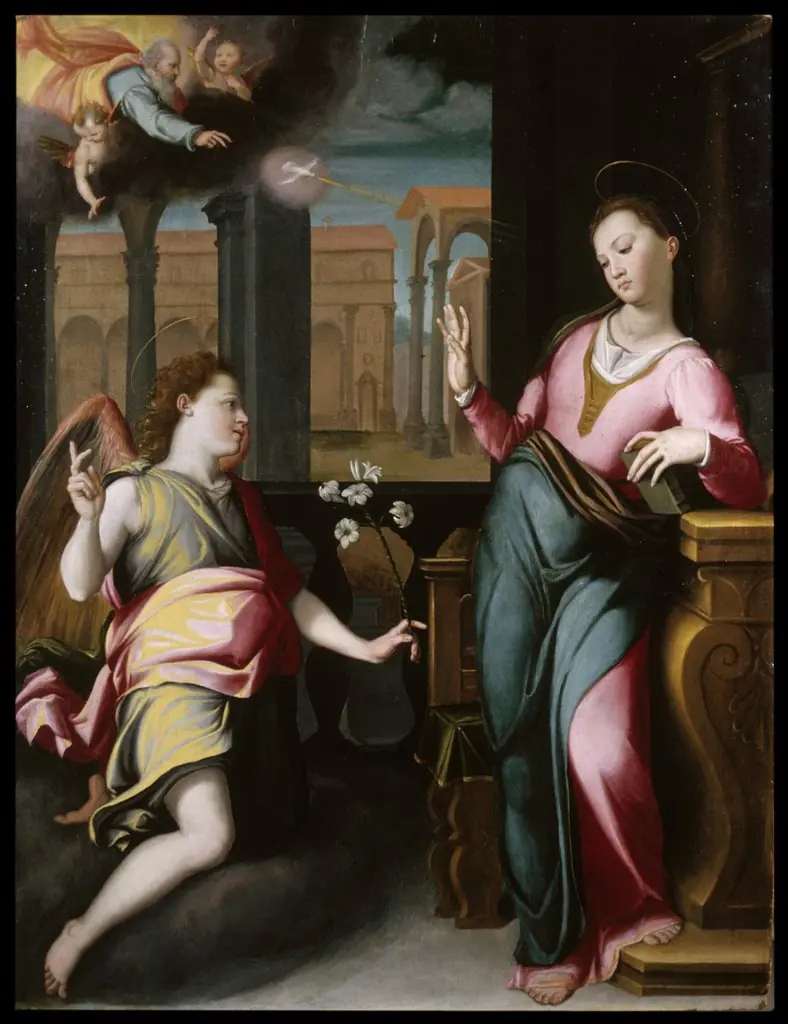
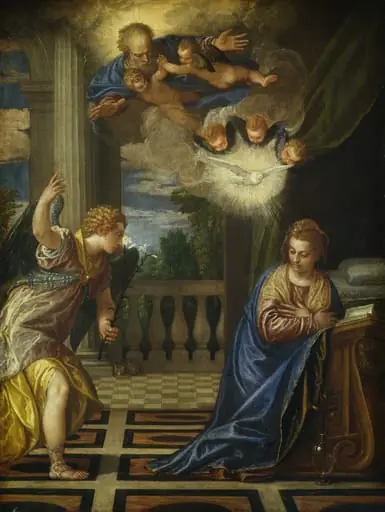
The scene captures the moment the Archangel Gabriel announces to the Virgin Mary that she will conceive Jesus. Gabriel kneels in reverence, while Mary, seated and composed, receives the divine message with quiet acceptance. Above, God the Father and cherubs signify heavenly presence, reinforcing the sacred nature of the event. The open book suggests Mary’s devotion and readiness to fulfill her role, grounding the supernatural in a contemplative, human moment.
Technique & Style
Pantoja de la Cruz employs chiaroscuro to model forms with subtle gradations of light and shadow, lending volume and emotional weight to the figures. The rich textures of fabric—Mary’s blue mantle and Gabriel’s crimson and gold robe—are rendered with precision, reflecting courtly attention to detail. The dark background and draped red cloth isolate the figures, focusing attention on their interaction while enhancing the scene’s intimacy and solemnity.
History & Provenance
Commissioned during the reign of Philip III, the painting entered the Spanish royal collection and remained in royal hands until the 19th century. It was later transferred to the Museo del Prado, where it has been held since the museum’s founding. Its preservation within royal collections underscores its significance as a devotional object tied to the Habsburg court’s religious identity and artistic patronage.
Context
While Italian Baroque artists were embracing dynamic movement and theatricality, Spanish religious painting retained a restrained, introspective tone. Pantoja de la Cruz’s work reflects this national preference for quiet reverence over overt drama. His adaptation of Italian compositional elements—such as the celestial hierarchy and chiaroscuro—was filtered through a distinctly Spanish devotional aesthetic, shaped by Counter-Reformation ideals and courtly discipline.
Legacy
Though less celebrated than his portraits, this Annunciation exemplifies Pantoja de la Cruz’s ability to merge courtly refinement with spiritual gravity. It stands as a representative work of early 17th-century Spanish religious art, illustrating how foreign influences were absorbed into a local tradition that valued stillness, dignity, and symbolic clarity over emotional excess.
Own this work as a print
Artist & collection
Artist
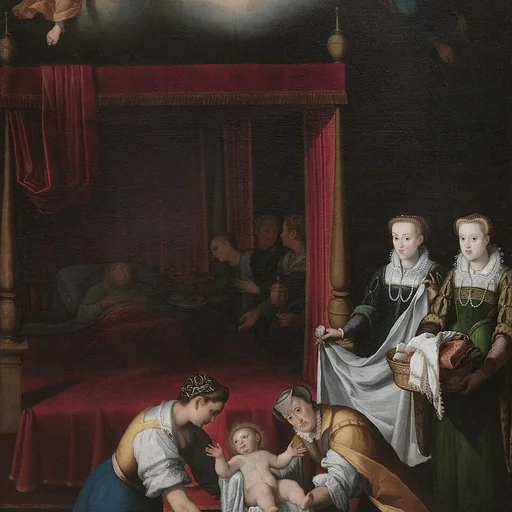
Juan Pantoja de La Cruz (1553 – 26 October 1608) was a Spanish painter, one of the best representatives of the Spanish school of court painters.

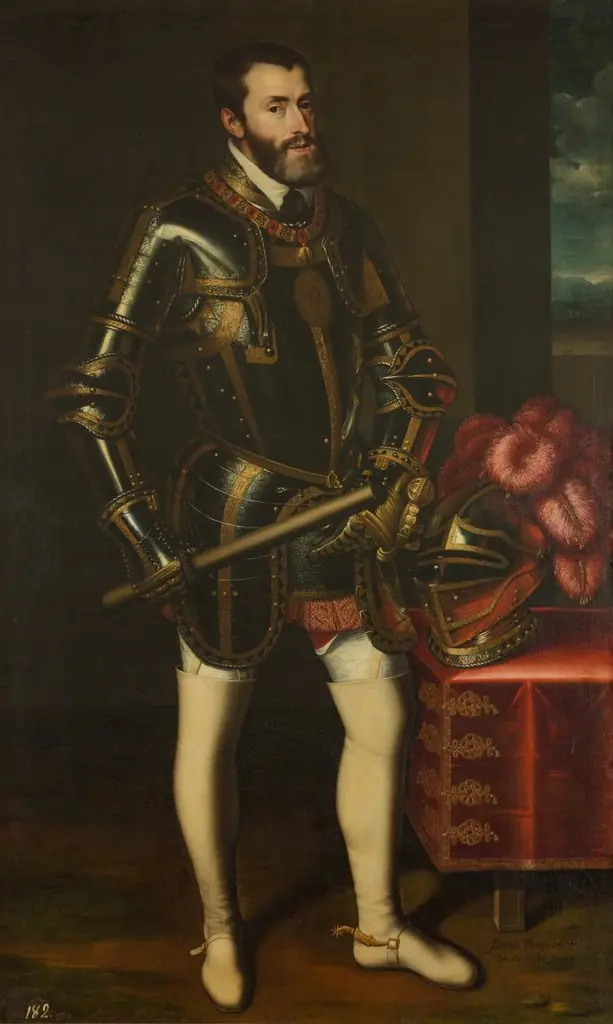 The Emperor Charles V
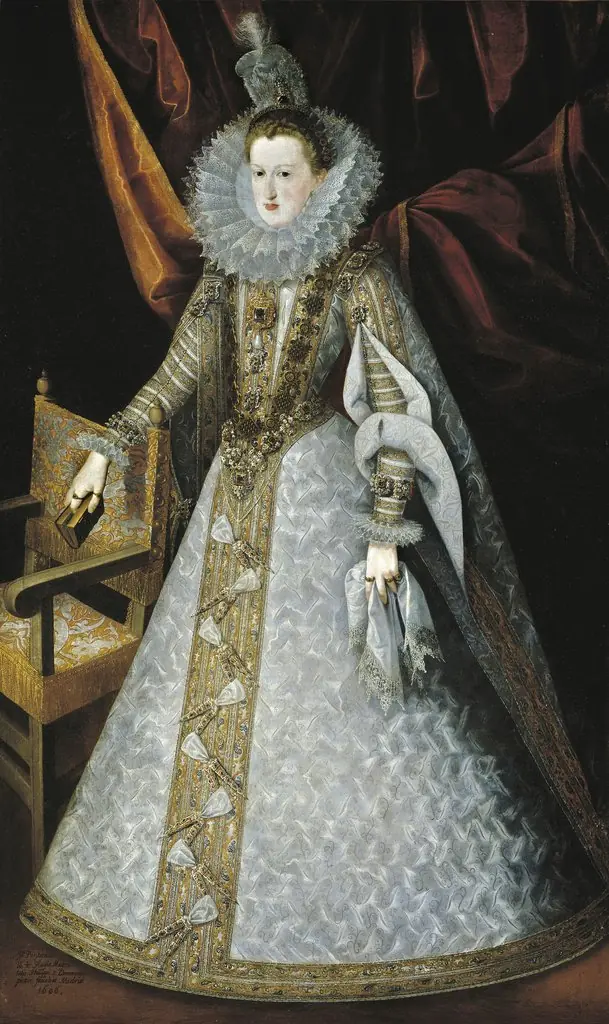 Margaret of Austria
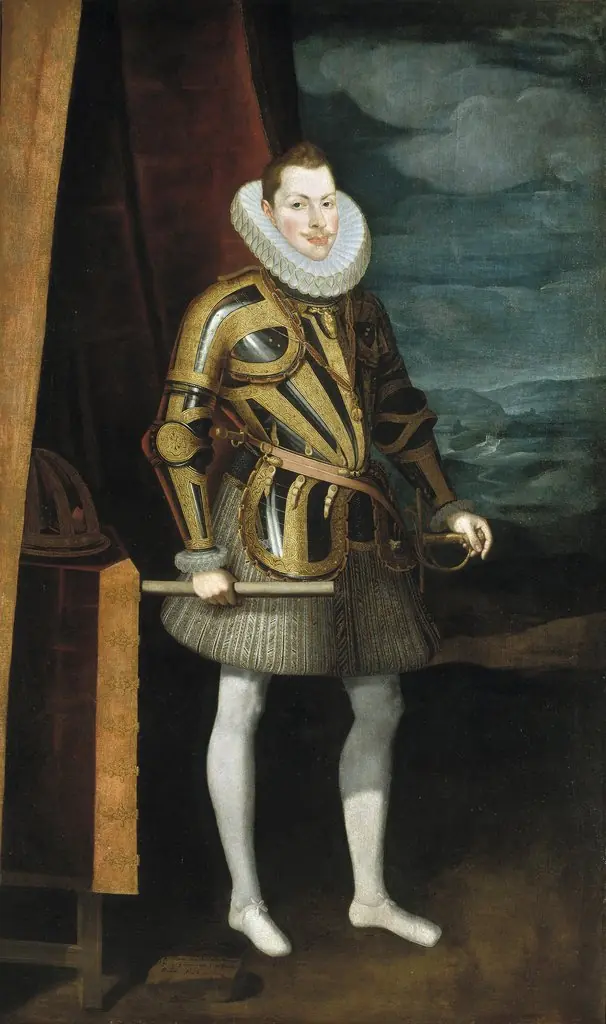 Philip III
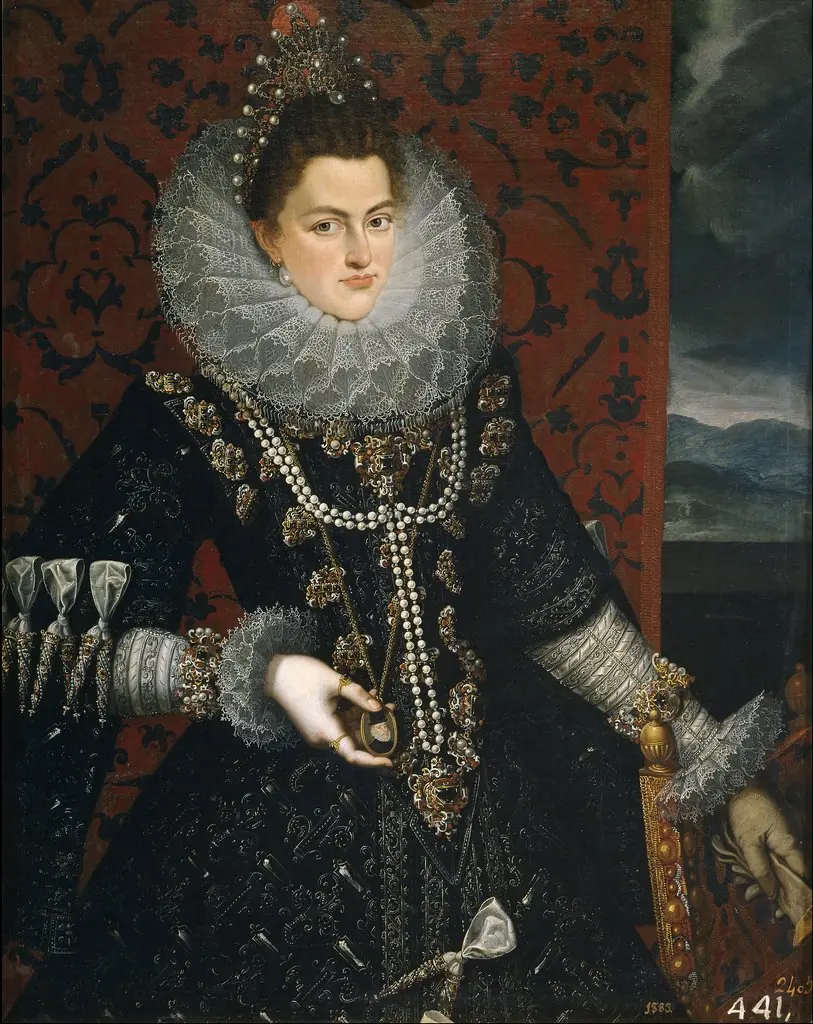 The Infanta Isabel Clara Eugenia
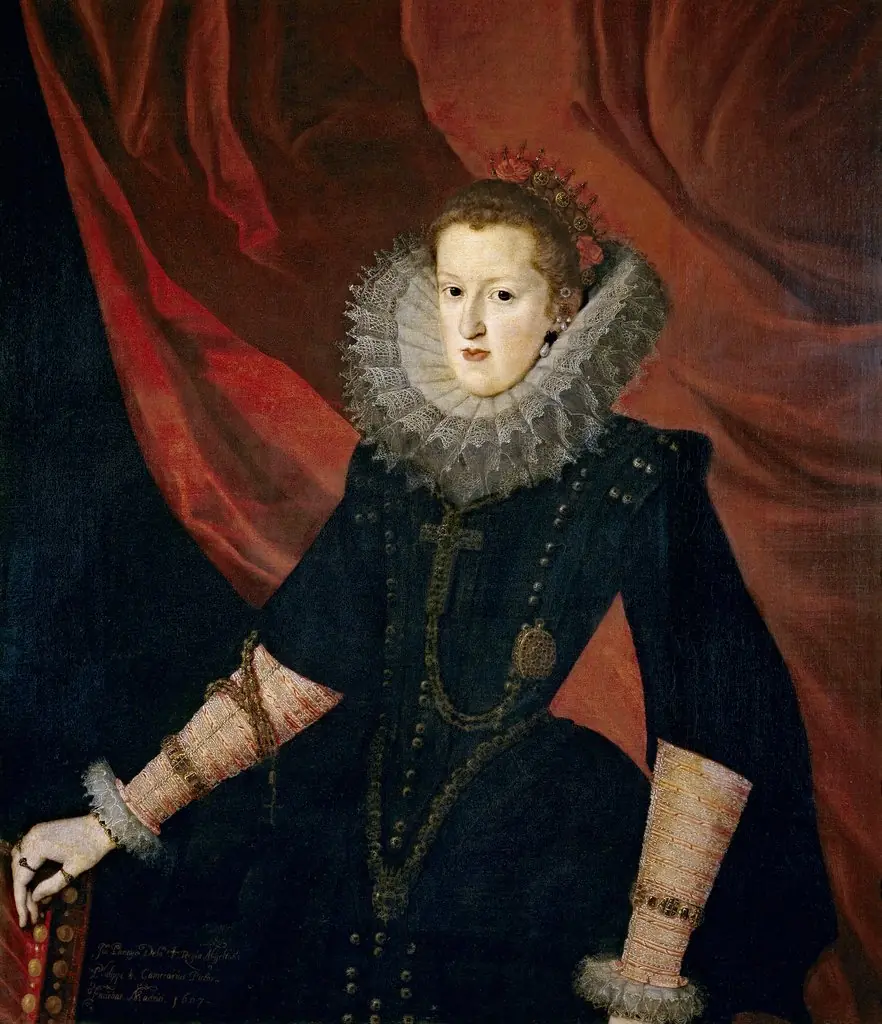 Margaret of Austria
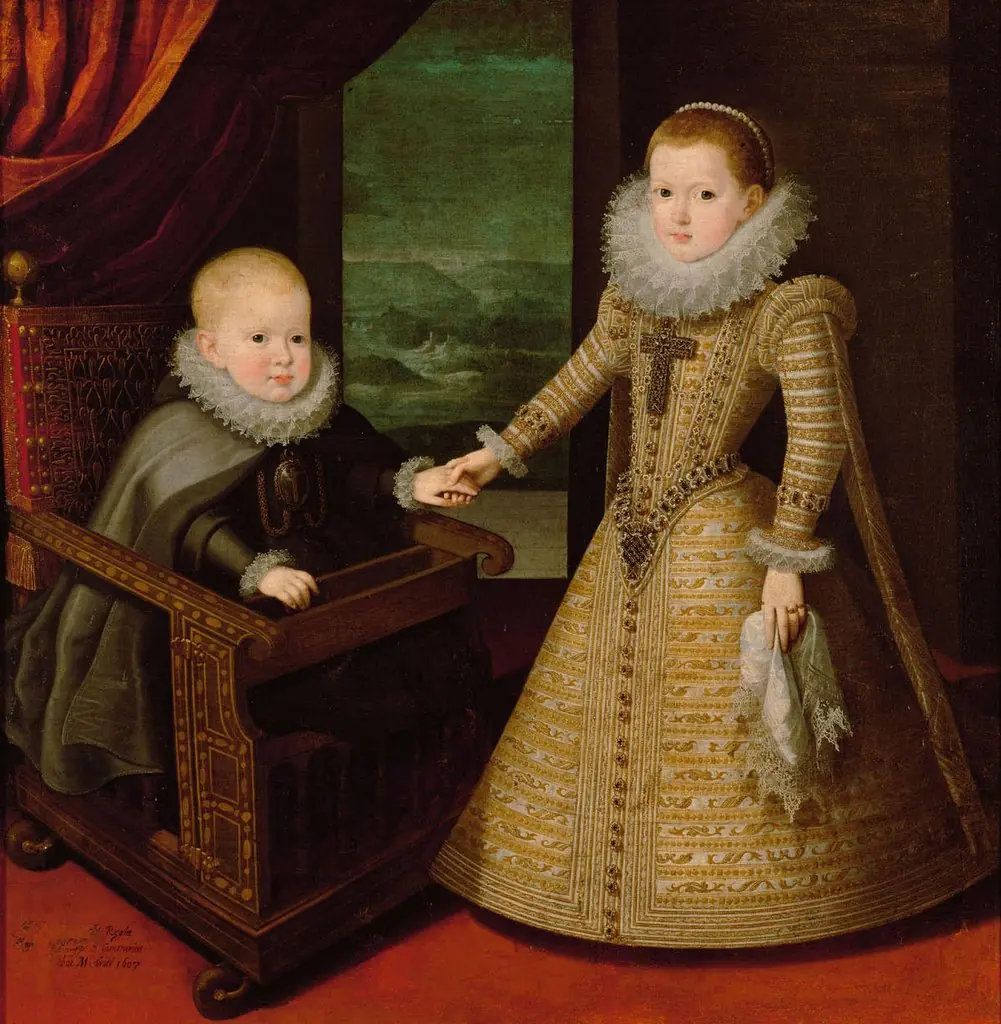 König Philipp IV. von Spanien (1605-1665) in geistlichem Gewand und seiner Schwester Infantin Anna (1601-1666), Bildnis in ganzer Figur
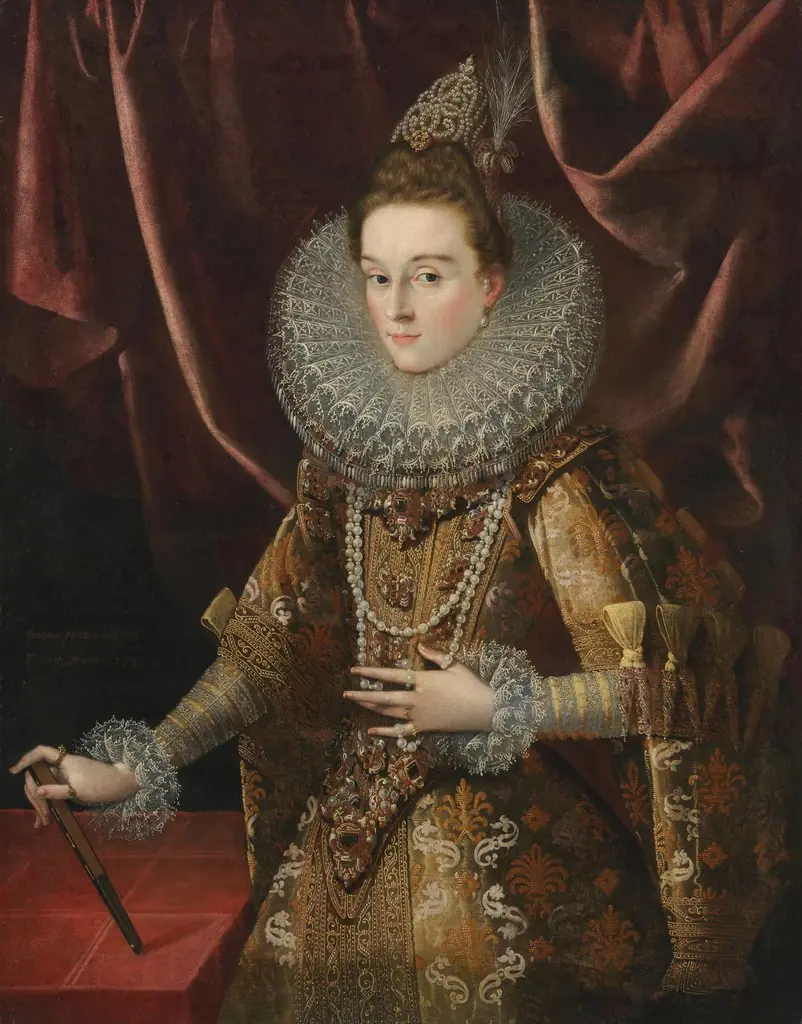 Isabella Clara Eugenia by Juan Pantoja de la Cruz
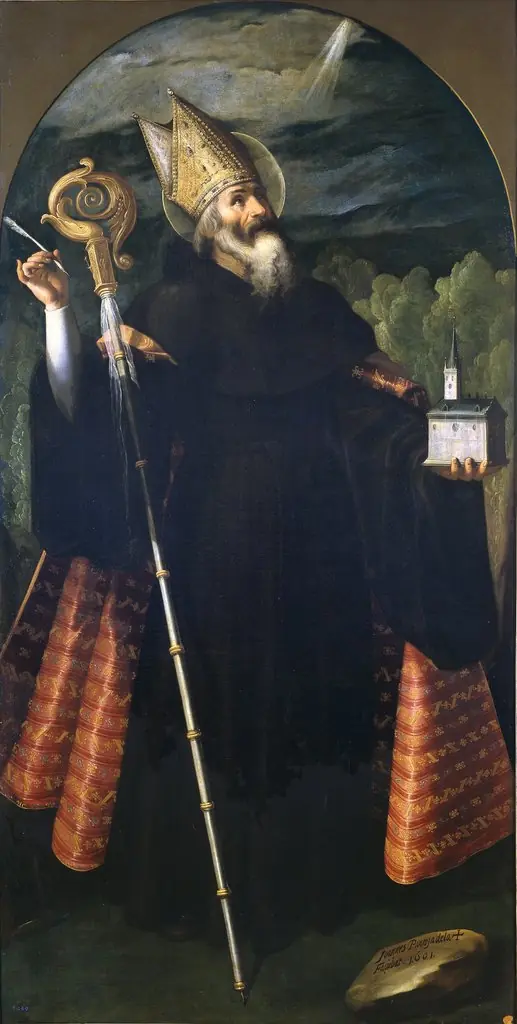 Saint Augustine