Artwork
Altarpiece of Saint Ursula and the Eleven Thousand Virgins
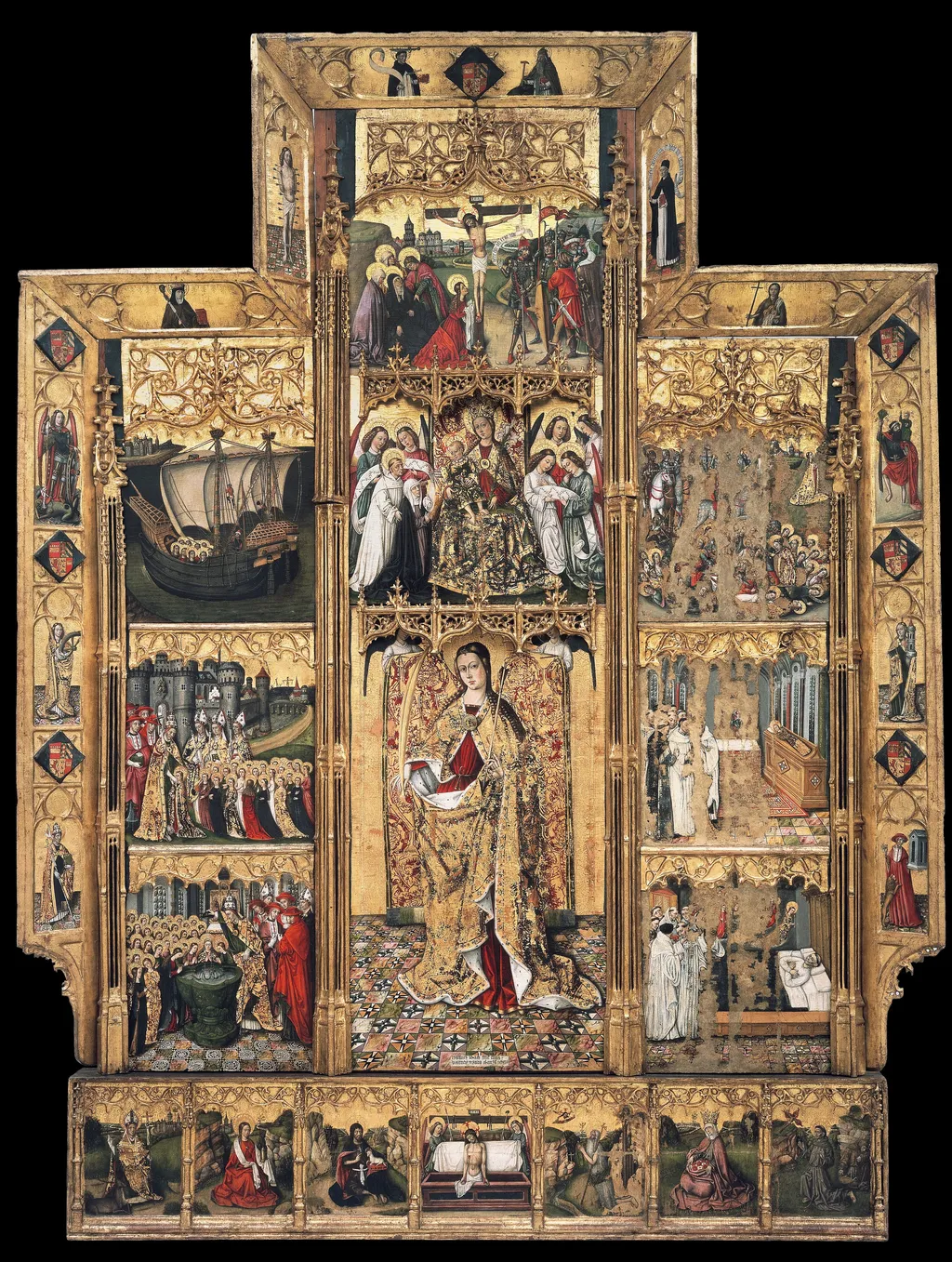
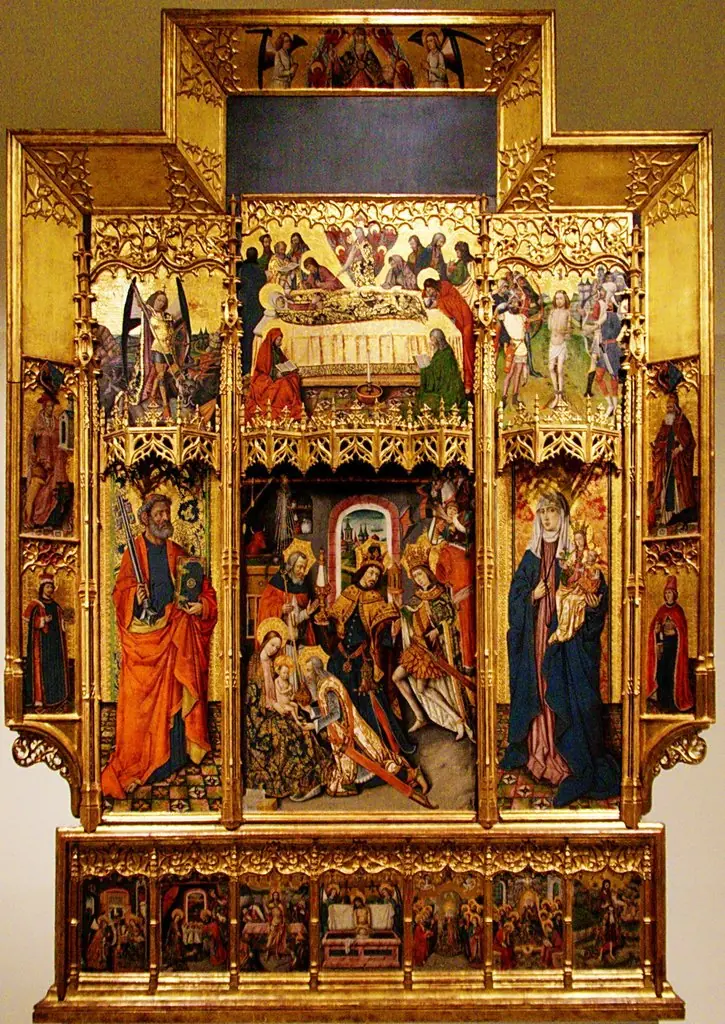
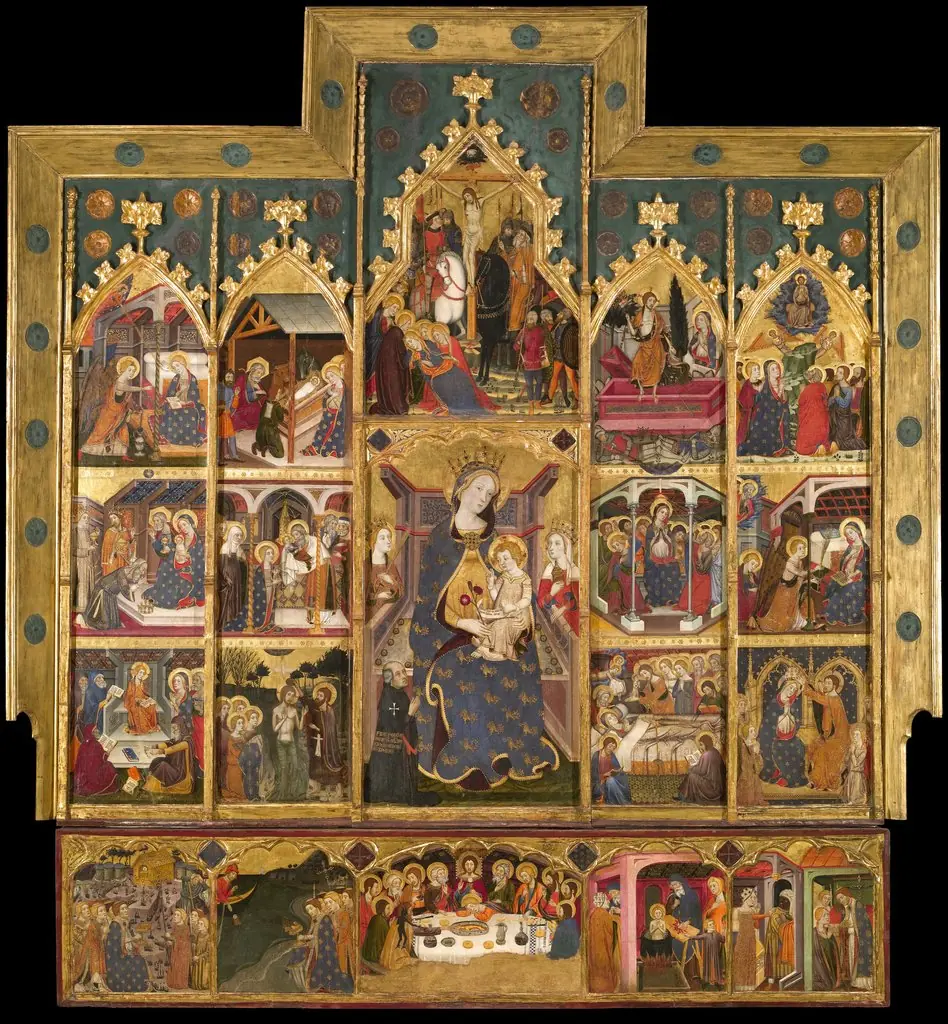
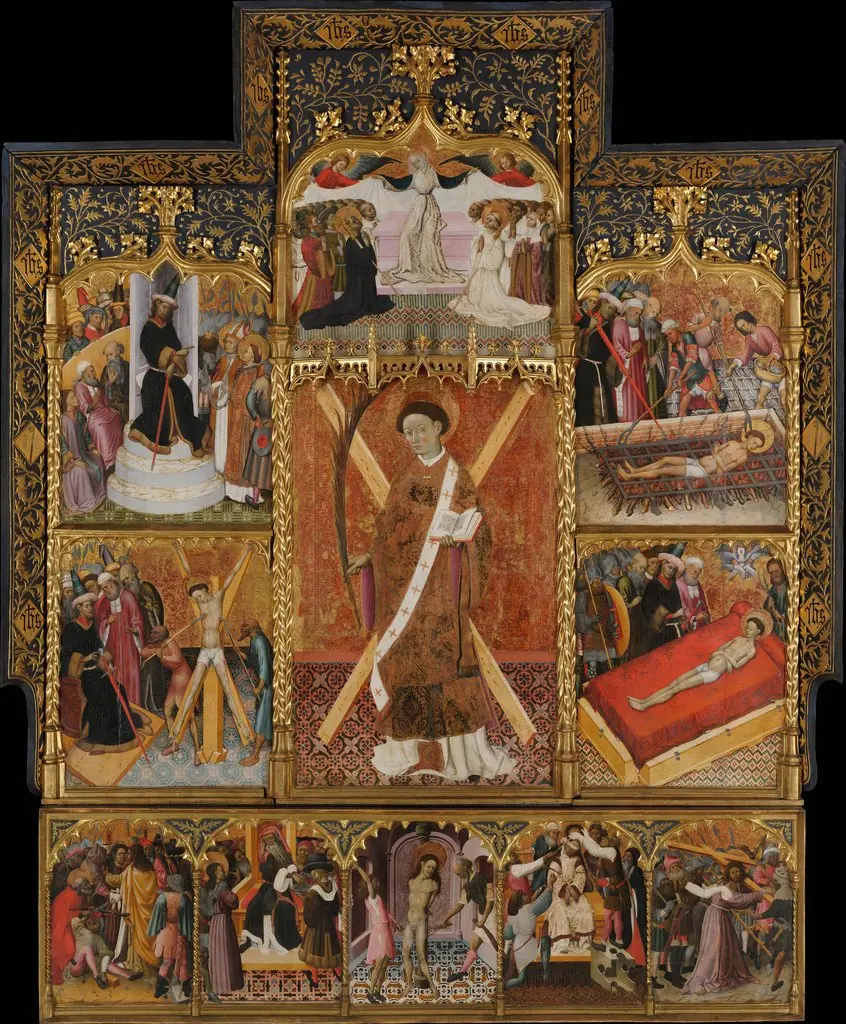
Altarpiece of Saint Ursula and the Eleven Thousand Virgins is a tempera painting by the Early Renaissance artist Juan Rexach. It dates from 1468 and is held in the collection of the Museu Nacional d'Art de Catalunya.
About this work
Overview
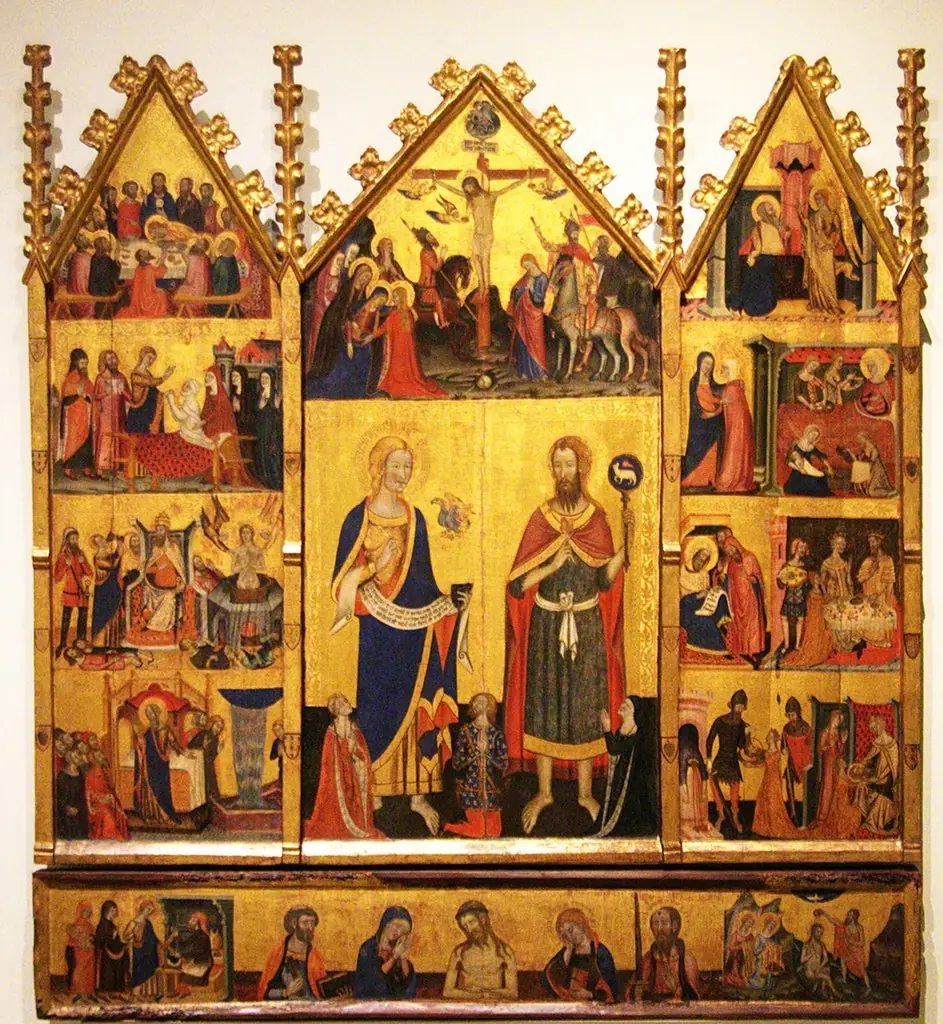
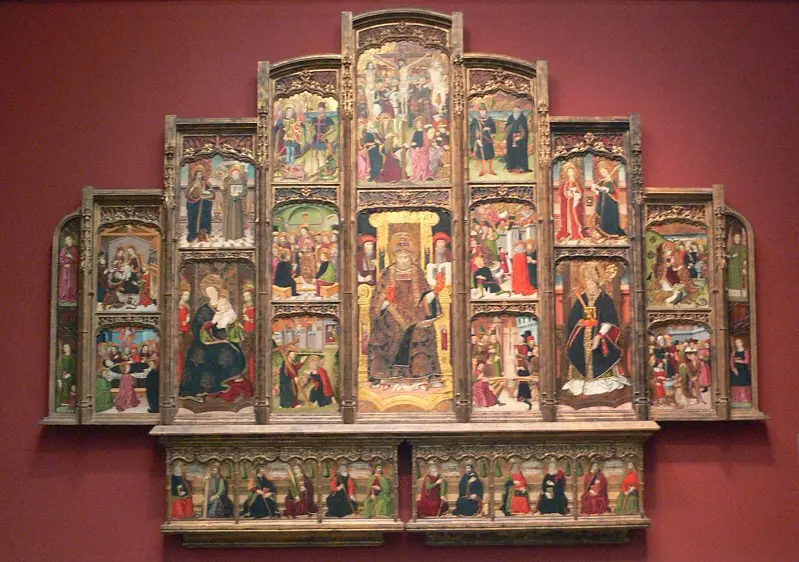
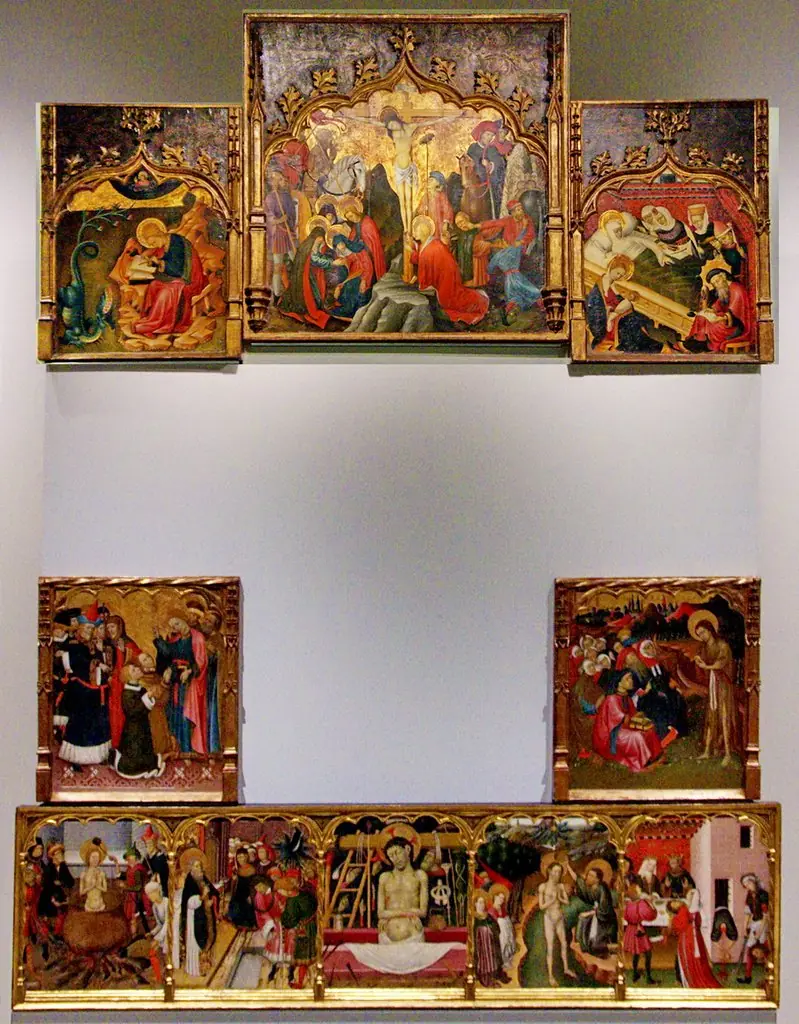
Created in 1468 by the Valencian painter Juan Rexach, this wooden altarpiece depicts the legend of Saint Ursula and her companions.
Created in 1468 by the Valencian painter Juan Rexach, this wooden altarpiece depicts the legend of Saint Ursula and her companions. Executed in the mid-Renaissance period, it reflects the devotional art traditions of eastern Spain. Rexach, known for large-scale religious panels, completed the work during a time when collaborative studio practices were common, complicating precise attribution. The piece remains in the collection of the Museu Nacional d'Art de Catalunya.
Subject & Meaning
The altarpiece illustrates the martyrdom legend of Saint Ursula, a British princess who, according to medieval hagiography, led eleven thousand virgin pilgrims to their deaths at the hands of Huns. Scenes from her journey and sacrifice are arranged around a central image of Ursula in solemn repose. The narrative structure serves both devotional and didactic purposes, reinforcing ideals of faith, purity, and sacrifice central to late medieval Christian piety.
Technique & Style
Rendered in tempera on wood, the altarpiece combines detailed panel painting with ornamental carving. Figures are arranged in hierarchical scale, with Ursula prominently centered. Gold leaf highlights halos and architectural elements, while muted browns and ochres ground the composition. The surface is richly textured, with fine brushwork in drapery and facial details, reflecting both Flemish influence and regional Valencian craftsmanship.
History & Provenance
The altarpiece was likely commissioned for a church or convent in Valencia, though its early location is undocumented. After the suppression of religious institutions in the 19th century, it entered public collections. Its survival through centuries of political and religious upheaval speaks to its enduring material and spiritual value. It was cataloged and preserved by the Museu Nacional d'Art de Catalunya in the early 20th century.
Context
Rexach operated within a network of artists in late 15th-century Valencia, continuing the legacy of his teacher Jacomart. His work emerged amid a flourishing of religious art in the Crown of Aragon, where altarpieces served as focal points for communal worship. The emphasis on narrative detail and gold decoration aligns with broader Iberian and Northern European trends, even as local stylistic preferences persisted.
Legacy
Though Rexach’s oeuvre is limited and often entangled with his workshop’s output, this altarpiece stands as one of the most complete surviving examples of his style. It contributes to the understanding of how religious narratives were visually sustained in pre-Reformation Spain. Its preservation allows scholars to study the transition from Gothic to Renaissance aesthetics in a regional context.
Artist & collection
Artist
Juan Rexach, (fl. 1431-1482) was a Spanish painter and miniaturist. His date of birth is not known. Most of his life is scarcely documented. He studied with Jacomart, in whose studio he worked, and after a period of…