Artwork
Untitled
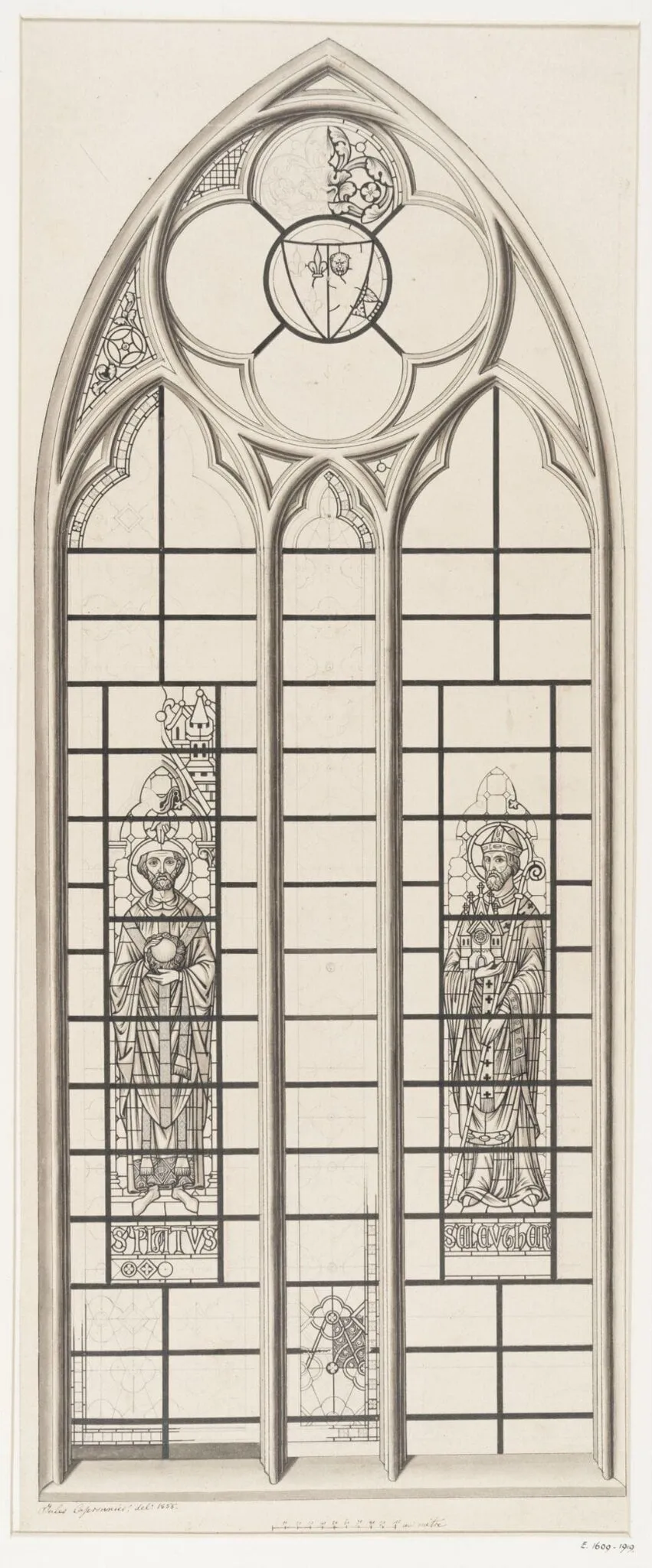
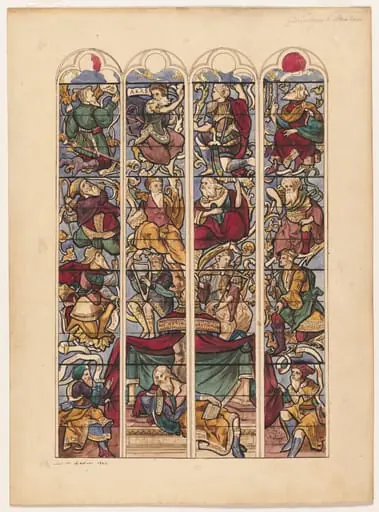
Untitled is a drawing by the Impressionist artist Jules-Adrien Capronnier. It dates from 1855 and is held in the collection of the Victoria and Albert Museum. This record drawing serves as a preparatory study for a stained glass window, executed in pen, pencil, and ink wash.
About this work
Overview
The work is not a finished piece but a functional record, essential to the production process of stained glass in the late 19th century.
This record drawing serves as a preparatory study for a stained glass window, executed in pen, pencil, and ink wash. It documents architectural details with meticulous attention, reflecting the artist’s role in translating design concepts into executable plans for ecclesiastical glazing. The work is not a finished piece but a functional record, essential to the production process of stained glass in the late 19th century.
Subject & Meaning
The drawing depicts a Gothic-style window composed of three vertical arched openings, crowned by a circular rose window. Ornamental stone tracery, finials, and carved motifs are rendered in fine detail, suggesting a liturgical or devotional context. The emphasis on structural precision implies the artist’s intent to preserve architectural authenticity rather than convey symbolic narrative.
Technique & Style
The artist employed fine pen lines, layered washes, and cross-hatching to model the texture and depth of carved stone. Shading is controlled and deliberate, distinguishing recessed areas from raised surfaces. The precision of line work reveals a methodical approach, characteristic of architectural drafting traditions in which clarity and reproducibility were paramount.
History & Provenance
Attributed to Jules-Adrien Capronnier, the drawing originates from his work as a designer for ecclesiastical stained glass in France during the late 1800s. It likely belonged to a studio archive, used to guide glasscutters and leadworkers. Its survival suggests it was retained as a reference or record, rather than discarded after execution.
Context
Capronnier operated within a revivalist movement that sought to revive medieval craftsmanship in religious art. His drawings reflect broader 19th-century efforts to reconcile historical accuracy with contemporary production methods. Such preparatory studies were standard in workshops producing windows for churches undergoing restoration or new construction.
Legacy
As a technical document, this drawing contributes to the understanding of how Gothic revival designs were translated into glass. It preserves the visual language of a craft now largely discontinued, offering insight into the labor-intensive processes behind stained glass production before industrial standardization.
Artist & collection
Artist
Jules-Adrien Capronnier left behind one known drawing from 1855, a careful record of shapes and lines.

 Untitled
 lasimaalauksia, Suomen kansallismuseon pääportaikko, ethnographia - historia - archaeologia
 Topographical drawing
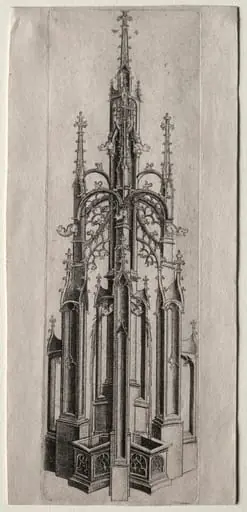 Design for a Gothic Fountain
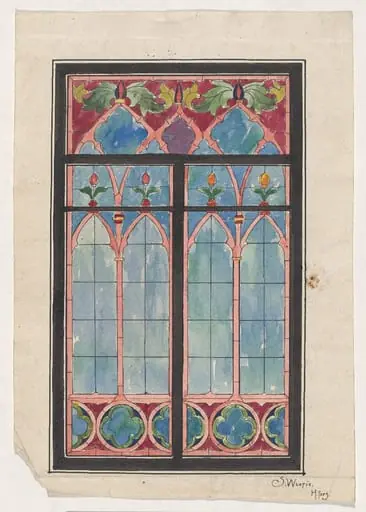 lasimaalausluonnos, kukka- ja kasviornamentiikkaa
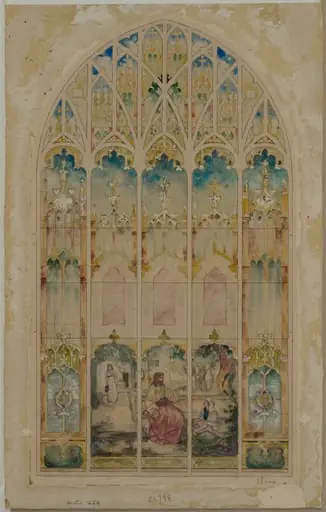 Chapel Window
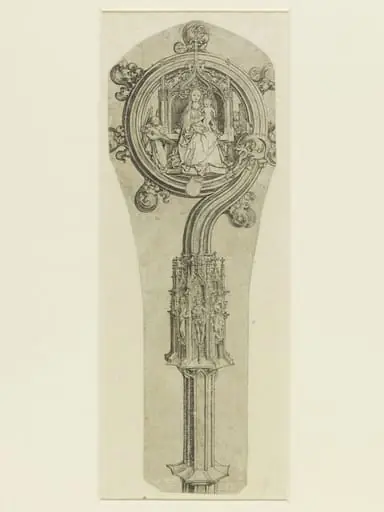 A Bishop's Crozier
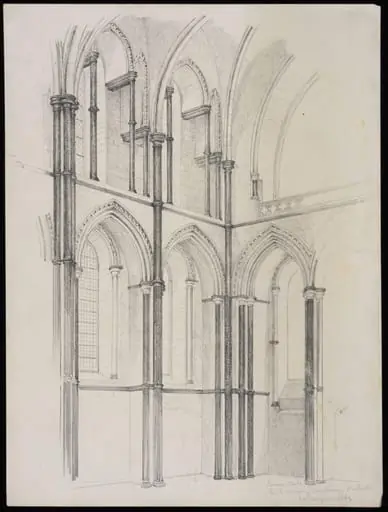 Interior of N.E. corner of the Sanctuary, Rochester Cathedral
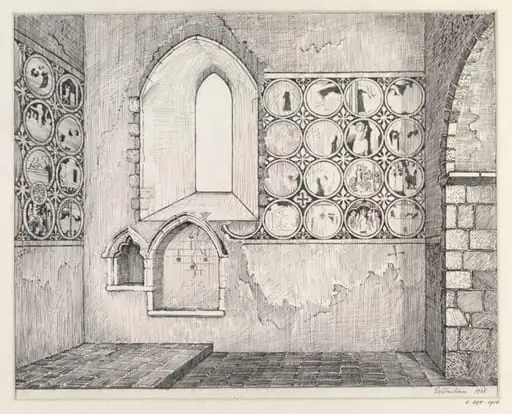 Untitled
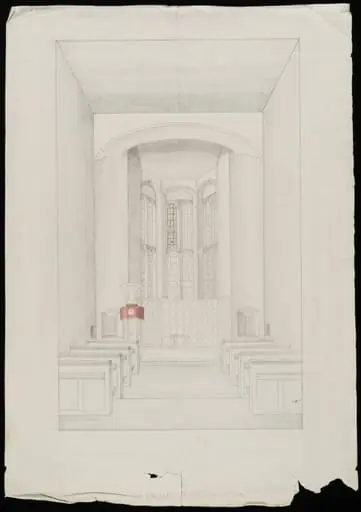 Interior of Chapel.
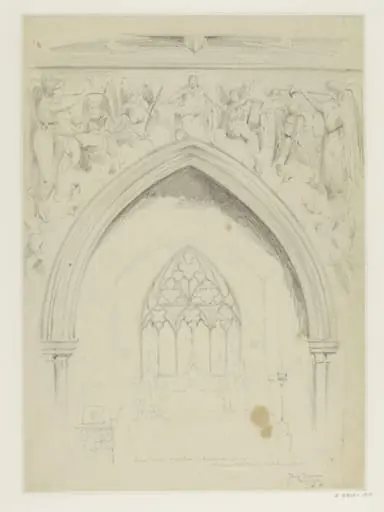 Untitled
 Study for Four Stained Glass Windows "Généalogie d'Abraham"