Artwork
The Good Samaritan
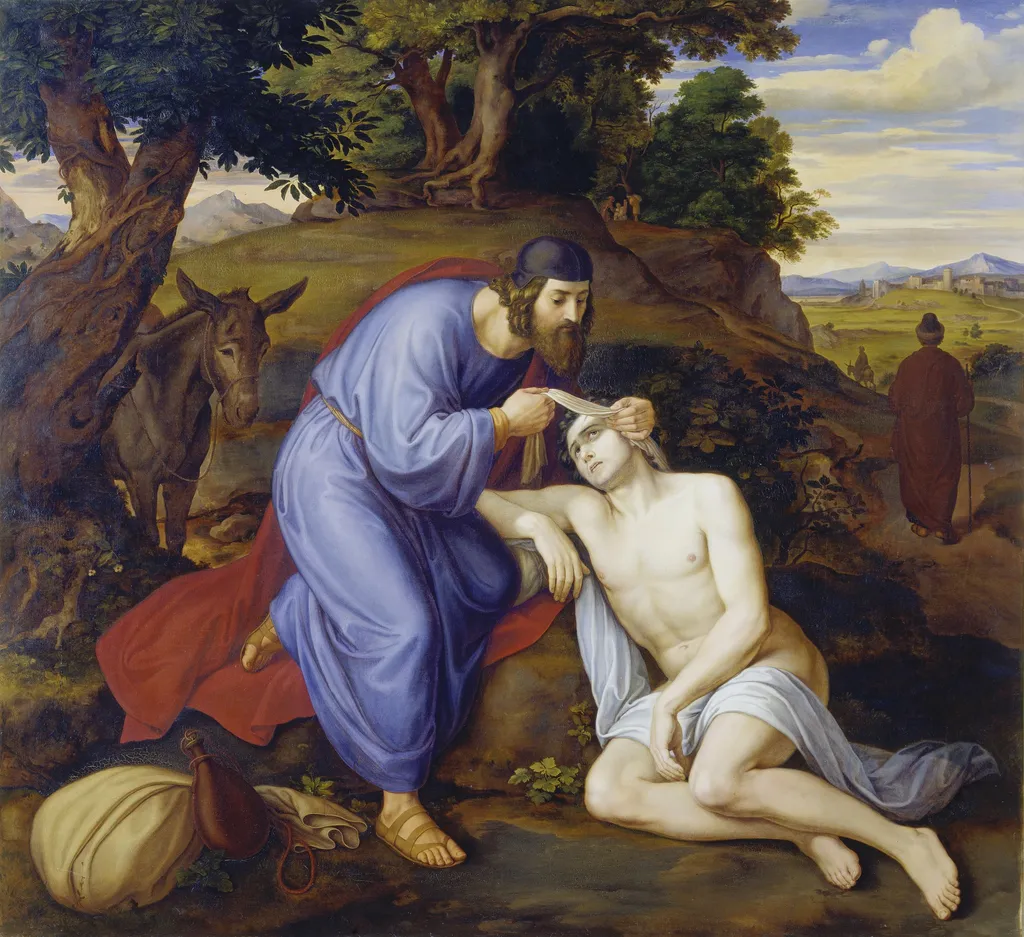
The Good Samaritan is an oil painting by the German Romanticist artist Julius Schnorr von Carolsfeld. It dates from 1833 and is held in the collection of the Städel Museum.
About this work
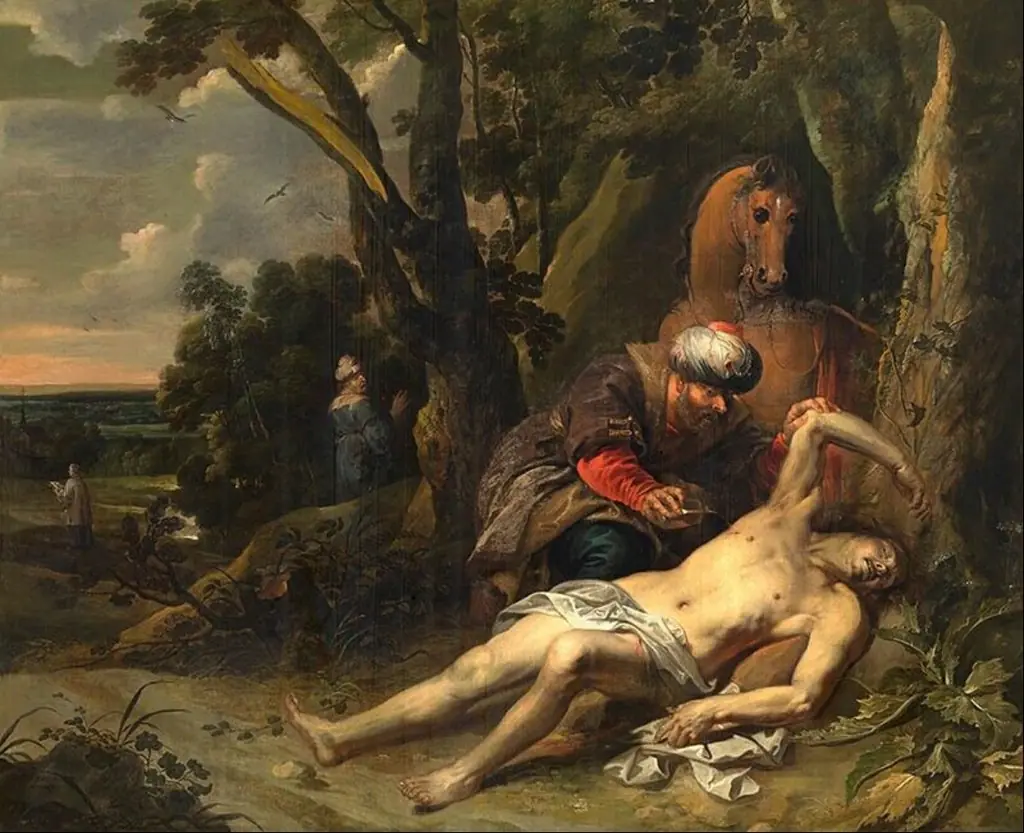
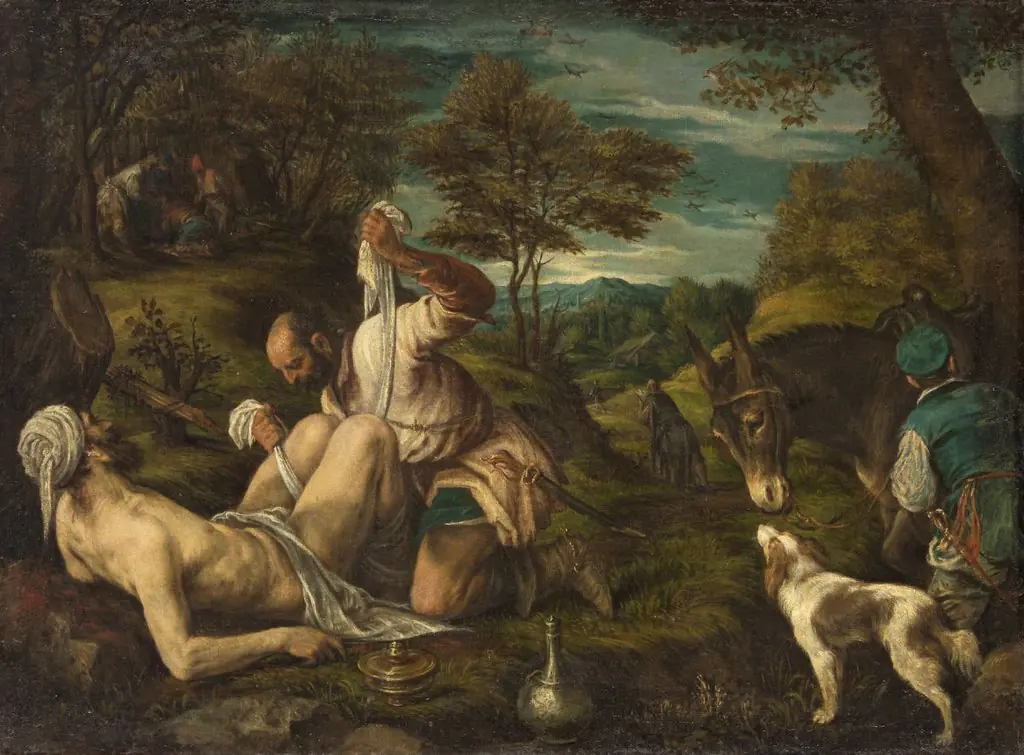
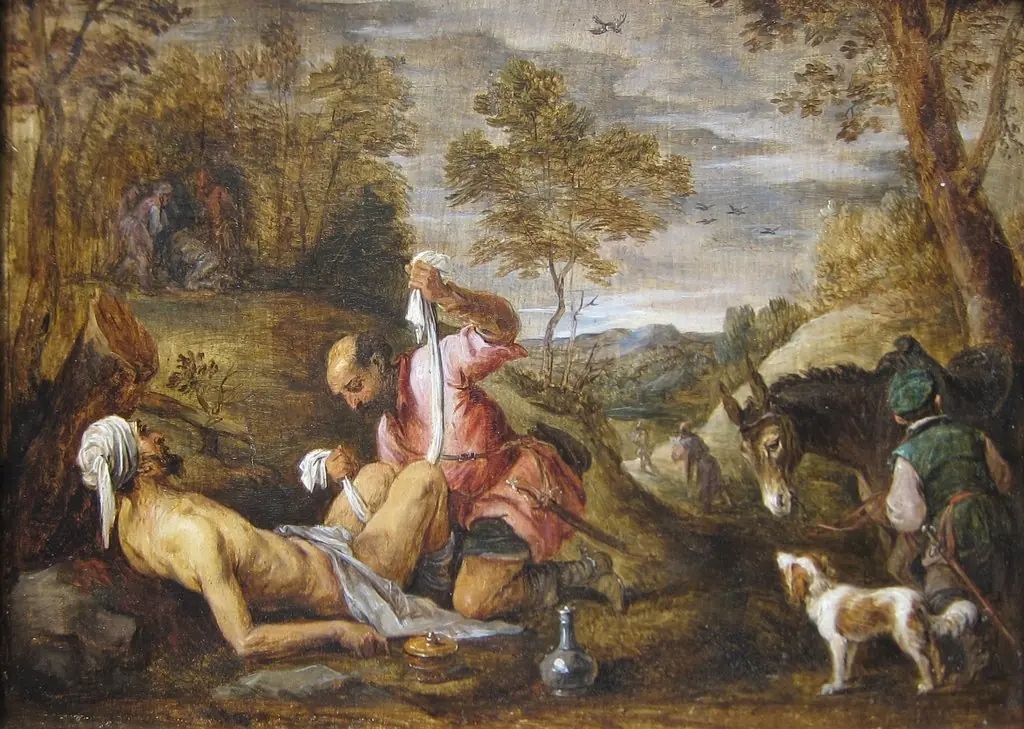
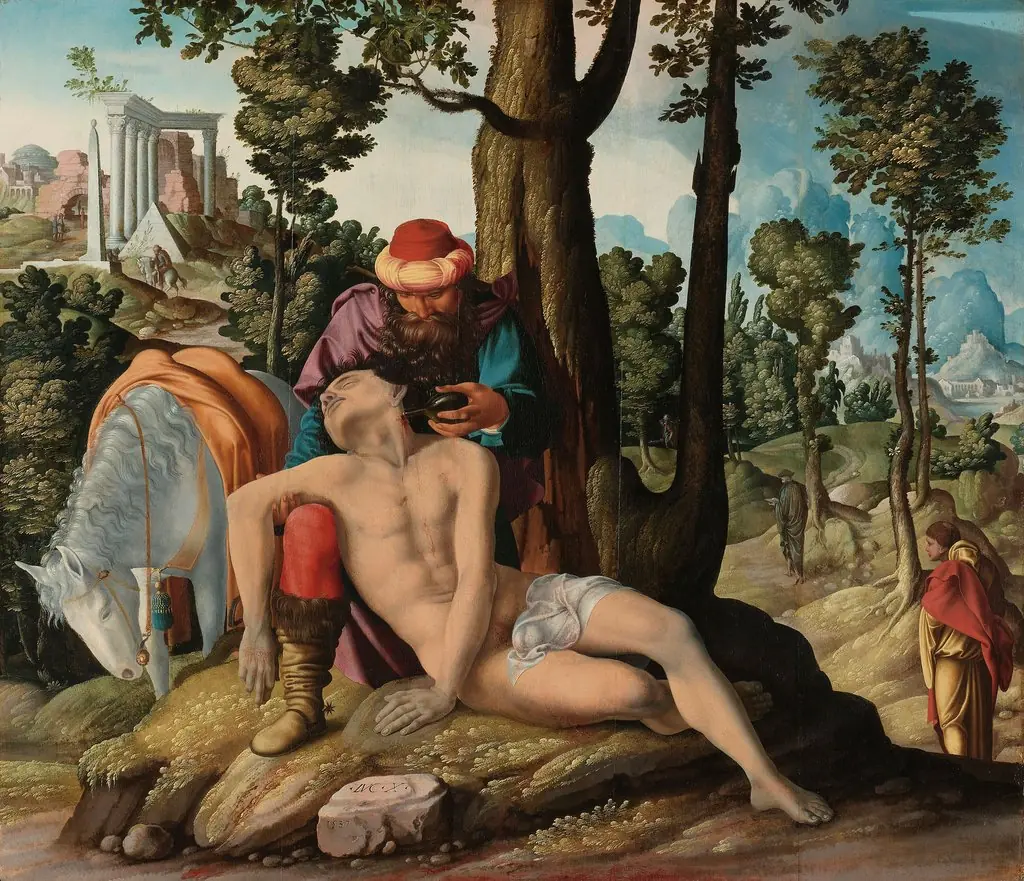
The injured man sits on the ground, wrapped in a white cloth, while the other man kneels beside him, holding a cloth to his head.
This painting depicts a scene of a man tending to another man's wounds. The injured man sits on the ground, wrapped in a white cloth, while the other man kneels beside him, holding a cloth to his head. In the background, a donkey stands near a tree, and a distant landscape unfolds with rolling hills and mountains.
The artist's use of color and light creates a sense of warmth and intimacy in the scene. The injured man's face is pale, while the other man's robes are a deep blue, contrasting with the earthy tones of the landscape.
The painting invites the viewer to reflect on the story of the Good Samaritan, and the artist's skillful use of color and composition brings this biblical parable to life. For more on the artist behind this work, explore Julius Schnorr von Carolsfeld (German, 1794–1872).
Overview
Julius Schnorr von Carolsfeld’s oil painting *The Good Samaritan* was completed in 1833. Executed within the German Romantic tradition, the work illustrates the biblical parable of the compassionate Samaritan. It is part of the collection of the Städel Museum in Frankfurt, where it remains on public display.
Subject & Meaning
The canvas captures the moment a Samaritan tends to an injured traveler. The wounded figure lies on the ground, swathed in a white shroud, while the Samaritan kneels, offering a cloth to the man's head. A donkey and a distant landscape frame the scene, emphasizing the act of mercy amid a desolate road.
Technique & Style
Schnorr employs a warm palette, contrasting the pallor of the wounded man with the deep blue of the Samaritan’s robes. Soft, diffused lighting creates an intimate atmosphere, while the earthy tones of the surrounding hills anchor the composition. The brushwork balances detailed figuration with a slightly idealised Romantic ambience.
History & Provenance
After its exhibition in the early 1830s, the painting entered the holdings of the Städel Museum, where it has been conserved as part of the institution’s 19th‑century German collection. Documentation traces its acquisition to the museum’s early efforts to assemble works by leading Romantic artists.
Context
Schnorr von Carolsfeld was a prominent member of the Nazarene circle, a group of German artists who sought to revive spiritual content in painting. *The Good Samaritan* reflects both the Nazarene emphasis on biblical narratives and the broader Romantic fascination with emotion, nature, and moral exempla.
Own this work as a print
Artist & collection
Artist
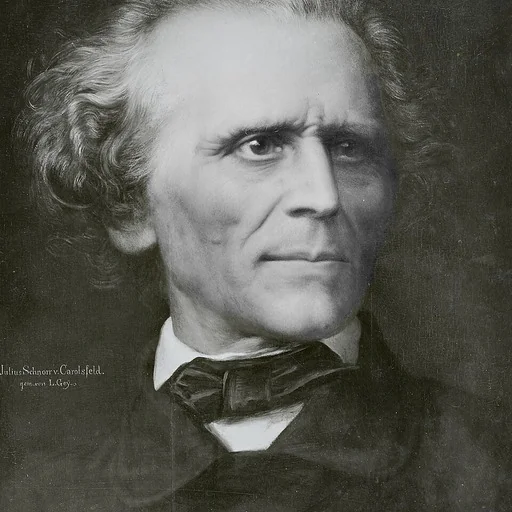
Julius Schnorr von Carolsfeld (26 March 1794 – 24 May 1872) (German pronunciation: ) was a German painter, chiefly of Biblical subjects.