Artwork
Ruth and Boas
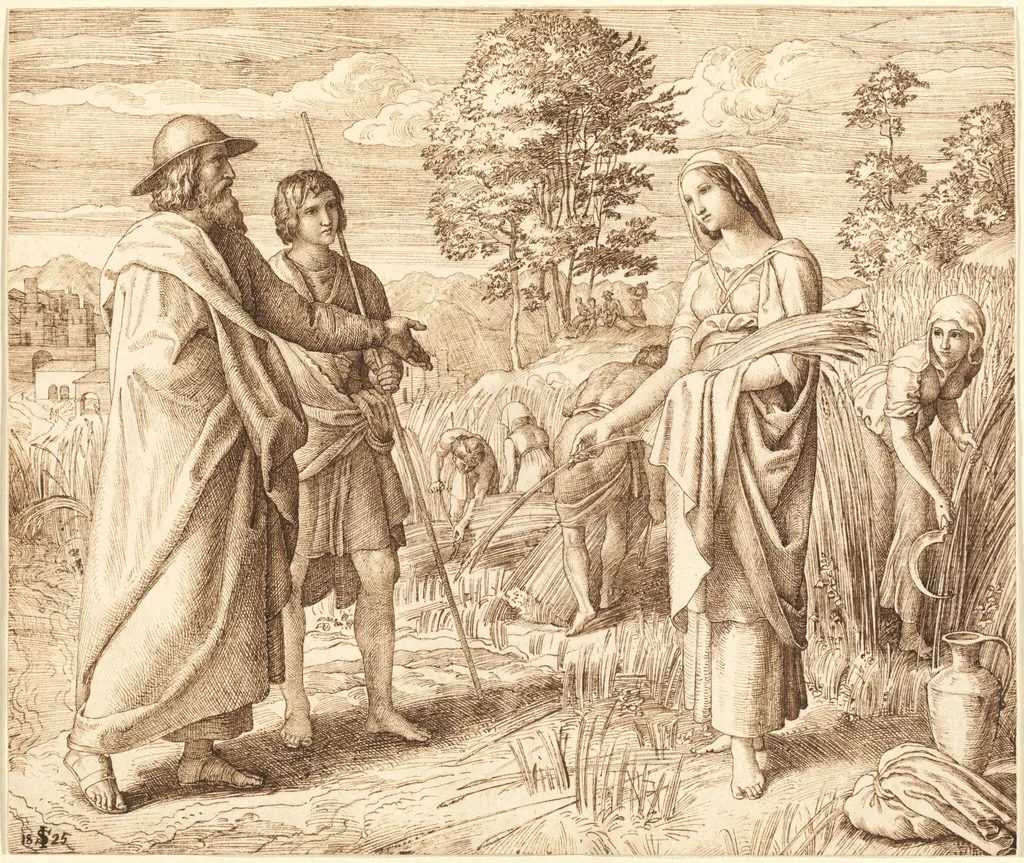
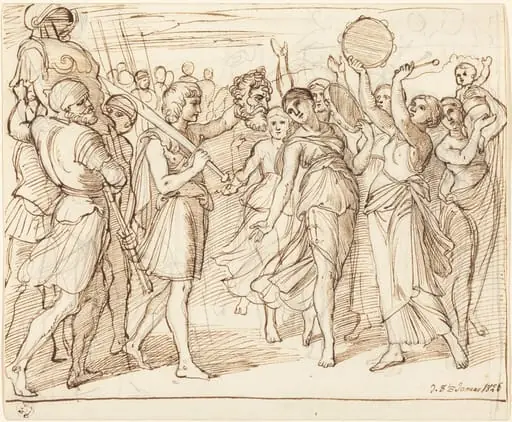
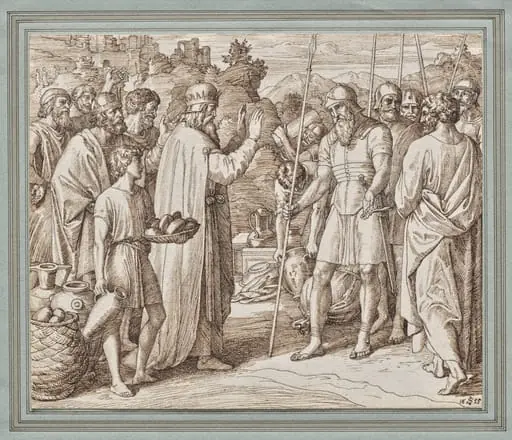
Ruth and Boas is an ink drawing by the Romanticist artist Julius Schnorr von Carolsfeld. It dates from 1825 and is held in the collection of the National Gallery of Art.
About this work
To learn more about the artistic techniques used in this drawing, look up the technique of cross-hatching.
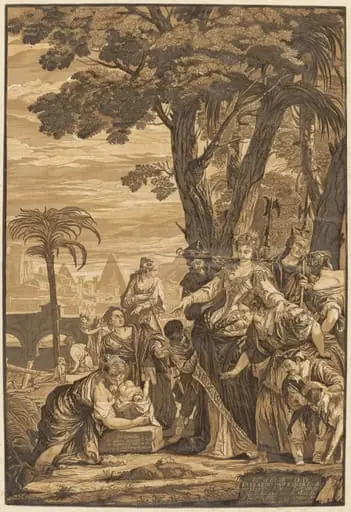
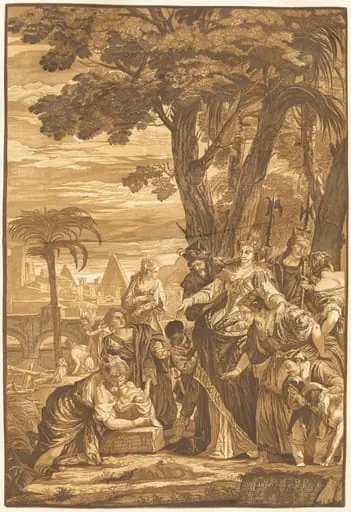
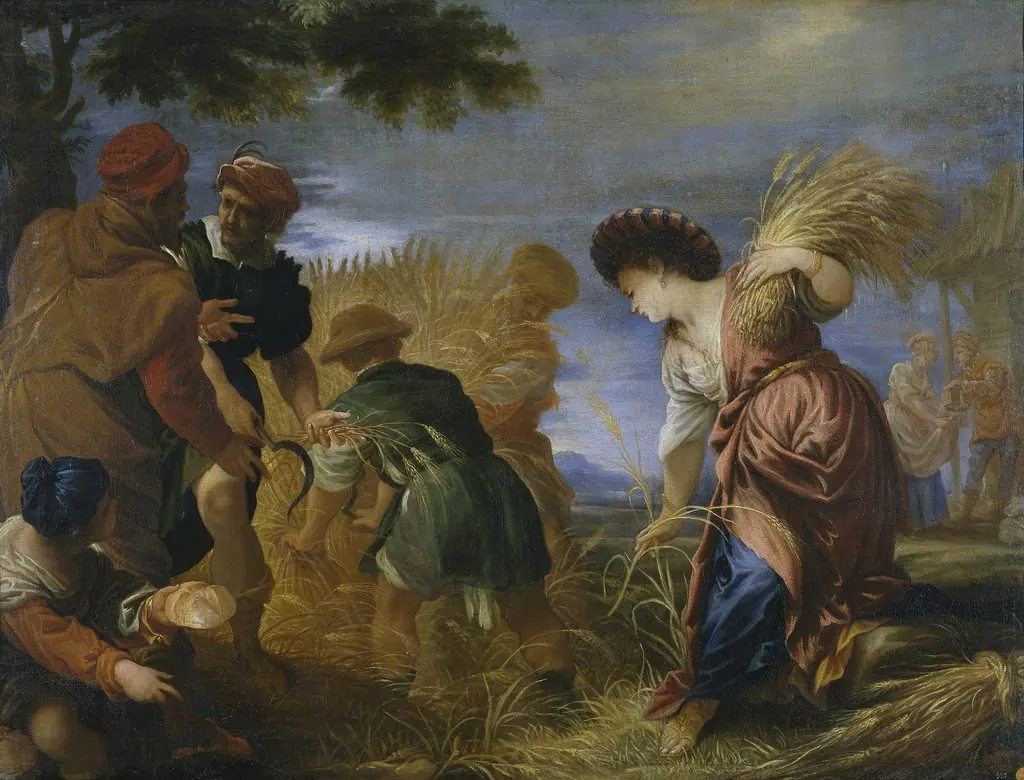
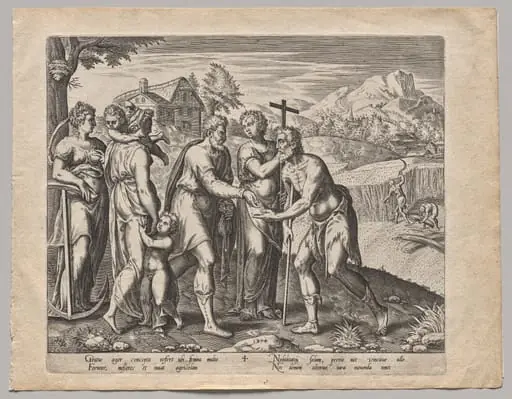
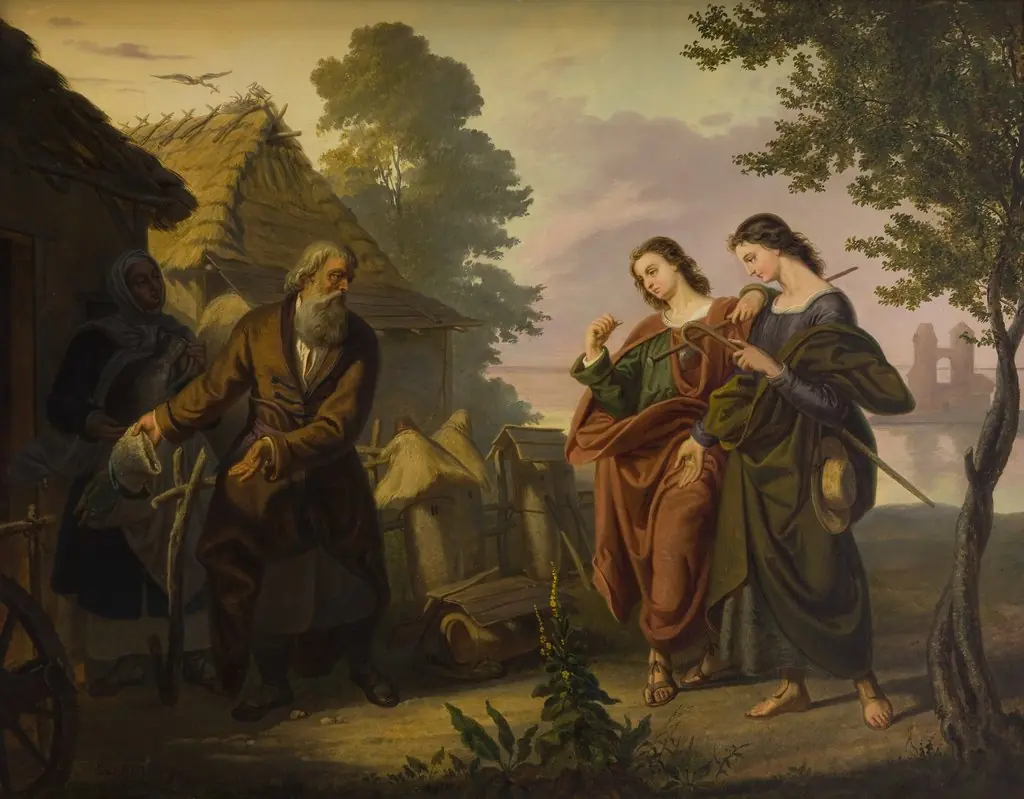
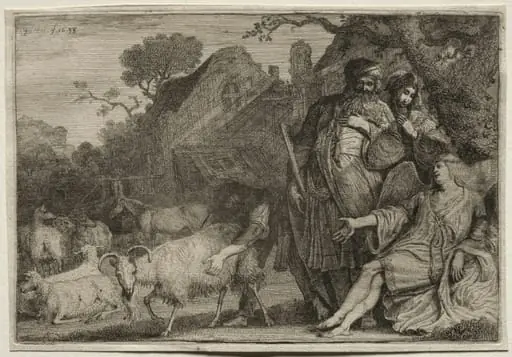
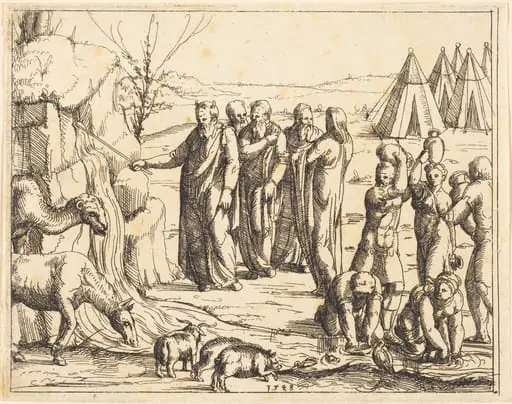
In this 1825 pen and brown ink drawing, Ruth and Boas are depicted in a rural landscape. Ruth, wearing a headscarf and a long dress, stands in a field, holding a bundle of wheat. Boas, dressed in a tunic and a hat, stands opposite her, holding a staff. In the background, other figures work in the field, and trees and hills stretch out into the distance.
The artist has used cross-hatching to create a sense of texture and depth in the drawing, with the lines varying in thickness and direction to suggest the roughness of the wheat and the smoothness of the figures' clothing.
To learn more about the artistic techniques used in this drawing, look up the technique of cross-hatching.
Overview
Created in 1825, this drawing by Julius Schnorr von Carolsfeld portrays a moment from the biblical story of Ruth and Boas. Executed with pen and brown ink over a graphite underdrawing on laid paper, the composition places the two figures in an open, agrarian setting, surrounded by distant hills and a working field.
Subject & Meaning
The work illustrates the encounter between Ruth, a Moabite widow, and Boas, a landowner, a pivotal episode that underscores themes of loyalty, providence, and social integration within the Hebrew narrative. By situating the characters amid a cultivated landscape, the artist emphasizes the agricultural context of their covenant and the broader moral implications of generosity and kinship.
Technique & Style
Schnorr von Carolsfeld employs a meticulous cross‑hatching technique, varying line density and direction to render the texture of wheat stalks, the softness of clothing, and the atmospheric depth of the background. The drawing reflects the Nazarene movement’s revival of early Renaissance clarity, using restrained tonal contrasts and a linear emphasis that recalls devotional frescoes.
History & Provenance
The piece originates from the artist’s early period, before his later fame for the extensive Picture Bible and cathedral stained‑glass commissions. It remains a representative example of his formative engagement with biblical subjects, produced during his involvement with the German Romantic‑Nazarene circle that sought to restore spiritual sincerity to art.
Context
In the 1820s, German artists associated with the Nazarene group looked to medieval and Renaissance models for inspiration, favoring religious narratives rendered with a disciplined draftsmanship. This drawing aligns with that ethos, presenting a scriptural scene with a focus on moral clarity rather than dramatic spectacle, typical of the movement’s aesthetic objectives.
Own this work as a print
Artist & collection
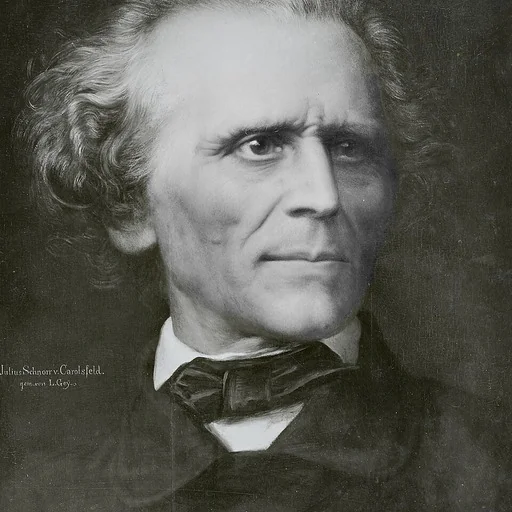
Artist
Julius Schnorr von Carolsfeld (26 March 1794 – 24 May 1872) (German pronunciation: ) was a German painter, chiefly of Biblical subjects.