Artwork
Johann Evangelist Scheffer von Leonhardshoff
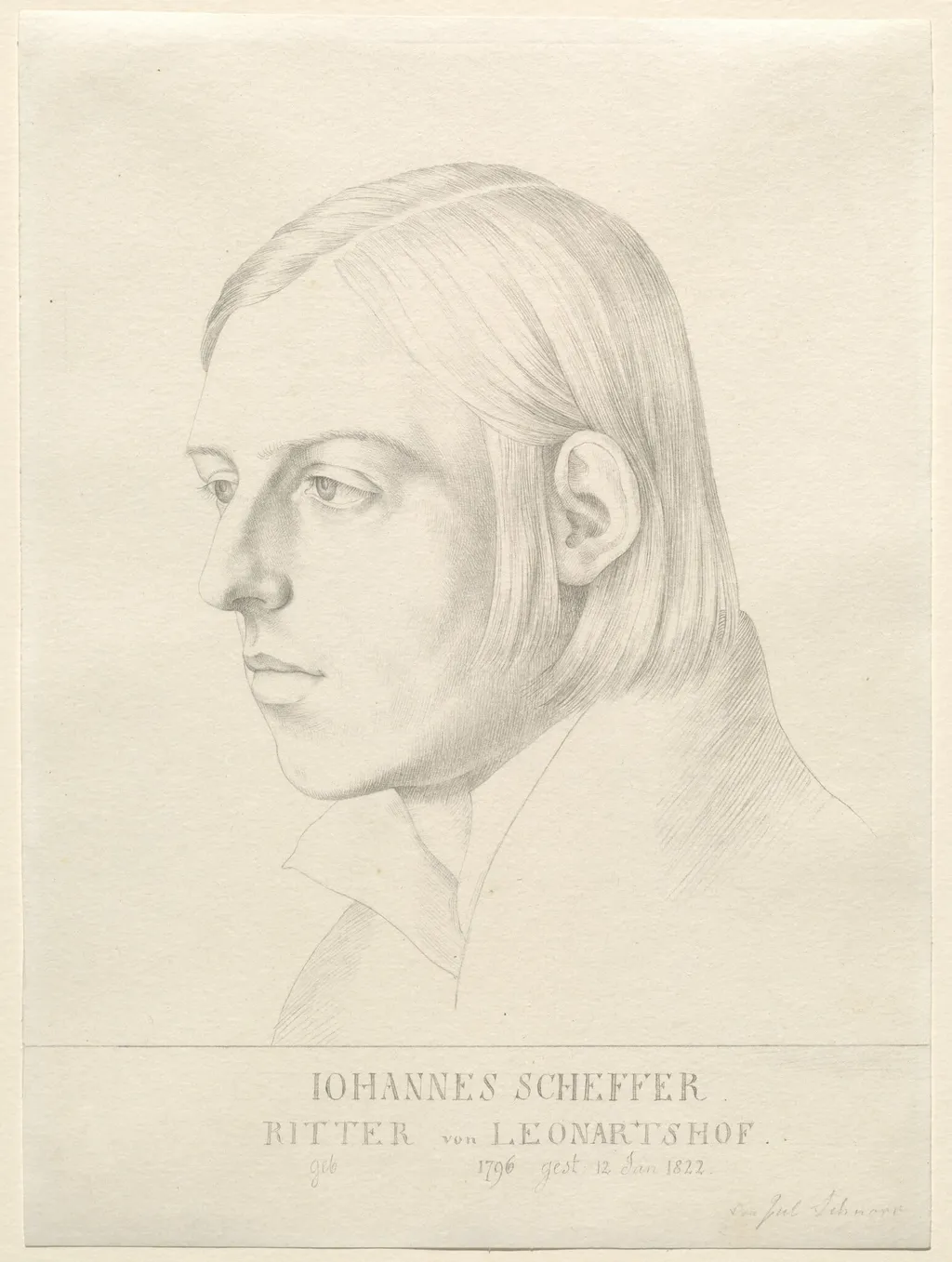
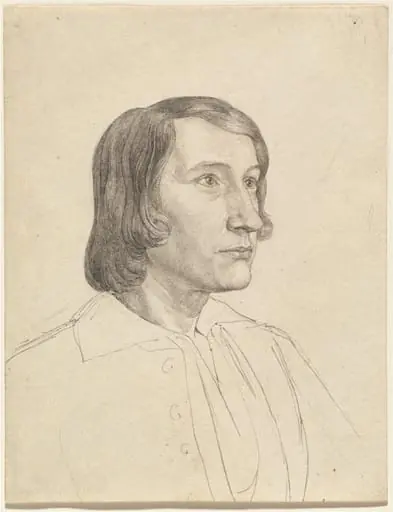
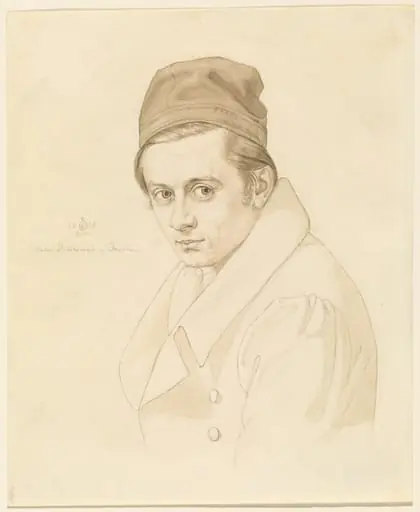
Johann Evangelist Scheffer von Leonhardshoff is a graphite drawing by the Romanticist artist Julius Schnorr von Carolsfeld. It dates from 1822 and is held in the collection of the National Gallery of Art.
About this work
This is a black-and-white drawing of a man’s head and shoulders turned slightly to the side.
This is a black-and-white drawing of a man’s head and shoulders turned slightly to the side. His hair is pulled back neatly, and his face has a calm, serious look. The lines are smooth and careful, focusing on the shape of his nose, jaw, and ears.
The name below reads *Johannes Scheffer Ritter von Leonhardshof*, with dates 1796–1822. This was drawn right after his death, likely as a memorial sketch.
If you like this style, check out Romanticism next.
Overview
This graphite drawing, executed on wove paper around 1822, presents a portrait of Johann Evangelist Scheffer von Leonhardshoff. The figure is shown from the shoulders up, turned slightly, with neatly pulled‑back hair and a composed, serious expression. The work is rendered in fine, controlled lines that emphasize the contours of the nose, jaw and ears.
Subject & Meaning
The portrait serves as a posthumous tribute to Scheffer, a young man who died in 1822 at the age of twenty-six. The calm demeanor and restrained pose suggest a contemplative remembrance, typical of memorial sketches intended to honor the deceased’s character rather than dramatize his life.
Technique & Style
Created with graphite on smooth wove paper, the drawing relies on delicate shading and precise line work. The artist’s hand is evident in the smooth, measured strokes that define facial features, reflecting the early‑19th‑century academic approach to portraiture and the influence of the Nazarene movement’s reverence for Renaissance clarity.
History & Provenance
The drawing was produced by Julius Schnorr von Carolsfeld, a German painter associated with the Nazarene circle, shortly after Scheffer’s death. Schnorr von Carolsfeld later became known for his extensive biblical illustrations and stained‑glass designs for cathedrals, but this early work remains a personal, commemorative piece.
Context
At the time of its creation, the Nazarene movement sought to revive the spiritual and formal qualities of Renaissance art within a contemporary religious framework. While this portrait is not overtly religious, its restrained aesthetic aligns with the movement’s broader aim to restore dignity and moral seriousness to visual representation.
Artist & collection
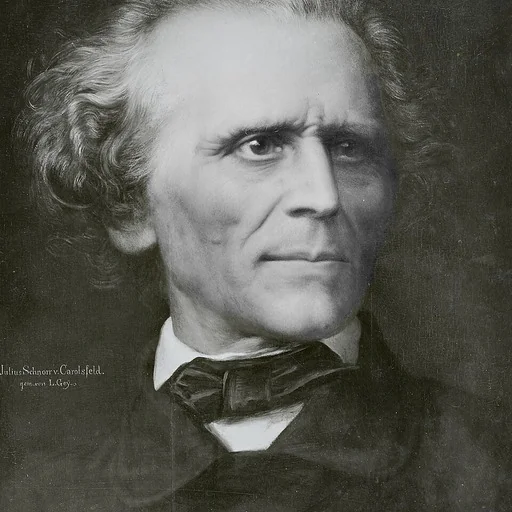
Artist
Julius Schnorr von Carolsfeld (26 March 1794 – 24 May 1872) (German pronunciation: ) was a German painter, chiefly of Biblical subjects.