Artwork
Penitent Saint Jerome
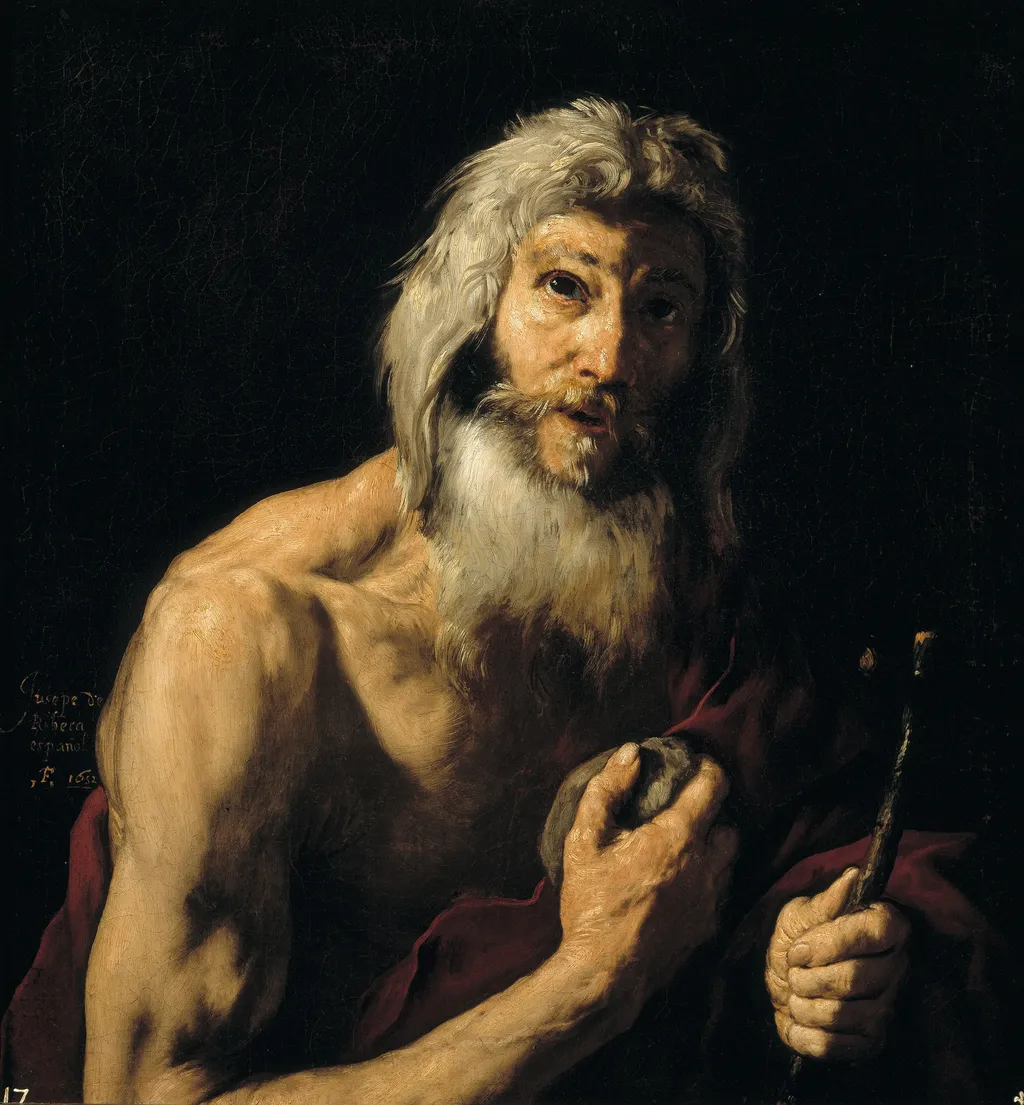
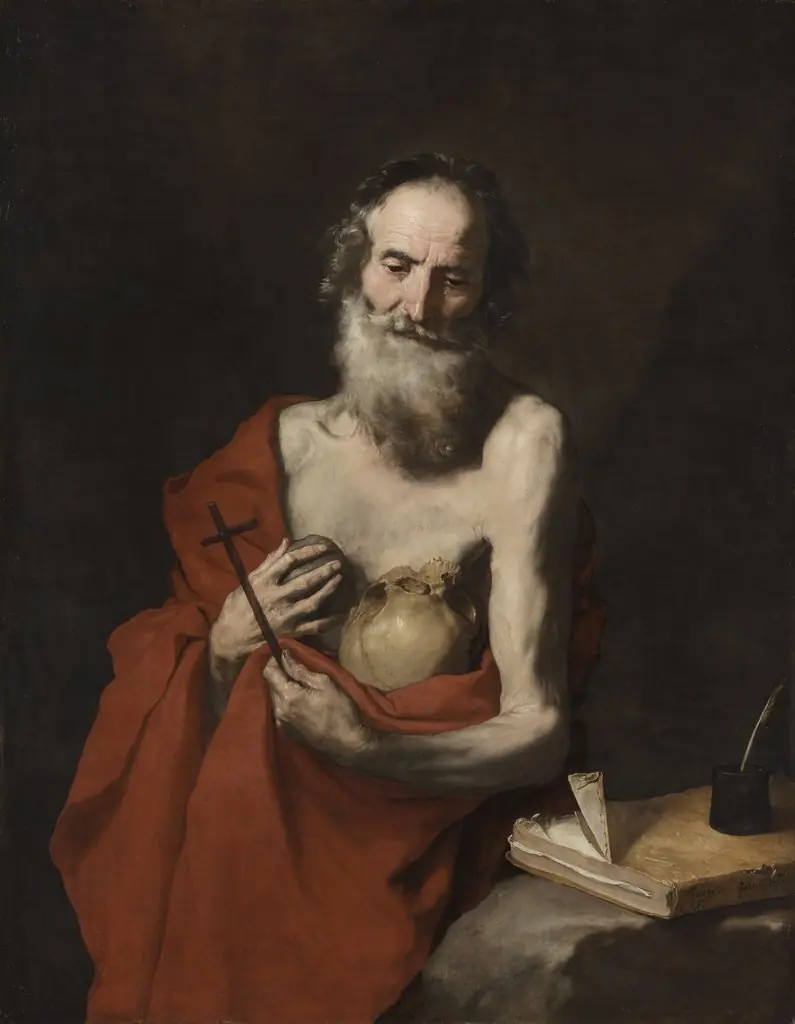
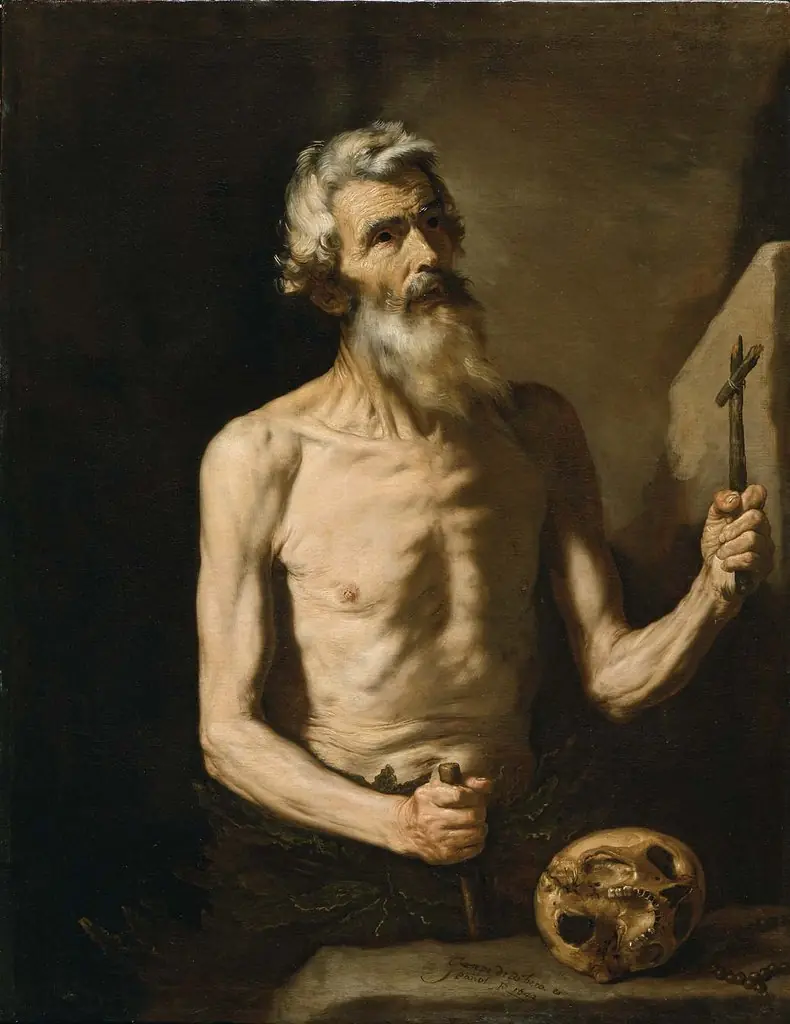
Penitent Saint Jerome is an oil painting by the Early Baroque Italian artist Jusepe de Ribera. It dates from 1652 and is held in the collection of the Museo del Prado.
About this work
Overview
Jusepe de Ribera painted *Penitent Saint Jerome* in 1652, employing oil on canvas. The work is part of the Prado Museum’s collection in Madrid and exemplifies the early Italian Baroque aesthetic that Ribera helped disseminate while working in Naples.
Subject & Meaning
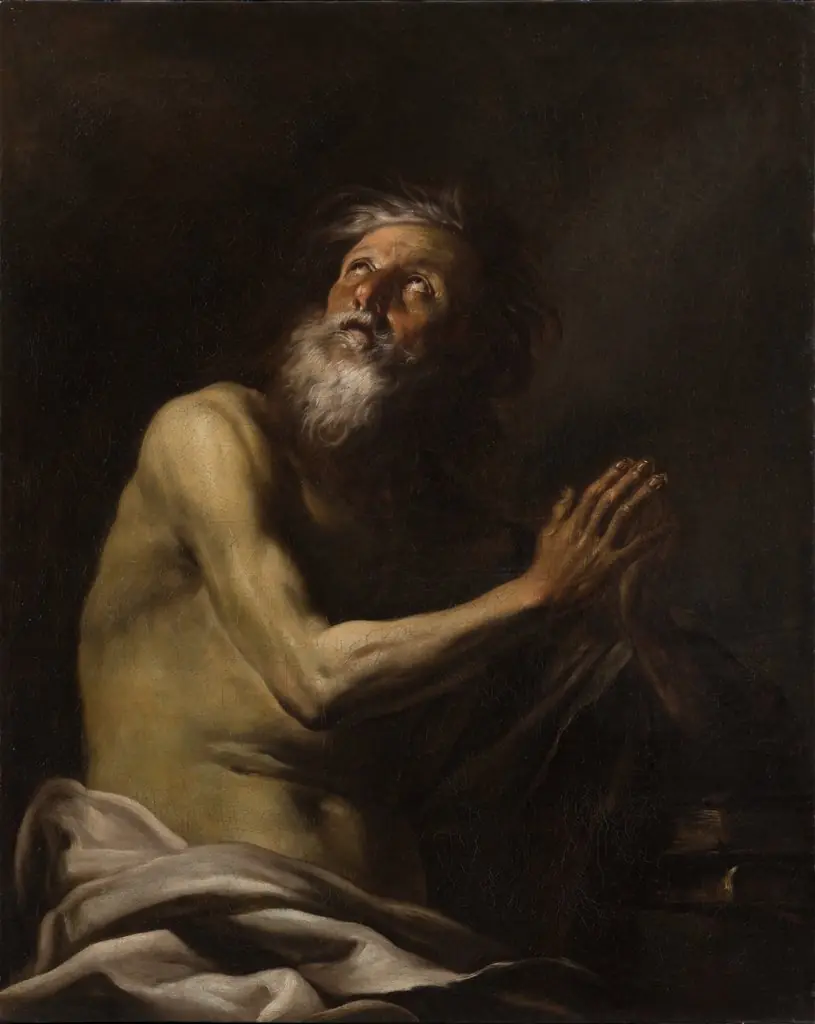
The composition presents an aged Saint Jerome, his white hair and full beard emphasizing his ascetic life. He is depicted without clothing, clutching a stone and a length of rope, symbols of his penitential suffering and the harshness of his hermitic existence.
Technique & Style
Ribera uses a stark chiaroscuro, allowing a concentrated beam of light to illuminate Jerome’s face, arms, and hands against a deep, shadowy backdrop. This contrast creates a palpable sense of volume, rendering the saint’s flesh and the textures of the stone and rope with tactile realism.
History & Provenance
Since its creation, the painting has remained in Spain, eventually entering the Museo del Prado’s holdings, where it is displayed among the institution’s Baroque holdings. Its provenance reflects the work’s continued association with Spanish artistic heritage.
Context
Ribera, a central figure of Spanish Baroque alongside Diego Velázquez and Francisco de Zurbarán, was known for his dramatic naturalism. *Penitent Saint Jerome* illustrates his commitment to portraying religious subjects with visceral intensity, aligning with Counter‑Reformation demands for emotionally compelling imagery.
Own this work as a print
Artist & collection
Artist
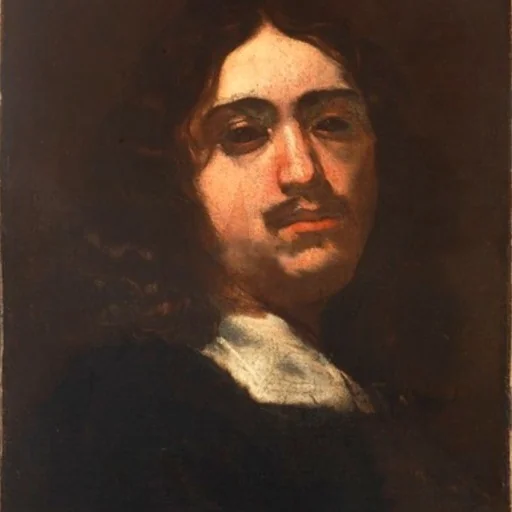
Jusepe de Ribera (Valencian: ; baptised 17 February 1591 – 3 November 1652) was a Spanish painter and printmaker.