Artwork
Saint Jerome
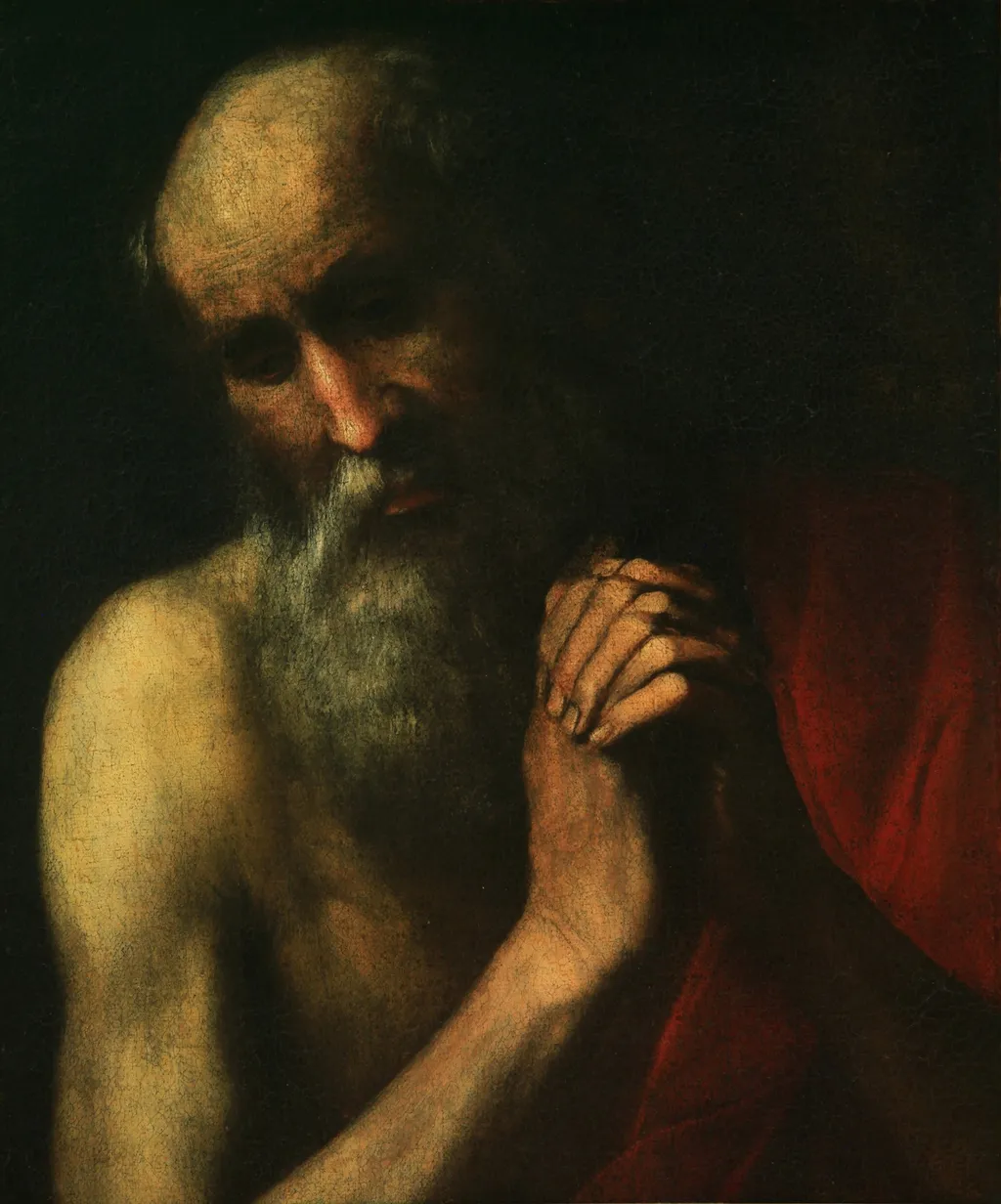
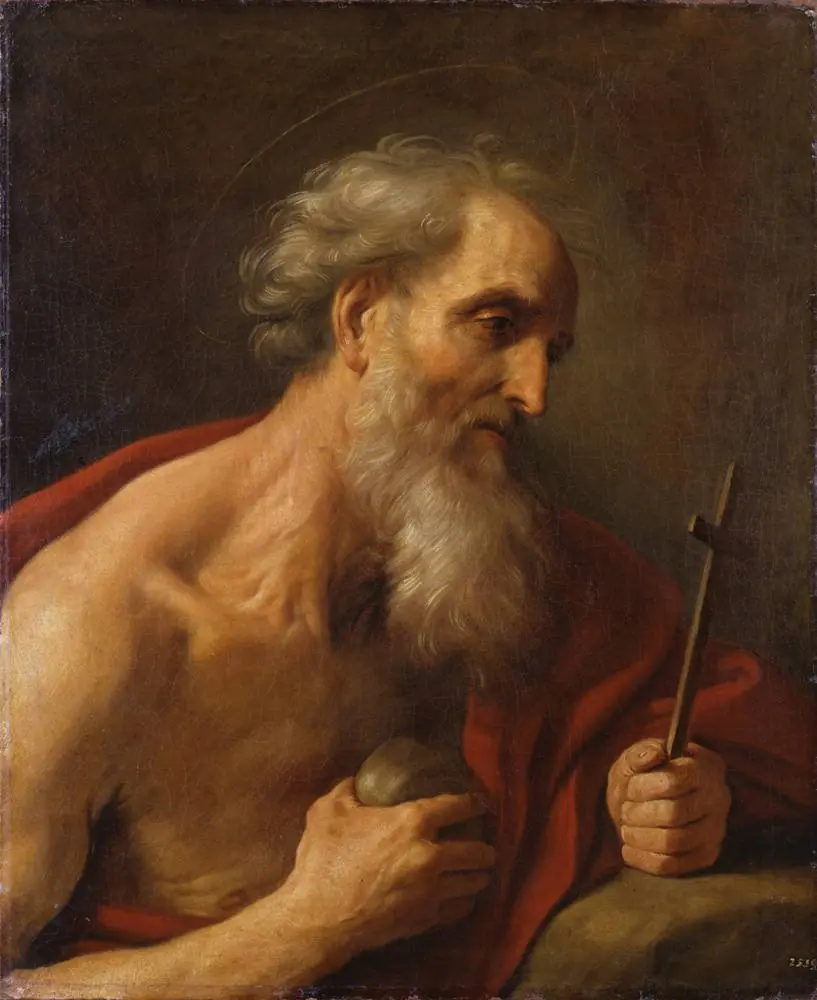
Saint Jerome is an oil painting by Unknown. It is held in the collection of the National Museum of Fine Arts, Argentina.
About this work
Overview
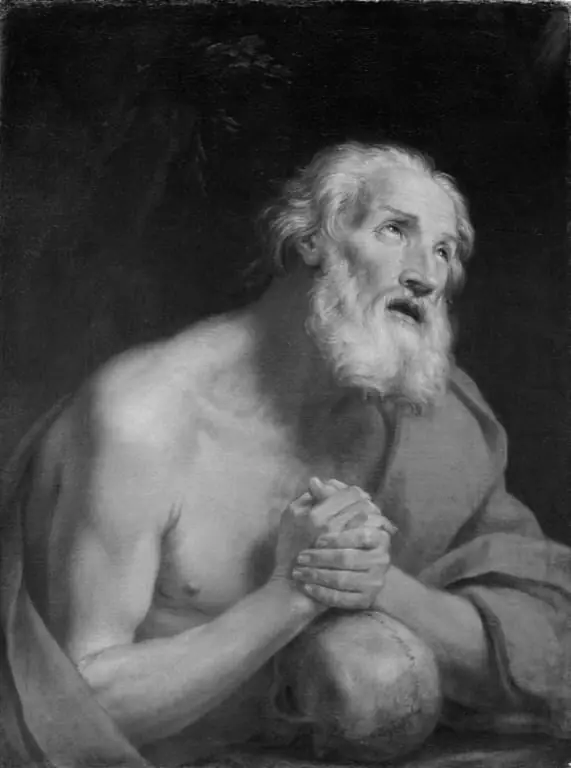
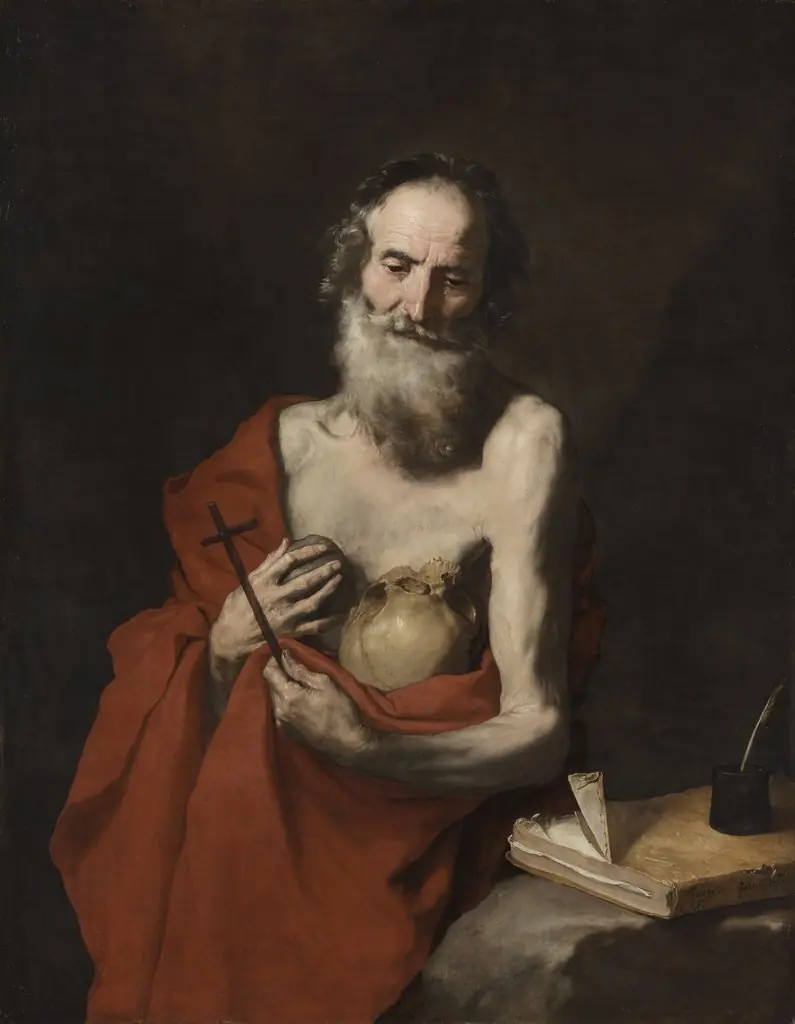
The artist employs strong contrasts of light and shadow to model form and direct attention toward the subject’s contemplative demeanor.
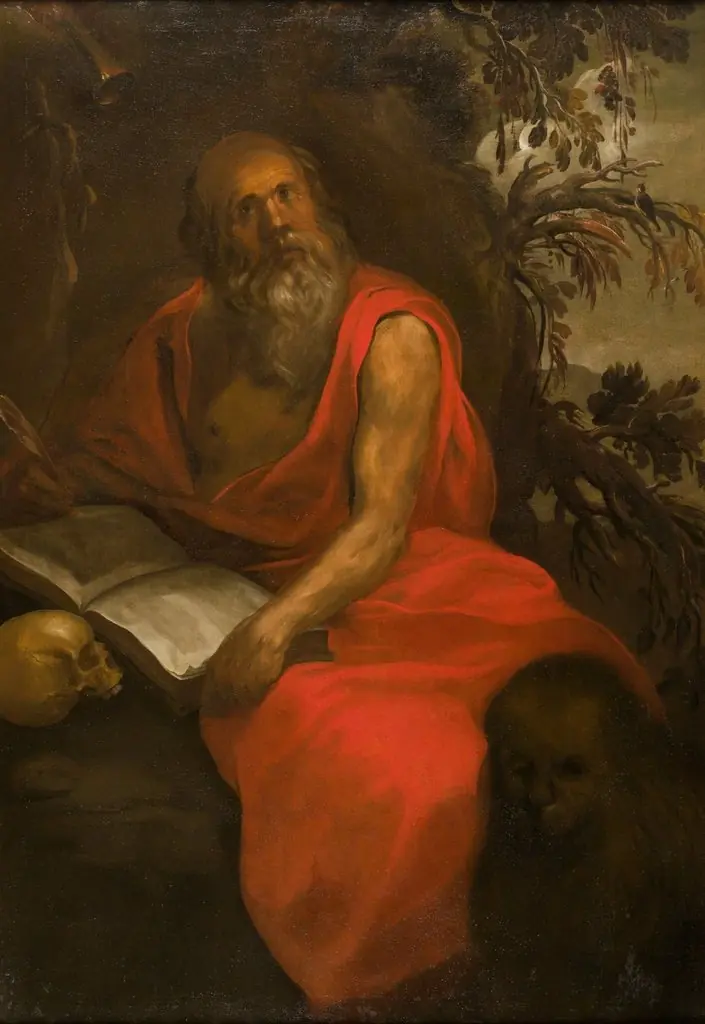
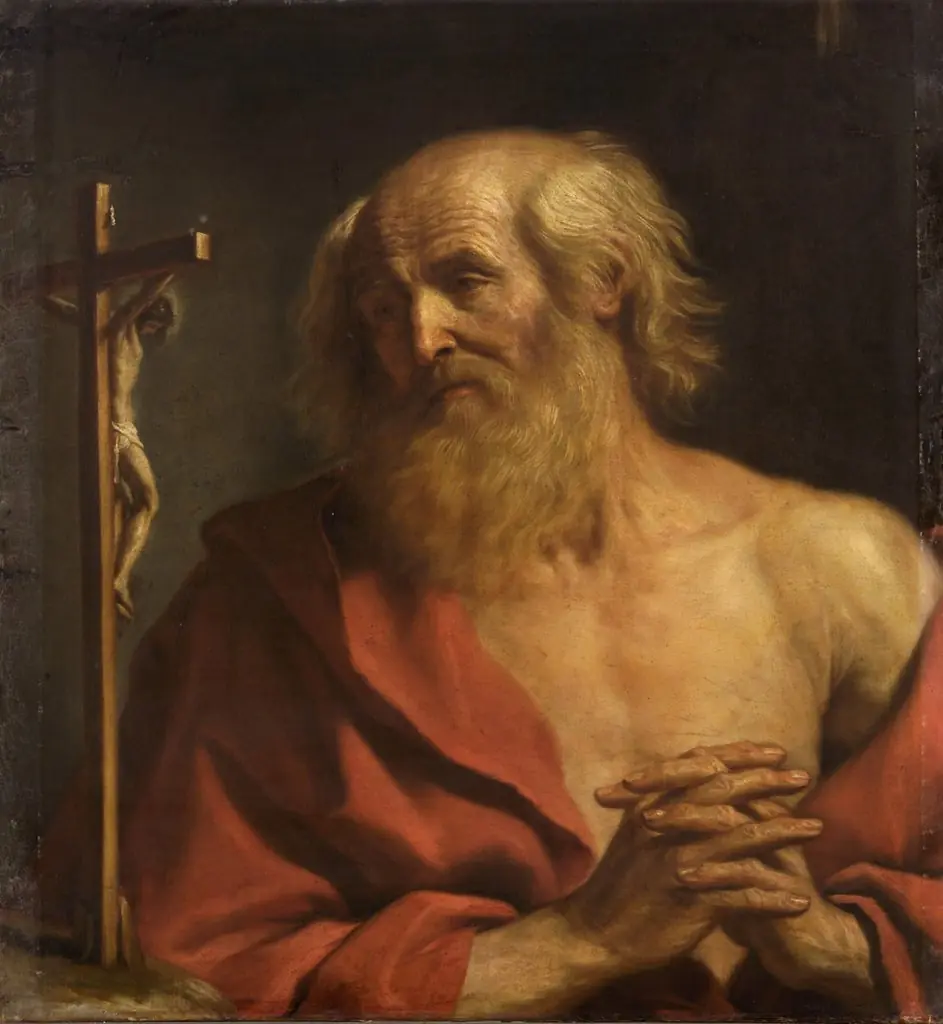
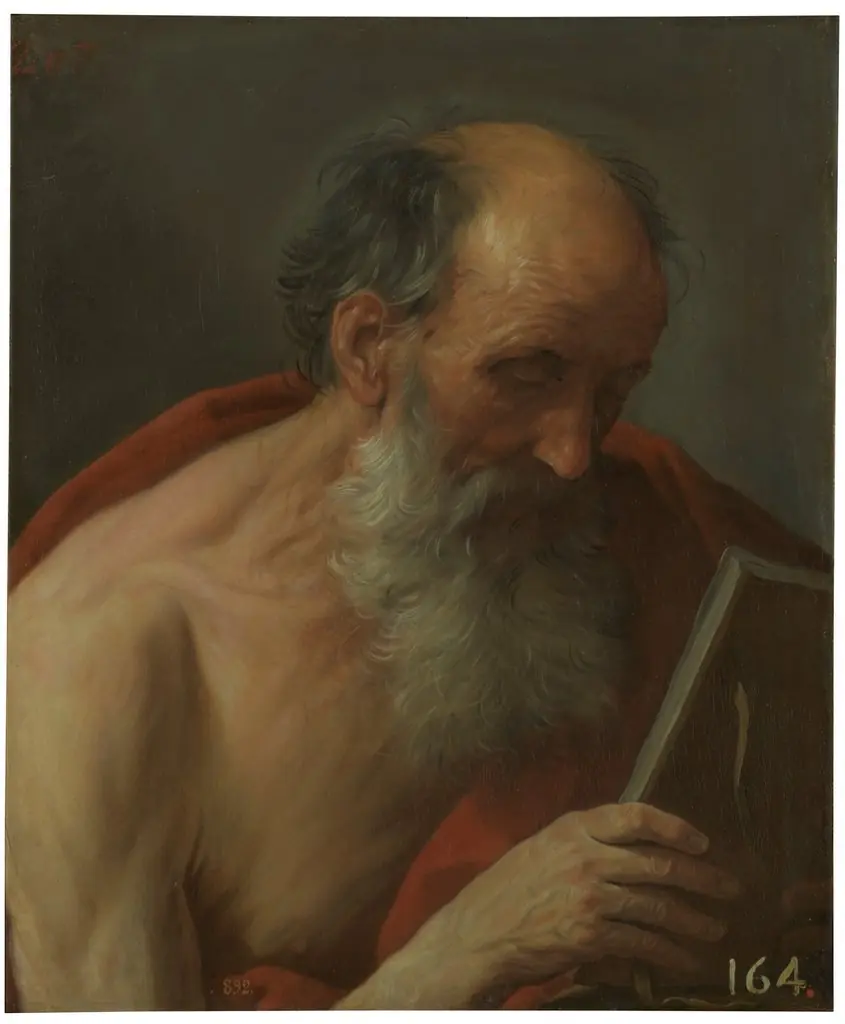
This oil painting presents a half-length portrait of Saint Jerome, rendered with focused intimacy. The figure is illuminated against a deep, unbroken background, emphasizing his presence without distraction. The composition centers on his face and hands, capturing a moment of quiet reflection. The artist employs strong contrasts of light and shadow to model form and direct attention toward the subject’s contemplative demeanor.
Subject & Meaning
Saint Jerome, known for translating the Bible into Latin, is depicted in a moment of scholarly introspection. His white beard and robe signify age and ecclesiastical status, while his downward gaze and hand resting on his chin suggest deep thought. Though no book is visible, the implied presence of scripture reinforces his identity as a theologian. The pose conveys inner devotion rather than external action, aligning with his reputation as a solitary scholar.
Technique & Style
The artist uses chiaroscuro to define the contours of Jerome’s face and hands, creating a sculptural solidity against the dark backdrop. Brushwork is restrained, favoring smooth transitions between light and shadow over visible texture. The limited palette enhances the focus on tonal variation, with the red robe standing out subtly against the muted tones. The absence of background detail reinforces the psychological intensity of the portrait.
History & Provenance
The painting’s early ownership is undocumented, but its style and technique align with early 17th-century Northern European devotional portraiture. It lacks a signature or clear attribution, though its execution suggests influence from artists working in the Caravaggisti tradition. Its survival in private collections until modern times indicates sustained appreciation for its quiet, meditative quality.
Context
During the Counter-Reformation, depictions of Saint Jerome were common in Catholic regions, symbolizing piety, scholarship, and the importance of scripture. This portrait reflects a trend toward intimate, psychologically grounded religious imagery, moving away from grand narratives. The emphasis on individual contemplation resonated with contemporary spiritual practices that valued personal devotion over public spectacle.
Legacy
Though not widely exhibited, the painting contributes to a broader tradition of introspective saintly portraits in early modern art. Its restrained composition and emotional subtlety influenced later depictions of religious figures that prioritized inner life over ceremonial display. It remains a quiet example of how simplicity and light can convey profound spiritual presence.
Artist & collection

Museum
National Museum of Fine Arts, Argentina
Continue through works from the same source collection.
 Domestic Scene
 Giacomo and Cardinal Marco, investing Andrea, Abbot of San Zeno, with his Benefice
 The Nymph of Fontainebleau
 Portrait of a Woman
 Madonna and Child with Saints in the Enclosed Garden
 Venus and Minerva
 Family Group of Four on Sofa
 Wall painting from Room H of the Villa of P. Fannius Synistor at Boscoreale