Artwork
Minaret of the mosque of Qadi Yahya Zayn al-Din (Habbaniyya), Cairo
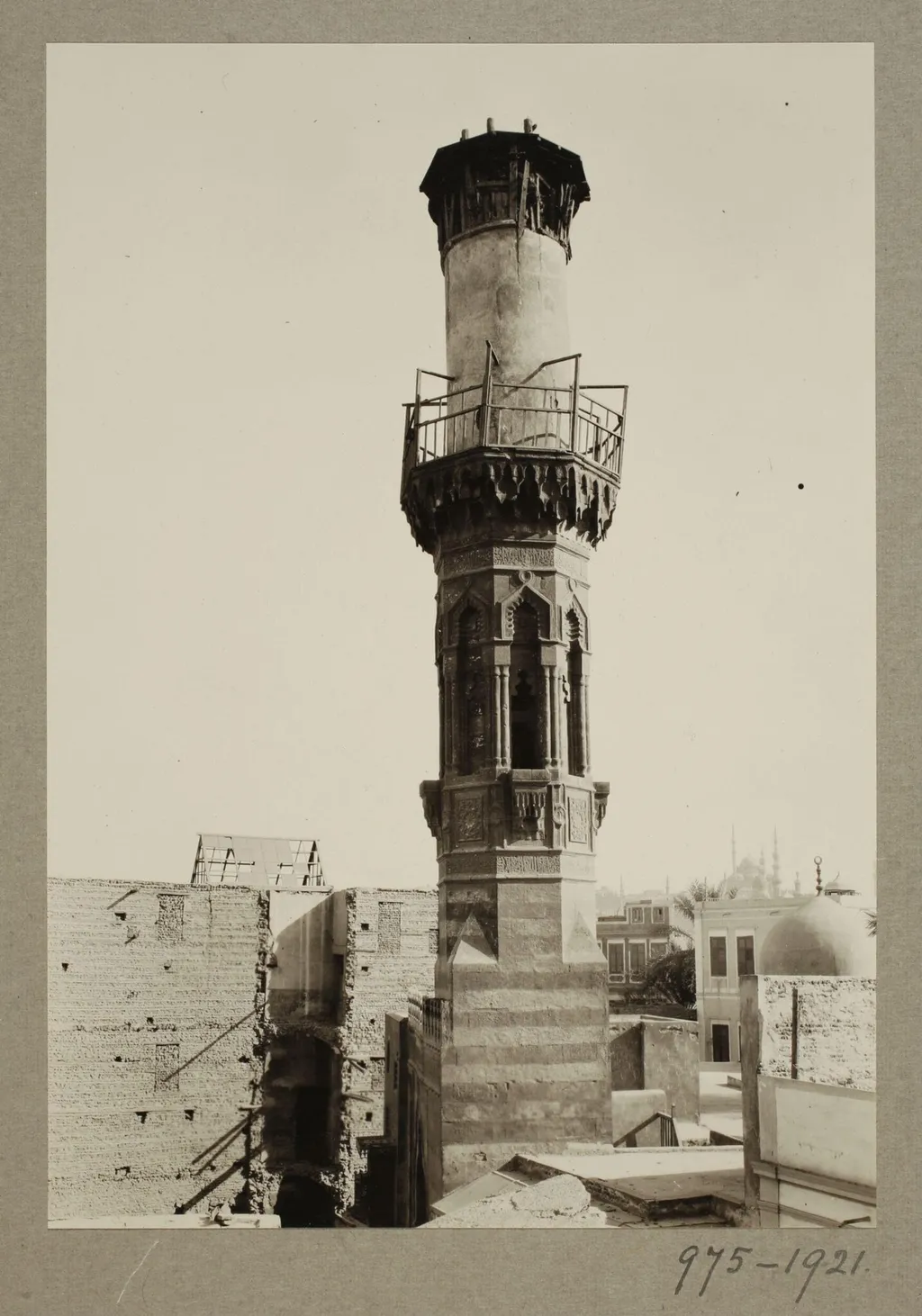
Minaret of the mosque of Qadi Yahya Zayn al-Din (Habbaniyya), Cairo is a photographic photography by K.A.C. Creswell. It dates from 1918 and is held in the collection of the Victoria and Albert Museum. This black-and-white photograph captures the minaret of the mosque built by Qadi Yahya Zayn al-Din in Cairo, taken between 1916 and 1921.
About this work
This is a black-and-white photograph of a tall tower in Cairo. It was taken between 1916 and 1921 by K.A.C. Creswell. The photo comes from a big collection of old building photos at the Victoria and Albert Museum.
Creswell spent his life studying Islamic architecture. The museum bought his Cairo views between 1921 and 1939.
See what else the Victoria and Albert Museum has online.
Overview
This black-and-white photograph captures the minaret of the mosque built by Qadi Yahya Zayn al-Din in Cairo, taken between 1916 and 1921.
This black-and-white photograph captures the minaret of the mosque built by Qadi Yahya Zayn al-Din in Cairo, taken between 1916 and 1921. It is part of a major collection of architectural images assembled by K.A.C. Creswell, a foundational scholar of Islamic architecture. The Victoria and Albert Museum acquired these photographs between 1921 and 1939, integrating them into its National Art Library holdings as critical visual records of medieval Islamic structures.
Subject & Meaning
The minaret belongs to a 14th-century mosque in Cairo, constructed under the patronage of a high-ranking judicial official. Its form reflects the architectural conventions of Mamluk-era religious buildings, where minarets served both liturgical and symbolic functions. The photograph documents the structure’s physical presence at a time when such monuments were undergoing little intervention, preserving details that might have later changed or been lost.
Technique & Style
Creswell personally took and developed this image, emphasizing clarity and accuracy over aesthetic effect. The composition is straightforward, with the minaret centered and evenly lit to highlight architectural details such as brickwork, stonework, and decorative bands. His method avoided dramatic angles or stylization, prioritizing documentary precision to support scholarly analysis and comparison with other structures.
History & Provenance
Creswell began photographing Islamic architecture as early as 1916, with some images appearing in Henriette Devonshire’s 1917 guide to Cairo’s monuments. The V&A acquired his Cairo collection over nearly two decades, likely sourcing these photographs directly from his fieldwork for his major publications. The images served both as research material and as a visual archive, later becoming a cornerstone of the museum’s holdings on Islamic architectural history.
Context
Before Creswell’s work, documentation of Islamic buildings often relied on speculative reconstructions. He introduced systematic photographic recording as a standard practice, insisting on firsthand observation and precise visual evidence. His efforts coincided with broader early 20th-century shifts in archaeology toward empirical methods. The photographs from this period represent a turning point in how Islamic architecture was studied and preserved in academic discourse.
Legacy
Creswell’s photographic archive remains a vital resource for scholars studying medieval Islamic architecture. His insistence on photographic accuracy set a new standard for architectural documentation. The V&A’s collection, drawn largely from his fieldwork, continues to inform research, conservation, and teaching, ensuring that his methodological rigor endures as a foundational influence in the field.
Artist & collection
Artist
He spent years crawling across the Middle East with a bulky camera, measuring every arch and dome with his lens.

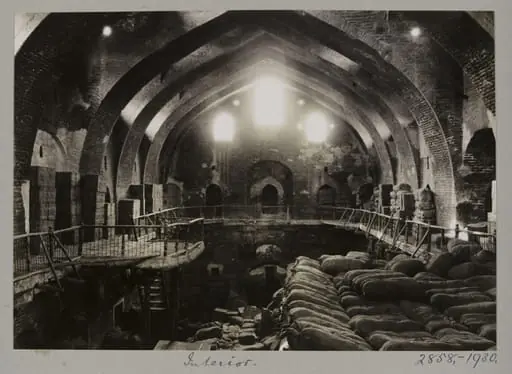 Interior of Khan Othma also known by Khan Murjan, Bagdad
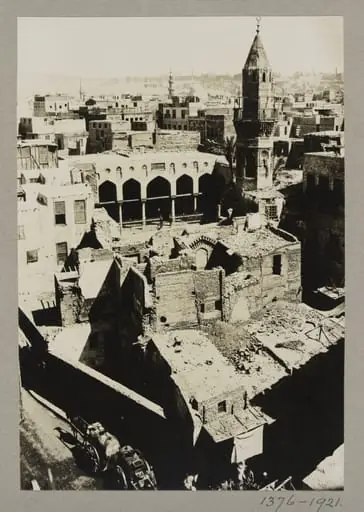 The mosque of Fatimid wazir Amir al-Salih Tala'i‘ seen from Bab Zuwayla, Cairo
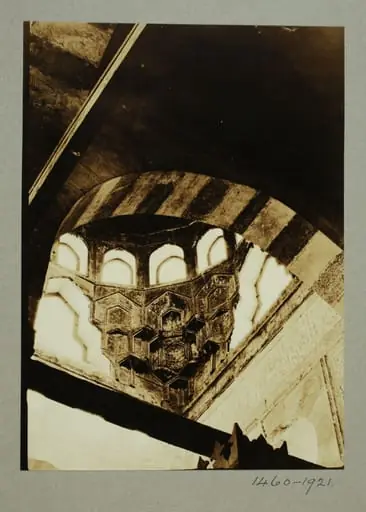 Pendentive of dome over mihrab in the mosque of Qadi Yahya Zayn al-Din (Habbaniyya), Cairo
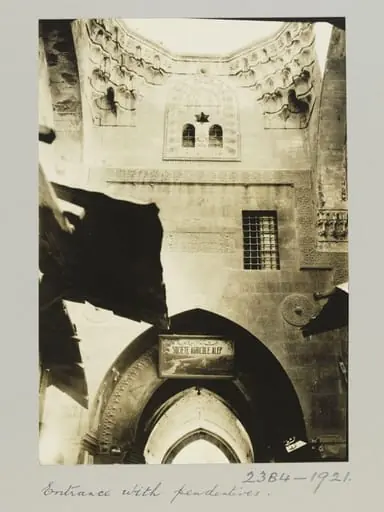 Entrance of Khan al-Jumruk, Aleppo
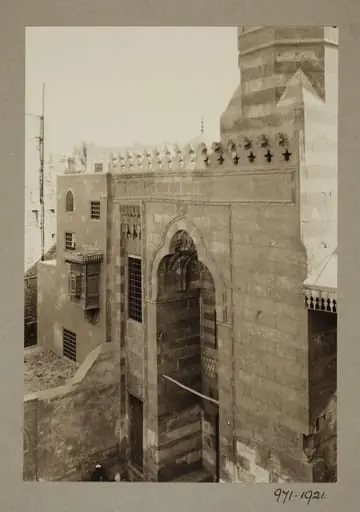 The entrance façade of the mosque of Qadi Yahya Zayn al-Din, Cairo
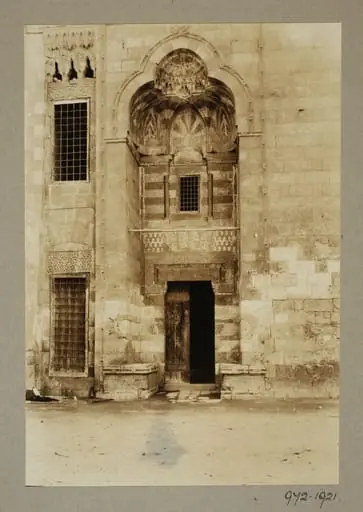 Entrance portal of the mosque of Qadi Yahya Zayn al-Din (Habbaniyya), Cairo
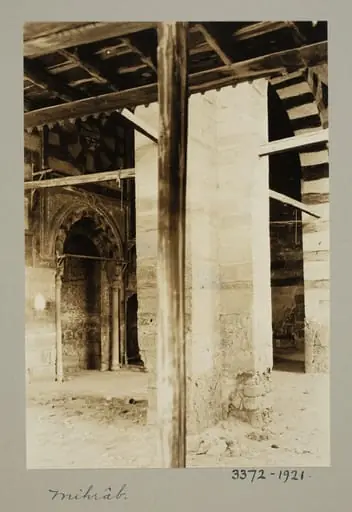 Mihrab of the mosque of Masih Pasha (Nur al-Din), Cairo
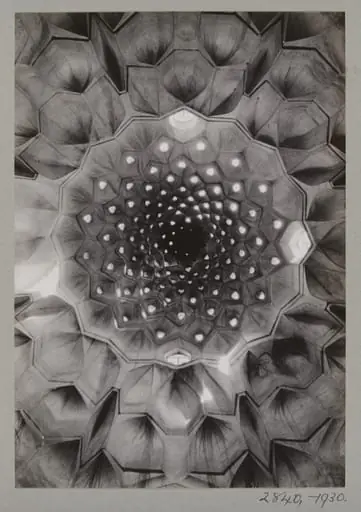 Interior view of dome of Mausoleum of Sitt Zubayda
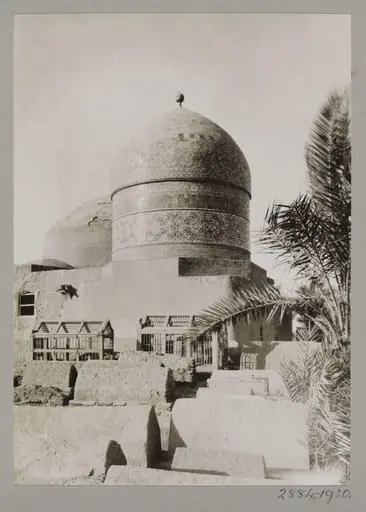 Mausoleum of Shaykh Ma'ruf al-Kharki, Baghdad
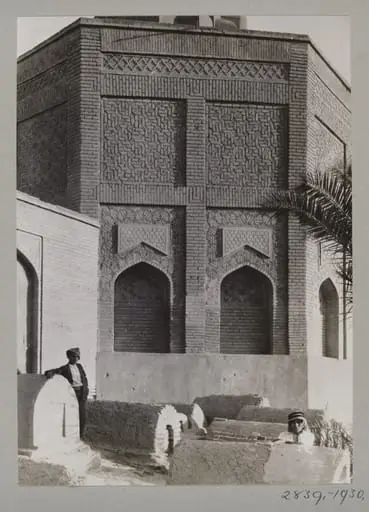 Mausoleum of Sitt Zubayda, Baghdad
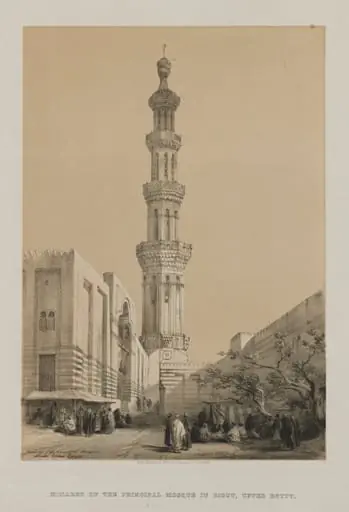 Egypt and Nubia, Volume III: Minaret of the Principal Mosque Siout, Upper Egypt
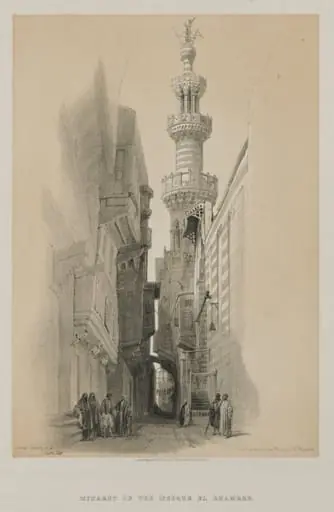 Egypt and Nubia, Volume III: The Minaret of the Mosque El Rhamree
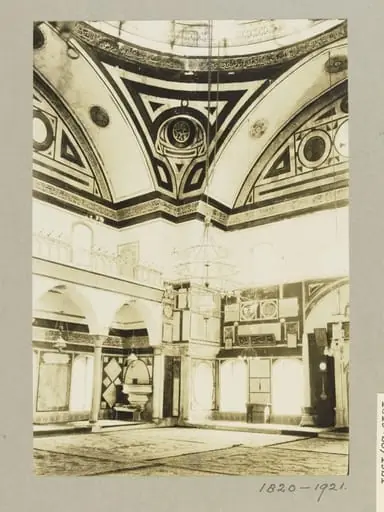 The Mosque of Jazzar Pasha, Acre
![Egypt and Nubia, Volume III: Tombs of the Caliphs-Cairo. Mosque of Ayed Be[y], by Louis Haghe](https://artifactworldgallery.com/img/louis-haghe--egypt-and-nubia-volume-iii-tombs-of-the-caliphs-cairo-mosque--9062e89e981f8684-w320.webp) Egypt and Nubia, Volume III: Tombs of the Caliphs-Cairo. Mosque of Ayed Be[y]
Egypt and Nubia, Volume III: Tombs of the Caliphs-Cairo. Mosque of Ayed Be[y]