Artwork
The mosque of Fatimid wazir Amir al-Salih Tala'i‘ seen from Bab Zuwayla, Cairo
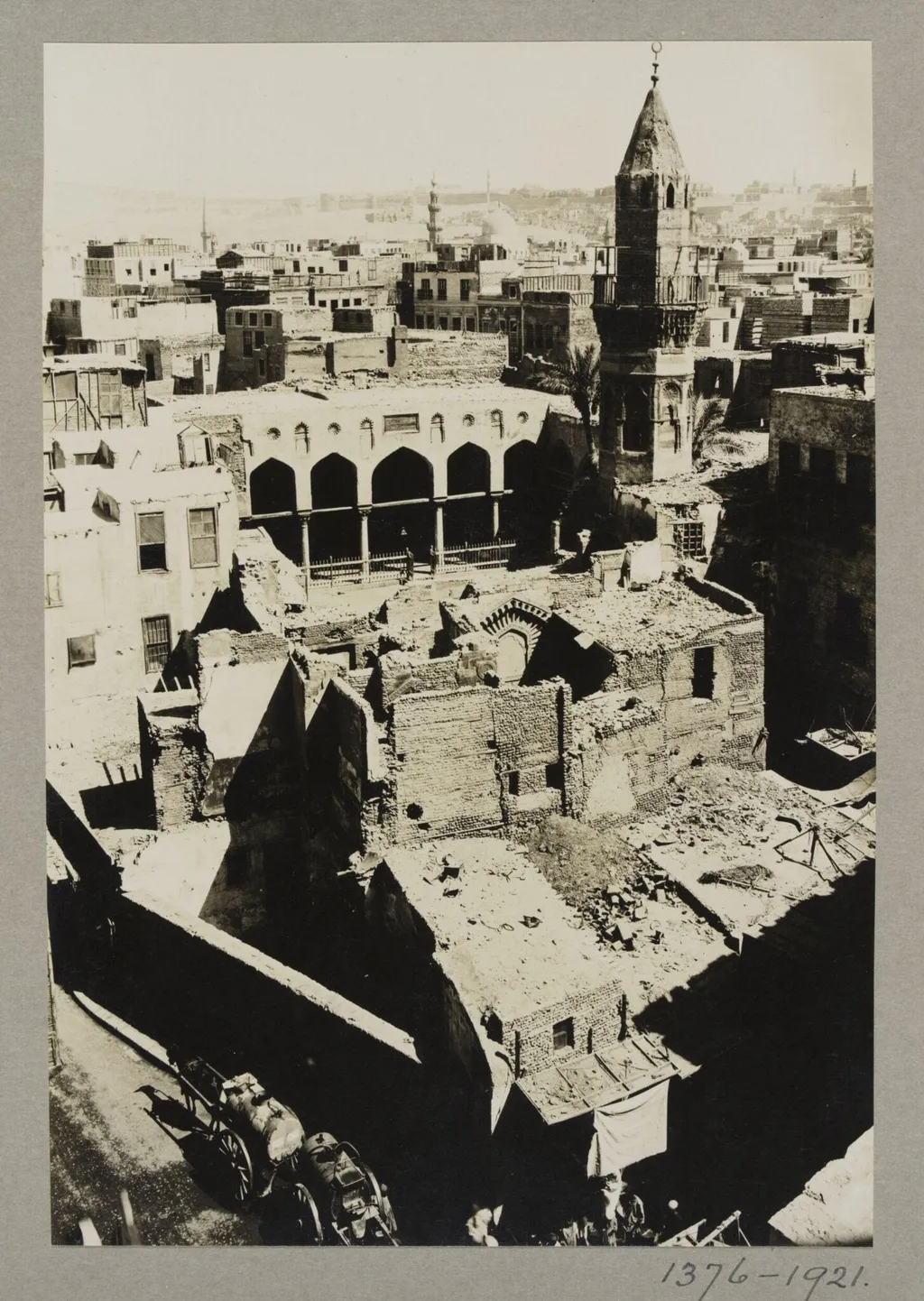
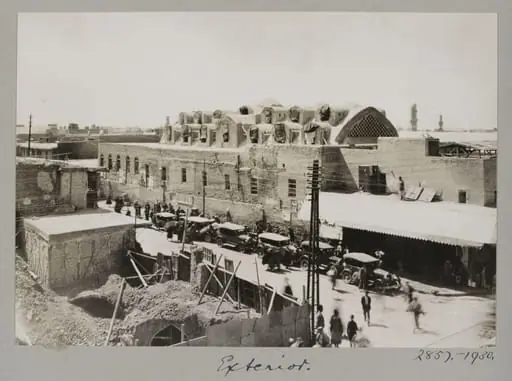
The mosque of Fatimid wazir Amir al-Salih Tala'i‘ seen from Bab Zuwayla, Cairo is a photographic photography by K.A.C. Creswell. It dates from 1918 and is held in the collection of the Victoria and Albert Museum. This photograph captures the mosque of Fatimid wazir Amir al-Salih Tala'i‘ as seen from Bab Zuwayla in Cairo.
About this work
Overview
It belongs to a substantial archive of architectural imagery collected by the Victoria and Albert Museum from the estate of K.
This photograph captures the mosque of Fatimid wazir Amir al-Salih Tala'i‘ as seen from Bab Zuwayla in Cairo. It belongs to a substantial archive of architectural imagery collected by the Victoria and Albert Museum from the estate of K.A.C. Creswell, acquired between 1921 and 1939. The collection, focused primarily on Cairo but extending across the Islamic Mediterranean, reflects Creswell’s systematic documentation of medieval structures through photography.
Subject & Meaning
The mosque, commissioned in the 12th century by a high-ranking Fatimid official, stands as a rare surviving example of early Islamic civic architecture in Cairo. Its position near Bab Zuwayla, a historic city gate, situates it within a dense urban fabric of religious and administrative buildings. The photograph preserves its form as it existed in the early 20th century, before later interventions altered the surrounding landscape.
Technique & Style
Creswell employed careful composition and controlled lighting to document architectural details with precision. His photographs avoid dramatic angles or romanticized framing, favoring clarity and structural accuracy. He personally developed and printed the images, ensuring consistent quality. This methodical approach distinguished his work from earlier, more speculative architectural drawings.
History & Provenance
The photograph was likely taken by Creswell during fieldwork conducted between 1916 and the 1930s. Some images in the V&A’s collection match those published in Henriette Devonshire’s 1917 guide to Cairo, suggesting early use of his photographs in scholarly publications. Creswell later sold his archive to the museum, providing a primary visual resource for his own research and future scholarship.
Context
Before Creswell’s work, documentation of Islamic architecture relied heavily on reconstructed plans and sketches. He introduced photography as a standard tool for recording physical conditions, elevations, and decorative elements in situ. His efforts coincided with a broader shift toward empirical study in architectural history, emphasizing material evidence over conjecture.
Legacy
Creswell’s photographic archive remains a foundational resource for scholars of Islamic architecture. The V&A’s holdings preserve not only his images but also his methodology—rigorous, systematic, and grounded in direct observation. His publications, supported by these photographs, continue to serve as essential references in the field, shaping how medieval Islamic buildings are studied and understood.
Artist & collection
Artist
He spent years crawling across the Middle East with a bulky camera, measuring every arch and dome with his lens.

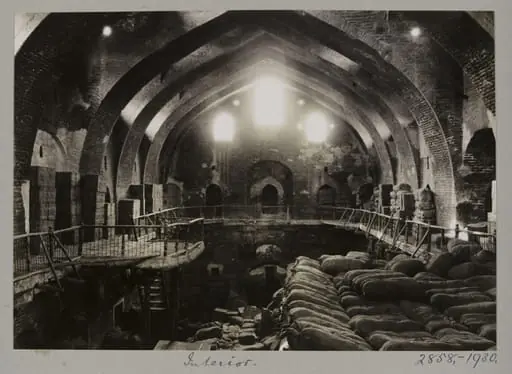 Interior of Khan Othma also known by Khan Murjan, Bagdad
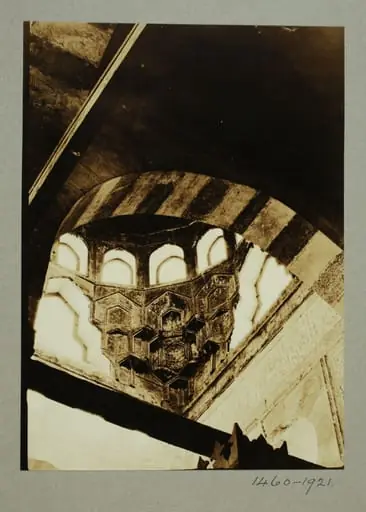 Pendentive of dome over mihrab in the mosque of Qadi Yahya Zayn al-Din (Habbaniyya), Cairo
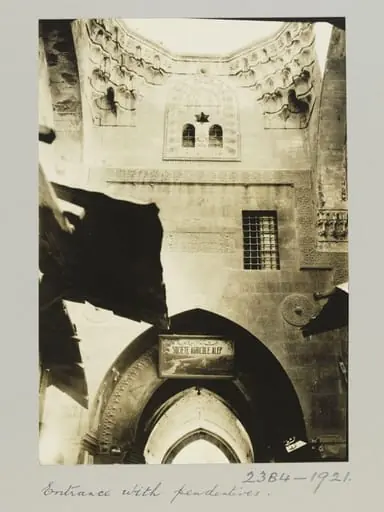 Entrance of Khan al-Jumruk, Aleppo
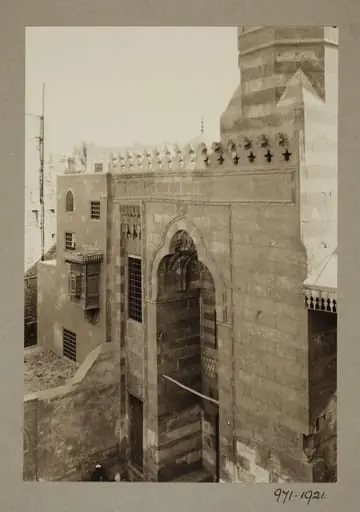 The entrance façade of the mosque of Qadi Yahya Zayn al-Din, Cairo
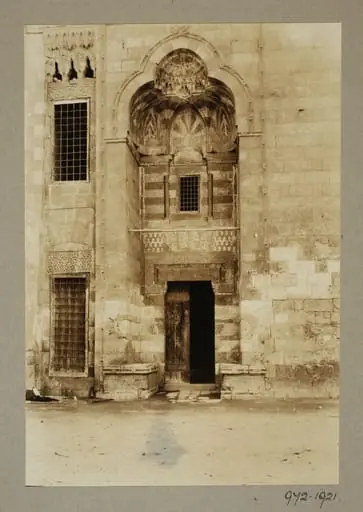 Entrance portal of the mosque of Qadi Yahya Zayn al-Din (Habbaniyya), Cairo
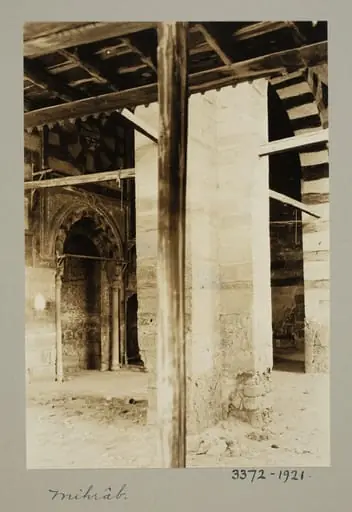 Mihrab of the mosque of Masih Pasha (Nur al-Din), Cairo
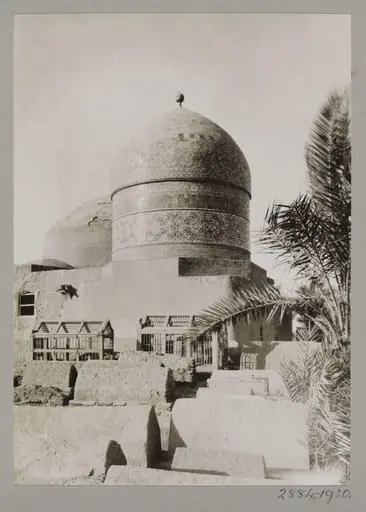
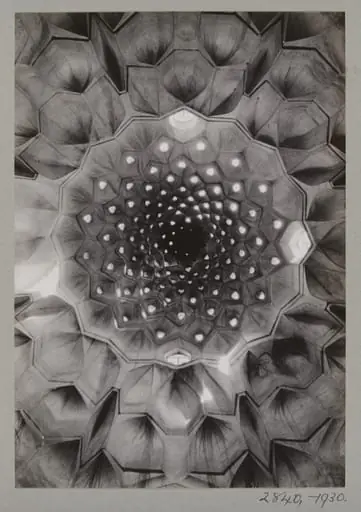 Interior view of dome of Mausoleum of Sitt Zubayda
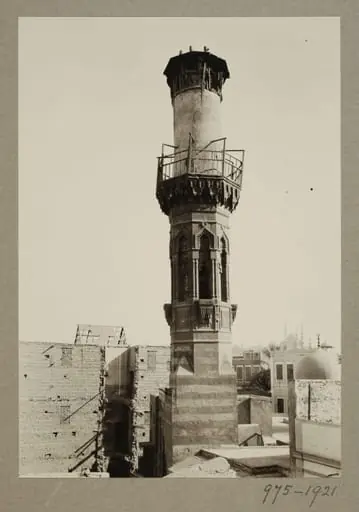 Minaret of the mosque of Qadi Yahya Zayn al-Din (Habbaniyya), Cairo