Artwork
Portrait of a Little Girl
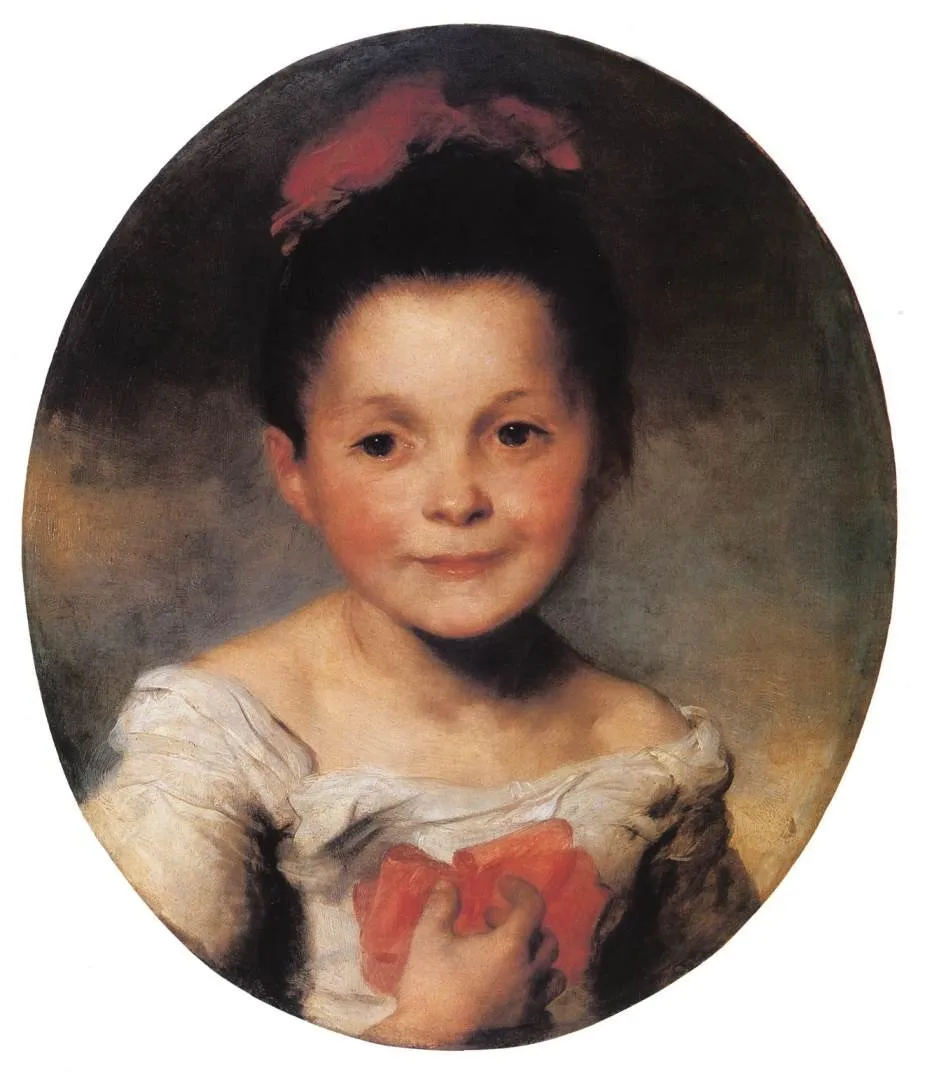
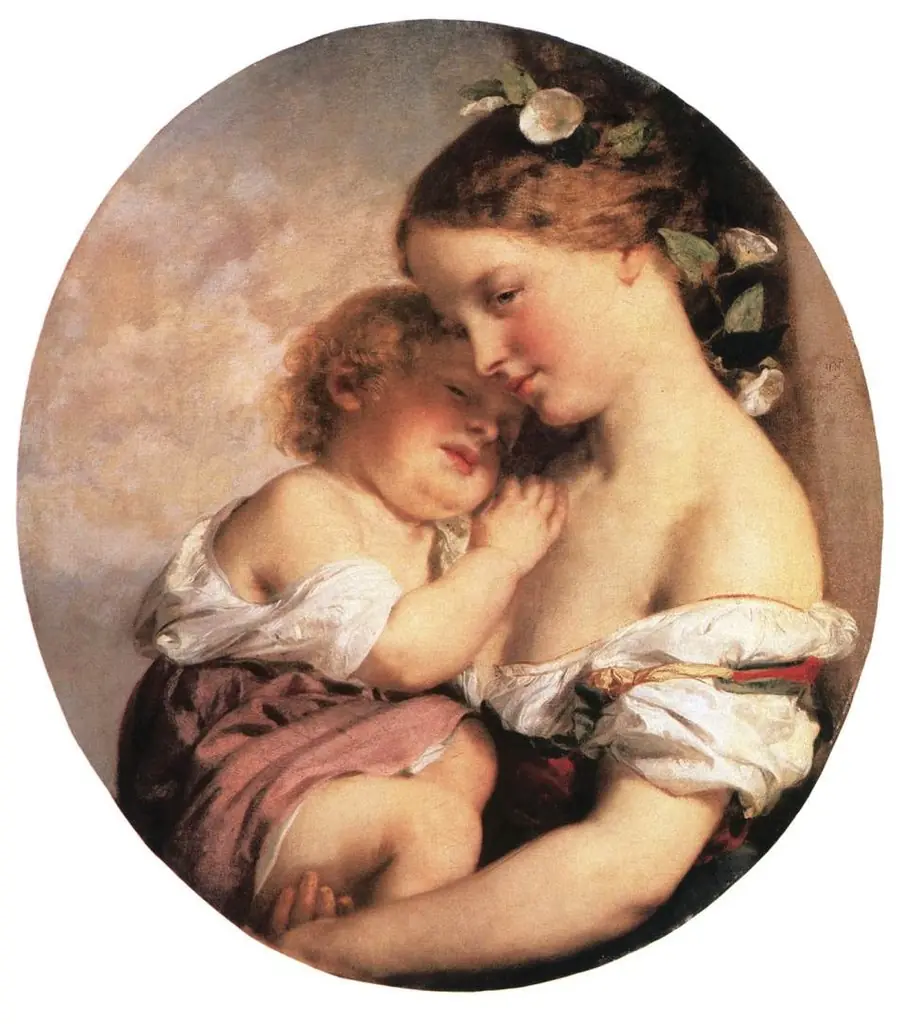
Portrait of a Little Girl is an oil painting by the Realist artist Károly Brocky. It dates from 1850 and is held in the collection of the Hungarian National Gallery.
About this work
Overview
Painted around 1850 by Hungarian artist Károly Brocky, this oil portrait captures a young girl in quiet stillness. Brocky, trained in Vienna and Paris and later based in London, favored direct observation over romanticized representation. The work belongs to the Hungarian National Gallery’s collection and exemplifies his commitment to capturing individual presence with restrained precision.
Subject & Meaning
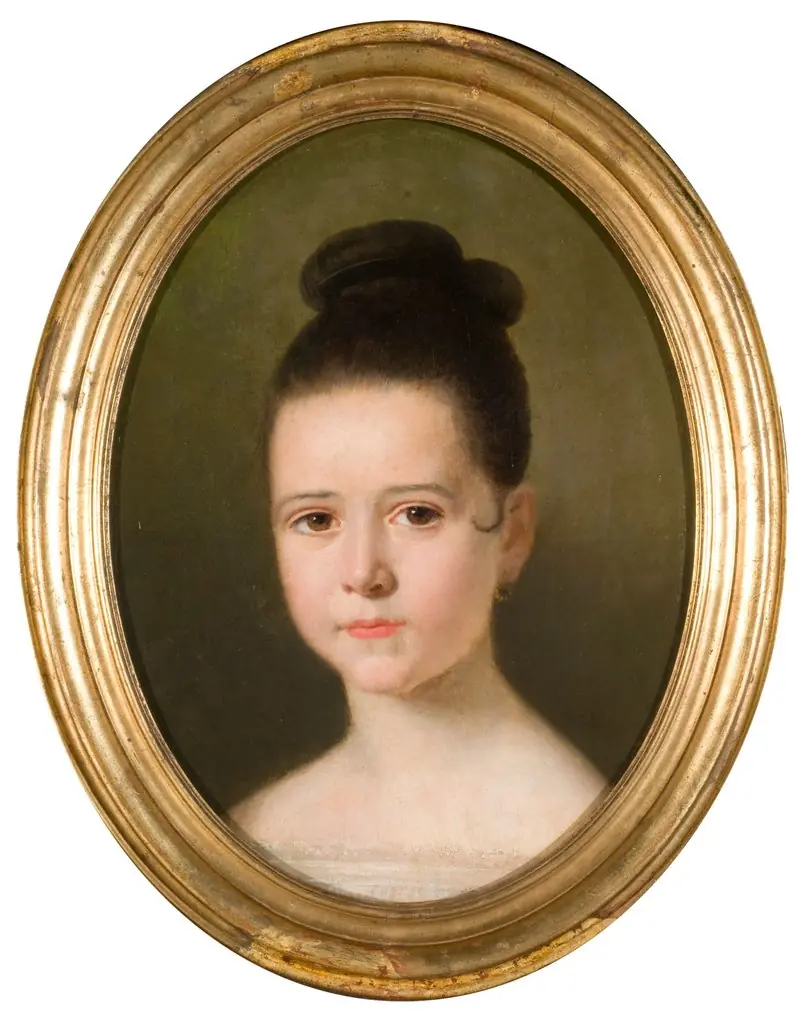
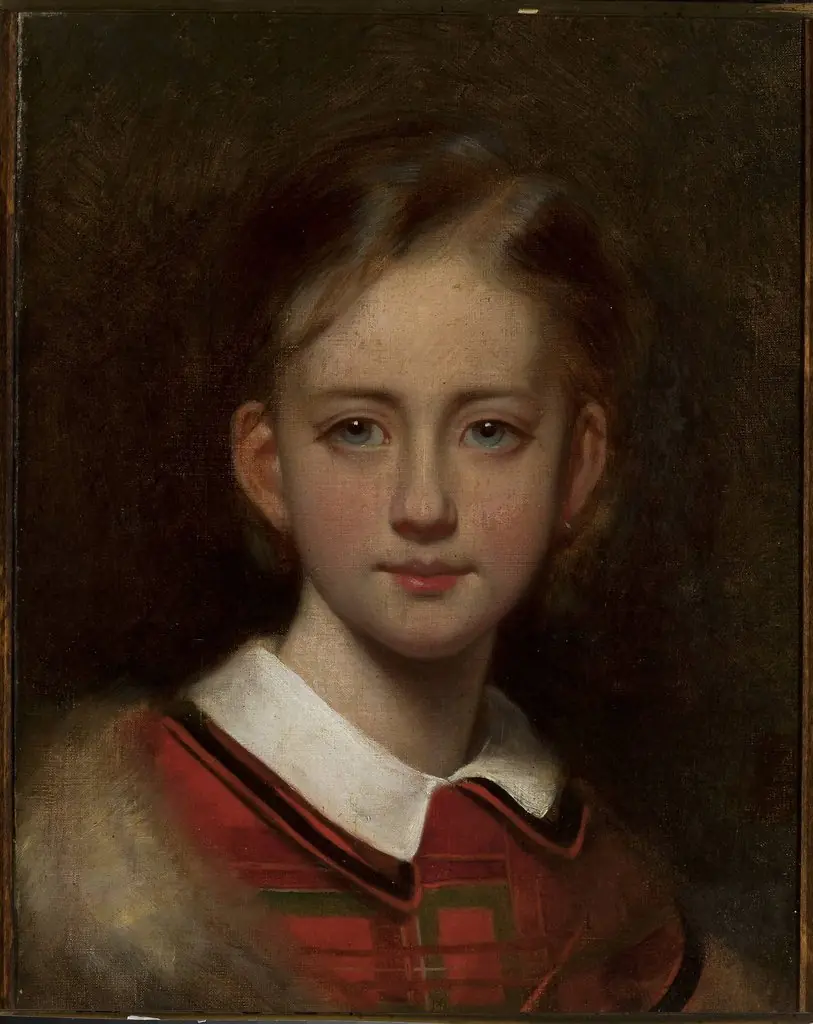
Her dark hair, bound with a pink ribbon, and simple white dress convey modesty, while the red object in her hands introduces a subtle point of focus.
The subject is a child, her gaze lowered and expression neutral, suggesting introspection rather than performative charm. Her dark hair, bound with a pink ribbon, and simple white dress convey modesty, while the red object in her hands introduces a subtle point of focus. The absence of narrative context invites attention to her quiet dignity, emphasizing the psychological presence over symbolic meaning.
Technique & Style
Brocky employed a realist approach, using soft chiaroscuro to model the girl’s form against a dark, unobtrusive background. The brushwork is controlled, with delicate transitions between light and shadow that lend volume without theatricality. The muted palette and restrained detail reflect a deliberate avoidance of sentimentality, aligning with mid-19th-century tendencies toward truthful representation.
History & Provenance
The painting entered the Hungarian National Gallery’s collection as part of efforts to document national artistic output during the 19th century. Though Brocky spent much of his career abroad, his works were recognized in Hungary for their technical clarity and emotional restraint. This portrait remains one of the few surviving examples of his intimate portraiture from this period.
Context
In the 1850s, European portraiture was shifting from aristocratic grandeur toward more personal, middle-class subjects. Brocky’s work reflects this trend, aligning with broader realist movements that valued authenticity over idealization. His training in Vienna and Paris exposed him to academic traditions, yet his focus on unadorned likeness marks a departure from ornate conventions.
Legacy
Though not widely known outside Hungary, Brocky’s portraits like this one contribute to the understanding of regional realism in 19th-century art. His ability to convey quiet humanity without embellishment influenced later Hungarian painters seeking to depict everyday subjects with sincerity. This painting endures as a quiet testament to his observational discipline.
Artist & collection
Artist
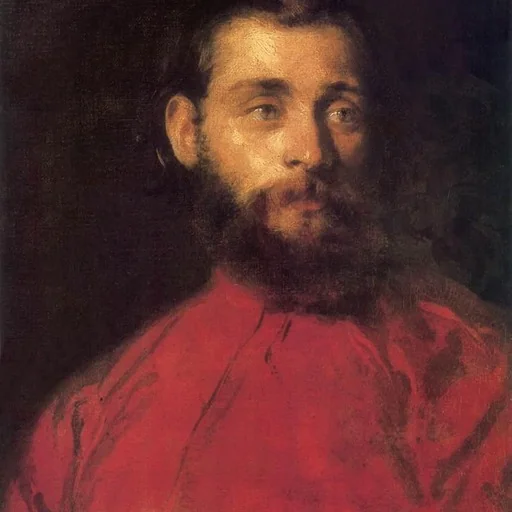
Károly Brocky, or Charles Brocky (Temesvár, 22 May 1808 – London, 8 July 1855) was a Hungarian painter.