Artwork
Mountain View
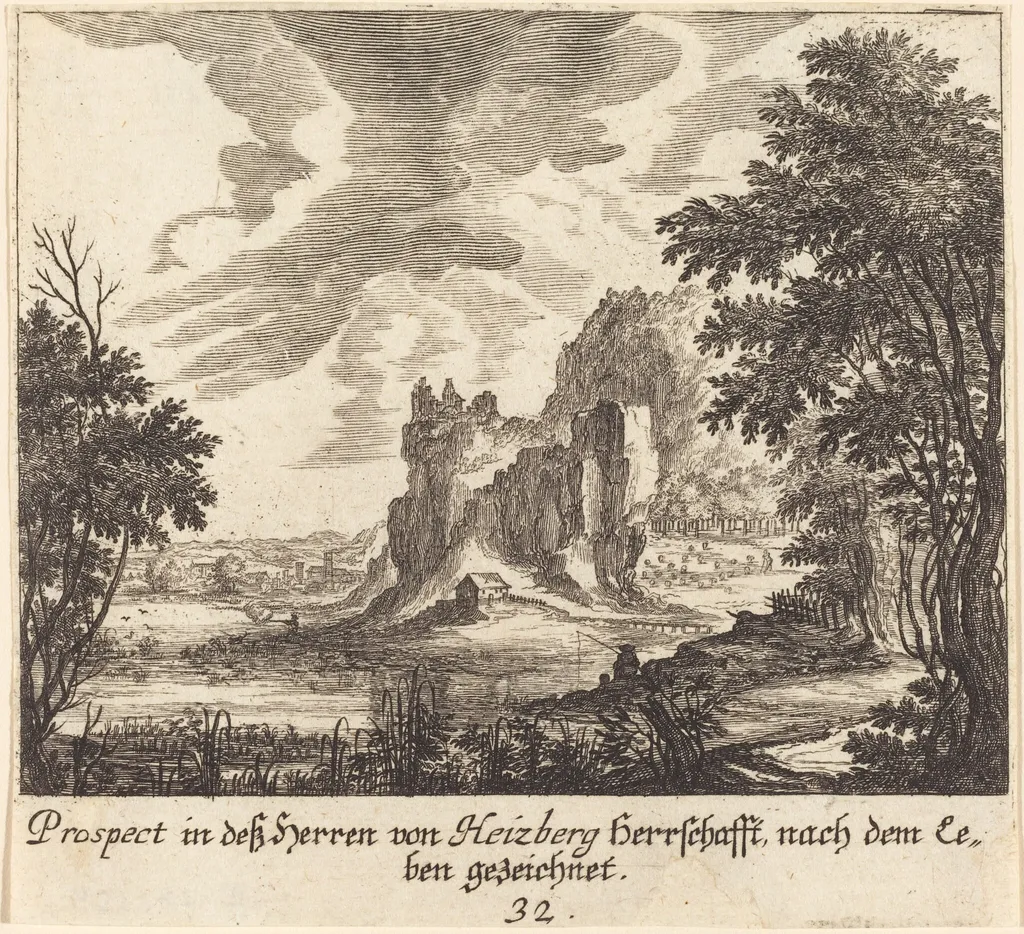
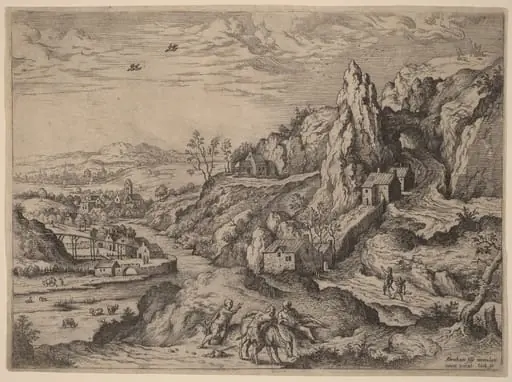
Mountain View is an ink print by the Baroque artist Melchior Küsel. It dates from 1681 and is held in the collection of the National Gallery of Art.
About this work
Overview
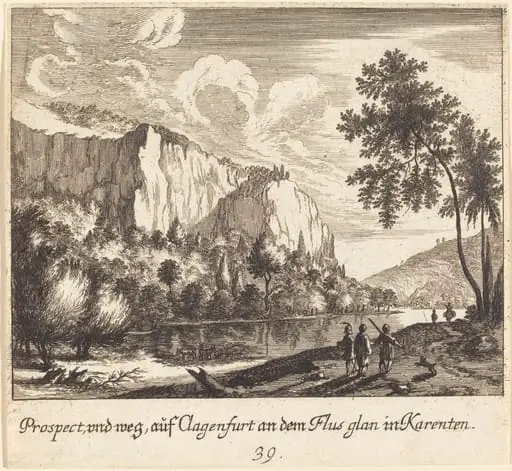
Melchior Küsel’s 1681 etching titled Mountain View presents a tranquil, monochrome landscape. A steep, craggy hill dominates the composition, its summit crowned by a fortified structure. Below, a modest settlement clusters at the foot of the slope, while a meandering path ascends toward the building. Sparse trees punctuate the terrain, and a calm body of water reflects a lightly clouded sky.
Subject & Meaning
The winding path invites the viewer’s eye upward, perhaps symbolizing a journey toward safety or authority represented by the castle‑like edifice.
The print juxtaposes human habitation with the surrounding natural environment, suggesting a harmonious coexistence between rural life and the imposing forces of nature. The winding path invites the viewer’s eye upward, perhaps symbolizing a journey toward safety or authority represented by the castle‑like edifice. The serene water and gentle clouds reinforce a sense of peaceful stability within the scene.
Technique & Style
Küsel employed the etching process, incising fine lines into a metal plate with acid to achieve delicate textures. The work’s tonal range derives from closely spaced hatching that renders the rugged rock faces, while looser strokes suggest foliage and atmospheric elements. This precise line work exemplifies the Baroque printmaking tradition’s emphasis on detail and controlled contrast.
History & Provenance
Created in 1681, Mountain View is among Küsel’s early printed works, produced during his active period in Augsburg. The etching was likely circulated among collectors of landscape prints in the late seventeenth century, though specific ownership records remain scarce. It now resides in several European print collections, reflecting its continued scholarly interest.
Context
The composition aligns with the seventeenth‑century European fascination with idealized rural vistas, a genre that blended topographical observation with imaginative elements. Küsel’s depiction of a fortified building atop a hill echoes contemporary motifs of power and protection, while the pastoral village mirrors the period’s interest in depicting everyday life within a broader natural setting.
Legacy
Mountain View illustrates the technical skill and compositional sensibility that characterized German etchers of the Baroque era. Its meticulous line work influenced subsequent printmakers who sought to balance detailed rendering with atmospheric depth, contributing to the development of landscape printmaking as a respected artistic genre.
Own this work as a print
Artist & collection


 Mountain View, Clagenfurt
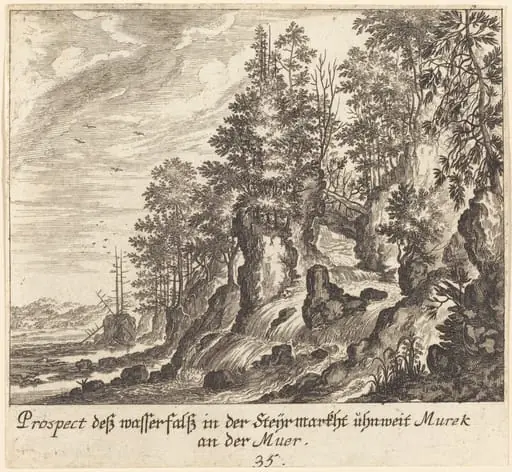 Waterfall
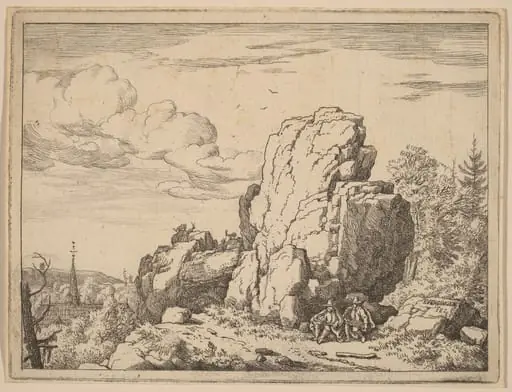 Two Men Seated at the Foot of a High Rock
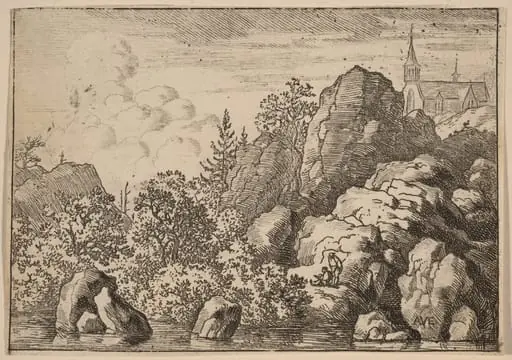 Church on a Hill
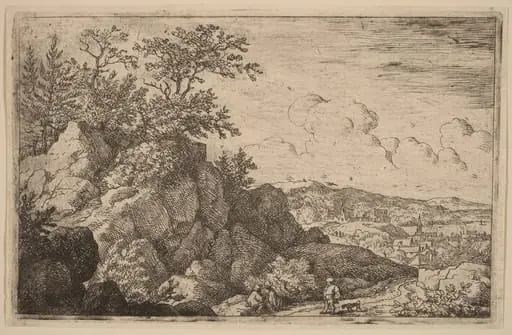 Peasant with His Dog
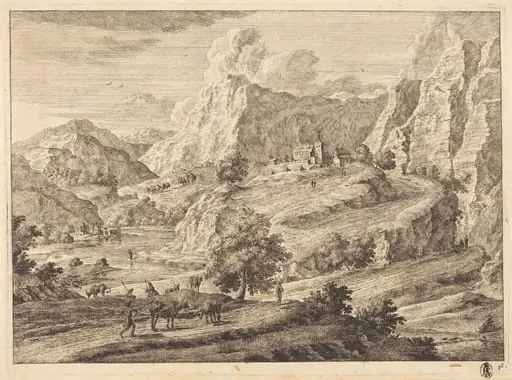 Mountainous Landscape with Figures and a Monastary
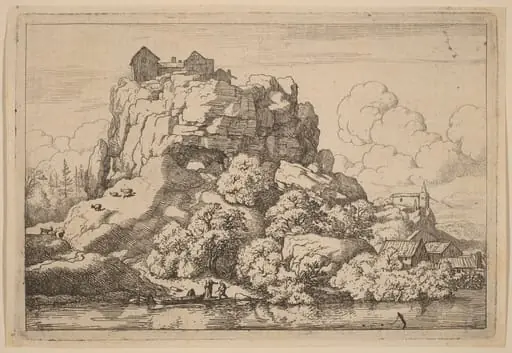 River at the Foot of a High Rock
 View of the River Rhine
 Church on a Hill
 Three Travelers at the Foot of a High Rock
 View of a Waterfall, Austria
 Sacrifice of Abraham