Artwork
Capitoline, Rome
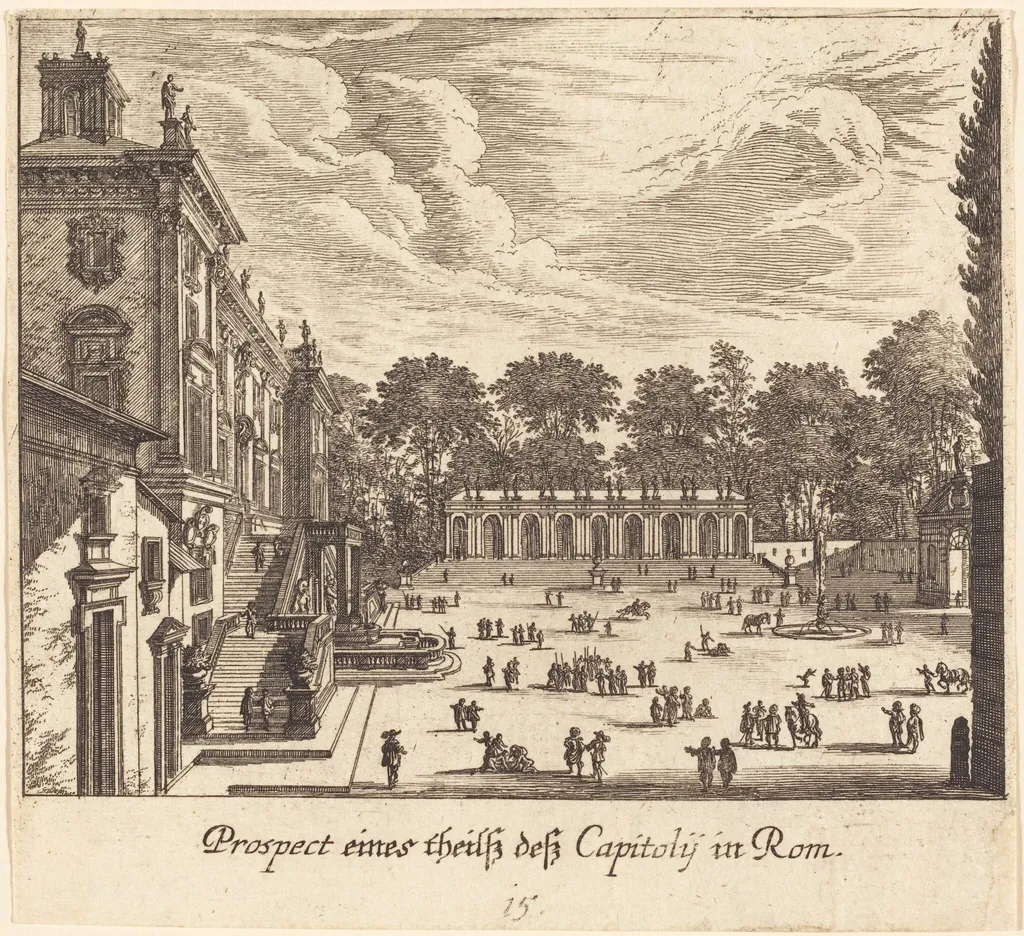
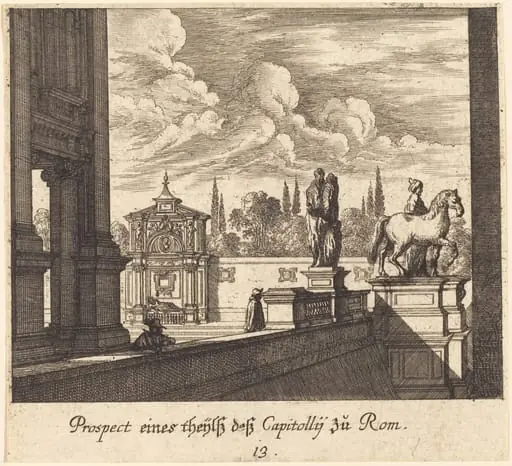
Capitoline, Rome is an ink print by the Baroque artist Melchior Küsel. It dates from 1681 and is held in the collection of the National Gallery of Art.
About this work
This drawing shows a grand building with tall columns and wide steps leading up to it.
This drawing shows a grand building with tall columns and wide steps leading up to it. People walk around the steps, some climbing, others standing in groups. Trees line the back of the building, and the sky above is light with wavy lines.
The title at the bottom says it’s the Capitoline in Rome, drawn in 1681. The artist used a sharp, detailed style to show every part of the scene.
If you like this, look up etching to see how artists create these precise lines.
Overview
Created in 1681 by Melchior Küsel, this etching depicts the Capitoline Hill in Rome, one of the city’s most significant ancient sites. Rendered in fine, precise lines typical of the medium, the print captures the architectural grandeur of the hill’s central structure, framed by trees and populated with small figures engaged in daily movement. The light, wavy sky suggests a clear day, grounding the scene in a quiet, observable reality rather than idealized grandeur.
Subject & Meaning
The Capitoline Hill, home to ancient Roman temples and later Renaissance civic buildings, was a symbol of political and religious authority. Küsel’s depiction emphasizes its enduring presence through the arrangement of columns, steps, and surrounding foliage. The scattered figures—walking, pausing, ascending—hint at the site’s continued public function, transforming it from a monument into a lived space, reflecting its role in both antiquity and early modern Rome.
Technique & Style
Küsel employed etching to achieve fine detail and tonal variation, using acid to bite lines into a metal plate for sharp, controlled marks. The architecture is rendered with meticulous precision, each column and step carefully delineated, while the trees and sky are suggested with looser, flowing strokes. This contrast between structural clarity and atmospheric softness enhances the sense of depth and realism, characteristic of 17th-century topographical prints.
History & Provenance
The print was made during Küsel’s time in Rome, where he documented architectural sites for European audiences. As a German engraver active in Italy, he contributed to the tradition of vedute—views of notable places—popular among travelers and collectors. Though its early ownership is undocumented, the work aligns with the broader 17th-century interest in Rome as a cultural and archaeological touchstone for Northern Europeans.
Context
In the late 17th century, Rome was a destination for scholars, artists, and Grand Tourists drawn to its classical ruins and papal architecture. Küsel’s etching reflects this fascination, offering a factual yet composed view of the Capitoline rather than a romanticized fantasy. Such prints served as both records and souvenirs, circulating knowledge of Roman antiquities beyond the city’s walls and feeding a growing appetite for visual documentation.
Legacy
Küsel’s Capitoline etching remains a modest but valuable example of early modern topographical printmaking. It contributes to a visual archive of Rome’s urban fabric during a period of transition between antiquity and Baroque renewal. While not widely known today, such works underpinned the scholarly and aesthetic engagement with classical sites that shaped European architectural thought for centuries.
Artist & collection


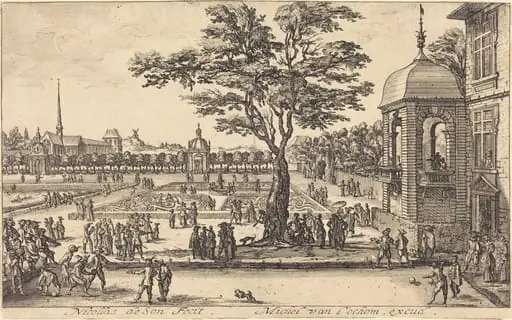 View of a Garden
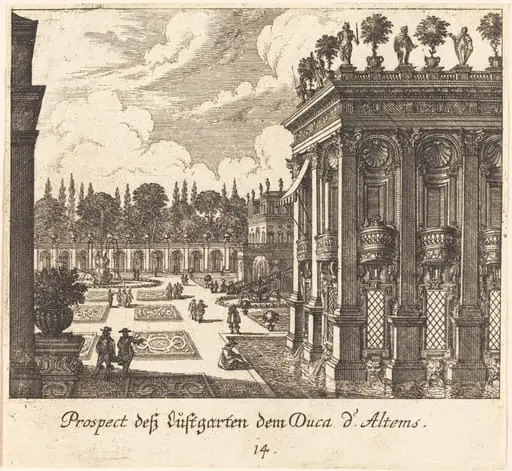 Gardens, Duke d'Altems
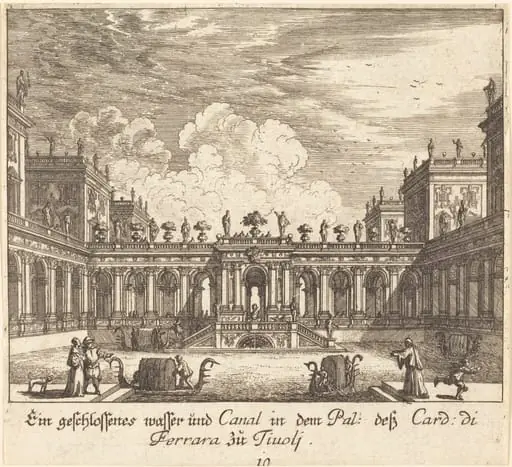 Palace and Canal, Cardinal di Ferrara, Tivoli
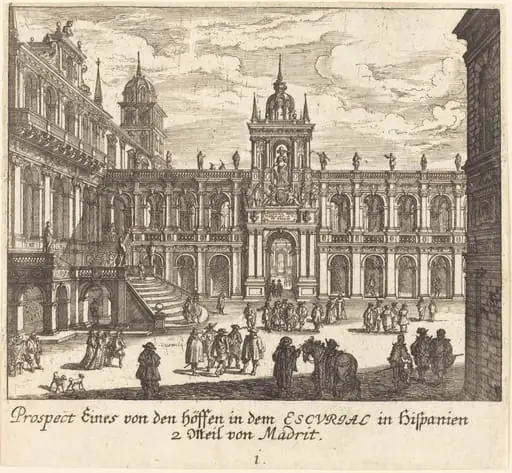 Escorial, Spain
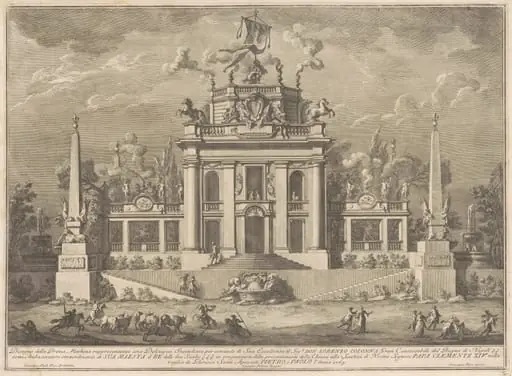 The Prima Macchina for the Chinea of 1769: A "Deliziosa"
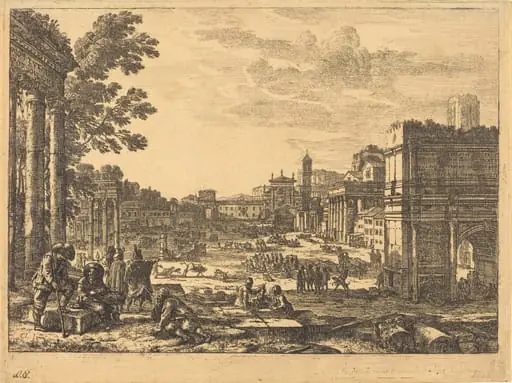 The Roman Forum (Le Campo Vaccino)
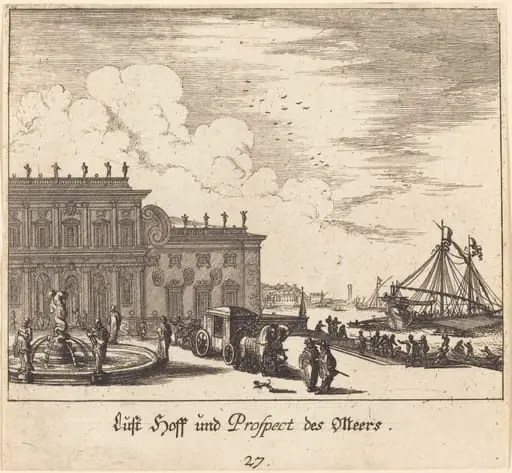 View of Meers
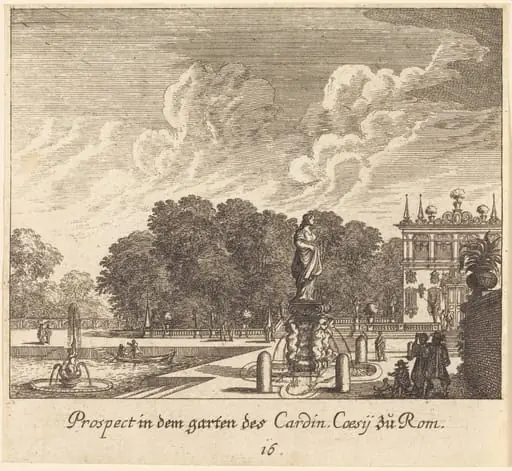 Gardens of Cardinal Coessi, Rome
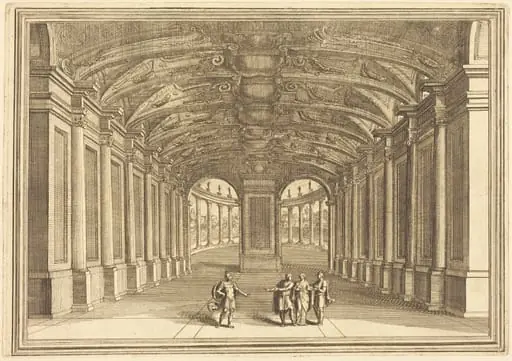 Il Greco in Troia: Plate 10
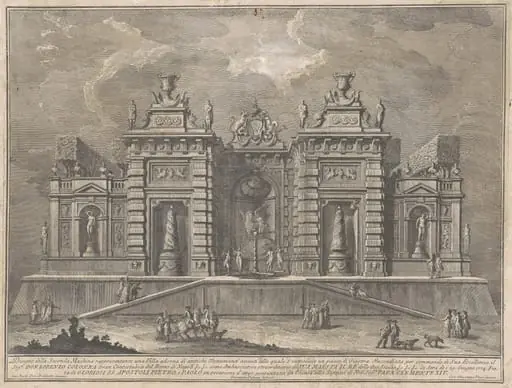 The Seconda Macchina for the Chinea of 1774: A Villa with Ancient Monuments and a Game of "Giostra"
 Capitoline, Rome