Artwork
Palazzo of Count Widman
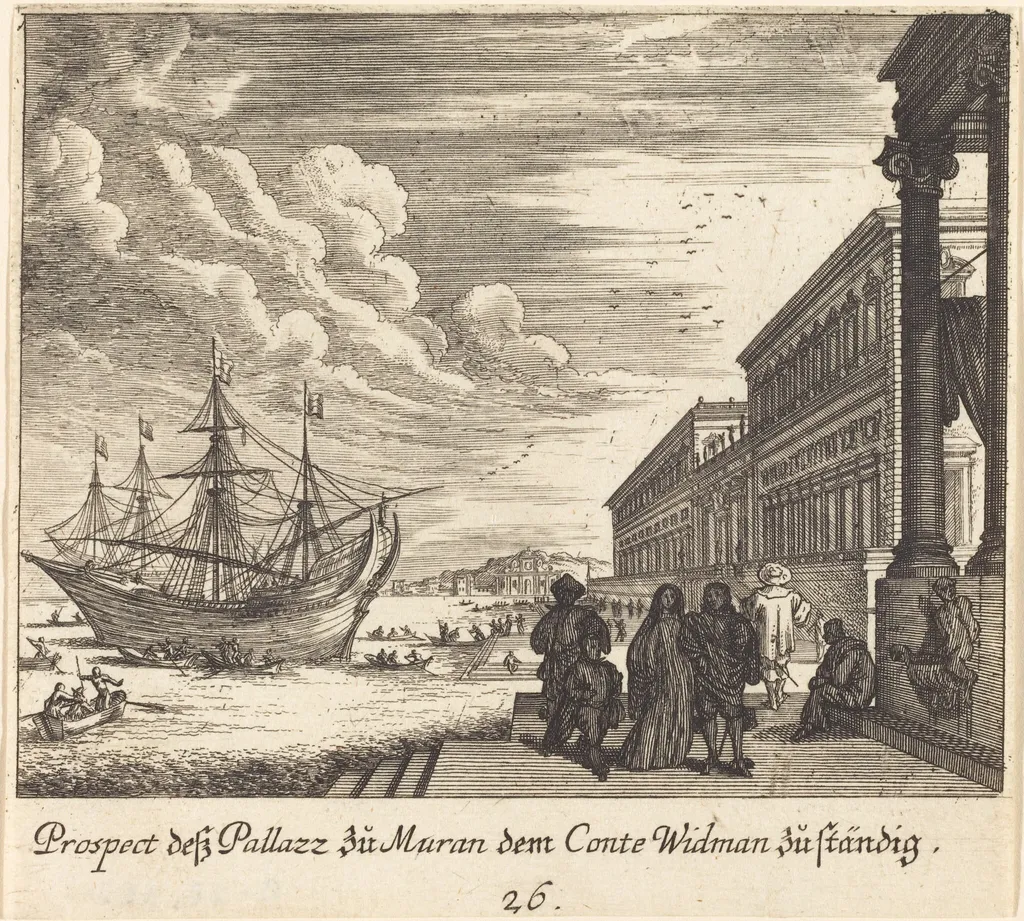
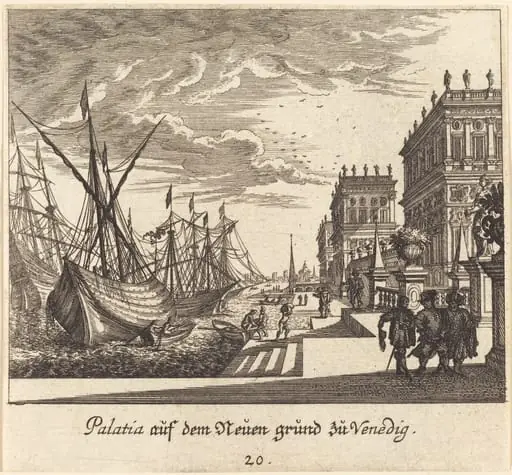
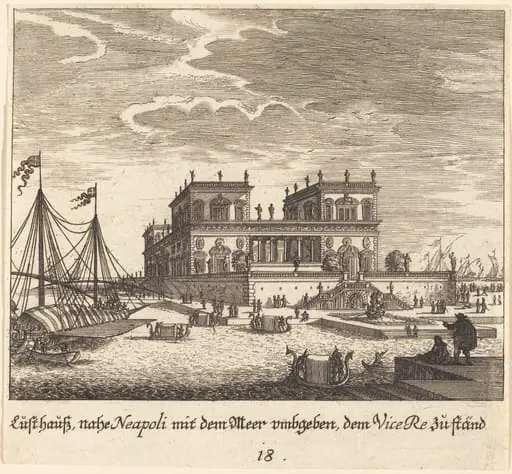
Palazzo of Count Widman is an ink print by the Baroque artist Melchior Küsel. It dates from 1681 and is held in the collection of the National Gallery of Art.
About this work
Overview
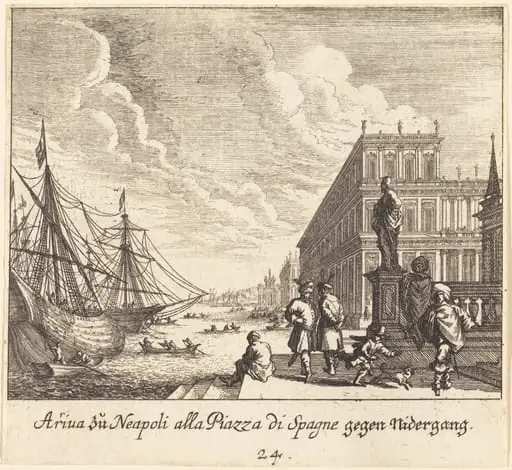
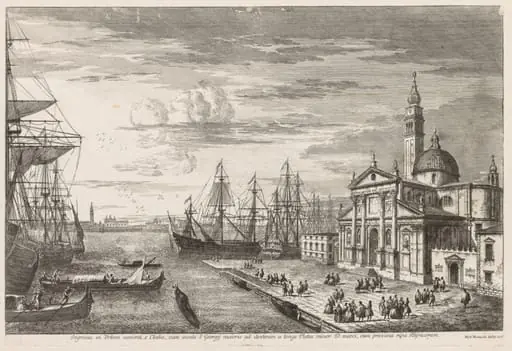
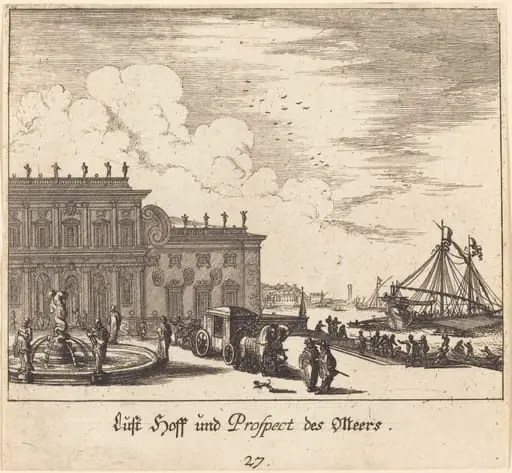
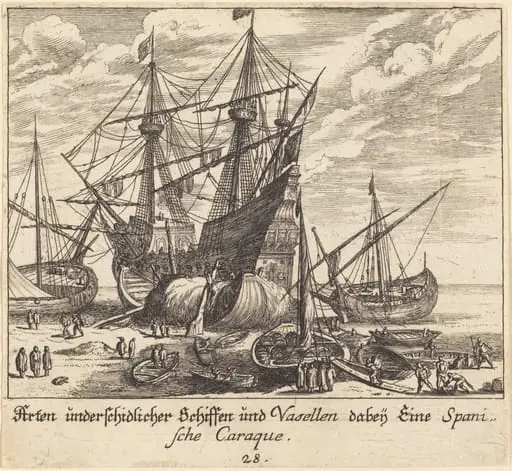
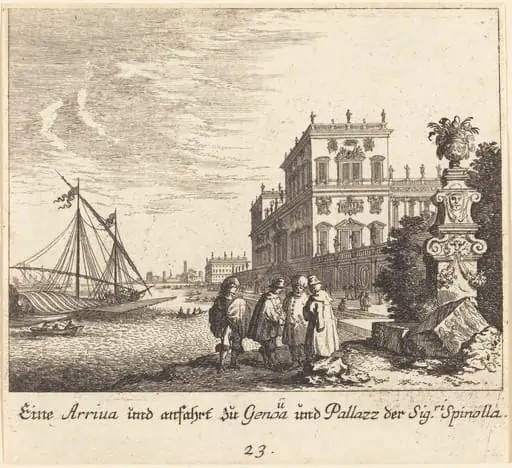
Melchior Küsel’s 1681 etching titled *Palazzo of Count Widman* depicts a bustling harbor scene rendered in monochrome. A sizable vessel is moored alongside an imposing building, while figures in long robes occupy a nearby platform. Smaller boats drift in the water, and the sky is dominated by dramatic cloud formations, giving the composition a sense of movement and depth.
Subject & Meaning
The print centers on a grand waterfront residence, identified in the inscription as the Palazzo of Count Widman, suggesting a noble or affluent patron. The presence of numerous ships and well‑dressed figures conveys the commercial vitality of the port and the social stature associated with the count’s domicile.
Technique & Style
Küsel employed the etching process, using fine, incised lines to model architectural details, ship rigging, and atmospheric clouds. The delicate hatching creates tonal variation and a sense of three‑dimensional space, reflecting the technical conventions of late‑seventeenth‑century Northern European printmaking.
History & Provenance
Created in 1681, the work is attributed to the German printmaker Melchior Küsel, known for his architectural and topographical subjects. The original plate’s ownership history is not extensively documented, but the print has appeared in several collections of early modern European prints, indicating its circulation among connoisseurs of the period.
Artist & collection