Artwork
Palace, Vice Re, Naples
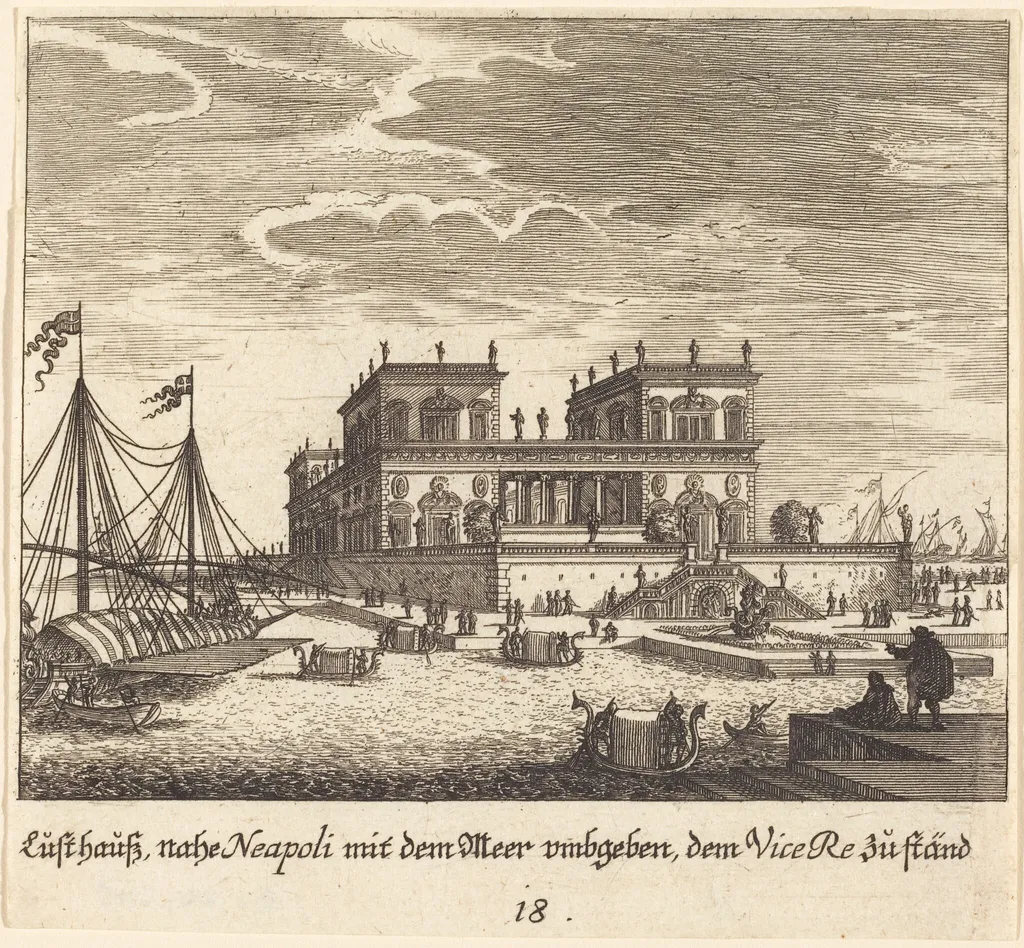
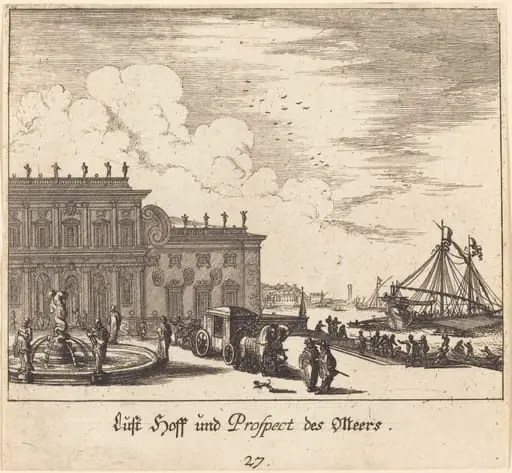
Palace, Vice Re, Naples is an ink print by the Baroque artist Melchior Küsel. It dates from 1681 and is held in the collection of the National Gallery of Art.
About this work
Overview
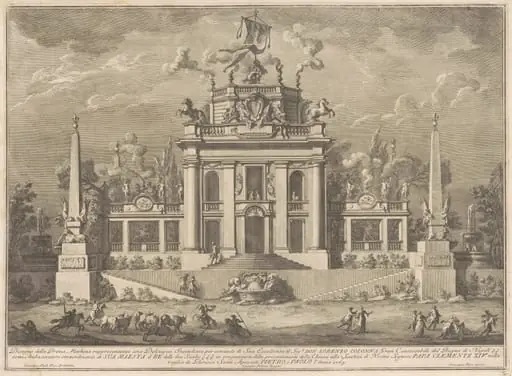
Melchior Küsel’s 1681 etching titled *Palace, Vice Re, Naples* captures a bustling Neapolitan harbor. Central to the composition is a large, multi‑storey edifice adorned with columns and statuary, its roof and balconies populated by figures. The scene is animated by ships, smaller boats, and a crowd of workers and onlookers, while a carriage traverses the shoreline.
Subject & Meaning
The print foregrounds a prominent palace, suggested by the inscription to be a royal or official residence, set against the lively activity of a Mediterranean port. The juxtaposition of architecture and maritime commerce reflects the city’s dual identity as a seat of power and a hub of trade, emphasizing the interdependence of governance and economic life in 17th‑century Naples.
Technique & Style
Küsel employed the etching process, incising fine lines into a copper plate to render intricate details such as rope rigging, wave texture, and the folds of clothing. The layered line work creates a sense of depth, distinguishing the massive stone structure from the bustling foreground and the distant sea, while the crispness of the lines conveys a documentary precision typical of Northern European printmakers of the period.
History & Provenance
Created in 1681, the print belongs to Küsel’s series of cityscapes that documented European urban centers. Though specific ownership records are scarce, the work has circulated among collections of prints and engravings, appearing in catalogues of 18th‑century German graphic art and later in museum holdings focused on Baroque printmaking.
Context
The image reflects the Baroque fascination with grand architecture and dynamic urban scenes. Naples, under Spanish rule at the time, was a vital Mediterranean port, and its harbors were frequently depicted by artists to showcase the city’s prosperity and strategic importance. Küsel’s Northern European perspective adds a comparative lens to the Italian urban landscape.
Legacy
Küsel’s etching contributes to the visual record of Naples’ architectural and commercial environment in the late 1600s. It serves as a reference for scholars studying the city’s urban development and for historians of printmaking, illustrating how etching was used to disseminate detailed images of foreign locales across Europe.
Artist & collection


 View of Meers
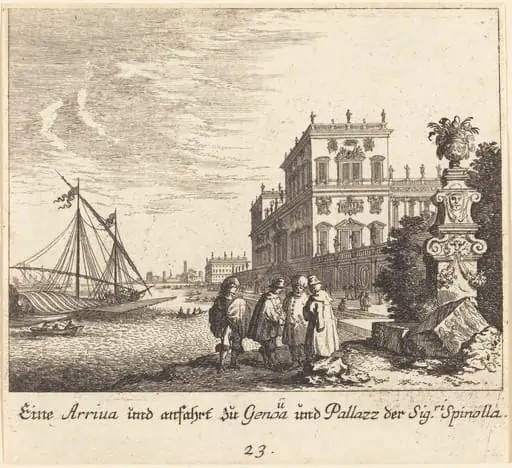 Palazzo Spinolla, Genoa
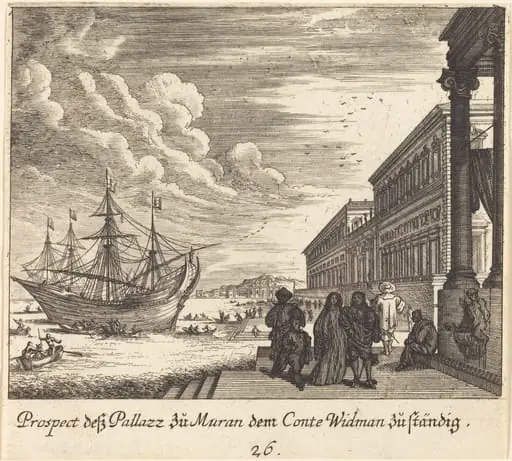 Palazzo of Count Widman
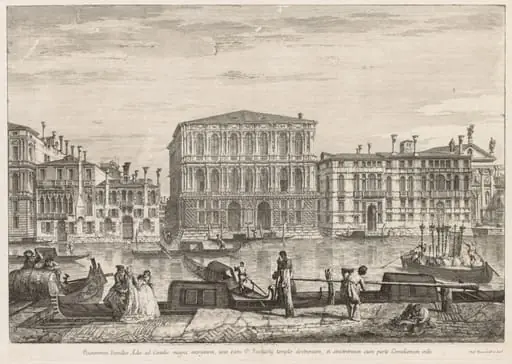 Views of Venice: Palazzo Pesaro
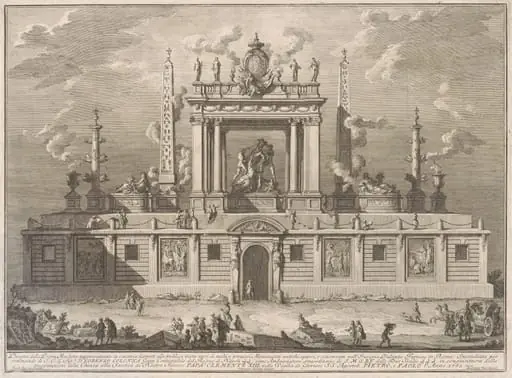 The Prima Macchina for the Chinea of 1762: The Farnese Bull and Other Antiquities from Palazzo Farnese
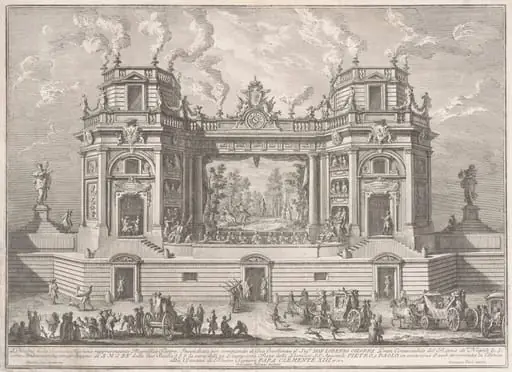 The Seconda Macchina for the Chinea of 1761: A Magnificent Theater
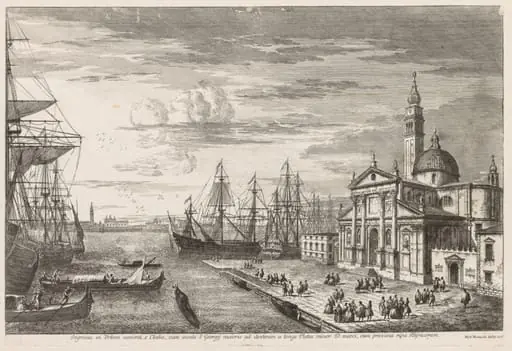 Views of Venice: The Basin of St. Mark's
 The Prima Macchina for the Chinea of 1769: A "Deliziosa"