Artwork
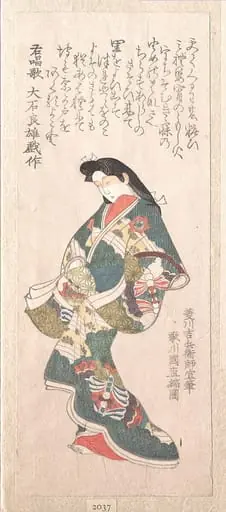
短冊持立美人図|Courtesan with Poetry Card (Tanzaku) at the New Year
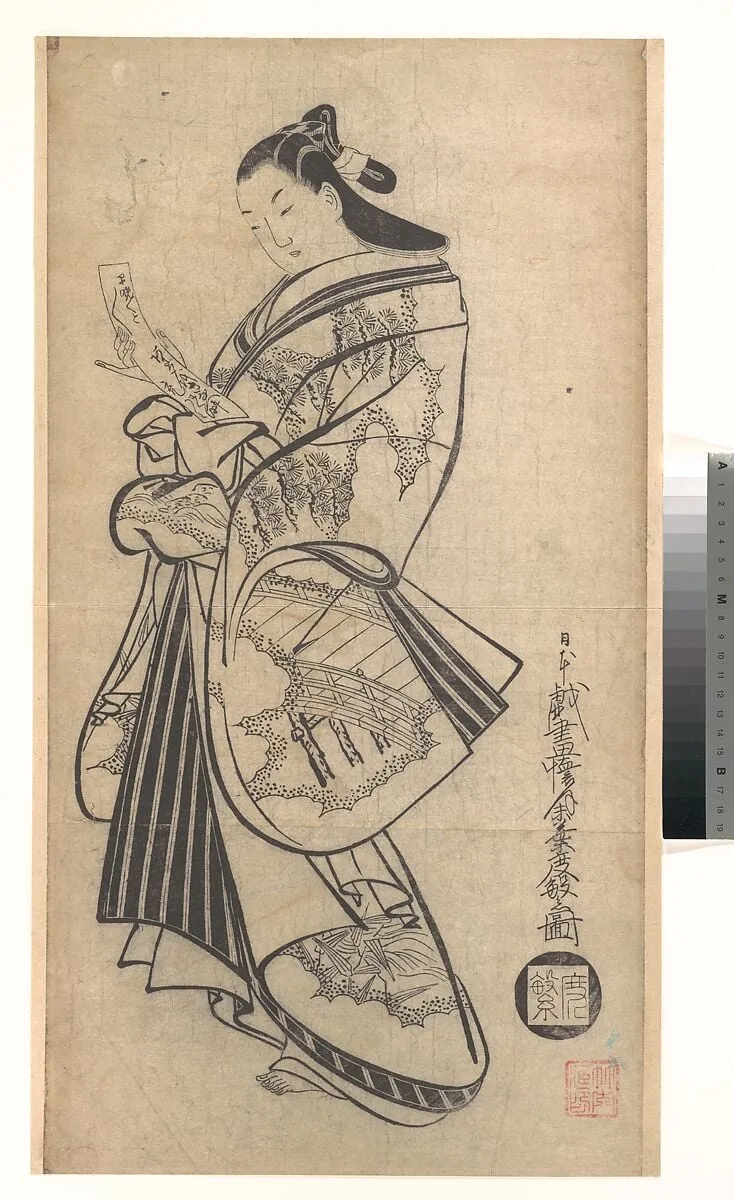
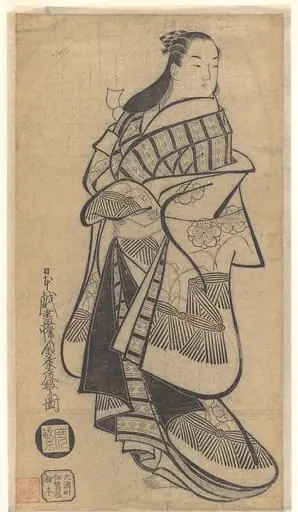
短冊持立美人図|Courtesan with Poetry Card (Tanzaku) at the New Year is an ink print by the Baroque artist Kaigetsudō Dohan. It dates from 1714 and is held in the collection of the Metropolitan Museum of Art.
About this work
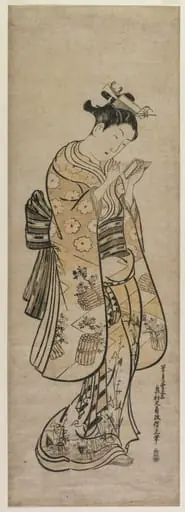
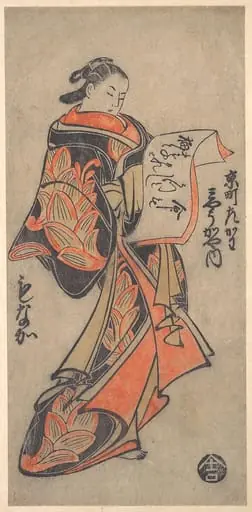
Her hair is pulled back into a high ponytail, and she's holding a small piece of paper in her right hand.
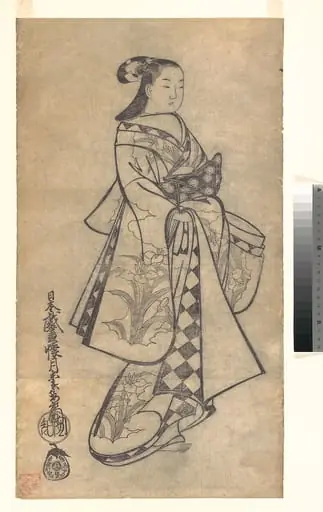
This is a black-and-white woodblock print of a woman. She's wearing a kimono with a pattern of plants and a long sash around her waist. Her hair is pulled back into a high ponytail, and she's holding a small piece of paper in her right hand.
The woman is standing with her body turned slightly to the left, but her face is turned to the right. She has a gentle expression on her face. The background of the print is plain, with no other objects or scenery visible.
This print is a great example of Japanese art from the early 18th century. To learn more about the artist who created this work, look up Kaigetsudō Dohan.
Overview
Courtesan with Poetry Card (Tanzaku) at the New Year is a monochrome woodblock print (sumizuri-e) by Kaigetsudō Dohan, dating to around 1714. The work is part of The Metropolitan Museum of Art's collection.
Subject & Meaning
The print depicts a courtesan standing in a contemplative pose, holding a tanzaku (poetry card) in her right hand. Her gentle expression and elegant attire, including a plant-patterned kimono and long sash, convey refinement. The subject's body faces left, while her face turns right, suggesting a nuanced, possibly introspective, mood.
Technique & Style
Executed in sumizuri-e, the print features bold, expressive lines and a stark, monochrome palette. The plain background emphasizes the courtesan's figure, highlighting the artist's use of negative space and simplicity to evoke serenity.
History & Provenance
Created circa 1714 by Kaigetsudō Dohan, the print is now housed at The Metropolitan Museum of Art. For biographical information on the artist, see separate resources on Kaigetsudō Dohan.
Context
This work exemplifies early 18th-century Japanese woodblock printing, a period marked by the emergence of distinctive artistic styles and themes, particularly in depictions of courtesans and poetic motifs.
Legacy
While the print's direct influence is not extensively documented, it contributes to the broader understanding and appreciation of Kaigetsudō Dohan's oeuvre and the evolution of Japanese woodblock printing techniques in the early 18th century.
Artist & collection