Artwork
Virgin and Child with Saint Lorenzo Giustiniani and Zeno
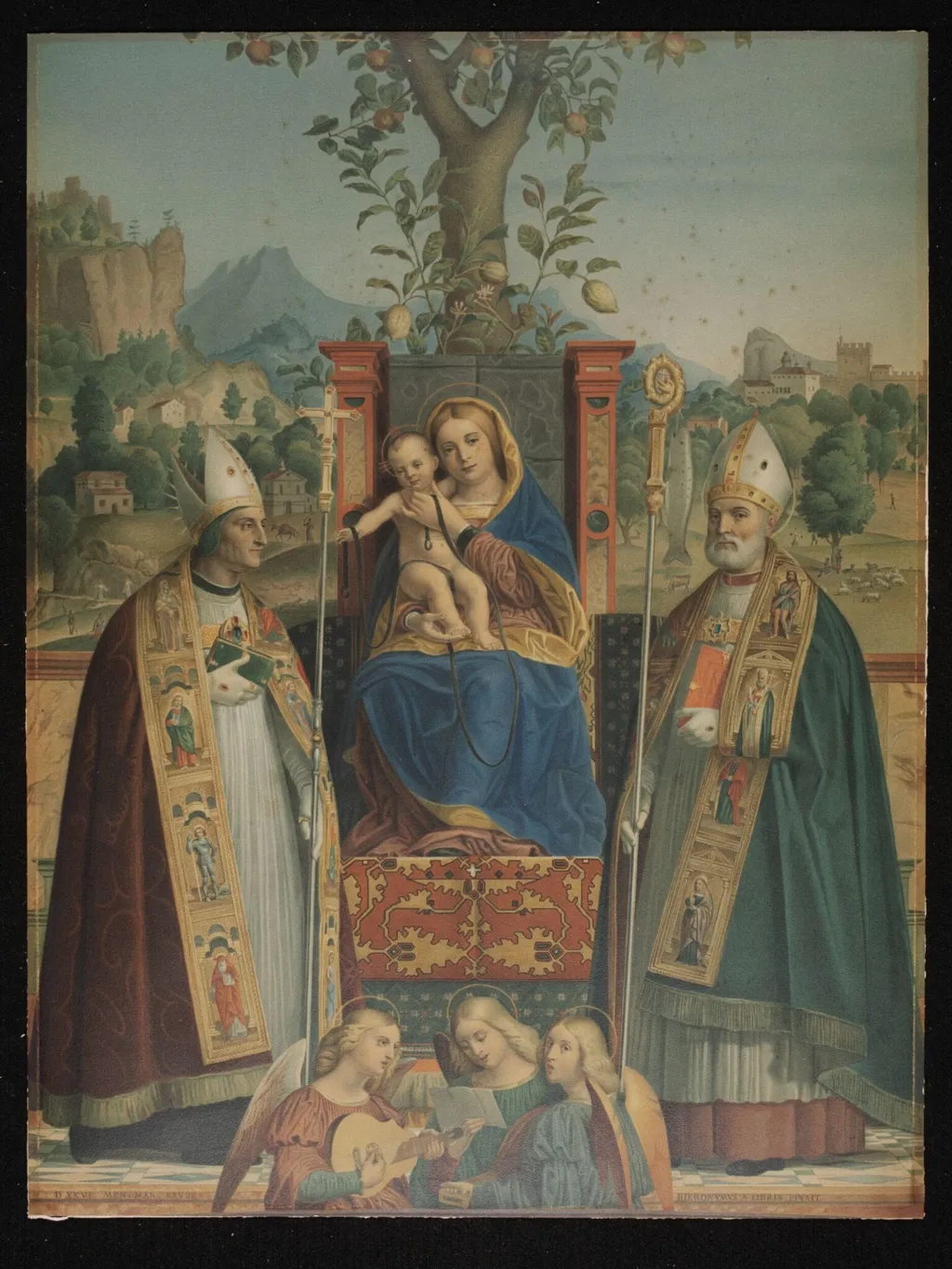
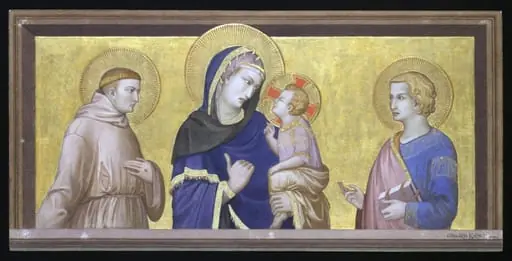
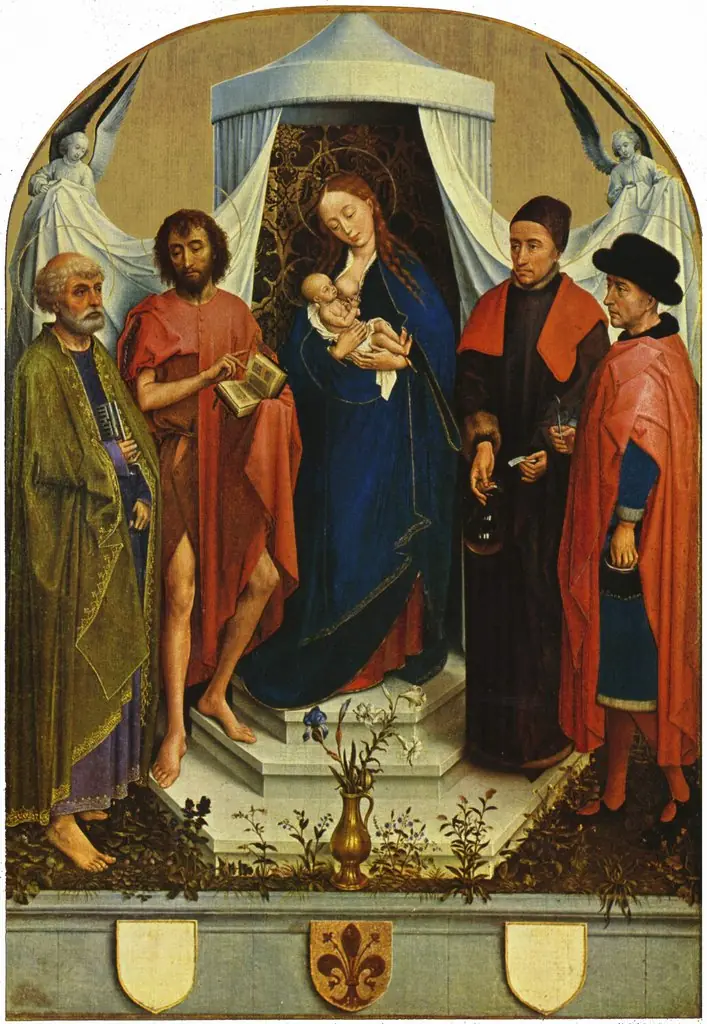
Virgin and Child with Saint Lorenzo Giustiniani and Zeno is a print by the Impressionist artist Edward Kaiser. It dates from 1874 and is held in the collection of the Victoria and Albert Museum.
About this work
This print shows a religious scene with the Virgin Mary holding the Christ child. Saints Lorenzo Giustiniani and Zeno appear beside them. Edward Kaiser made it in 1874.
It’s a chromolithograph, a colorful printing method where each color gets its own stone. The Arundel Society ordered prints like this for subscribers.
Check out prints at the Victoria and Albert Museum.
Overview
Each hue was applied using a separate stone, a labor-intensive method that allowed for nuanced color reproduction.
This chromolithograph, created by Edward Kaiser in 1874, reproduces a devotional composition featuring the Virgin and Child flanked by Saints Lorenzo Giustiniani and Zeno. Produced for the Arundel Society, it belongs to a series of color prints designed to disseminate high-quality reproductions of Renaissance and medieval Italian frescoes to a broad public audience. Each hue was applied using a separate stone, a labor-intensive method that allowed for nuanced color reproduction.
Subject & Meaning
The scene depicts the Virgin Mary seated with the Christ Child, surrounded by two saints associated with Venice: Lorenzo Giustiniani, the first Patriarch of Venice, and Saint Zeno, a revered bishop and martyr. Their presence reinforces the devotional and civic identity of Venetian Christianity. The composition follows traditional iconography, emphasizing spiritual authority and intercession, intended to inspire contemplation among viewers in domestic and ecclesiastical settings.
Technique & Style
The print was made using chromolithography, a process requiring a separate lithographic stone for each color. Artists first painted watercolor copies of original frescoes, which were then translated into printing plates. The technique preserved the tonal richness and linear clarity of the source, though with a flattened, decorative quality typical of reproductive prints. The result is a vivid, detailed image that mimics the appearance of painted surfaces without the texture of original pigment.
History & Provenance
Commissioned by the Arundel Society, this print was part of a larger effort to make accessible works of Italian art to subscribers across Britain and beyond. The Society, active from 1849 to 1897, employed artists to copy frescoes from churches and chapels, then distributed the resulting prints through subscription. Over 200,000 such prints were circulated, many ending up in schools, churches, and public halls where they served educational and devotional purposes.
Context
The Arundel Society emerged during a period of renewed interest in medieval and Renaissance art, fueled by the Gothic Revival and the rise of public education. By reproducing religious imagery from Italian fresco cycles, the Society aimed to elevate public taste and provide visual models for religious instruction. This print reflects a broader 19th-century movement to democratize access to art, prioritizing moral and aesthetic education over original ownership.
Legacy
Chromolithographs like this one remain in public and institutional collections, offering insight into 19th-century art dissemination and Victorian attitudes toward religious imagery. Though no longer considered fine art, they are valued as historical artifacts that reveal how art was reproduced, consumed, and integrated into everyday life. Many survive in churches and museums, testifying to their enduring presence in communal visual culture.
Artist & collection

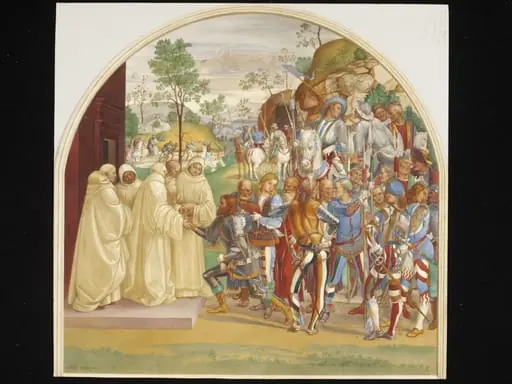 St Benedict and the True King Totila
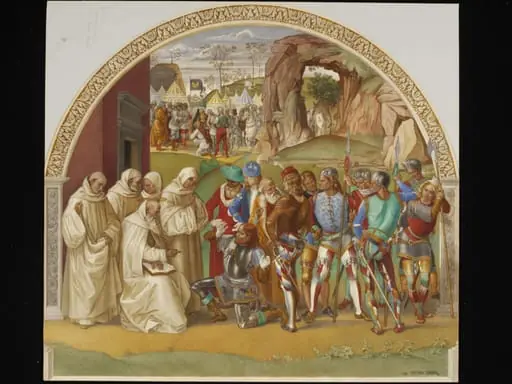 St Benedict and the False King Totila
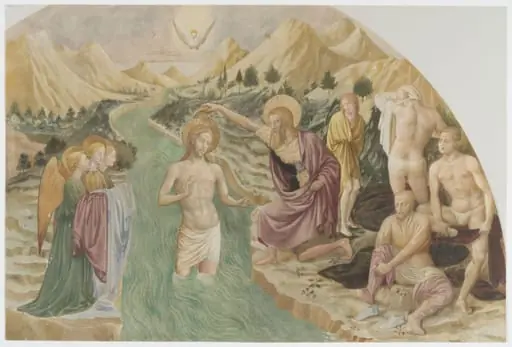 Copy after the painting Baptism of Christ by Masolino in Castiglione d'Olona
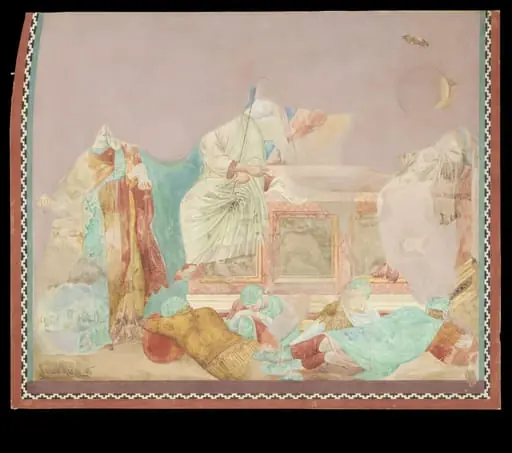 Copy after the painting The Maries at the Sepulchre attributed to the Isaac Master in the Upper Church, San Francesco, Assisi
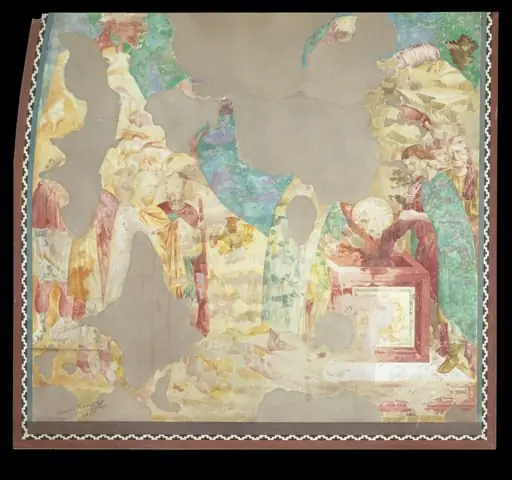 Copy after the painting Joseph and his brothers at the Well attributed to the Isaac Master in the Upper Church, San Francesco, Assisi
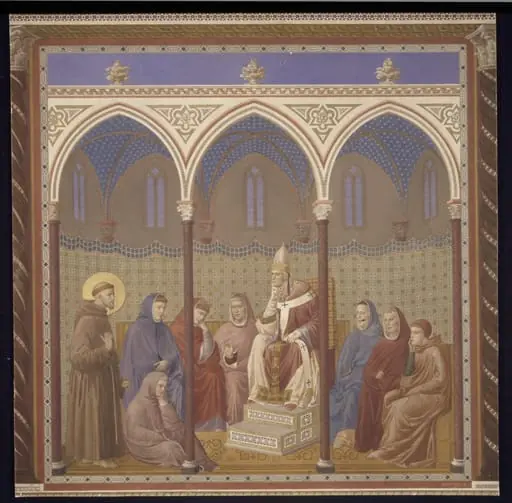 Copy after the painting St Francis before Pope Honorius by the Master of the St Francis cycle in the Upper Church, San Francesco, Assisi
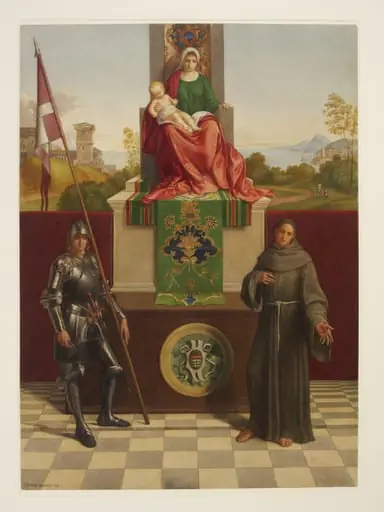 Copy after the painting Virgin and Child with Saints (Castelfranco Altarpiece) by Giorgione in S. Liberale, Castelfranco
 Copy after the painting Virgin and Child with St John and St Francis by Pietro Lorenzetti ??? in the Lower Church, San Francesco, Assisi
 Trinity, the Virgin, and Two Saints
 Mary and Child Enthroned with Saints
 The Virgin and Child enthroned with St. Stephanus and St. Jerome
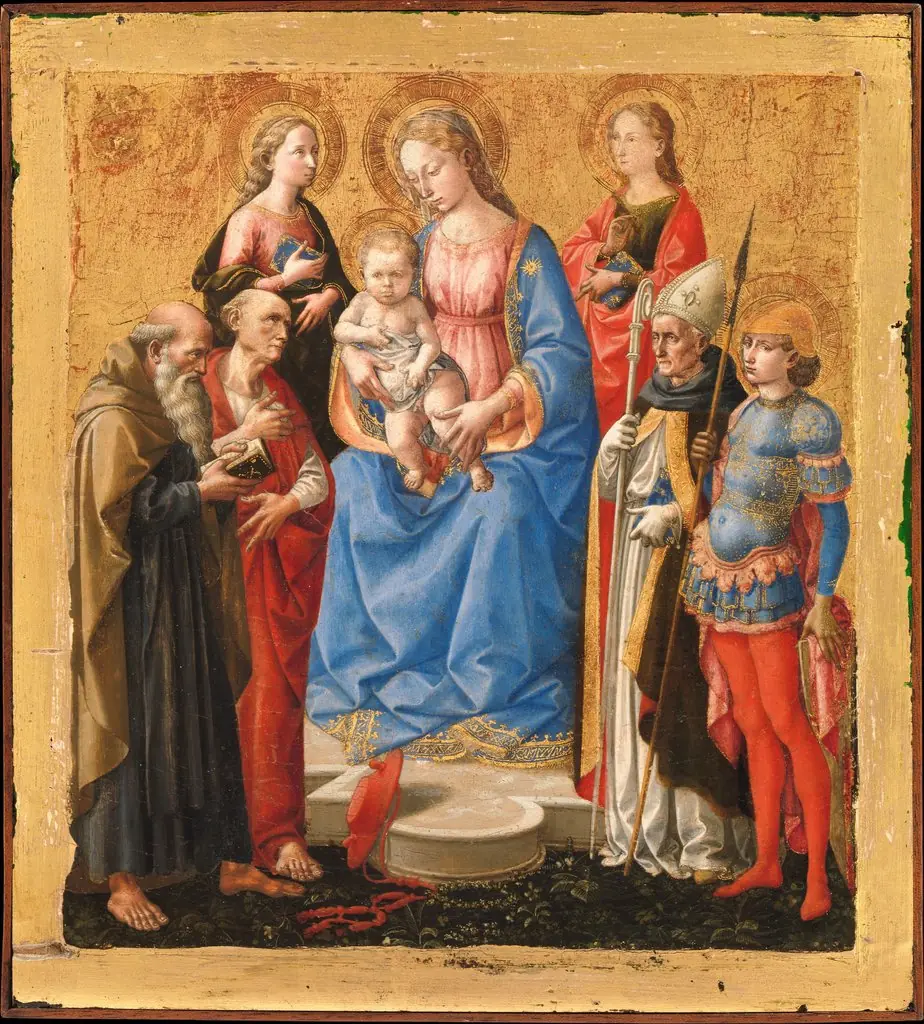 Madonna and Child with Six Saints
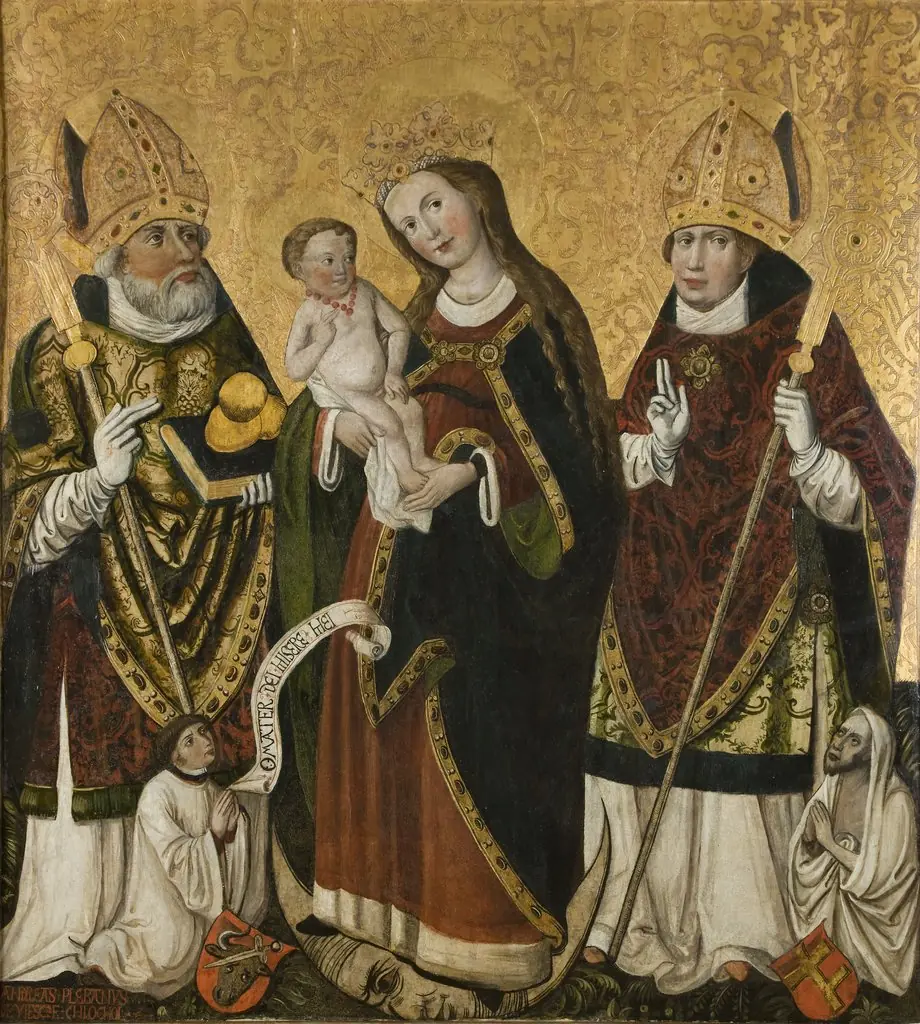 Matka Boska z Dzieciątkiem i świętymi biskupami - Mikołajem i Stanisławem. Korpus retabulum ołtarza głównego w Bejscach
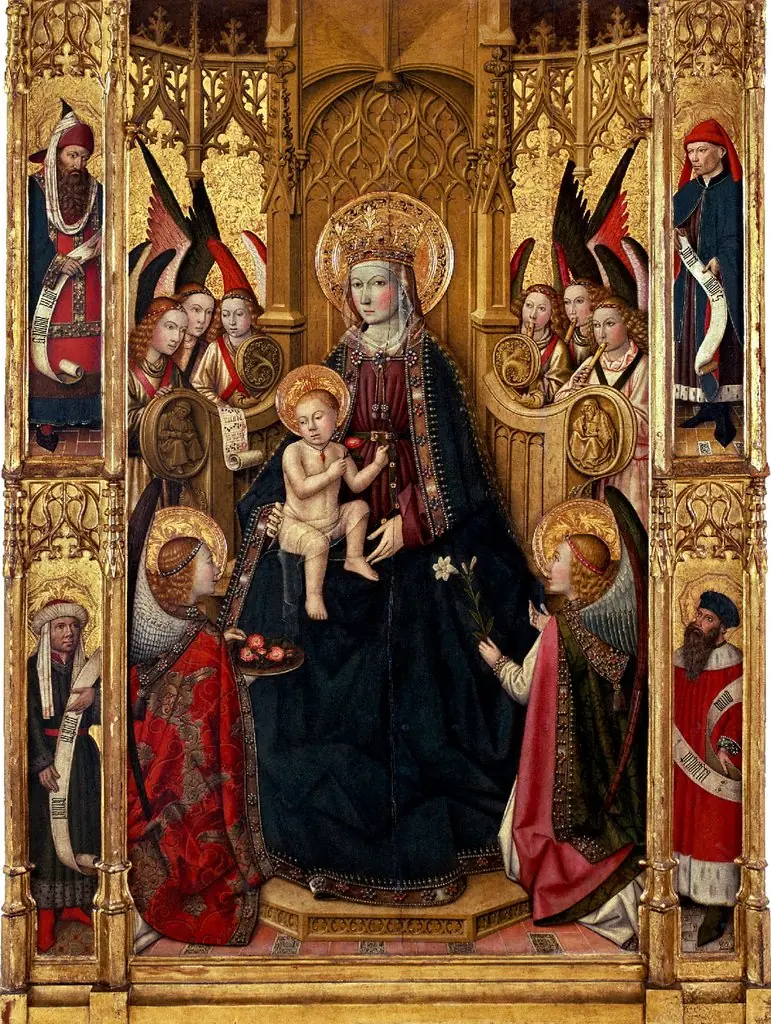 Madonna with child
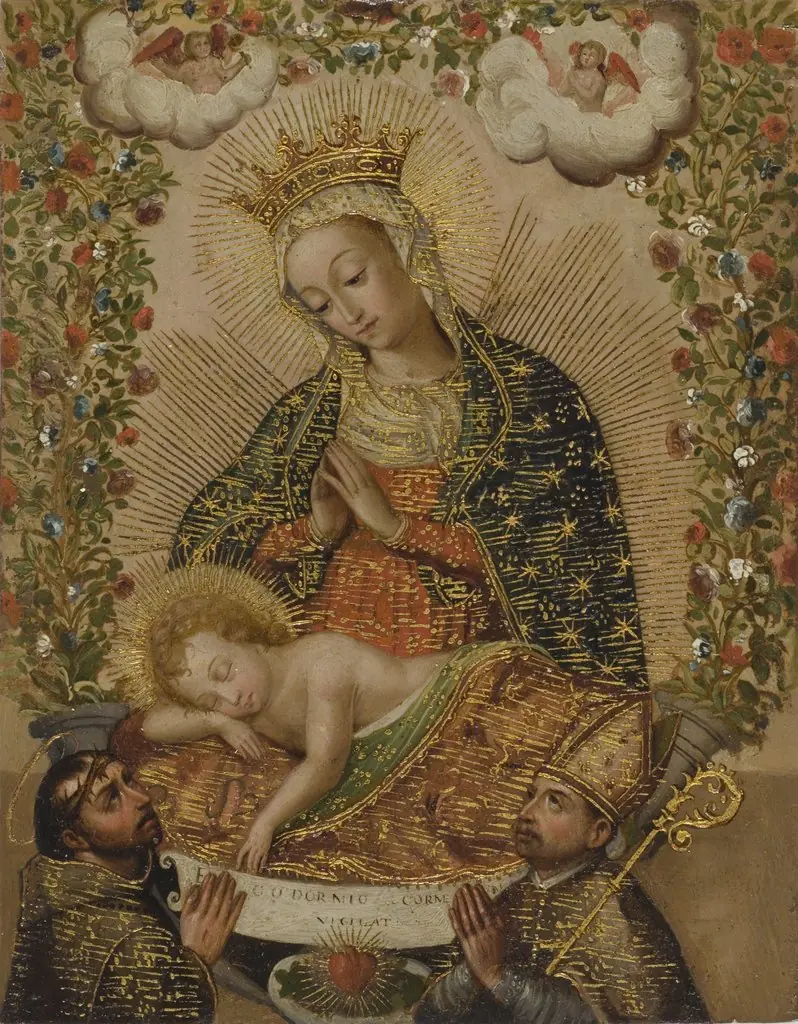 The Virgin Adoring the Christ Child with Two Saints (La Virgin adorando al Niño Jesús con dos santos)
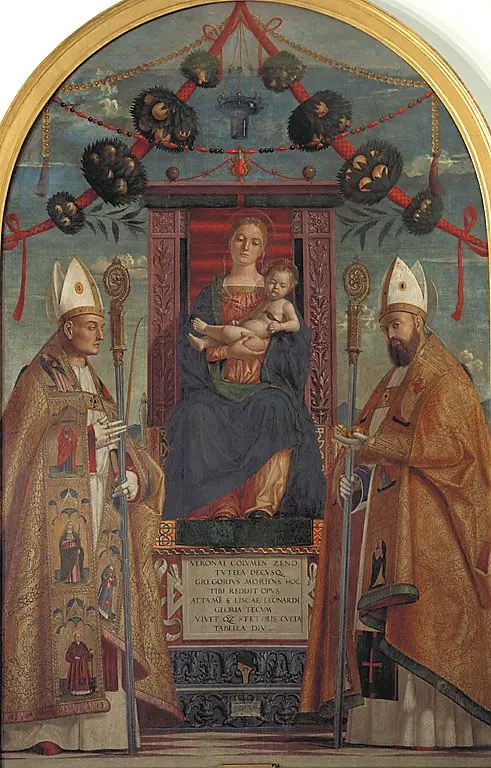 Madonna in trono con il Bambino e i Santi Zeno e Nicolò
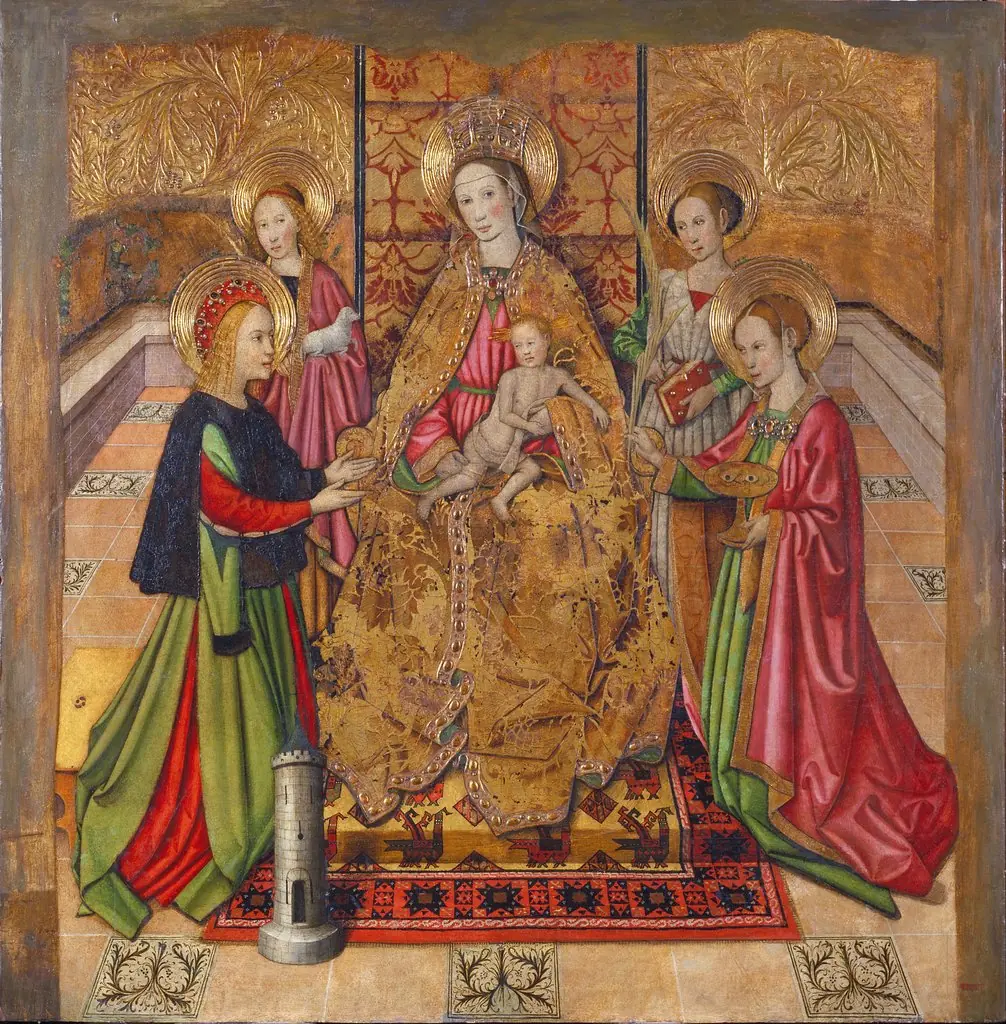 Virgin and Saints
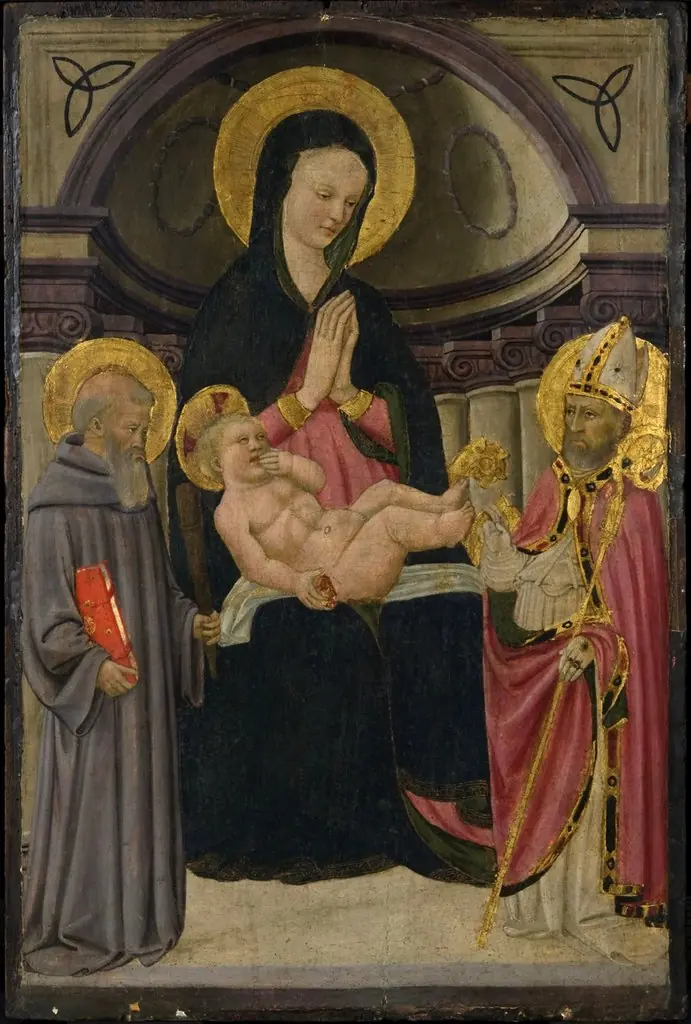 Virgin and Child Enthroned with Saint Benedict and a Bishop Saint
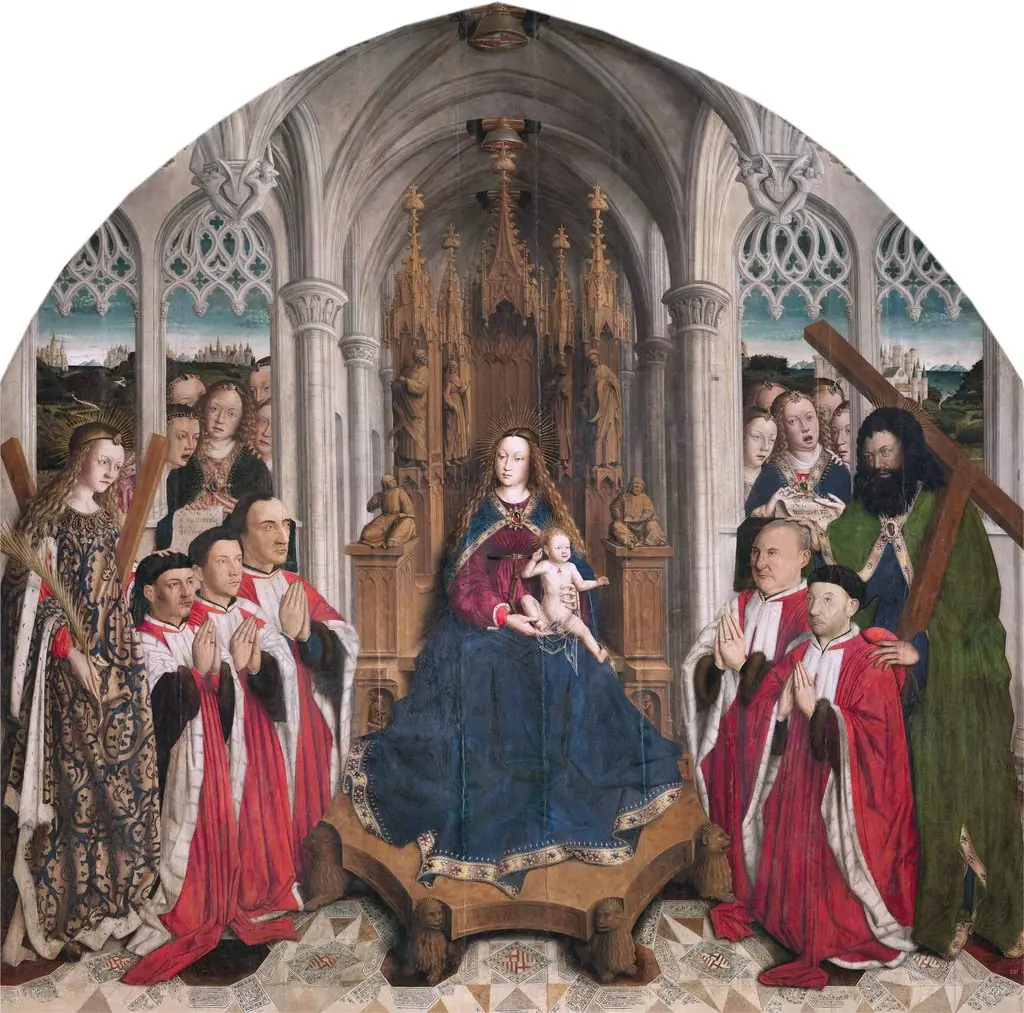 Virgin of the Councillors
 Medici Madonna