Artwork
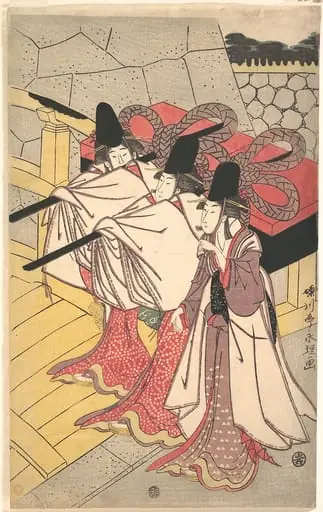
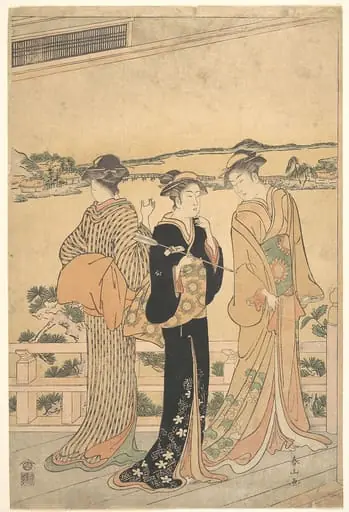
礫川亭永理 (鳥橋斎栄里)画 「畧六玉川 井出の山吹」|Mountain Roses of Ide (Ide no Yamabuki), from the series A Parodic Six Jewel Rivers (Yatsushi Mu-Tamagawa)
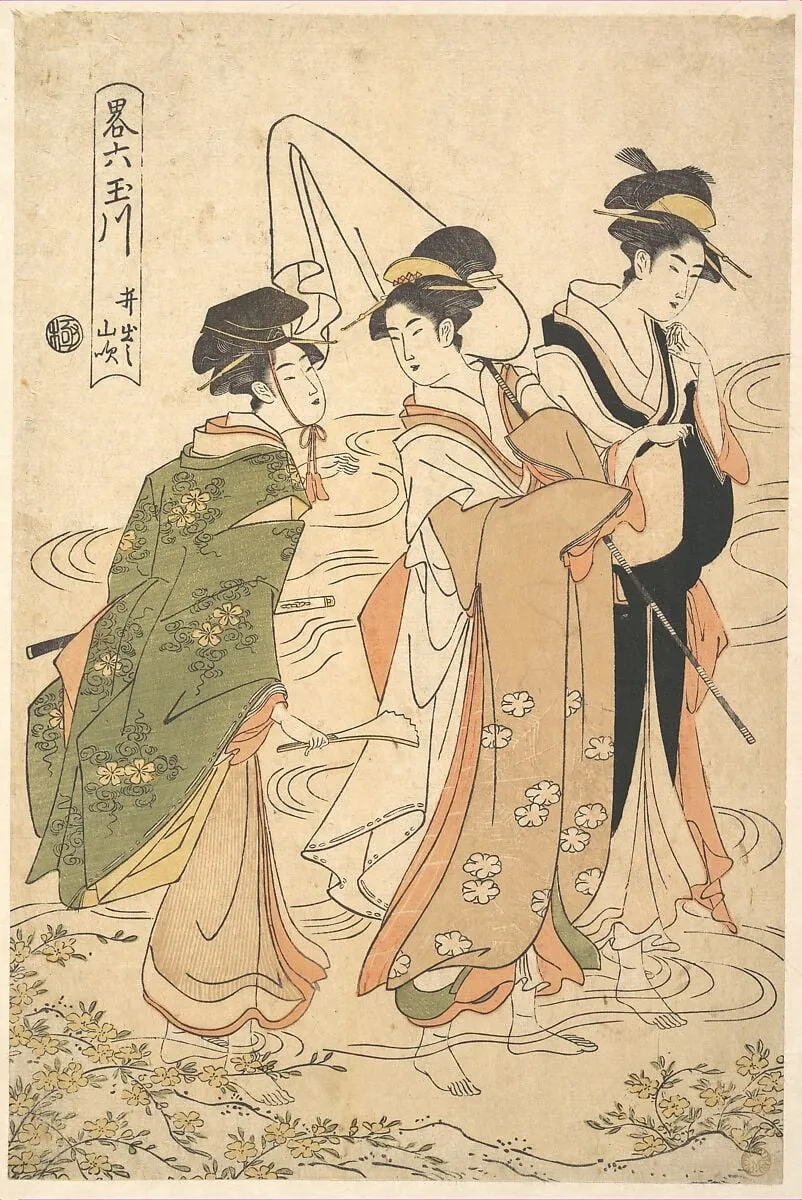
礫川亭永理 (鳥橋斎栄里)画 「畧六玉川 井出の山吹」|Mountain Roses of Ide (Ide no Yamabuki), from the series A Parodic Six Jewel Rivers (Yatsushi Mu-Tamagawa) is an ink print by the Romanticist artist Rekisentei Eiri. It dates from 1795 and is held in the collection of the Metropolitan Museum of Art.
About this work
Overview
It is currently held in the collection of The Metropolitan Museum of Art, where it represents a lesser-known but distinctive voice in the genre.
Created around 1795 by Rekisentei Eiri, this woodblock print is part of a series titled A Parodic Six Jewel Rivers, which reimagines celebrated Japanese river landscapes through humorous or satirical lenses. The work is rendered in ink and color on paper, typical of ukiyo-e prints of the late Edo period. It is currently held in the collection of The Metropolitan Museum of Art, where it represents a lesser-known but distinctive voice in the genre.
Subject & Meaning
The scene depicts three women strolling through a landscape associated with Ide, a location linked to the Yamabuki flower, or Japanese rose. Their relaxed posture and mutual glances suggest camaraderie rather than narrative drama. The title’s reference to 'six jewel rivers' is playfully subverted—here, the natural landmark is replaced by an intimate, human-centered moment, reflecting the series’ broader tendency to invert traditional poetic ideals with everyday charm.
Technique & Style
Eiri employs delicate line work and soft, muted color gradients to render the figures and their floral-patterned kimonos. Fans and parasols are rendered with subtle detail, enhancing the sense of movement. The background, rendered in pale beige with minimal tonal variation, avoids overt landscape detail, directing focus to the figures. The composition balances asymmetry with calm, characteristic of late 18th-century ukiyo-e’s shift toward domestic and lyrical themes.
History & Provenance
The print was produced during a period when ukiyo-e artists increasingly explored parodic and genre-bending subjects. Rekisentei Eiri, active in the 1790s, was part of a circle of printmakers who experimented with literary allusions and visual wit. The work entered The Metropolitan Museum of Art’s collection through documented acquisitions of Edo-period prints, though its early ownership history remains largely unrecorded.
Context
This print emerged amid a flourishing print culture in Edo, where series based on classical poetry or geography were commonly reinterpreted for urban audiences. The 'Six Jewel Rivers' motif, traditionally solemn, was here turned into a vehicle for gentle satire. Eiri’s focus on women in leisure reflects broader trends in ukiyo-e that celebrated the pleasures of urban life, particularly among the merchant class and their families.
Legacy
Though Rekisentei Eiri is not among the most widely recognized ukiyo-e artists, works like this demonstrate the diversity of styles and subjects explored during the late Edo period. The print contributes to scholarly understanding of how humor and domesticity were woven into traditional formats. It remains a quiet example of how everyday moments could be elevated through printmaking, without grandeur or mythological reference.
Artist & collection


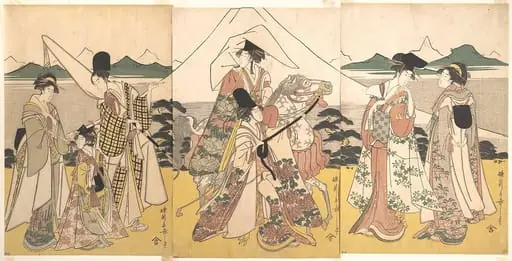
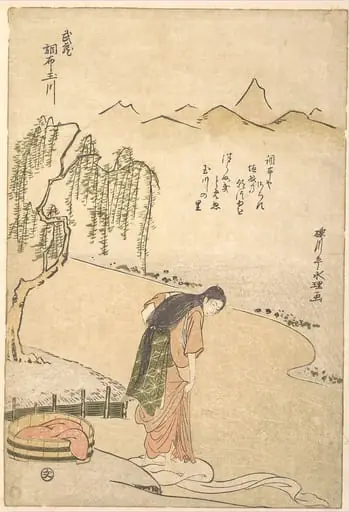
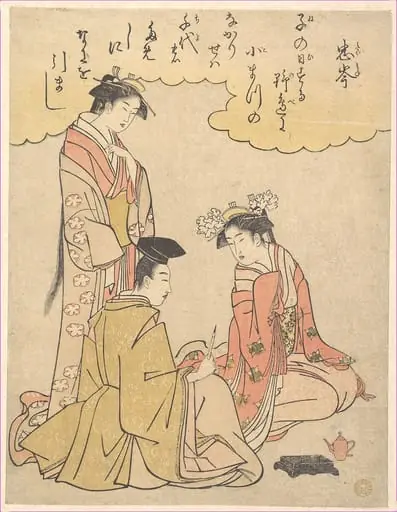
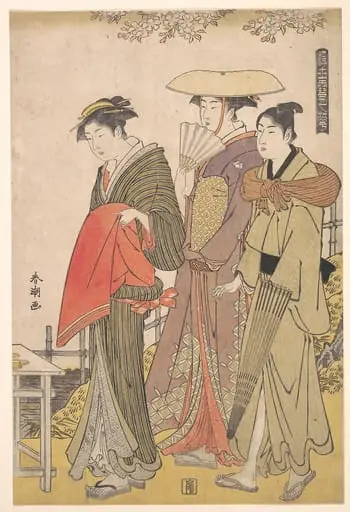 Ukiyoe Ga|The Beauty of the Floating World
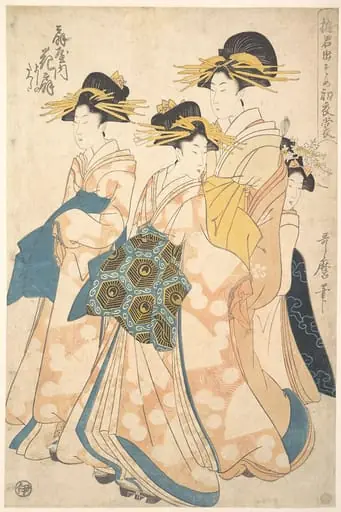 遊君出そめ初衣裳 扇屋内花扇|The Oiran Hanaogi of Ogiya attended by Two Shinzo and Her Kamuro Yoshino
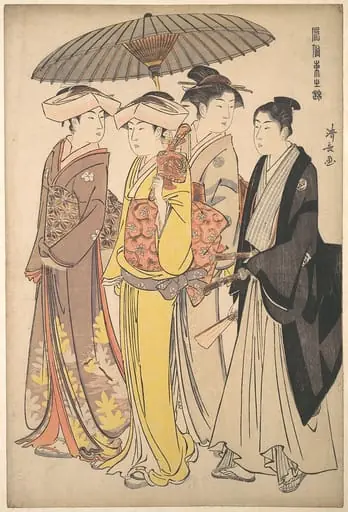 「風俗東之錦」 武家の息女と侍女と若党 |A Lady from a Samurai Household with Three Attendants, from the series A Brocade of Eastern Manners (Fūzoku Azuma no nishiki)
 Untitled
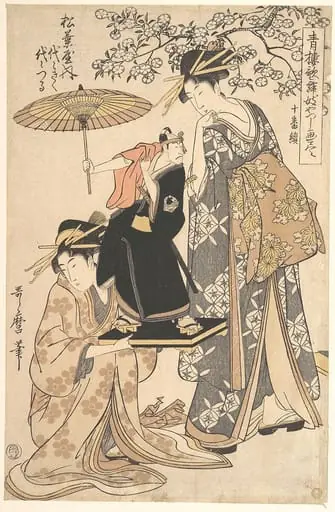 青楼歌舞妓やつし画尽 十番続|The Oiran Yoyogiku of Matsubaya Standing under a Cherry Tree
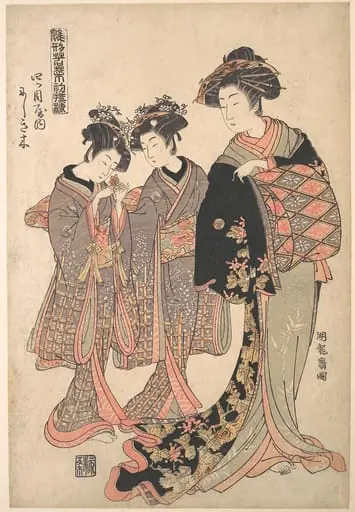 『雛形若菜初模様 四ツ目屋内 にしき木』|The Courtesan Nishikigi of the Yotsumeya Brothel, from the series “A Pattern Book of the Year’s First Designs, Fresh as Spring Herbs” (“Hinagata wakana hatsu moyō”)
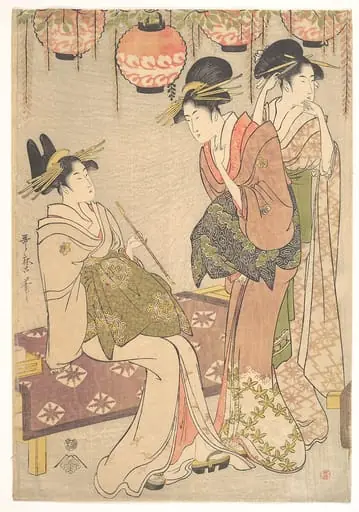 Untitled
 Kitchugi|Geisha of the Tachibana Street
 Untitled