Artwork
Ali Quli Khan
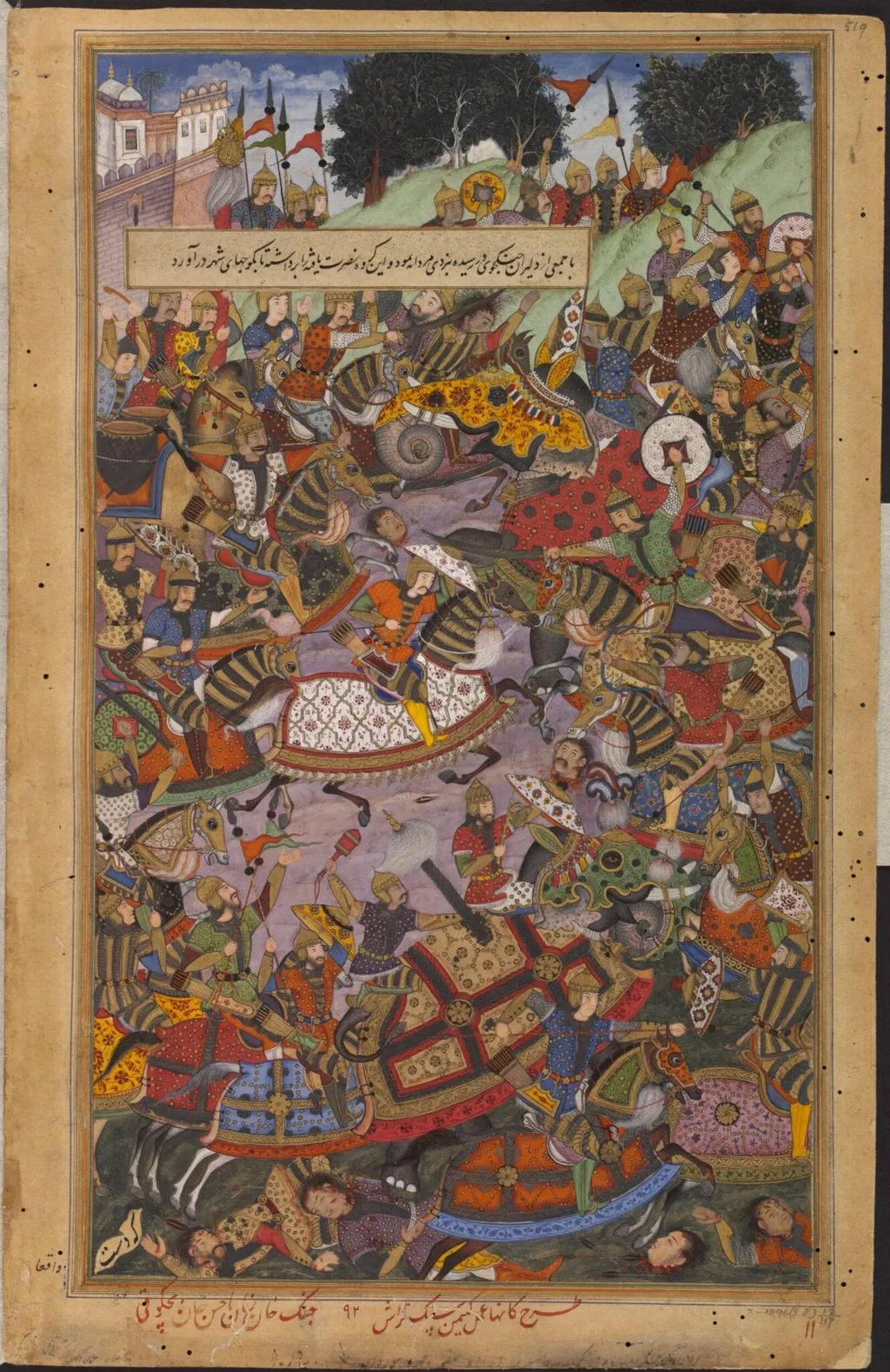
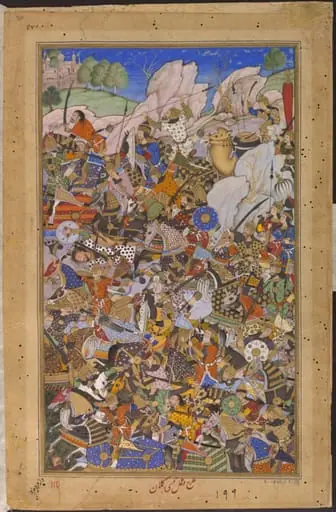
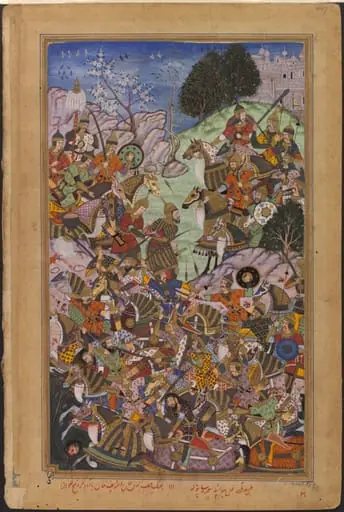
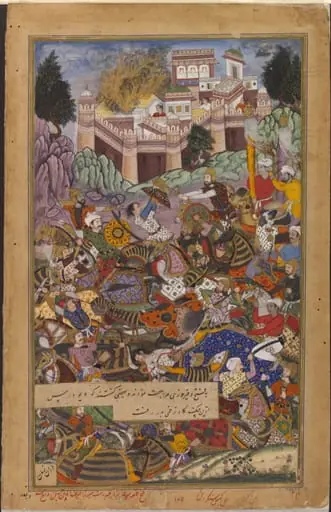
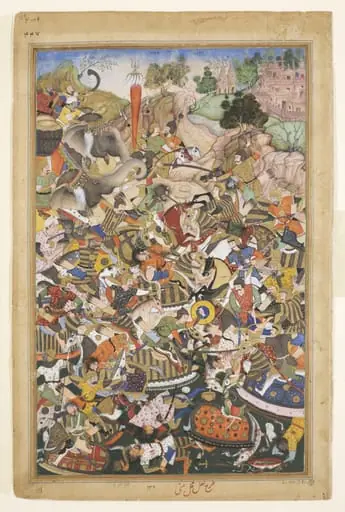
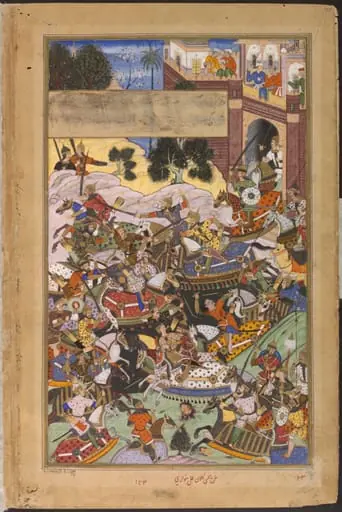
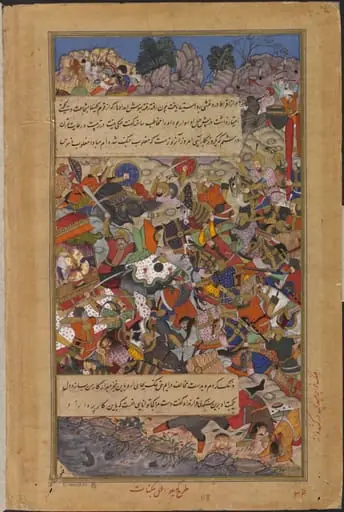
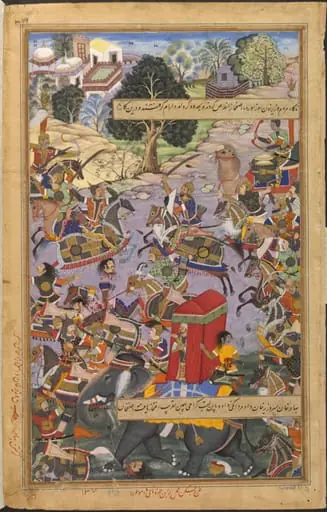
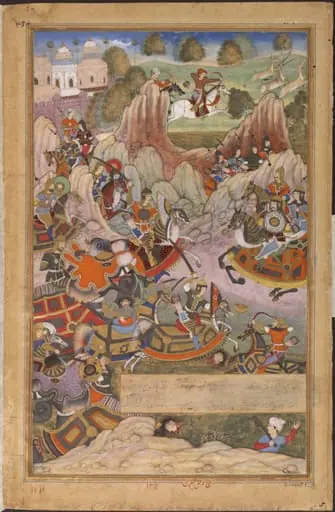
Ali Quli Khan is a paint painting by the Mughal Painting artist Kanha. It dates from 1592 and is held in the collection of the Victoria and Albert Museum. This painting, paired with IS.
About this work
Overview
Its survival and later acquisition by the Victoria and Albert Museum in 1896 reflect its enduring historical significance.
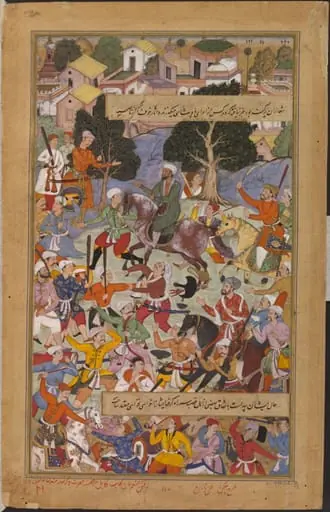
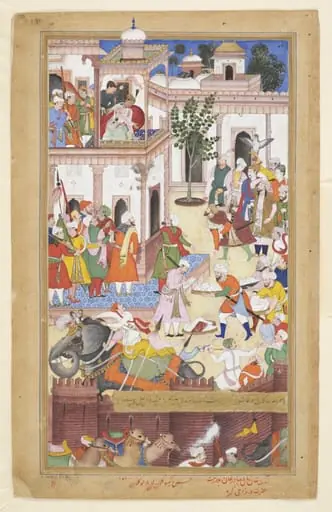
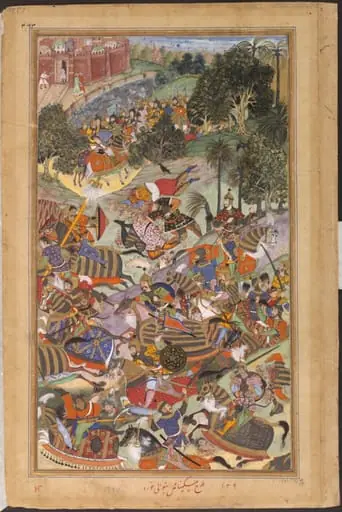
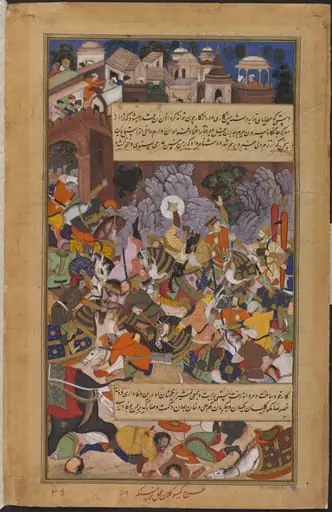
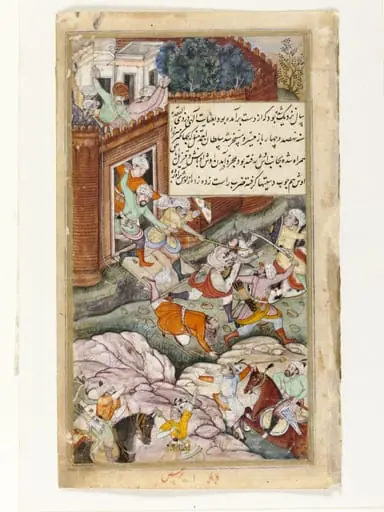
This painting, paired with IS.2:13-1896, forms a single narrative scene from the Akbarnama, the official chronicle of Emperor Akbar’s reign. Created around 1592–1594, it depicts a military victory on the banks of the Jumna River in 1561. The work emerged from Akbar’s imperial atelier, where multiple artists collaborated under a unified compositional plan. Its survival and later acquisition by the Victoria and Albert Museum in 1896 reflect its enduring historical significance.
Subject & Meaning
The scene illustrates Ali Quli Khan’s triumph over Afghan forces, a moment recorded in Abu'l Fazl’s text to underscore Mughal military dominance. The riverbank setting anchors the event in real geography, reinforcing the chronicle’s claim to historical accuracy. The depiction serves not merely as record but as political affirmation, legitimizing Akbar’s rule through the valor of his commanders. The inclusion of named artists signals the imperial value placed on artistic labor as part of state documentation.
Technique & Style
The painting reflects the refined synthesis of Persian, Indian, and early European influences characteristic of Akbar’s atelier. Fine brushwork defines figures and landscape, with attention to costume, weaponry, and natural detail. The composition is carefully structured, likely drafted by Kanha, then executed by Khiman Sangtarash. Inscriptions in red ink at the base identify the artists, a rare practice that highlights individual contribution within a collaborative imperial project.
History & Provenance
The manuscript remained in the imperial library through the reigns of Jahangir and Shah Jahan before entering private hands. It was acquired by Major General Clarke during his tenure as Commissioner of Oudh and passed to his widow, Mrs. Frances Clarke. The Victoria and Albert Museum purchased the folios in 1896, preserving them as part of one of the earliest illustrated versions of the Akbarnama. Its provenance traces a direct line from Mughal court to British colonial collection.
Context
The Akbarnama was commissioned as a state-sponsored chronicle to immortalize Akbar’s reign in both text and image. Its illustration, undertaken by nearly fifty artists, represented a major artistic enterprise. Abu'l Fazl’s writings acknowledge several painters by name, elevating their status within court culture. This painting is part of a broader project that merged historical narrative, political ideology, and artistic innovation under imperial patronage.
Legacy
As one of the earliest illustrated copies of the Akbarnama, this work set a precedent for Mughal manuscript painting. Its collaborative nature and documented artist credits offer insight into the structure of royal workshops. Today, it remains a key reference for understanding how visual art functioned as state propaganda and historical record in early modern South Asia, influencing later traditions of courtly illustration.
Artist & collection
Artist
Kanha painted delicate portraits of Mughal nobles and scenes from court life around 1590.