Artwork
Wazir Khan and Bahadur Khan
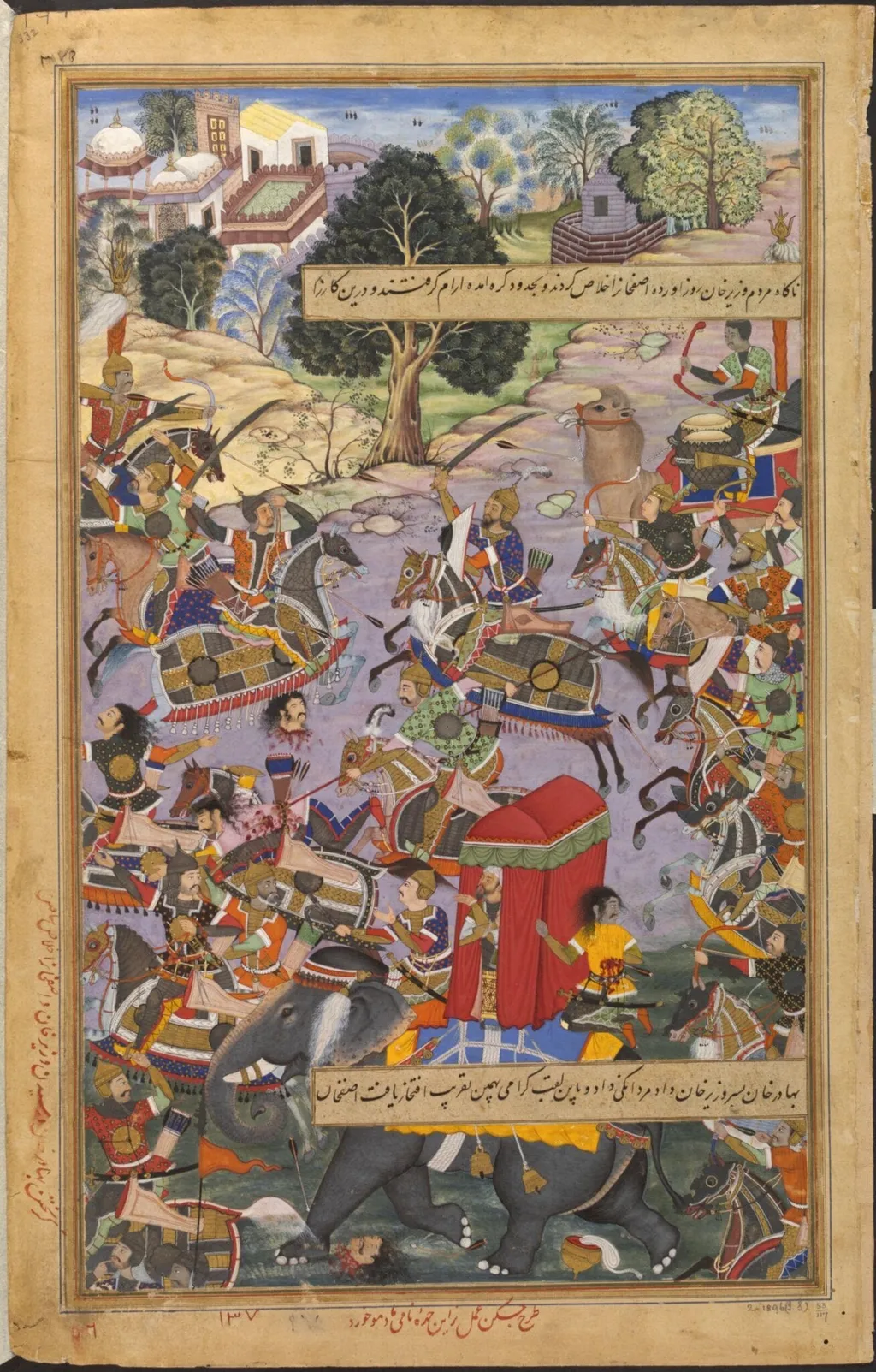
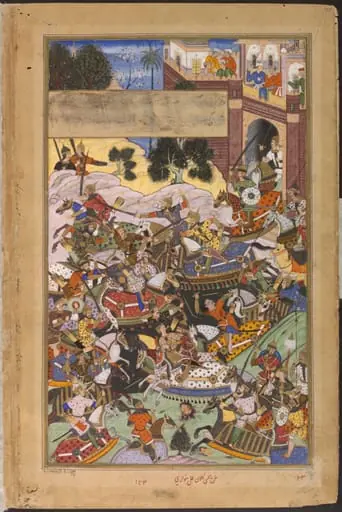
Wazir Khan and Bahadur Khan is a paint painting by the Mughal Painting artist Jagan. It dates from 1592 and is held in the collection of the Victoria and Albert Museum.
About this work
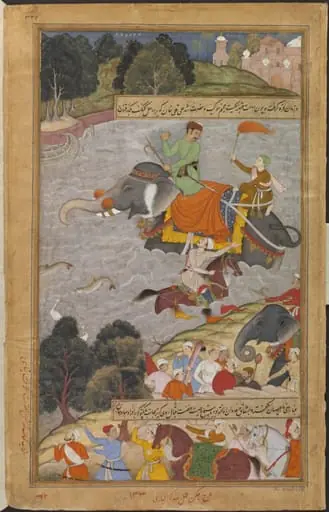
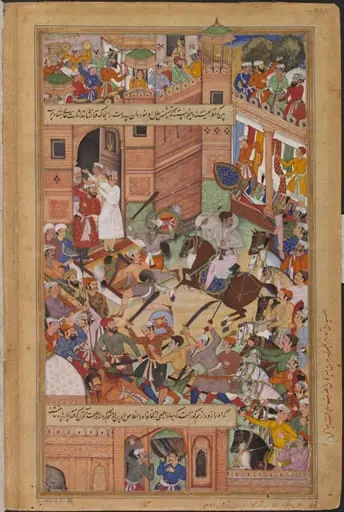
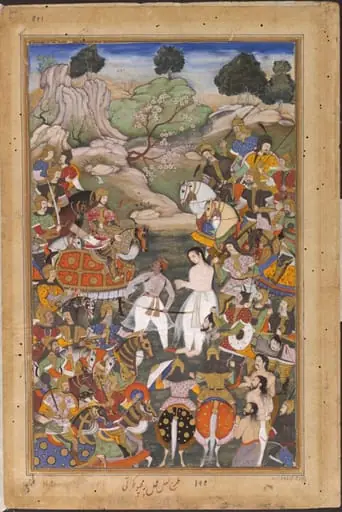
This painting shows two men, Wazir Khan and Bahadur Khan, in a scene.
The story behind this painting is interesting. It's based on a real event from 1567, where Wazir Khan fought to free a captive noble. The painting is part of a book about the Mughal emperor Akbar.
To learn more about similar artwork, look up the artist Jagan.
Overview
The miniature illustrates a 1567 clash between Wazir Khan and ‘Ali Quli Khan, recorded in the Akbarnama, the official chronicle of Emperor Akbar’s reign. It shows Wazir Khan intervening to release the captured noble Asaf Khan, who is depicted shackled on an elephant litter in the foreground.
Subject & Meaning
The scene narrates a brief episode of Mughal internal conflict: Asaf Khan, formerly loyal to Akbar, had rebelled alongside his brother Wazir Khan and allied with ‘Ali Quli Khan and Bahadur Khan. Dissatisfied with the alliance, they attempted to flee; Asaf Khan was seized, prompting Wazir Khan’s decisive attack to free him, symbolising loyalty amid factional strife.
Technique & Style
The composition was devised by the court artist Jagan, while the execution of details was entrusted to Narayan. The principal portraits—those of Wazir Khan, Bahadur Khan, and Asaf Khan—were painted by Madhav the Younger, as noted in contemporary inscriptions beneath the image. The work exemplifies the refined miniature style of late‑16th‑century Mughal court painting.
History & Provenance
The Akbarnama was compiled in Persian by the historian Abu’l‑Fazl between 1590 and 1596 at Akbar’s request. The V&A’s fragmentary manuscript, illustrated circa 1592–1595, represents the earliest known illustrated edition of the text, employing several of the emperor’s leading artists, whose names appear in red ink beneath the miniatures.
Context
Mughal miniatures of this period served both documentary and decorative purposes, recording imperial campaigns and courtly events. This particular illustration reflects the political turbulence of Akbar’s early reign, when regional nobles frequently shifted allegiances, and underscores the emperor’s interest in preserving a visual record of his rule.
Artist & collection
Artist
In the late 1500s, Jagan painted vibrant Mughal miniatures that put emperors and nobles on paper.