Artwork
Untitled
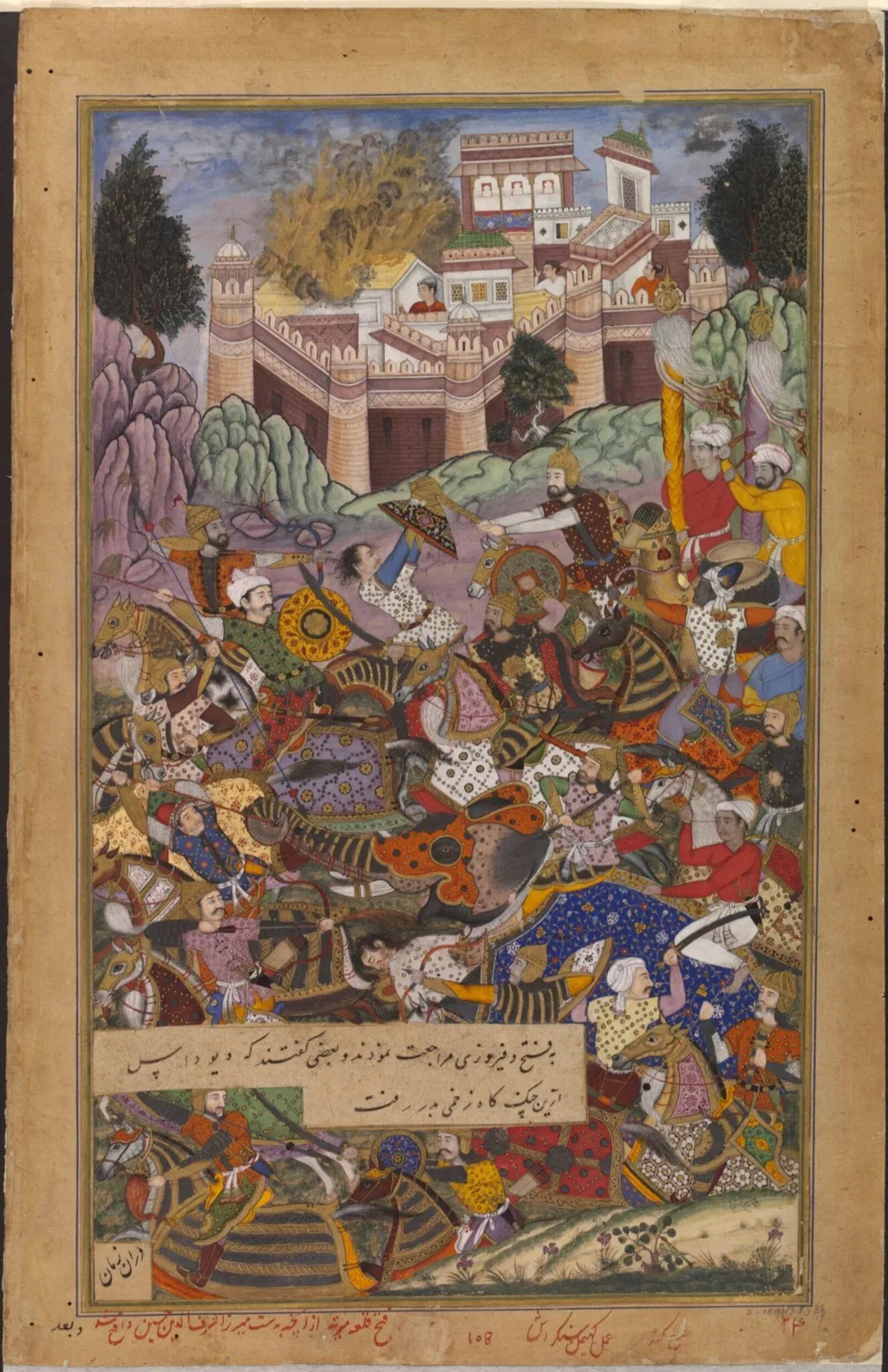
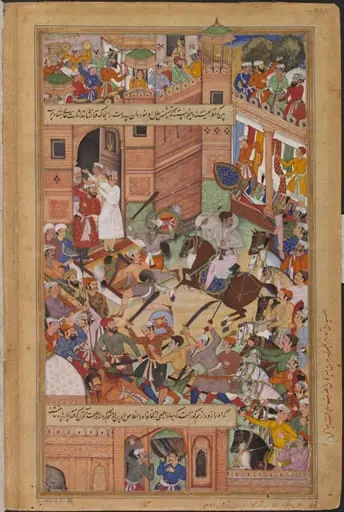
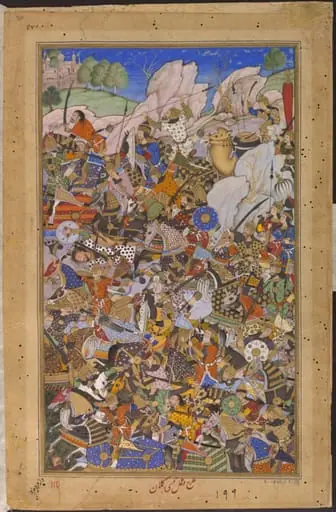
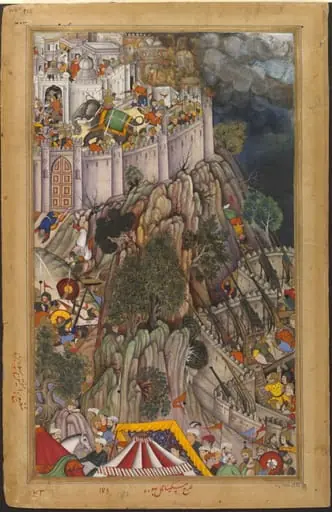
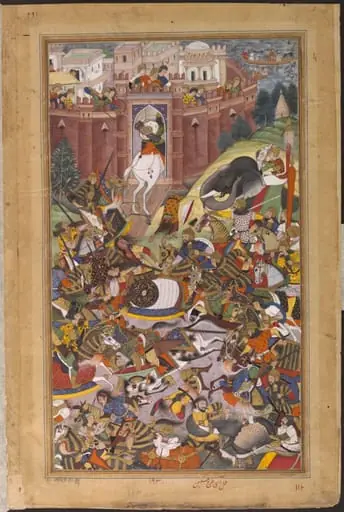
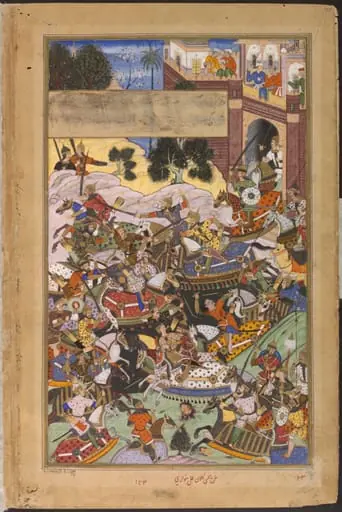
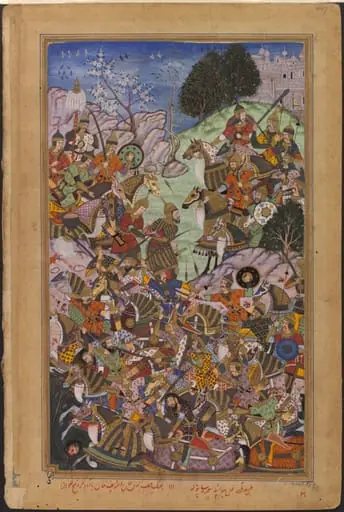
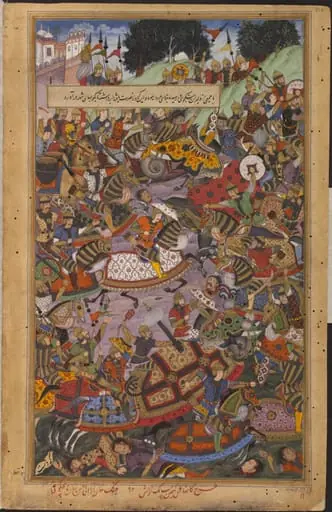
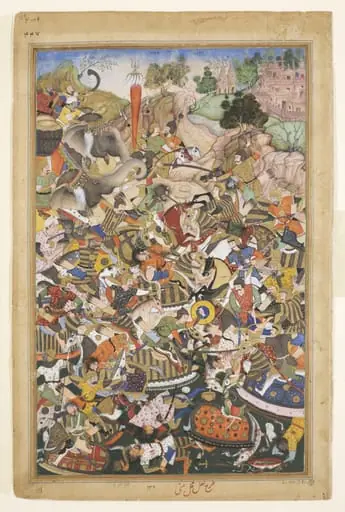
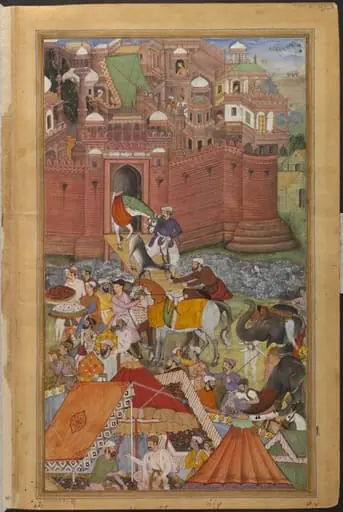
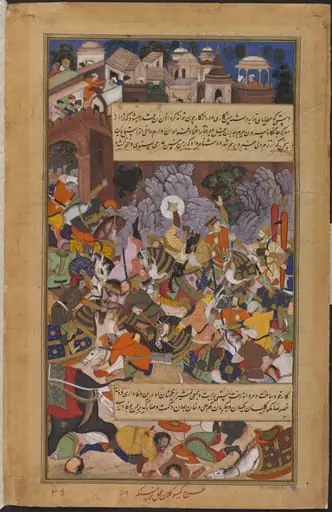
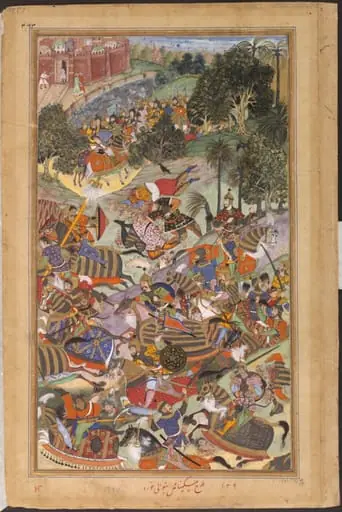
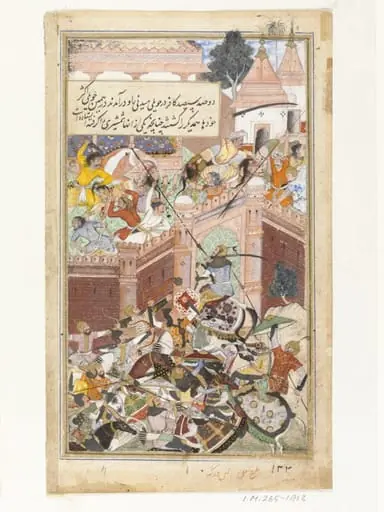
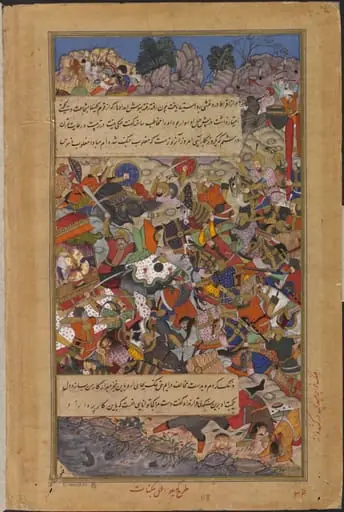
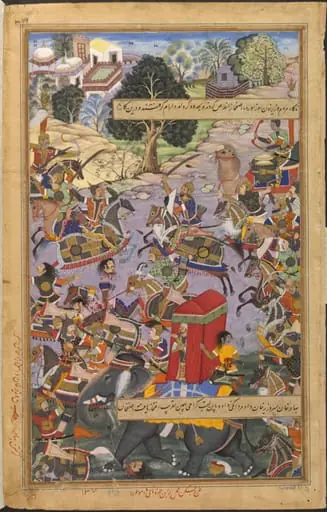
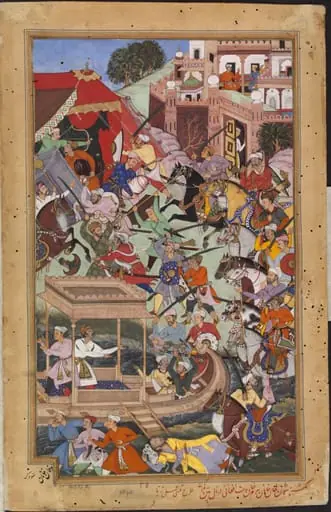
Untitled is a paint painting by the Mughal Painting artist Khiman Sangtarash. It dates from 1592 and is held in the collection of the Victoria and Albert Museum. This painting is part of a lavishly illustrated manuscript of the Akbarnama, the official history of Emperor Akbar’s reign.
About this work
Overview
The work belongs to a rare early set of illustrations produced between 1592 and 1595, commissioned directly for Akbar’s personal library.
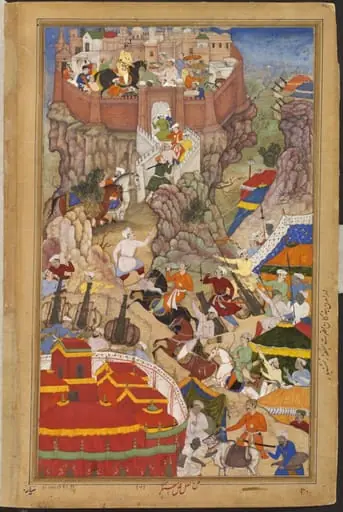
This painting is part of a lavishly illustrated manuscript of the Akbarnama, the official history of Emperor Akbar’s reign. Created by court artists Khiman Sangtarash and Mukund, it visually documents a military campaign in 1562: the capture of Fort Mirtha near Jodhpur by Mughal troops under Mirza Sharaf ud-Din Husain. The work belongs to a rare early set of illustrations produced between 1592 and 1595, commissioned directly for Akbar’s personal library.
Subject & Meaning
The scene captures the fall of Fort Mirtha, with the structure engulfed in flames and Mughal soldiers advancing in the foreground. It serves not merely as a record of conquest but as a deliberate assertion of imperial power and control. By depicting the moment of victory, the image reinforces the legitimacy of Akbar’s rule and the effectiveness of his military leadership, aligning visual narrative with the textual chronicle’s political aims.
Technique & Style
Executed in opaque watercolor on paper, the painting combines precise figural detail with stylized landscape elements. The composition balances dynamic action in the foreground with symbolic destruction in the background. Artists employed fine brushwork and layered pigments to render armor, banners, and architecture with clarity. Persian and Indian traditions merge in the flattened perspective and rich color palette, characteristic of early Mughal court painting.
History & Provenance
The manuscript was compiled under Akbar’s direction, with illustrations completed by leading royal artists whose names are inscribed in red beneath the images. After Akbar’s death, it passed to his son Jahangir and later to Shah Jahan. In the 19th century, it entered the collection of Major General John Clarke during his service in India. His widow, Frances Clarke, sold it to the Victoria and Albert Museum in 1896, where it remains today as one of the earliest surviving illustrated copies.
Context
The Akbarnama was conceived as a state-sponsored chronicle, blending historical record with ideological messaging. Its illustrations were not decorative but integral to the text’s authority, produced by a workshop of artists selected for their skill and loyalty. This painting reflects a broader imperial project: using art to memorialize military success and consolidate cultural identity under Mughal rule, blending Persian literary form with Indian visual conventions.
Legacy
The manuscript set a precedent for imperial historiography in South Asia, influencing later Mughal illustrated texts. Its survival in near-complete form offers rare insight into the organization of royal ateliers and the role of visual culture in governance. The inclusion of artists’ names in the margins marks a shift toward recognizing individual creativity within a collective courtly tradition, a practice that would shape future artistic documentation in the region.
Artist & collection
Artist
Khiman Sangtarash kept painting the same three cypress trees over and over, like a writer stuck on a favorite sentence.