Artwork
Asaf Khan
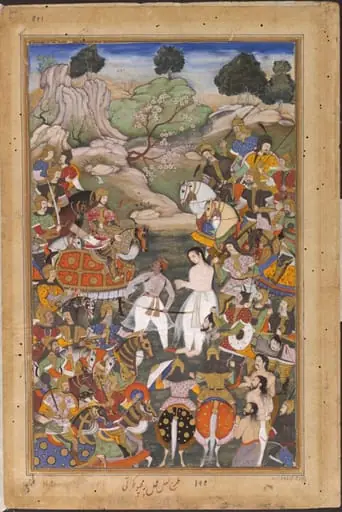
Asaf Khan is a paint painting by the Mughal Painting artist Kesav Kalan. It dates from 1592 and is held in the collection of the Victoria and Albert Museum.
About this work
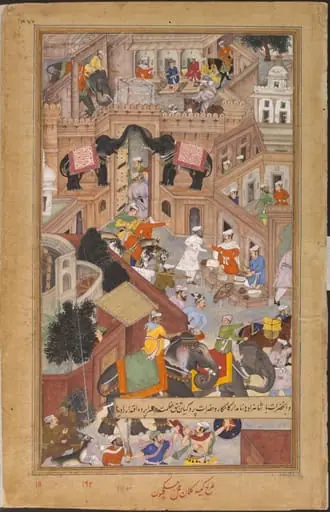
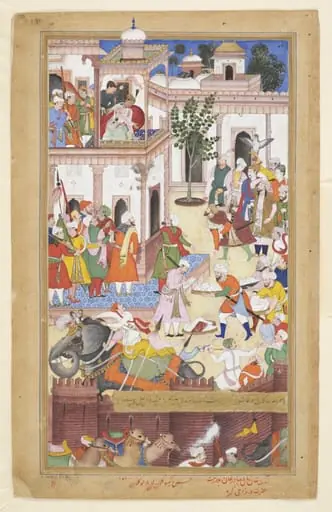
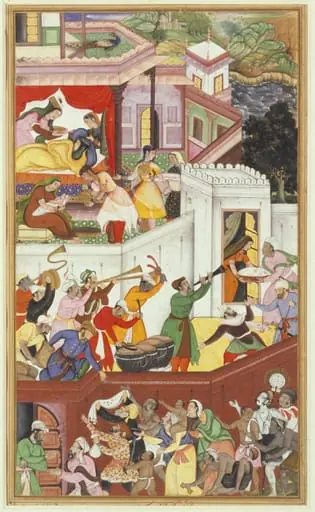
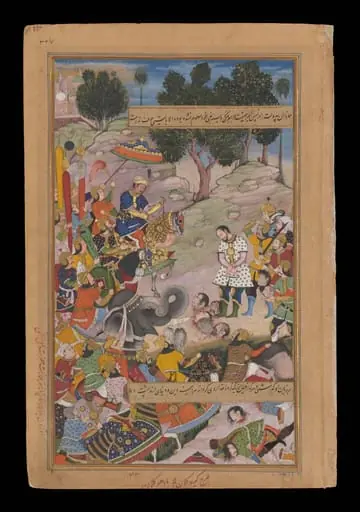
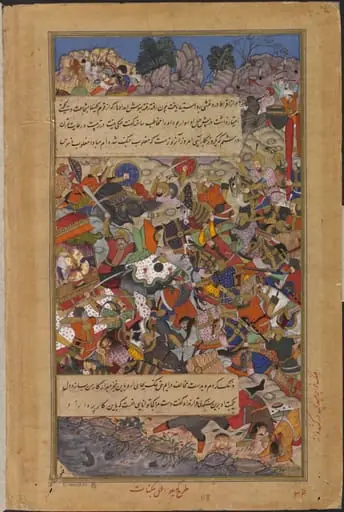
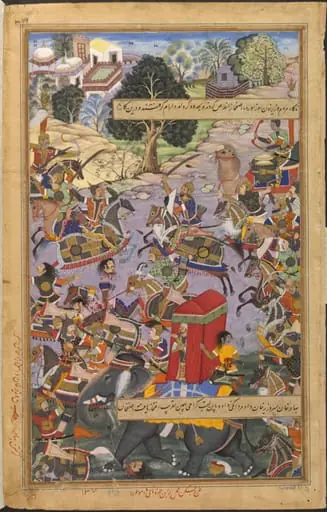
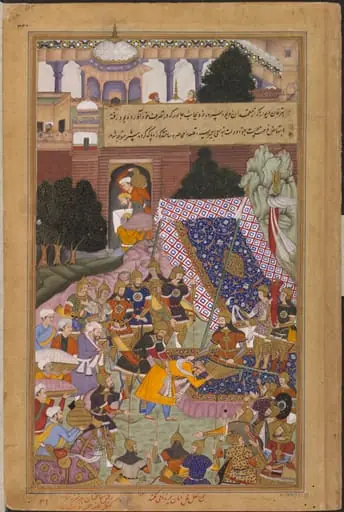
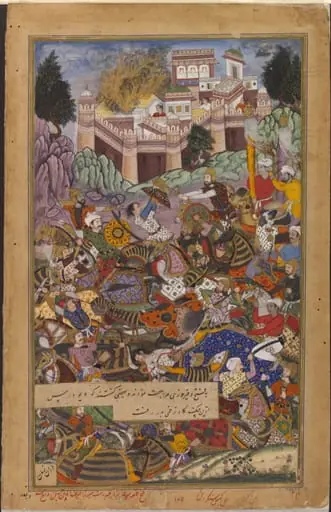
Kesav Kalan shows Asaf Khan riding a white horse at the front of Mughal troops. The soldiers carry guns and banners. Khan’s face looks calm, not angry, even in battle.
This was made for Emperor Akbar around 1595 to show power. The fight was real—Rani Durgavati, a Gond ruler, led her own army against the Mughals.
Look up the Victoria and Albert Museum to see where this painting lives.
Overview
Created by court artists Kesav Kalan and Nar Singh, it depicts a military campaign led by Asaf Khan, Akbar’s vizier, against Rani Durgavati of Gara Katanga.
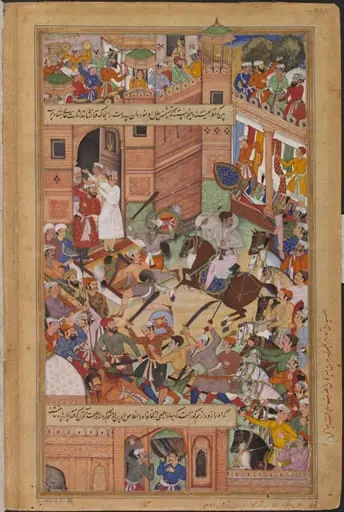
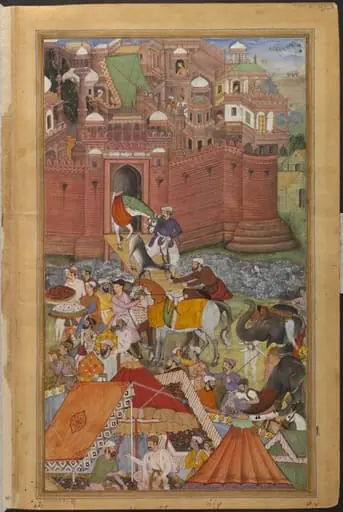
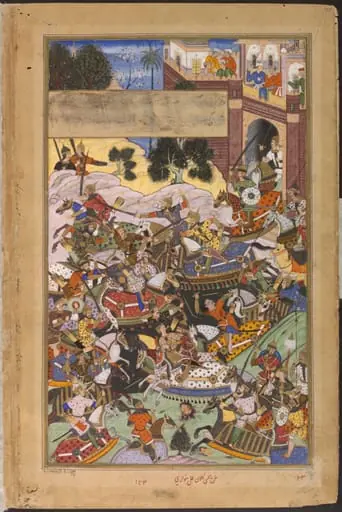
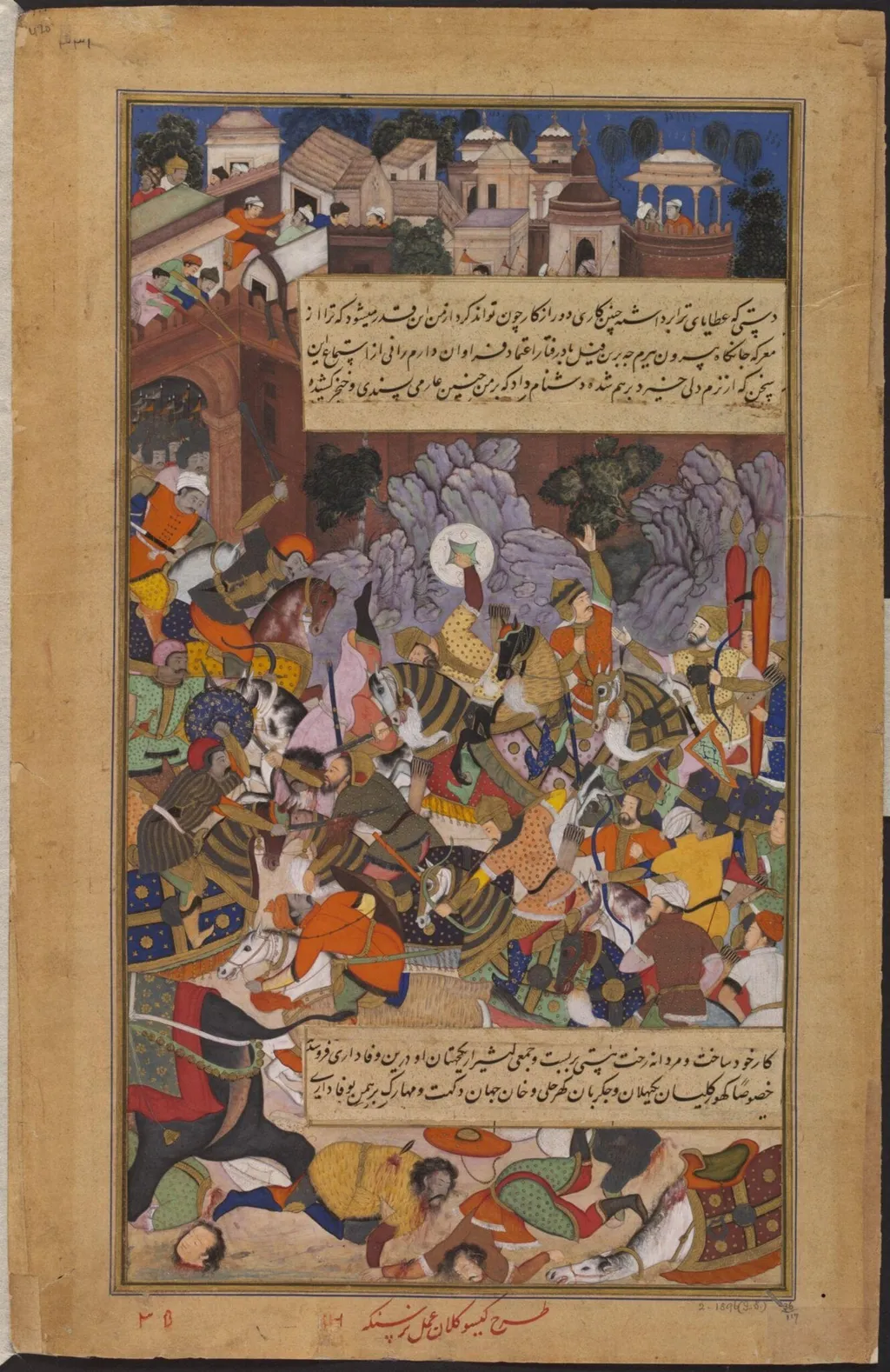
This painting is one half of a double-page illustration from the Akbarnama, the official chronicle of Emperor Akbar’s reign, commissioned around 1592–1595. Created by court artists Kesav Kalan and Nar Singh, it depicts a military campaign led by Asaf Khan, Akbar’s vizier, against Rani Durgavati of Gara Katanga. The work belongs to a royal manuscript produced for Akbar’s personal library, featuring detailed depictions of events recorded by his historian Abu’l Fazl.
Subject & Meaning
The scene portrays Asaf Khan commanding Mughal troops during a 1564 campaign against Rani Durgavati, a Gond queen known for her resistance. Though the Mughals prevailed, historical accounts note Akbar’s respect for her valor. The image does not dramatize violence but emphasizes order and authority, with Khan depicted calmly atop a white horse, reinforcing the legitimacy and control of imperial power rather than the chaos of battle.
Technique & Style
Executed in opaque watercolor and gold on paper, the painting reflects the refined aesthetic of the Mughal atelier. Figures are rendered with precise detail, and the composition uses spatial depth through layered landscapes and aligned banners. The calm demeanor of Asaf Khan contrasts with the movement of soldiers and horses, suggesting disciplined command. Artist names appear in red ink beneath the image, a mark of royal attribution and accountability.
History & Provenance
The manuscript was compiled between 1590 and 1596, with illustrations completed shortly after. It remained in the imperial library through Akbar’s successors, Jahangir and Shah Jahan. The Victoria and Albert Museum acquired the folio in the 19th century; its companion panel is held separately. The presence of artists’ names in the margins confirms its status as a direct imperial commission, not a later reproduction.
Context
The Akbarnama was part of a broader effort to document Akbar’s rule with historical and visual authority. Illustrations like this one served both as record and propaganda, aligning military conquest with imperial virtue. The inclusion of regional rulers like Durgavati acknowledged the diversity of territories under Mughal expansion, while reinforcing the emperor’s role as supreme arbiter of power across India’s varied polities.
Legacy
As one of the earliest illustrated versions of the Akbarnama, this work set a precedent for imperial historiography in Mughal art. Its detailed portrayal of battle, leadership, and cultural encounter influenced later court painting traditions. The survival of the manuscript and its attribution to named artists provide rare insight into the organization and values of the Mughal atelier during its formative period.
Artist & collection
Artist
Painted around 1590–95, these delicate Mughal portraits show Emperor Akbar and his court in full color and gold leaf.