Artwork
Qutb ad-Din Khan and Muhammad Husain Mirza
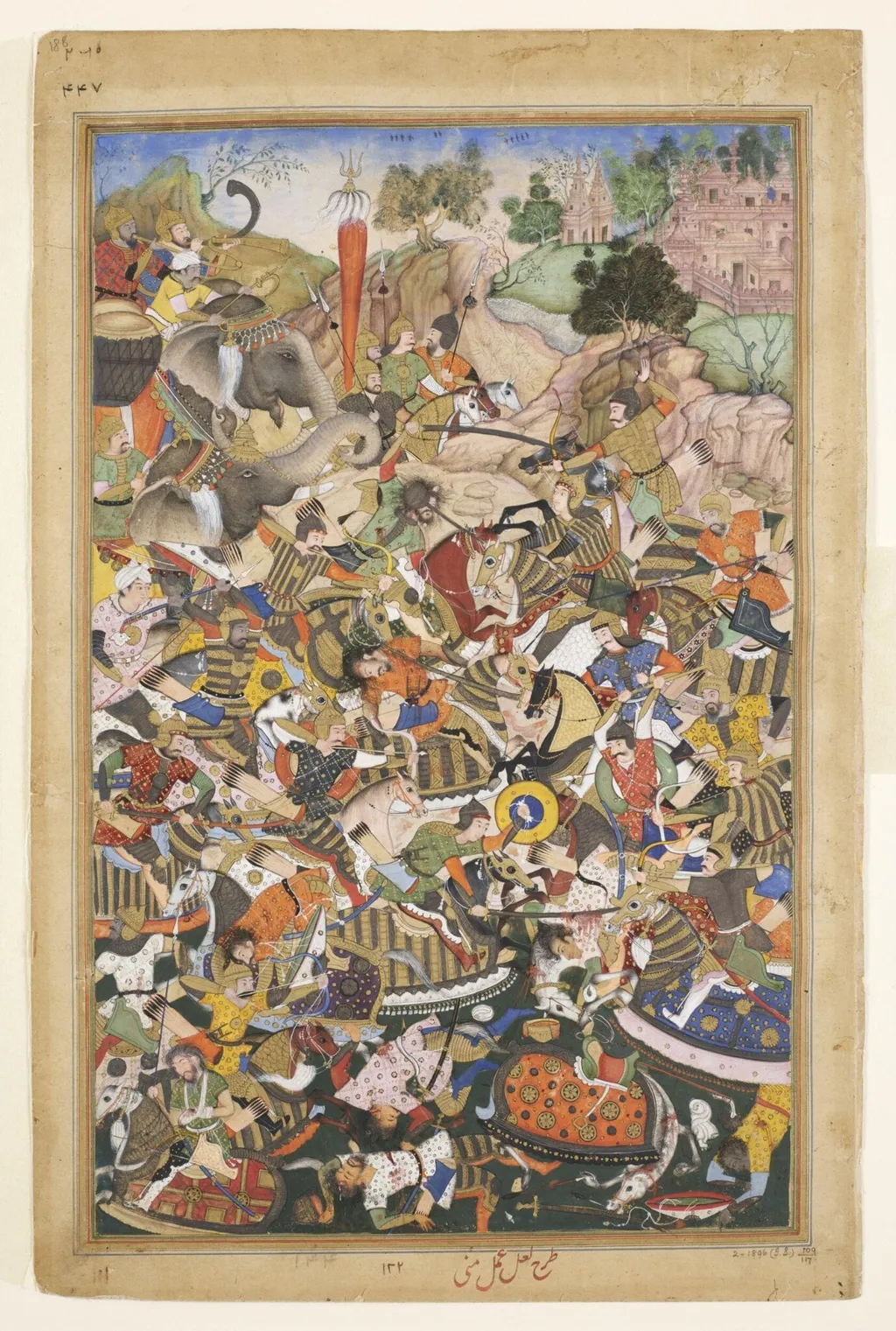
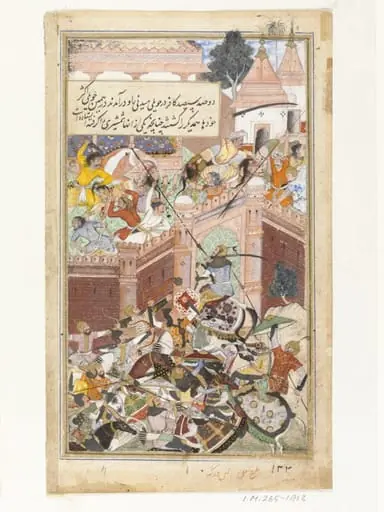
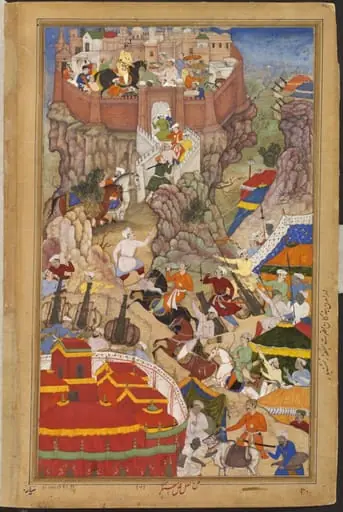
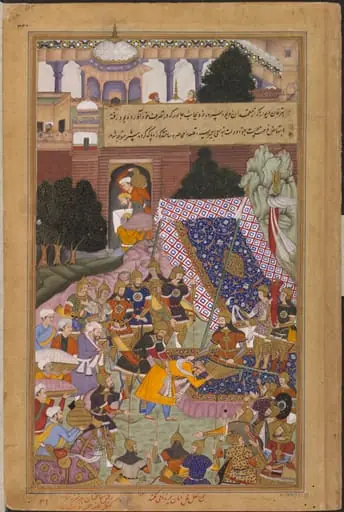
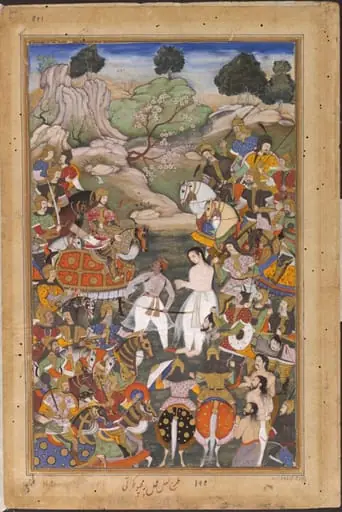
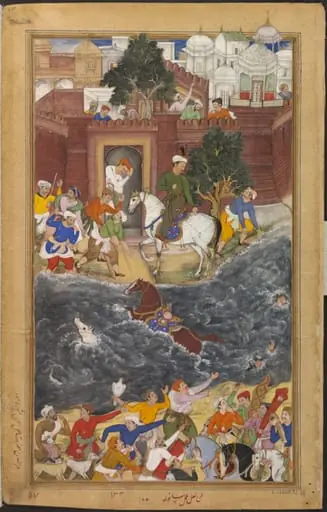
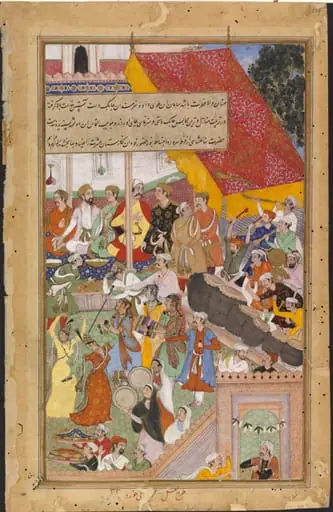
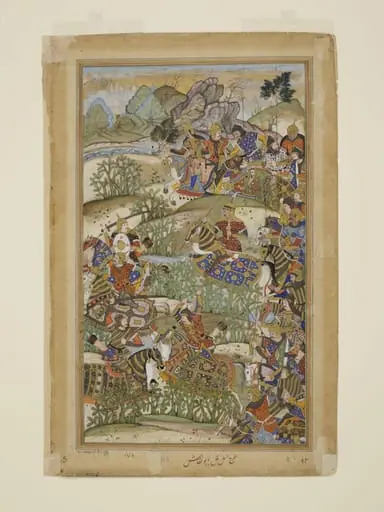
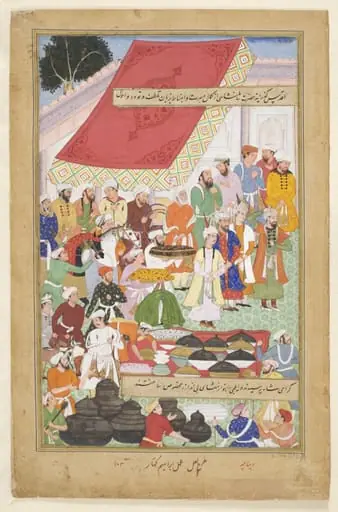
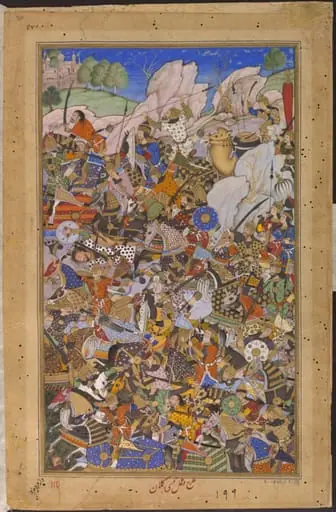
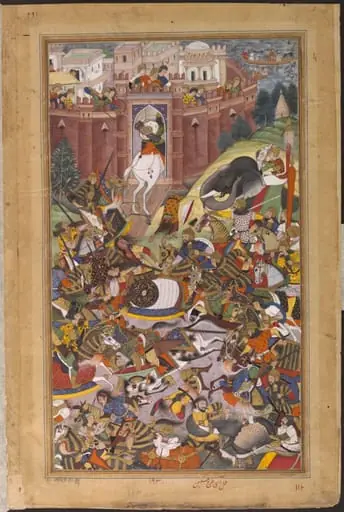
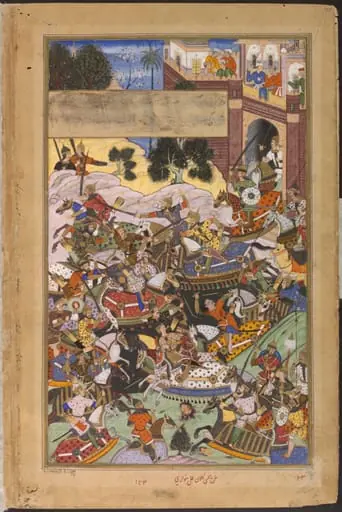
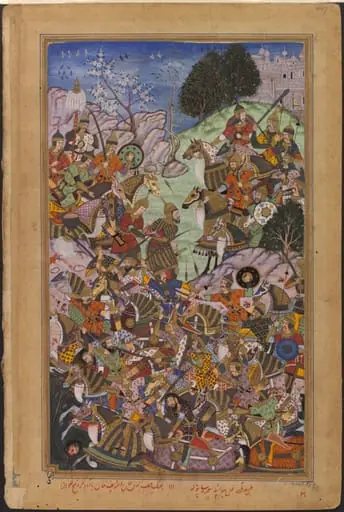
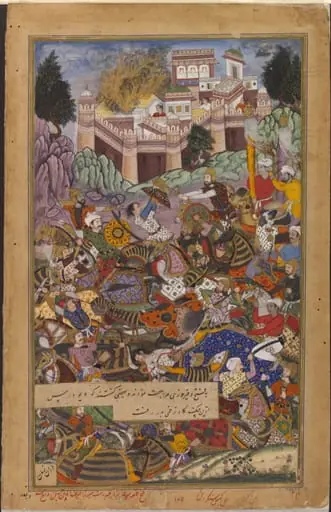
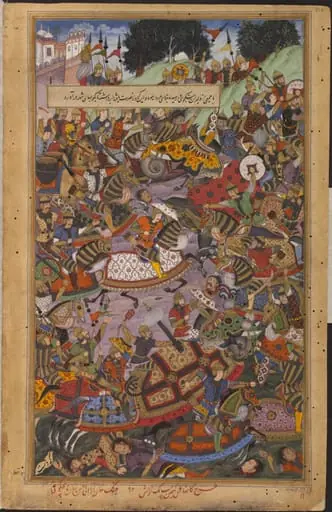
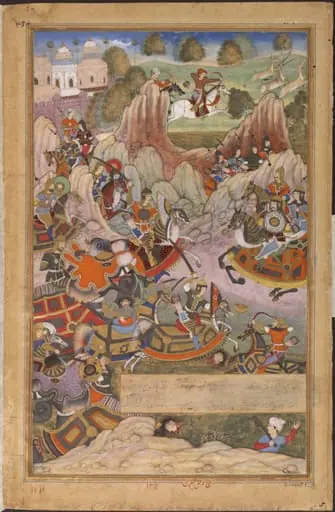
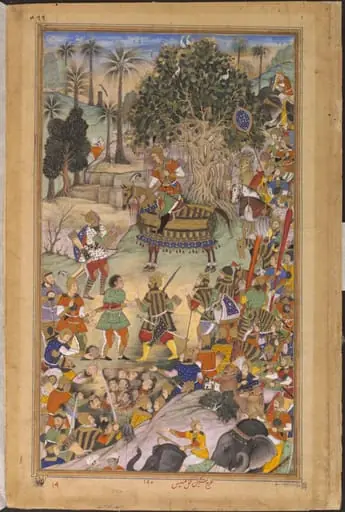
Qutb ad-Din Khan and Muhammad Husain Mirza is a paint painting by the Mughal Painting artist La'l. It dates from 1592 and is held in the collection of the Victoria and Albert Museum. This painting is one half of a double-page illustration from the Akbarnama, the official chronicle of Emperor Akbar’s reign.
About this work
Overview
The V&A acquired the folio in 1896 from the estate of a British colonial officer who obtained it in India during the mid-nineteenth century.
This painting is one half of a double-page illustration from the Akbarnama, the official chronicle of Emperor Akbar’s reign. Created between 1592 and 1595, it was produced for the imperial court by the artist Mani under the design of La’l. The scene captures a military victory in Gujarat, 1572, and forms part of a larger manuscript commissioned to document Akbar’s rule. The V&A acquired the folio in 1896 from the estate of a British colonial officer who obtained it in India during the mid-nineteenth century.
Subject & Meaning
The painting portrays Qutb ad-Din Khan and Muhammad Husain Mirza, two Mughal commanders who led the campaign against rebel forces in Gujarat. Though depicted together in formal pose, they represent opposing sides: Qutb ad-Din Khan was a loyal Mughal general, while Muhammad Husain Mirza was a defeated rival. Their joint representation likely served to emphasize imperial authority and the integration of former adversaries into the Mughal hierarchy, reinforcing the legitimacy of Akbar’s rule.
Technique & Style
The composition is minimalistic, with no landscape or architectural details, focusing attention on the two figures. Their elaborate robes in green and blue are rendered with fine brushwork, highlighting textile patterns and the texture of fabric. Figures are rendered in profile, a convention of Persianate court painting, while inscriptions in red ink beneath identify the subjects and artists. The restrained background underscores the ceremonial nature of the scene, prioritizing status over narrative environment.
History & Provenance
The Akbarnama manuscript was compiled by Abu’l Fazl between 1590 and 1596, with illustrations completed shortly after. This particular folio was made for Akbar’s personal library and later passed to his son Jahangir, then to Shah Jahan. By the nineteenth century, it had entered the collection of British colonial officials. Major General John Clarke acquired it in India during his tenure as Commissioner of Oudh; after his death, his widow Frances Clarke sold the manuscript to the V&A in 1896.
Context
The Akbarnama was part of a broader imperial project to legitimize Mughal authority through written and visual history. Its illustrations combined Persian, Indian, and emerging Mughal styles, reflecting the cosmopolitan nature of Akbar’s court. Artists like La’l and Mani were among the most skilled in the imperial atelier, their names recorded by Abu’l Fazl as marks of prestige. The manuscript’s production coincided with Akbar’s consolidation of power in western India, making visual records of battles like Patan politically significant.
Legacy
This folio remains a key example of early Mughal manuscript painting, illustrating the fusion of historical documentation and artistic refinement under imperial patronage. Its survival in near-complete form offers insight into the organization of the royal atelier and the role of visual culture in statecraft. As one of the earliest illustrated versions of the Akbarnama, it influenced later imperial manuscripts and continues to inform scholarly understanding of Mughal historiography and artistic practice.
Artist & collection
Artist
Lal (La'l) sometimes called Lal wa Sarjangal is a town and the administrative center of Lal wa Sarjangal District, Ghor province in central Afghanistan.