Artwork
Untitled
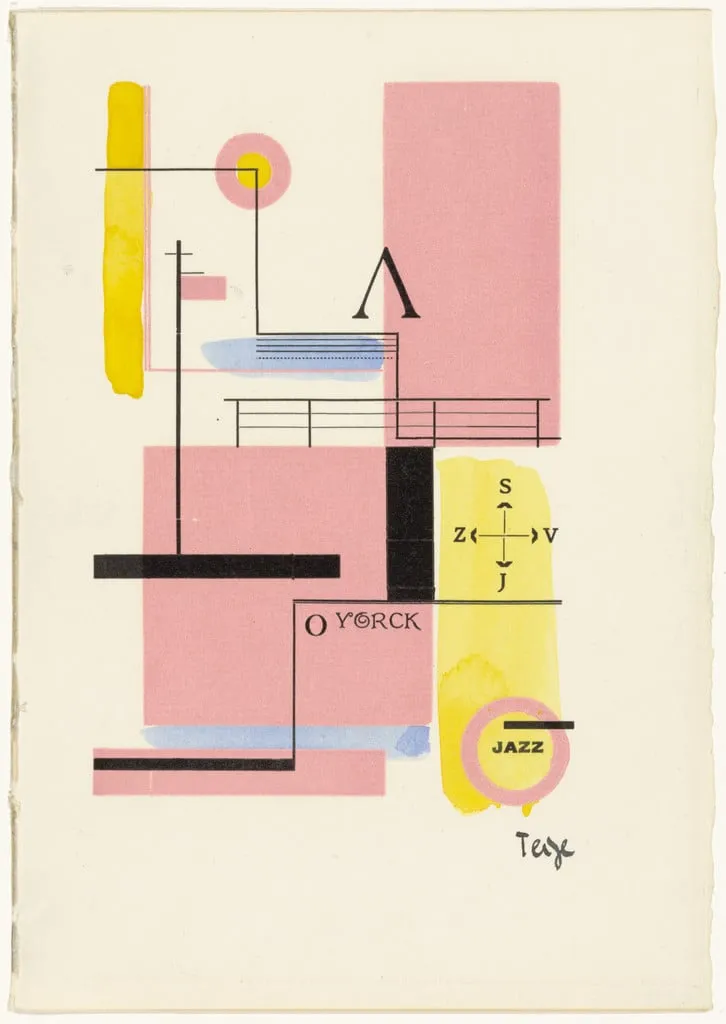
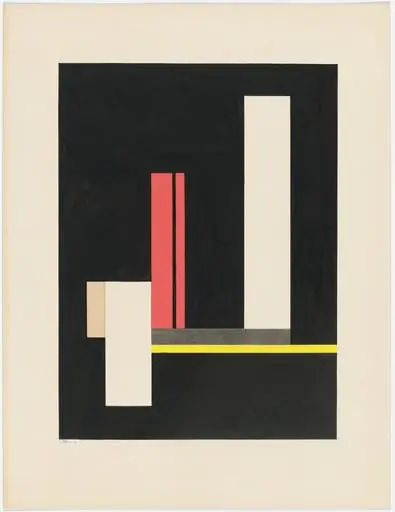
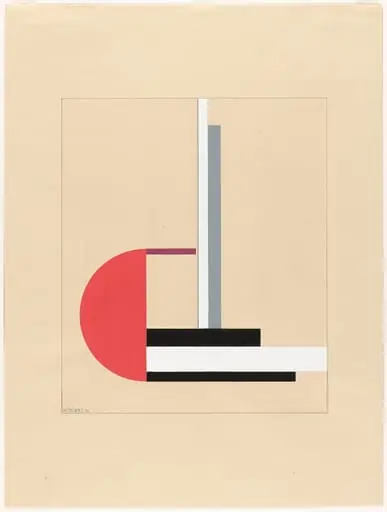
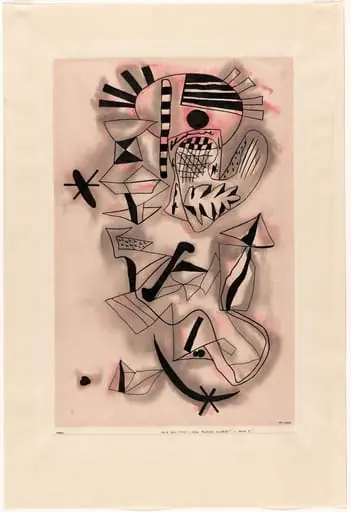
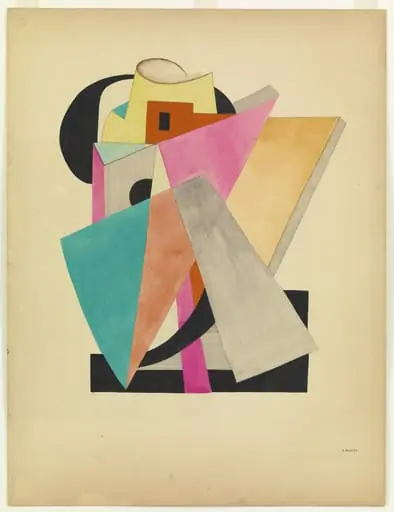
Untitled is a watercolor print by Karel Teige. It dates from 1928 and is held in the collection of the Museum of Modern Art.
About this work
Overview
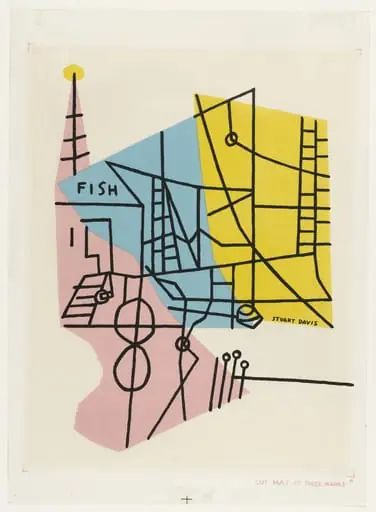
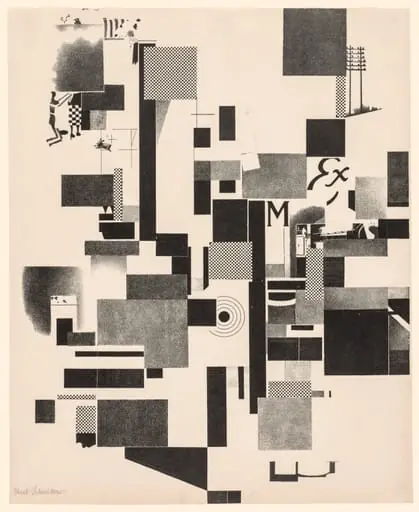
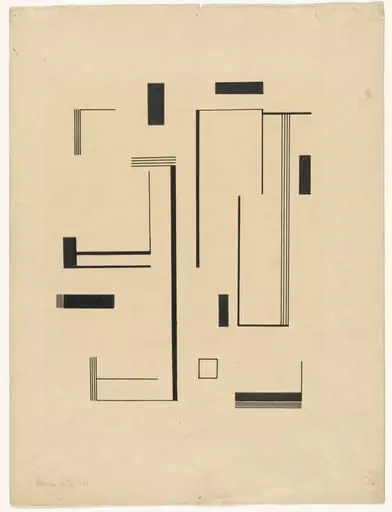
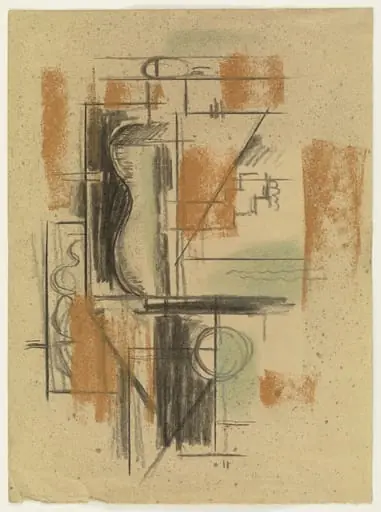
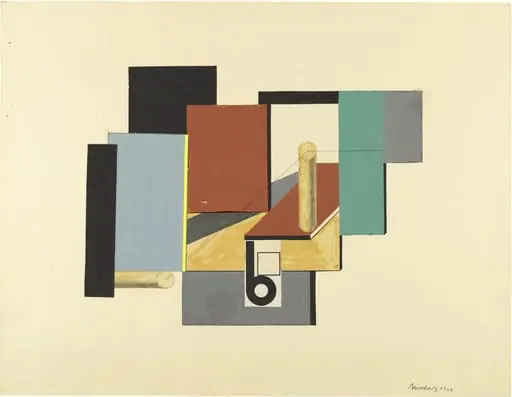
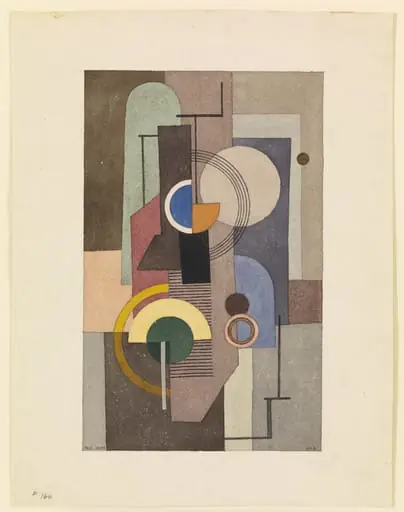
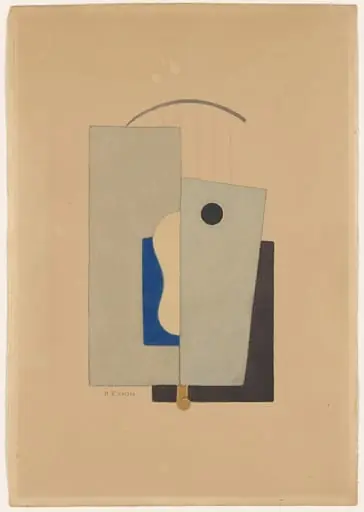
Created in 1928, this print by Karel Teige combines letterpress printing with hand-applied watercolor. It is part of The Museum of Modern Art’s collection and exemplifies the intersection of typographic design and abstract composition. The work resists traditional pictorial representation, instead constructing meaning through geometric forms, color blocks, and fragmented text.
Subject & Meaning
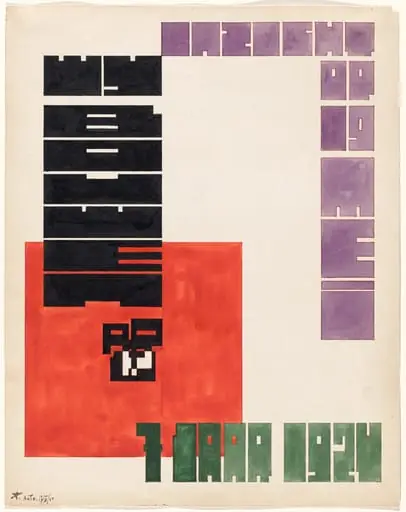
The piece incorporates fragments of language—'O YORCK,' 'JAZZ,' and scattered letters—that suggest urban references and cultural currents of the time.
The piece incorporates fragments of language—'O YORCK,' 'JAZZ,' and scattered letters—that suggest urban references and cultural currents of the time. While 'JAZZ' evokes modernity and rhythm, the overall composition leans toward structural abstraction rather than narrative. The arrangement implies a visual commentary on industrialized city life, filtered through the language of avant-garde design.
Technique & Style
Teige employed flat, unmodulated watercolor washes over a letterpress base, creating sharp contrasts between bold shapes and delicate pigment layers. Colors—pink, yellow, blue, and black—are applied with precision, their edges cleanly defined. The use of arrows and fragmented text introduces a sense of movement and coded communication, aligning with constructivist principles of clarity and functional aesthetics.
History & Provenance
The work originated in Prague during a period of intense experimentation in Czech avant-garde circles. Teige, a central figure in the Devětsil group, produced it as part of a broader exploration of graphic design as a tool for social and aesthetic renewal. It entered MoMA’s collection in the mid-20th century, reflecting institutional interest in European modernist prints.
Context
Made during the height of Czech Constructivism, the piece reflects the movement’s rejection of ornament in favor of industrial forms and typographic experimentation. Teige’s integration of text and geometry responded to urban modernity and the rise of mass media. The work stands apart from purely musical interpretations of 'JAZZ,' instead using the term as a symbol of contemporary energy.
Legacy
Teige’s integration of print and watercolor influenced later generations of graphic designers and conceptual artists interested in the materiality of text. The work remains a key example of how avant-garde artists in interwar Europe redefined the boundaries between fine art, design, and publishing, prioritizing intellectual rigor over decorative appeal.
Artist & collection