Artwork
Roma Vecchia
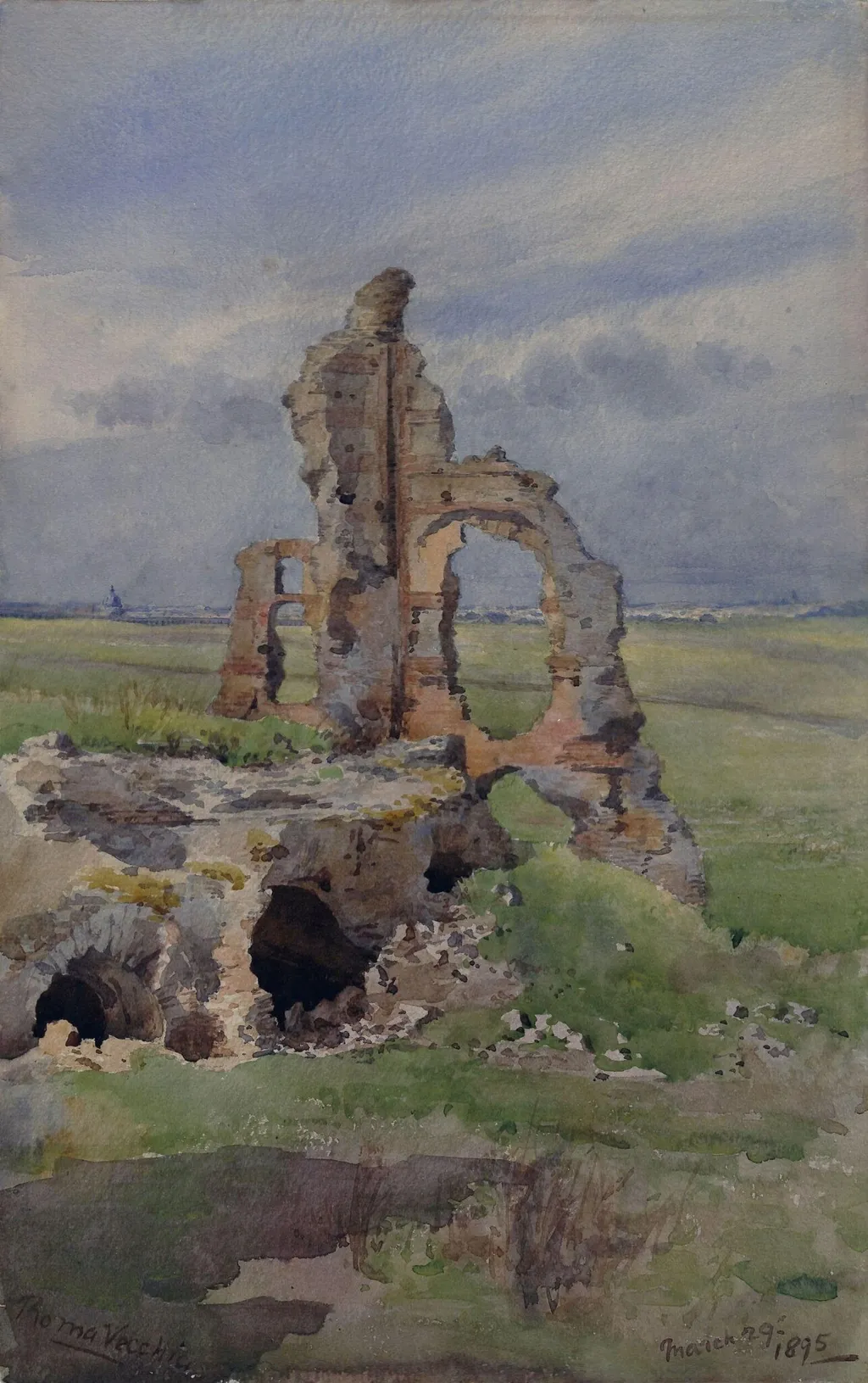
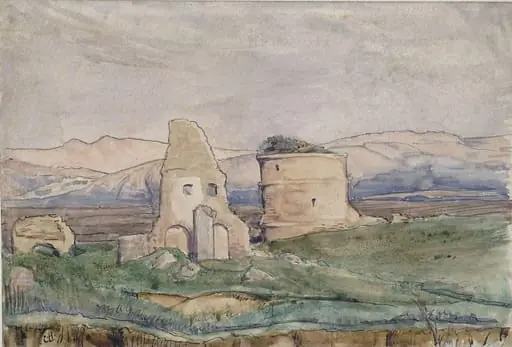
Roma Vecchia is a watercolor work on paper by the Impressionist artist Katharine Ann Caulfield. It dates from 1895 and is held in the collection of the Victoria and Albert Museum.
About this work
Overview
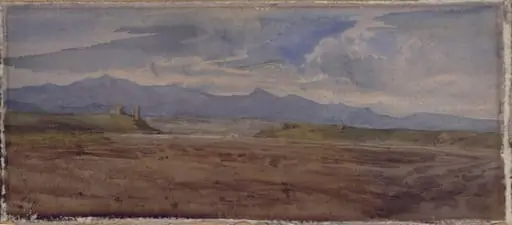
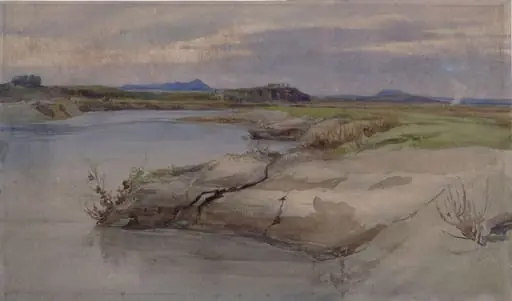
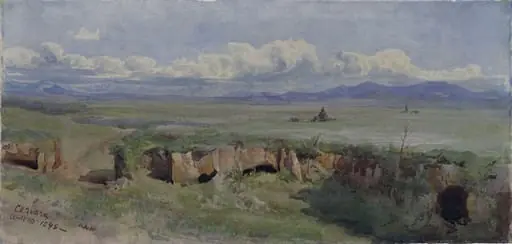
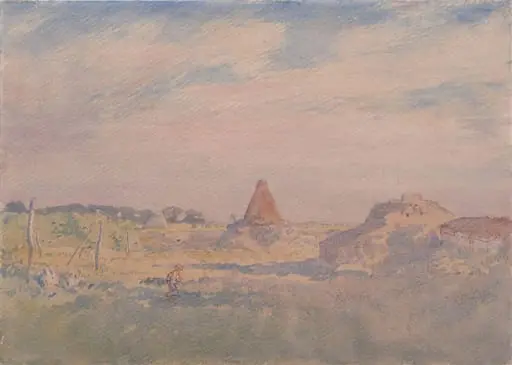
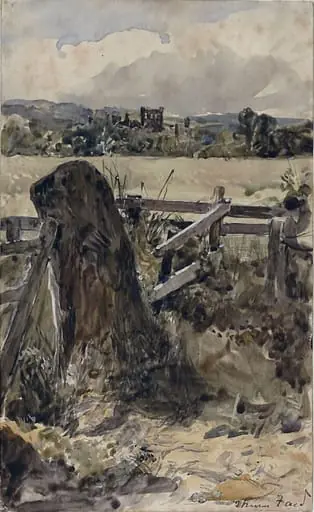
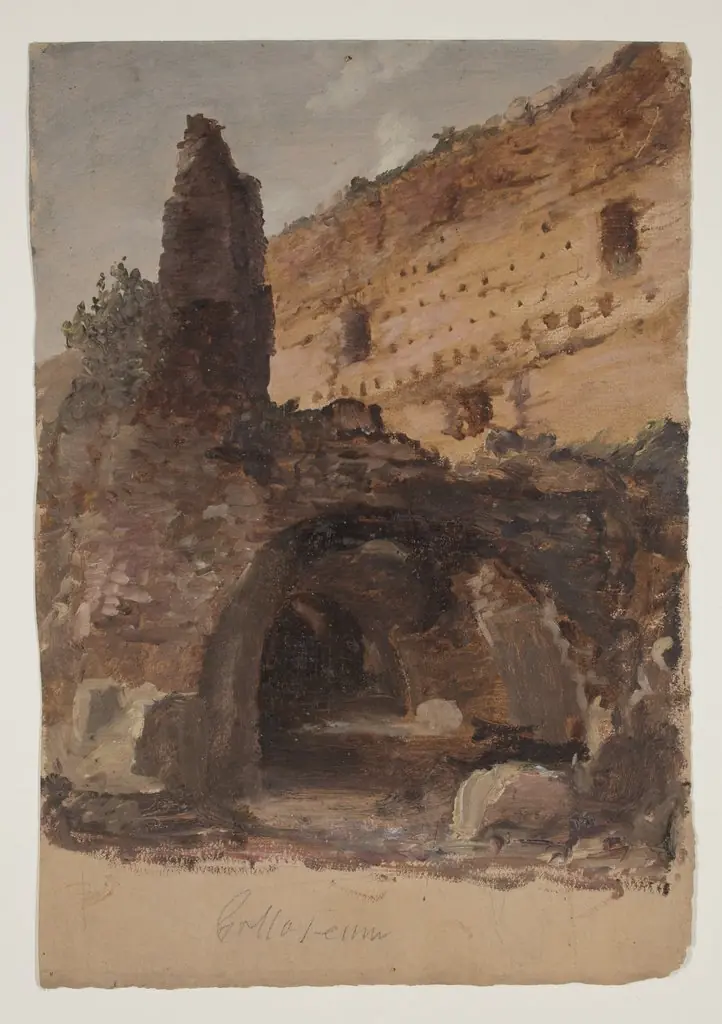
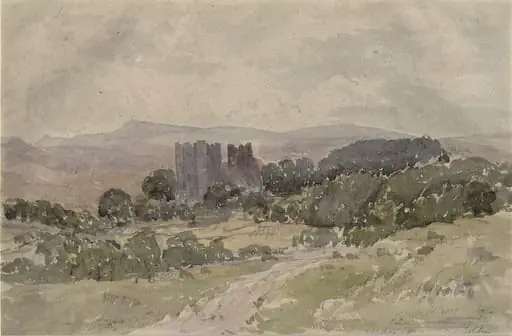
Katharine Ann Caulfield completed this watercolour in 1895, signing and dating the work. It depicts a quiet Italian landscape dominated by weathered stone ruins, rendered with a delicate, translucent wash that emphasizes atmosphere over detail. The composition balances structural remnants with open sky and field, evoking a sense of time suspended.
Subject & Meaning
The scene centers on ancient architectural fragments—arches, columns, and crumbling walls—nestled within a pastoral setting. These ruins suggest the passage of time and the quiet persistence of history amid nature’s reclamation. There is no human presence; the focus lies in the stillness of the landscape, inviting reflection rather than narrative.
Technique & Style
Caulfield employed loose, fluid brushwork and layered washes to achieve a soft, atmospheric effect. Muted tones of gray, olive, and ochre dominate, with subtle variations in hue suggesting texture and depth. The watercolour’s transparency allows underlying paper to contribute to the luminosity, enhancing the sense of light filtering through clouds.
History & Provenance
The work is documented as signed and dated by the artist in 1895, though its early ownership and exhibition history remain unrecorded. It has remained in private hands since its creation, with no known public display prior to recent scholarly interest in late 19th-century women watercolourists.
Context
Created during a period when British artists increasingly traveled to Italy for inspiration, this piece reflects a broader trend of romanticizing classical ruins. Caulfield’s approach, however, avoids grandeur, favoring intimate, understated observation—a quiet counterpoint to more dramatic contemporaneous treatments of Roman antiquity.
Legacy
Though not widely exhibited, *Roma Vecchia* contributes to a growing recognition of women artists who worked in watercolour during the late Victorian era. Its restrained aesthetic and technical sensitivity offer insight into a quieter, personal mode of landscape representation often overlooked in art historical narratives.
Artist & collection
Artist
Katharine Ann Caulfield painted soft watercolors of the Roman countryside in the 1890s.