Artwork
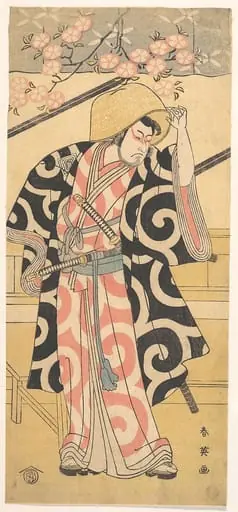
市川蝦蔵 (先の五代目市川団十郎) の穴生の里の毛虫ばゞア|The Actor Ichikawa Ebizō (formerly Danjūrō V) as Kemushi Babā of Anō Village
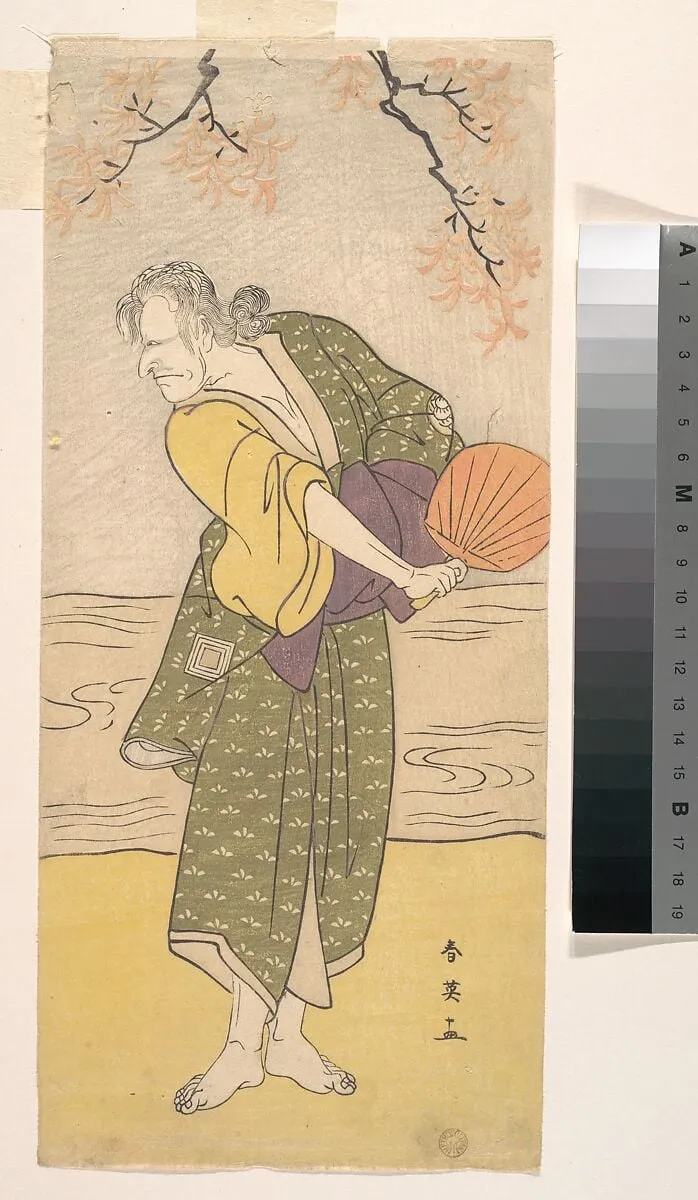
市川蝦蔵 (先の五代目市川団十郎) の穴生の里の毛虫ばゞア|The Actor Ichikawa Ebizō (formerly Danjūrō V) as Kemushi Babā of Anō Village is an ink print by the Romanticist artist Katsukawa Shun'ei 勝川春英. It dates from 1792 and is held in the collection of the Metropolitan Museum of Art.
About this work
To learn more about the artist's style and technique, check out the work of Katsukawa Shun'ei.
This painting shows a man in a green robe with white flowers, holding a fan. He has a yellow shirt underneath and a purple sash around his waist. The background is beige with some branches and leaves at the top.
The man is standing in a relaxed pose, with his weight shifted onto one leg. He looks like he's about to take a step forward. The artist has used bold lines and bright colors to create a sense of energy and movement.
This painting is a great example of Japanese art from the 18th century. To learn more about the artist's style and technique, check out the work of Katsukawa Shun'ei.
Overview
This woodblock print, created in 1792 by Katsukawa Shun'ei, is the right panel of a diptych depicting the actor Ichikawa Ebizō in the role of Kemushi Babā, a character from the play 'Anō Village.' Executed in ink and color on paper, it exemplifies the nishiki-e technique popular in late 18th-century Japan. The print is part of the collection at The Metropolitan Museum of Art, preserved as a record of Edo-period theatrical culture.
Subject & Meaning
The figure portrays Kemushi Babā, a folkloric woman from Anō Village known for her association with caterpillars and supernatural elements. Ichikawa Ebizō, a renowned kabuki actor, embodied this role with theatrical exaggeration. The character blends humor and eerie mysticism, reflecting kabuki’s tradition of portraying supernatural beings through stylized human performance. The pose and attire suggest movement, hinting at the character’s elusive, otherworldly nature.
Technique & Style
Shun'ei employed bold outlines and vivid, flat areas of color typical of ukiyo-e prints of the period. The green robe, yellow undergarment, and purple sash create strong chromatic contrast against the muted background. Delicate branches and leaves at the top frame the figure without overwhelming it. The relaxed stance and subtle weight shift convey dynamic stillness, enhancing the theatricality of the pose through precise linework and controlled color application.
History & Provenance
Produced in 1792 during the height of kabuki’s popularity in Edo, the print was likely distributed as part of a promotional series for a specific performance. As a diptych, it was intended to be viewed alongside its companion panel. The Metropolitan Museum of Art acquired the print as part of its broader collection of Japanese prints, preserving it as a cultural artifact tied to the theatrical and printmaking traditions of the late Edo era.
Context
Kabuki theater in late 18th-century Japan relied heavily on visual spectacle, and actor portraits like this one served both as advertisements and fan memorabilia. Shun'ei, a pupil of Katsukawa Shunshō, specialized in actor prints that emphasized individuality and dramatic presence. This work reflects the era’s fascination with celebrity performers and the blending of folklore with stage performance, reinforcing the cultural authority of kabuki as a public art form.
Legacy
Though less widely known than some of his contemporaries, Shun'ei’s work contributed to the evolution of actor portraiture in ukiyo-e. This print remains a valuable example of how theatrical roles were visually codified and disseminated to urban audiences. It continues to inform scholarly understanding of Edo-period performance culture and the interplay between print media and live theater in pre-modern Japan.
Artist & collection

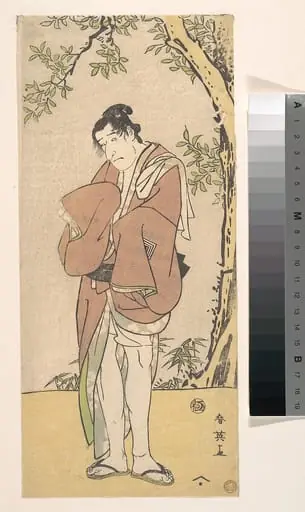
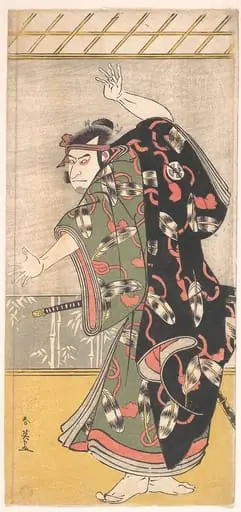
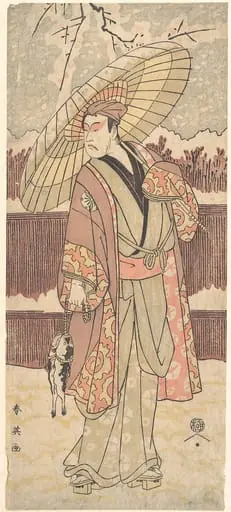
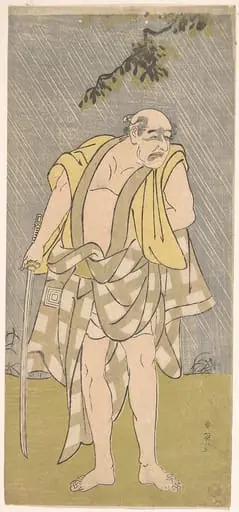
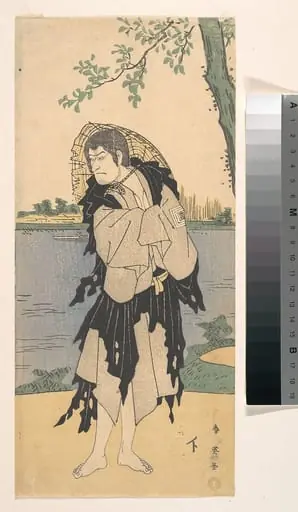
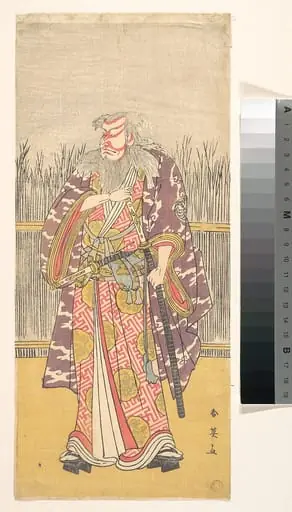 市川鰕蔵(五代目市川団十郎)の佐々木岸柳|The Actor Ichikawa Ebizō (Danjūrō V) as the Elderly Samurai Sasaki Ganryū (?)
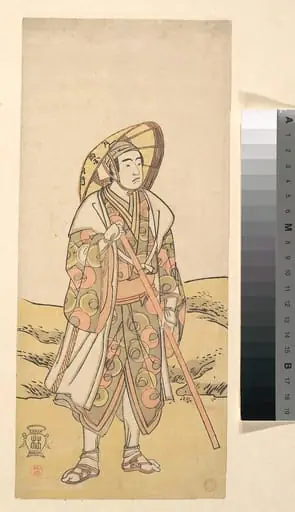 三代目沢村宗十郎のくまの順礼十作、実は平重盛|The Actor Sawamura Sōjūrō III as the Kumano Pilgrim Jissaku, actually Taira no Shigemori
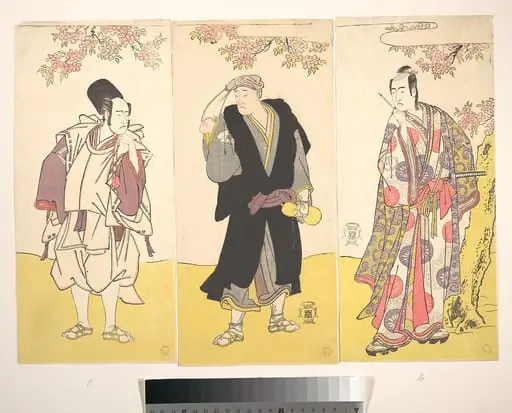 三代目市川八百藏・初代目尾上松助・三代目澤村宗十郎|Kabuki Actors Ichikawa Yaozō III, Onoe Matsusuke I, and Sawamura Sōjūrō III
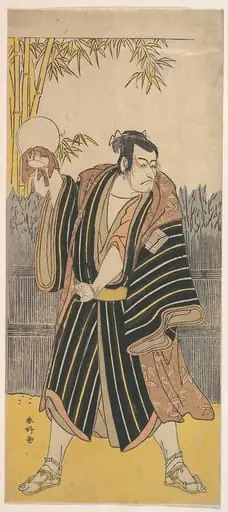 勝川春好画 七代目片岡仁左衛門 五代目市川團十郎|Kabuki Actor Ichikawa Danjūrō V
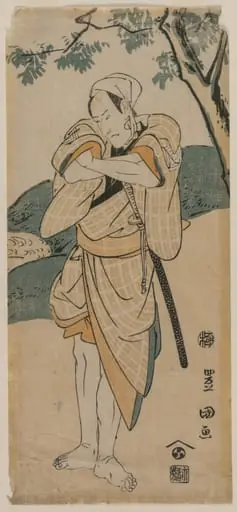 The Actor Ichikawa Danjuro as a Samurai
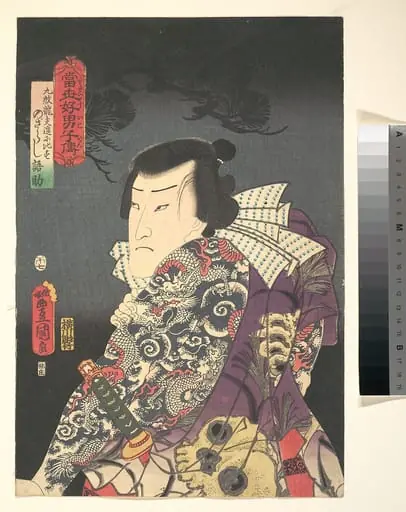 当世好男子伝」松 「九紋竜支進に比すのざらし語助」三代目市川市蔵|The Actor Ichikawa Ichizō III as Nozarashi Gosuke, likened to Shi Jin the Nine Dragoned (Kyūmonryū Shishin ni hisu), from the “Pine” triptych of the series A Modern Water Margin (Tōsei suikoden)