Artwork
Untitled
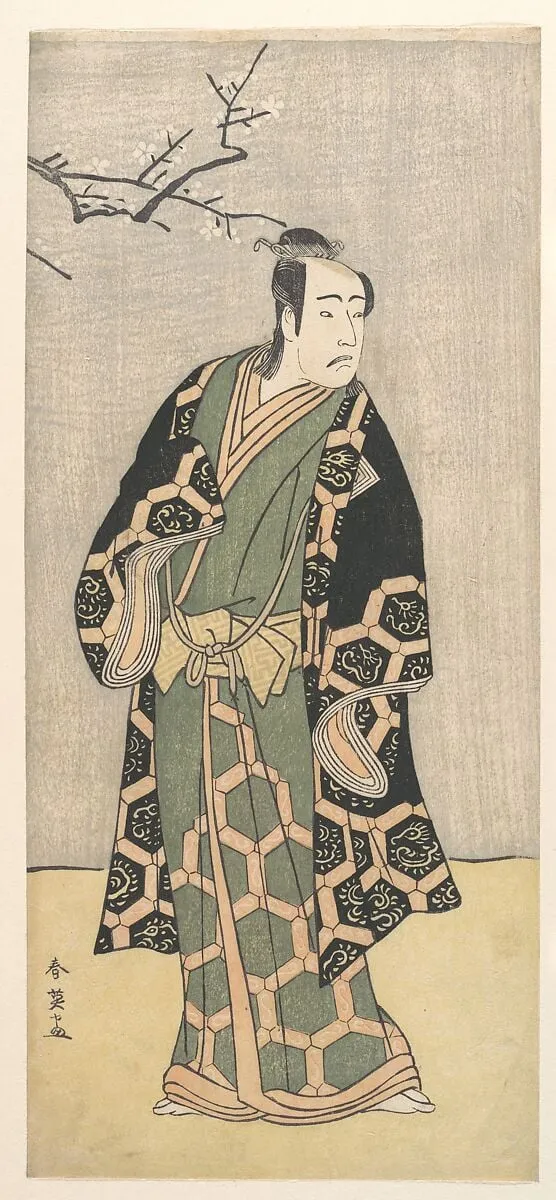
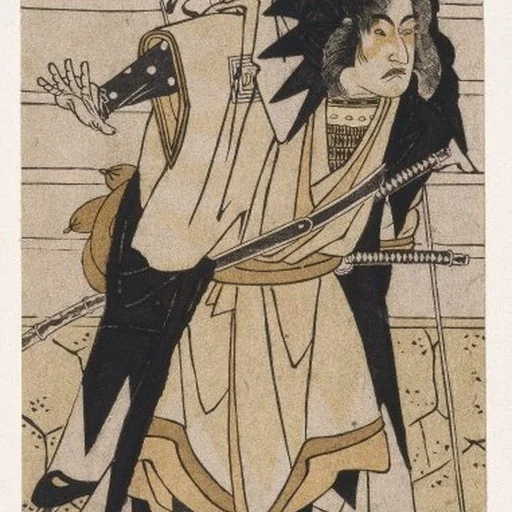
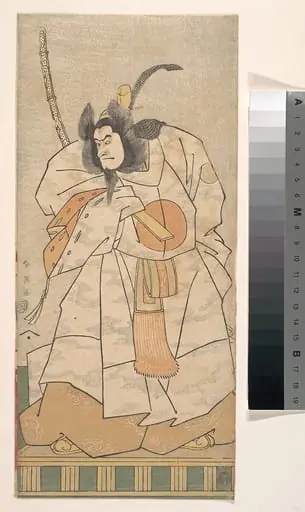
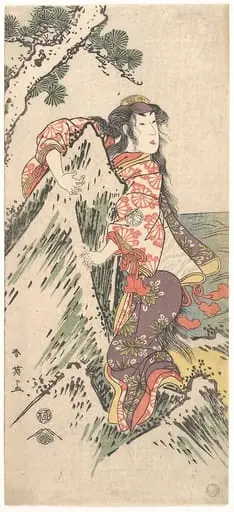
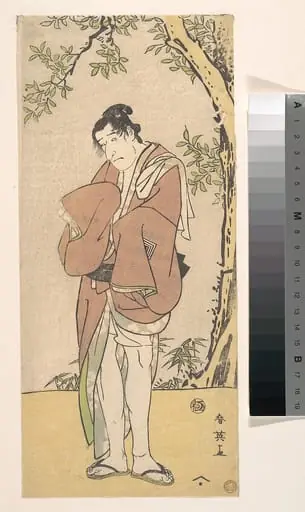
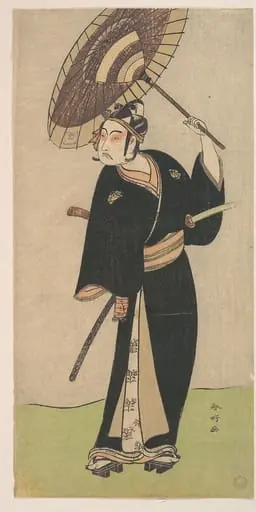
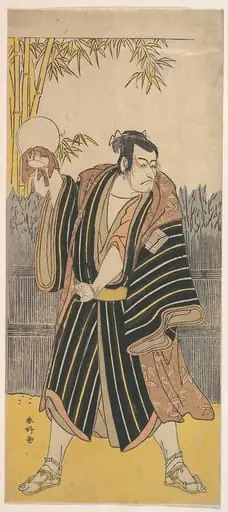
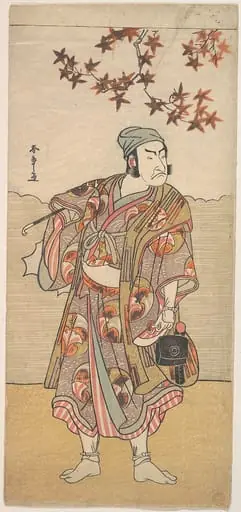
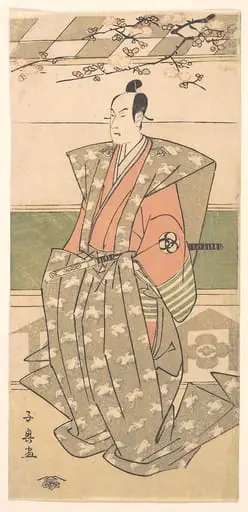
Untitled is an ink print by the Romanticist artist Katsukawa Shun'ei 勝川春英. It dates from 1790 and is held in the collection of the Metropolitan Museum of Art. This woodblock print, dated 1790, is attributed to Katsukawa Shun'ei and resides in The Metropolitan Museum of Art.
About this work
Overview
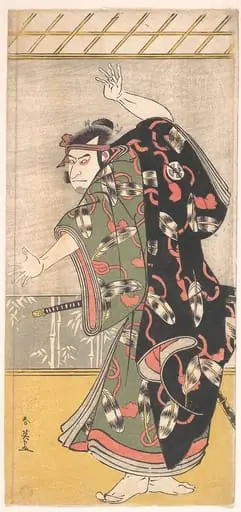
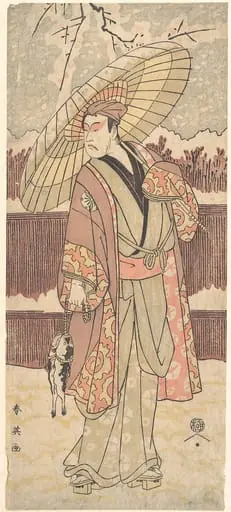
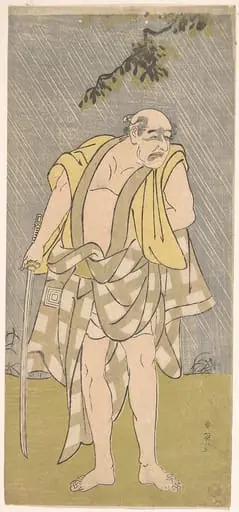
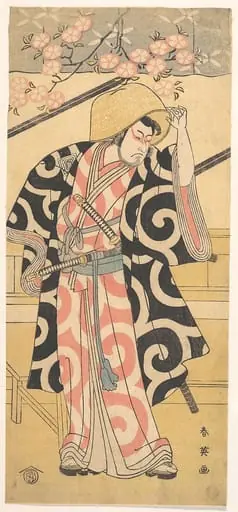
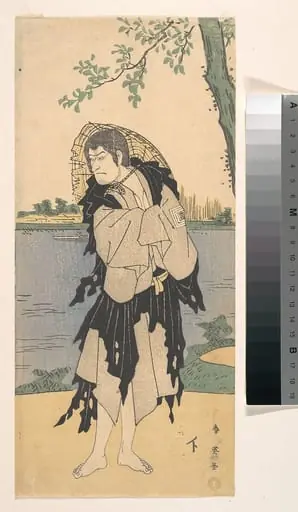
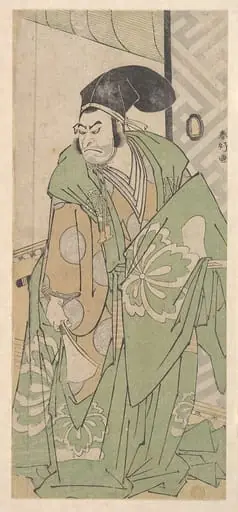
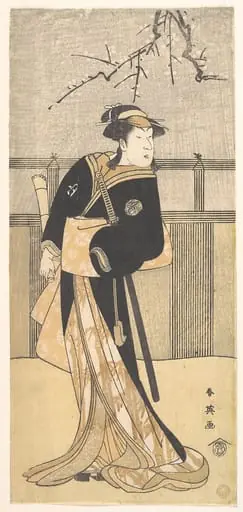
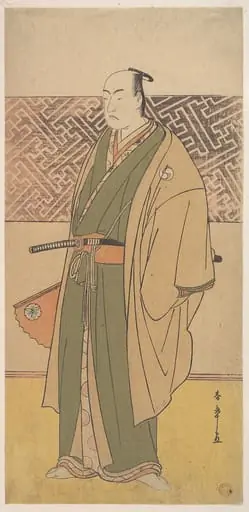
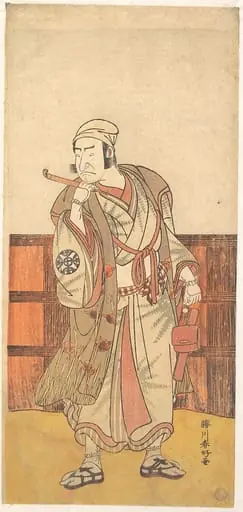
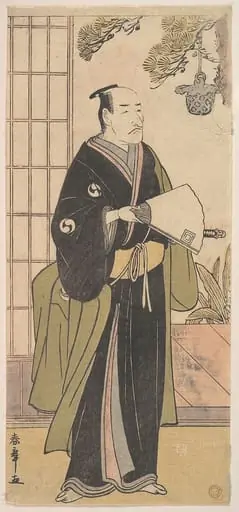
This woodblock print, dated 1790, is attributed to Katsukawa Shun'ei and resides in The Metropolitan Museum of Art. Rendered in ink and color on paper, it features a tall, vertical composition centered on a solitary male figure. The design emphasizes linear clarity and restrained color, with minimal background detail drawing focus to the figure’s attire and posture.
Subject & Meaning
The figure is depicted in formal attire, suggesting a role from kabuki theater, though his identity remains unspecified. His serious expression and tightly bound topknot convey solemnity, possibly indicating a samurai or dramatic character. The stark contrast between his ornate robe and the barren tree behind him evokes isolation or introspection, common themes in Edo-period actor prints.
Technique & Style
Shun'ei employs bold, clean outlines and flat areas of color—black, green, and white—to define the robe’s geometric and swirling patterns. The fabric appears layered, with solid sections juxtaposed against intricate designs, enhancing texture without shading. The bare branch and plain background rely on minimalism, allowing the robe’s patterns to dominate visually through contrast and precision.
History & Provenance
Created during the late 18th century, this print reflects the popularity of actor portraiture in Edo-period Japan. While specific early ownership records are unverified, its presence in The Metropolitan Museum of Art indicates it was acquired as part of a broader collection of Japanese prints, likely in the early 20th century through scholarly or collector networks.
Context
This work belongs to the Katsukawa school’s tradition of actor prints, which emphasized individualized facial expressions and elaborate costumes. Unlike broader ukiyo-e scenes, this piece isolates the figure, focusing on costume as narrative. The restrained palette and lack of setting align with a trend toward stylized, intimate portrayals in late 18th-century printmaking.
Legacy
Though less widely recognized than contemporaries like Sharaku, Shun'ei’s prints contributed to the evolution of actor portraiture by refining costume detail and emotional restraint. This print exemplifies how textile patterns became carriers of character, influencing later artists to treat fabric as a visual language rather than mere decoration.
Artist & collection