Artwork
初代中村仲蔵|The First Nakamura Nakazō in the Role of Shimada no Hachizō
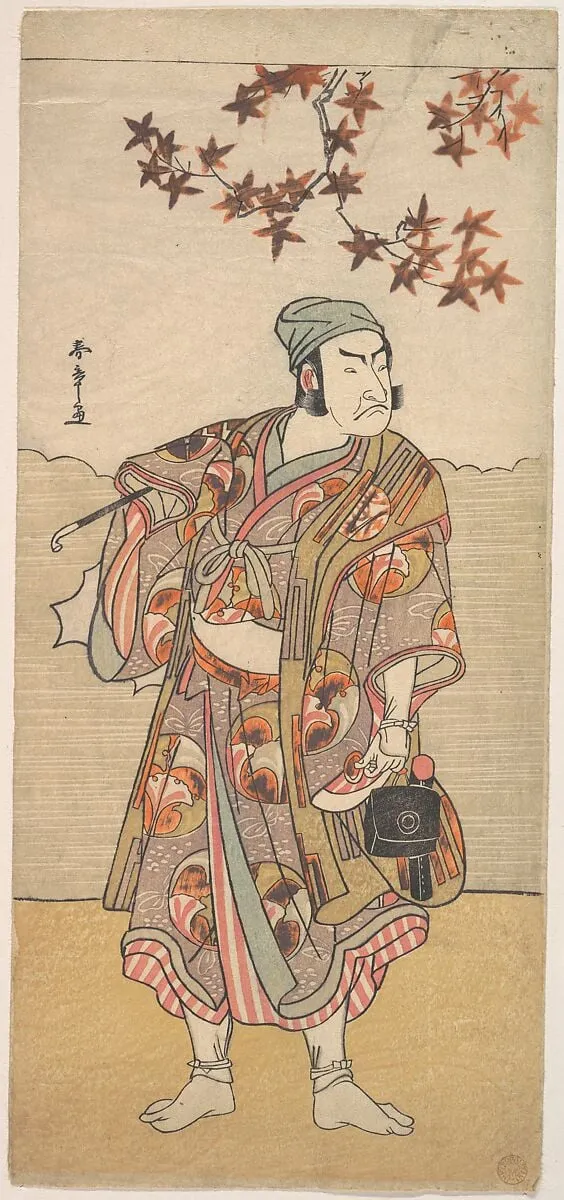
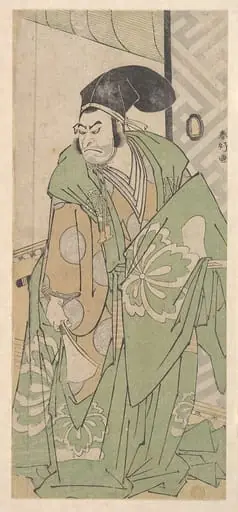
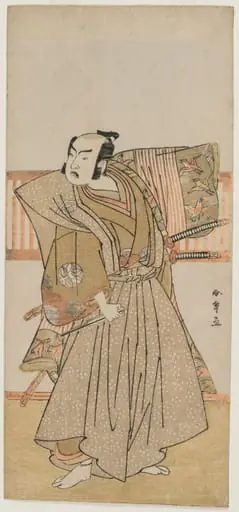
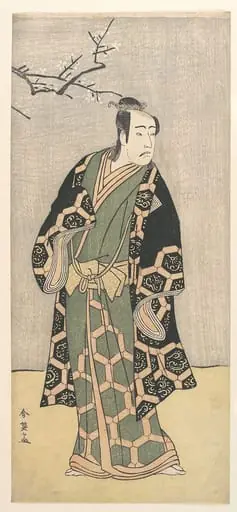
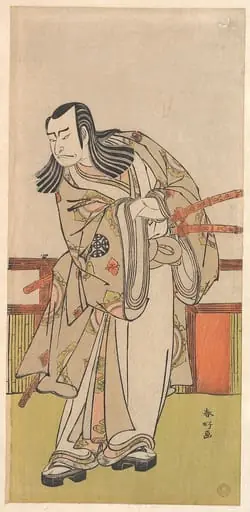
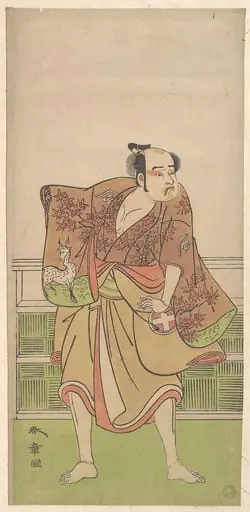
初代中村仲蔵|The First Nakamura Nakazō in the Role of Shimada no Hachizō is an ink print by the Romanticist artist Katsukawa Shunshō. It dates from 1783 and is held in the collection of the Metropolitan Museum of Art.
About this work
His clothes have bold reds, greens, and golds, with a black bag slung over his shoulder.
This print shows a man in bright, patterned robes standing sideways. His clothes have bold reds, greens, and golds, with a black bag slung over his shoulder. Behind him, falling leaves float against a light background.
The man looks like a character from a play—his pose and clothes suggest he’s an actor. The print was made in 1783 by a Japanese artist.
Next, check out actor roles in traditional Japanese theater.
Overview
This woodblock print, created in 1783 by Katsukawa Shunshō, depicts the first Nakamura Nakazō portraying the character Shimada no Hachizō. Executed in nishiki-e technique, it uses ink and color on paper to capture a moment from kabuki theater. The print is part of the collection at The Metropolitan Museum of Art, representing a key example of Edo-period actor portraiture.
Subject & Meaning
The figure is Shimada no Hachizō, a dramatic role from kabuki performance, rendered in the likeness of the actor Nakamura Nakazō. His posture and elaborate costume signal a character of high social standing or theatrical flair. The falling leaves suggest seasonal change or transience, common motifs in Japanese art that subtly reinforce the ephemeral nature of performance and life.
Technique & Style
Shunshō employed the nishiki-e method, using multiple carved blocks to apply precise layers of color. The robes display vivid reds, greens, and gold accents, contrasting with the muted background. Fine lines define fabric patterns and facial features, while the asymmetrical composition and shallow space reflect the conventions of ukiyo-e portraiture, emphasizing theatrical presence over naturalism.
History & Provenance
Produced in 1783 during the height of actor print popularity in Edo, this work was likely distributed as a promotional item for a kabuki performance. It entered The Metropolitan Museum of Art’s collection through documented acquisitions of Japanese prints in the 20th century, preserving its historical context as a commercial and artistic artifact of its time.
Context
In late 18th-century Edo, actor portraits were mass-produced for fans, blending celebrity culture with artistic expression. Shunshō, a leading figure in the Katsukawa school, specialized in capturing actors’ likenesses with psychological nuance. This print reflects the close relationship between theater and print culture, where performance and visual art mutually reinforced each other’s appeal.
Legacy
Shunshō’s portrayal of Nakamura Nakazō exemplifies the evolution of actor prints from stylized representations toward more individualized depictions. While later artists would push toward greater realism, this work remains a significant reference for understanding how kabuki’s visual identity was shaped and disseminated through print media in the Edo period.
Artist & collection
Artist
Katsukawa Shunshō spent his life in Edo (now Tokyo), where the city’s teahouses and theaters buzzed with energy.