Artwork
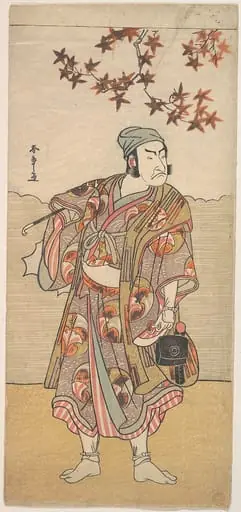
勝川春好画 初代中村仲蔵|Kabuki Actor Nakamura Nakazō I
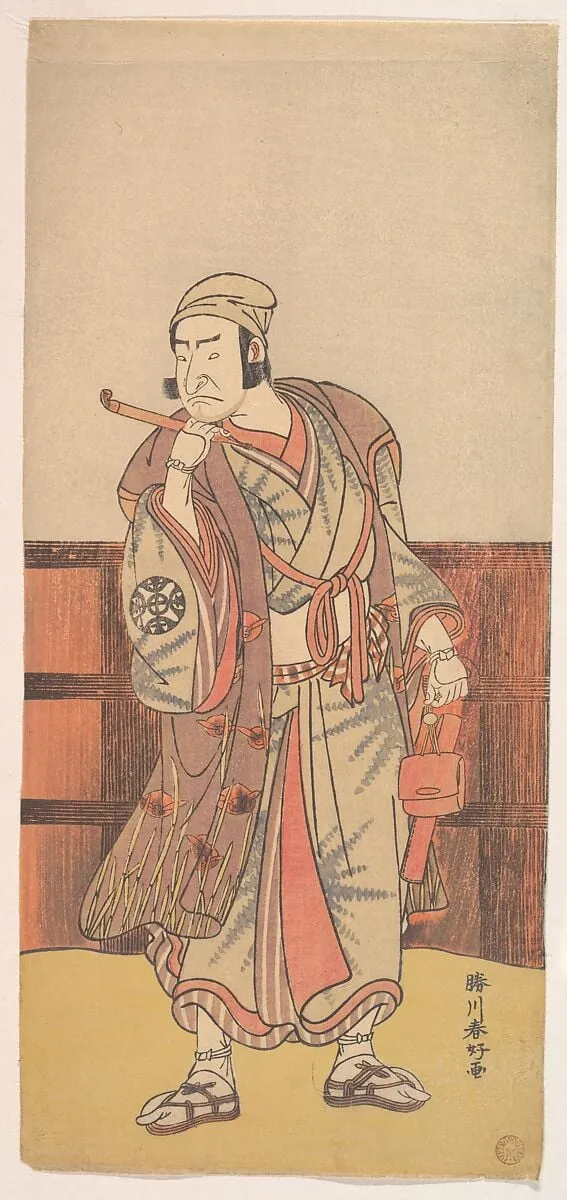
勝川春好画 初代中村仲蔵|Kabuki Actor Nakamura Nakazō I is an ink print by the Romanticist artist Katsukawa Shunkō. It dates from 4 and is held in the collection of the Metropolitan Museum of Art.
About this work
Overview
Kabuki Actor Nakamura Nakazō I is a woodblock print created by Katsukawa Shunkō. Executed in the nishiki-e technique, it combines ink and color on paper. The work is part of The Metropolitan Museum of Art's collection.
Subject & Meaning
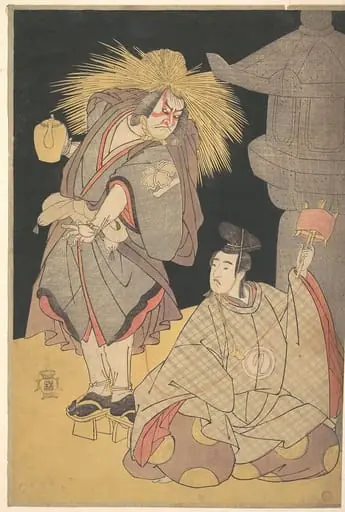
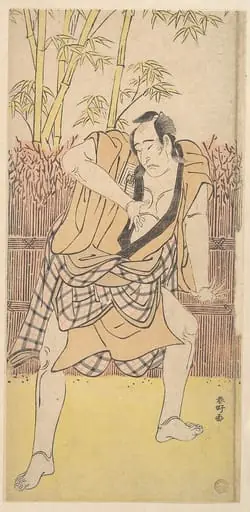
The print depicts Nakamura Nakazō I, a kabuki actor, in a contemplative pose. He wears a long, boldly patterned robe and holds a pipe, while a small figure, possibly a child, observes from behind. The composition emphasizes the actor's expression and posture.
Technique & Style
Shunkō employed simple, expressive lines and flat colors, characteristic of Japanese woodblock printing. This stylistic choice directs the viewer's attention to the actor's demeanor and pose, highlighting the interplay between subtle emotion and theatrical presence.
History & Provenance
Created in the late 18th century, the print is now housed at The Metropolitan Museum of Art, though its precise creation date and ownership history before acquisition are not specified here.
Context
This work reflects the influence of kabuki theater on Japanese art. Actors often became subjects of woodblock prints, capturing their roles and personalities for a broader audience, illustrating the intersection of theater and visual arts in Edo-period Japan.
Artist & collection

Artist
Katsukawa Shunkō spent his life in Edo, where crowded theaters and teahouses buzzed around him.

 Untitled
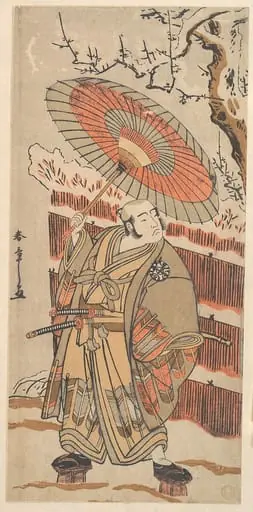
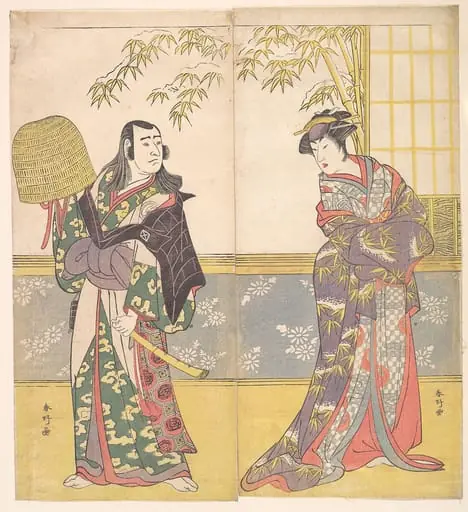 勝川春好画 三代目澤村宗十郎 三代目佐野川市松 |Kabuki Actors Sawamura Sōjūrō III and Sanogawa Ichimatsu III in "A Courtesan’s Mirror for the Eastern Provinces" (Keisei Azuma kagami)
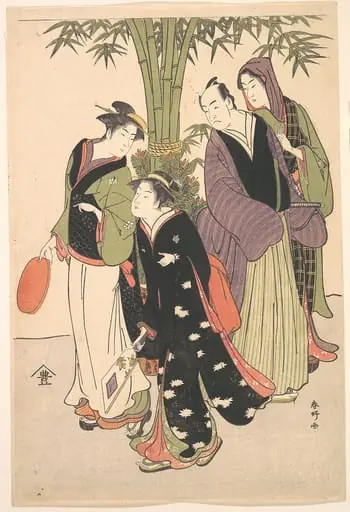 勝川春好画 三代目瀬川菊之丞・二代目市川門之助|Kabuki Actors Segawa Kikunojō III and Ichikawa Monnosuke II and Two Courtesans Celebrating the New Year
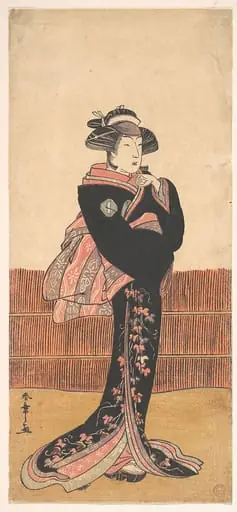
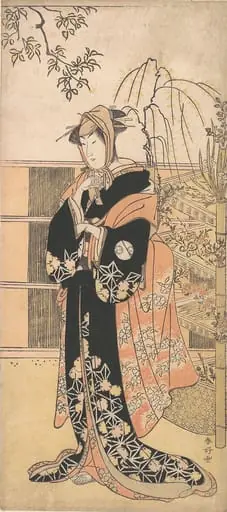 勝川春好画 三代目瀬川菊之丞|Kabuki Actor Segawa Kikunojō III in a Woman’s Role
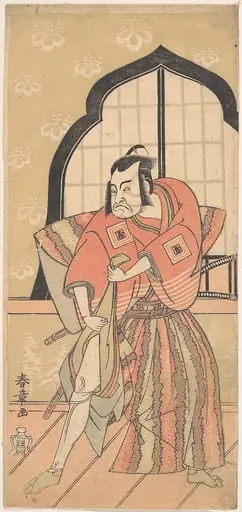
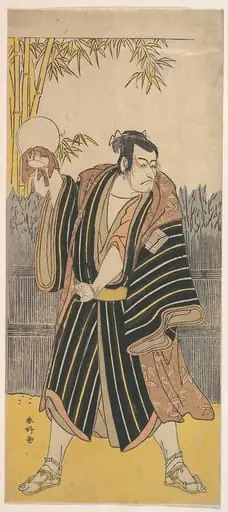 勝川春好画 七代目片岡仁左衛門 五代目市川團十郎|Kabuki Actor Ichikawa Danjūrō V
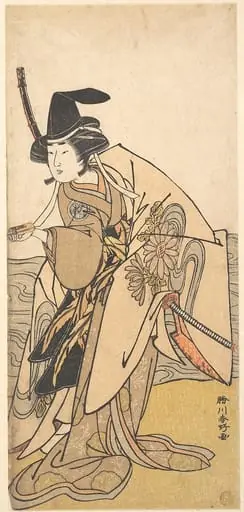 Untitled
 Untitled
 Untitled