Artwork
Untitled
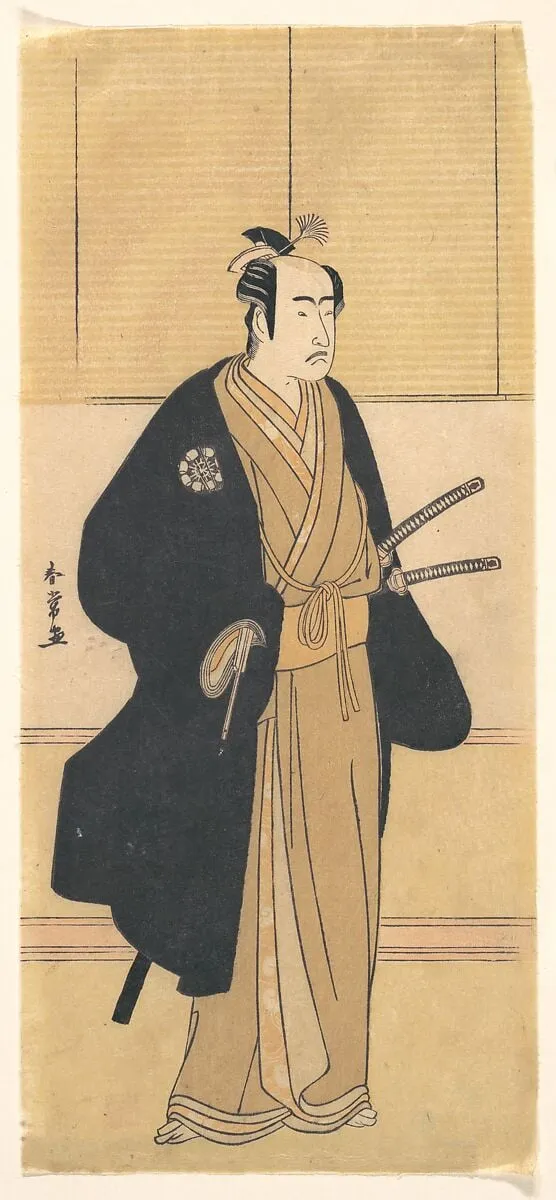
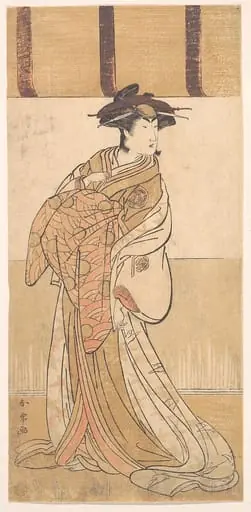
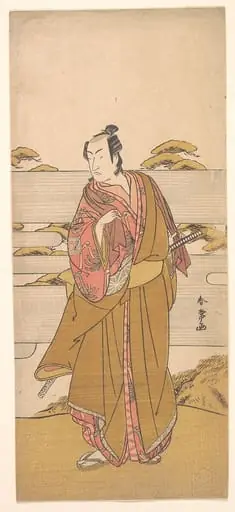
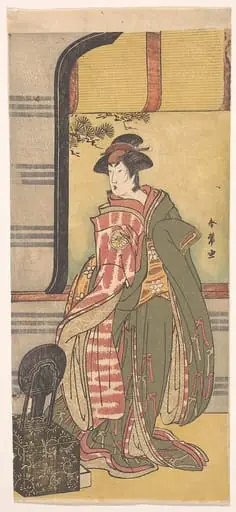
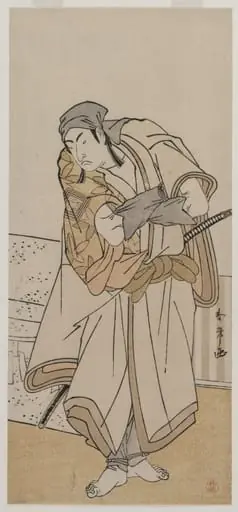
Untitled is an ink print by the Baroque artist Katsukawa Shunjō. It dates from 1744 and is held in the collection of the Metropolitan Museum of Art.
About this work
Overview
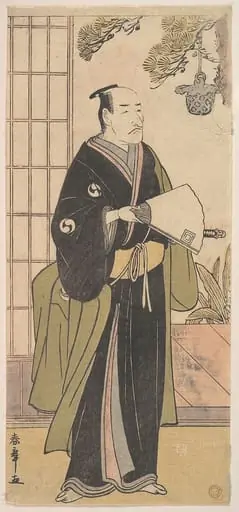
The composition is restrained, focusing on a single male subject against a minimal background, emphasizing form and posture over environmental detail.
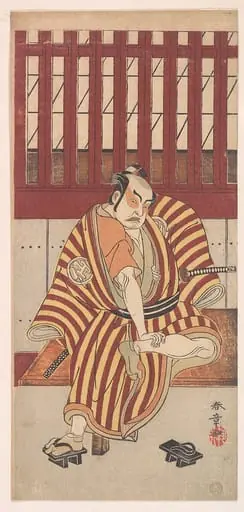
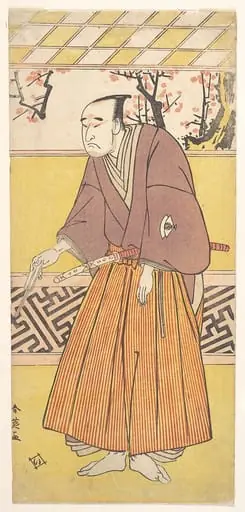
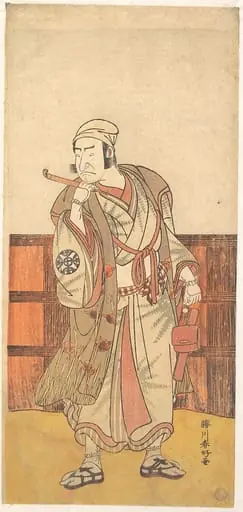
This woodblock print, dated 1744, is attributed to Katsukawa Shunjō and is part of The Metropolitan Museum of Art’s print collection. Executed in ink and color on paper, it exemplifies the ukiyo-e tradition of depicting figures from contemporary urban life. The composition is restrained, focusing on a single male subject against a minimal background, emphasizing form and posture over environmental detail.
Subject & Meaning
The figure is a man dressed in formal attire: a black robe, sash, and tall dark hat, suggesting status or occupation. He holds a sword in one hand and a fan in the other, combining symbols of authority and refinement. His expression is solemn, conveying composure rather than emotion. While not explicitly labeled, such portraits often represented actors or samurai, figures whose public personas were widely recognized in Edo-period Japan.
Technique & Style
The print employs flat, unmodulated areas of color and strong, clean outlines typical of early ukiyo-e. Shunjō avoids shading and perspective, relying instead on silhouette and pattern to define form. The background is reduced to a few suggestive lines, possibly indicating a wall, leaving the figure isolated and prominent. This stylistic choice enhances legibility and visual impact, suited for mass reproduction and public display.
History & Provenance
Created in 1744 during the mid-Edo period, the work reflects the growing popularity of actor and portrait prints in Edo. It entered The Metropolitan Museum of Art’s collection through documented acquisitions of Japanese prints in the early 20th century. While its immediate provenance prior to museum ownership is not fully detailed, its preservation aligns with broader Western interest in Japanese graphic arts from the 1890s onward.
Context
In mid-18th century Edo, woodblock prints served as affordable visual media for the urban middle class. Portraits of actors and dignitaries were especially popular, circulating as cultural icons. Shunjō, trained in the Katsukawa school, contributed to this tradition by refining the depiction of individual character through stylized features and simplified attire, distinguishing his work from earlier, more decorative approaches.
Legacy
This print represents an early stage in the evolution of ukiyo-e portraiture, before the genre fully embraced dramatic expression and elaborate settings. Shunjō’s restrained approach influenced later artists who sought to capture psychological presence through minimal means. Though less widely known than his successors, his work helped establish the visual language of actor prints that would dominate the genre for decades.
Artist & collection


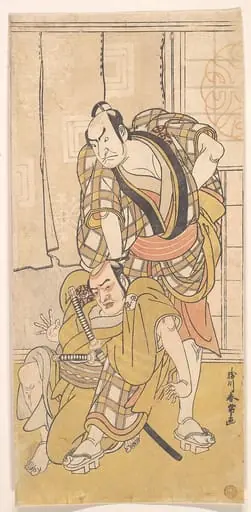
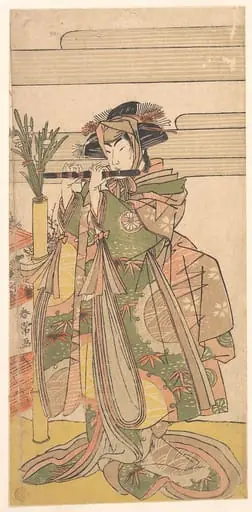
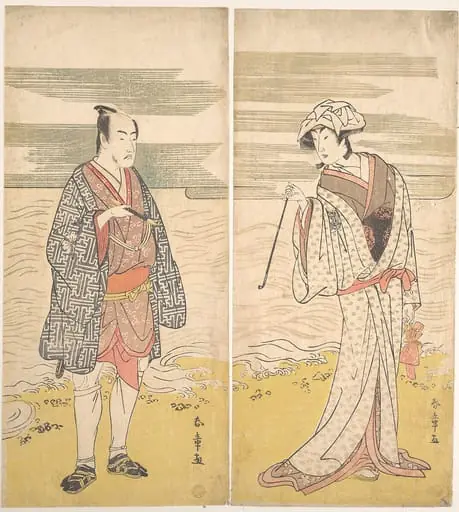
 Untitled
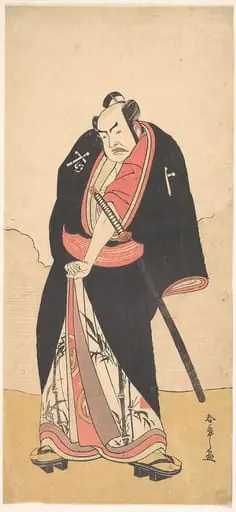 二代目中村助五郎|Kabuki Actor Nakamura Sukegorō II as Kaminari Shōkurō
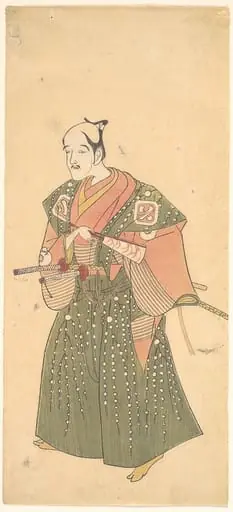 初代嵐音八 (複製?)|The Actor Arashi Otohachi I (facsimile?)
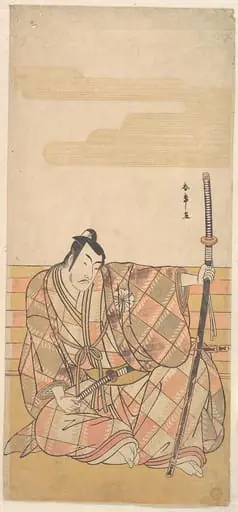 Untitled
 Untitled
 Untitled
 Untitled
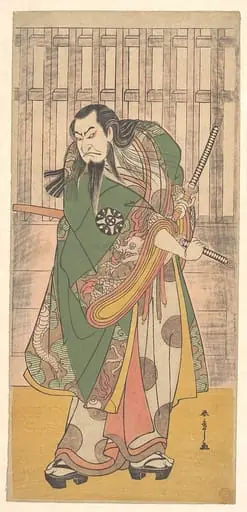 初代中村中蔵の髭の伊久|The Actor Nakamura Nakazō I as the Elderly Samurai Hige no Ikyū
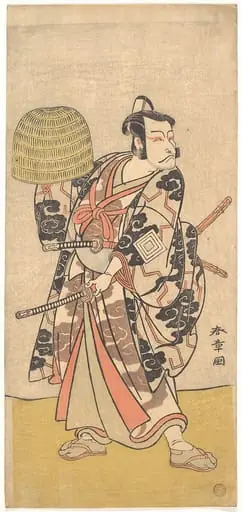 勝川春章画 五代目市川團十郎|Kabuki Actor Ichikawa Danjūrō V
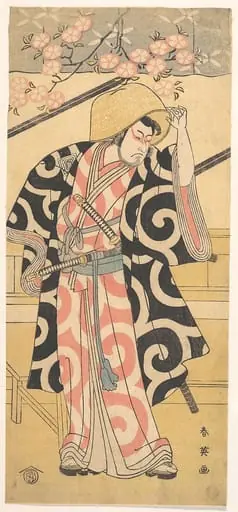 Untitled
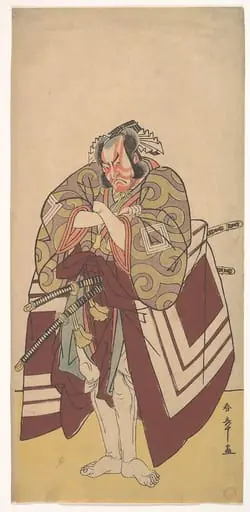 五代目市川団十郎|Kabuki Actor Ichikawa Danjūrō V in a Shibaraku (Stop Right There!) Role
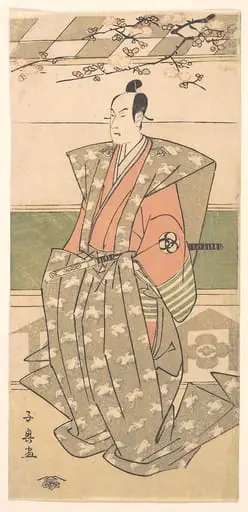 Untitled