Artwork
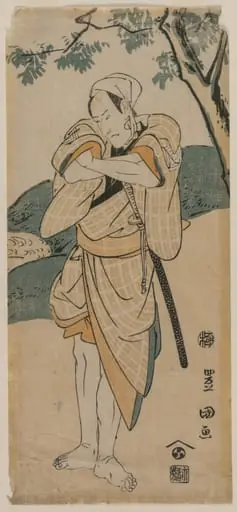
Ichikawa Yaozo II as Soga no Goro
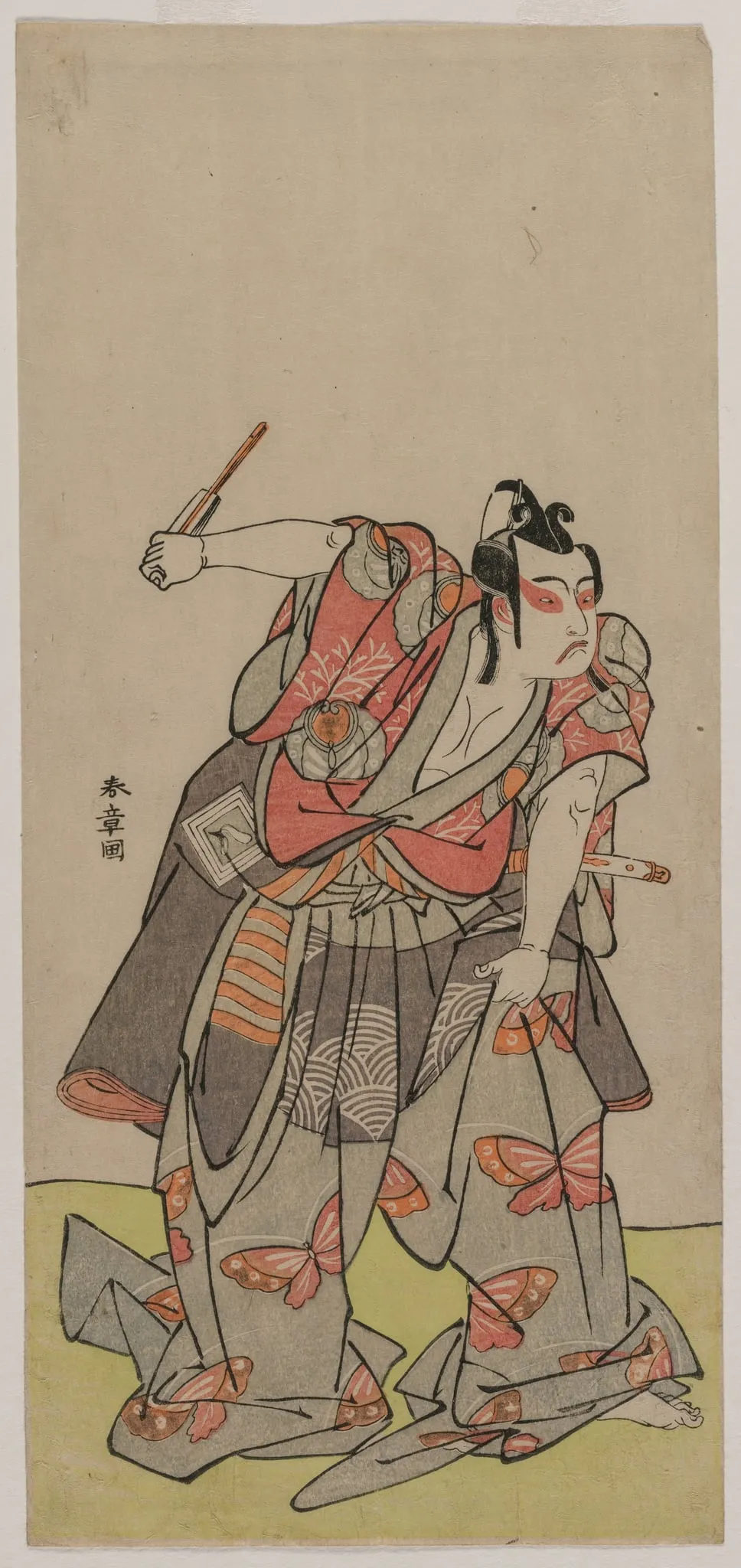
Ichikawa Yaozo II as Soga no Goro is a print by the Romanticist artist Katsukawa Shunshō. It dates from 1774 and is held in the collection of the Cleveland Museum of Art.
About this work
Overview
Katsukawa Shunshō's 'Ichikawa Yaozo II as Soga no Goro' (c. 1774) is a vibrant ukiyo-e print depicting a theatrical figure in dynamic pose, characterized by bold colors and intricate costume details.
Subject & Meaning
The subject is Ichikawa Yaozo II, a renowned actor, portrayed as Soga no Goro, a character from traditional Japanese drama, likely kabuki. The depiction captures a pivotal moment in a play, conveying drama through the actor's expressive face and poised gesture.
Technique & Style
Executed in the ukiyo-e tradition, the print features Shunshō's mastery of color and composition. The use of white face paint, bold black eyeliner, and vibrant textiles (red sleeves, striped skirt) against a presumably simple background (not described) showcases the artist's emphasis on the performer's presence.
History & Provenance
Created around 1774, the print is now part of The Cleveland Museum of Art's collection. Specific details about its creation context or previous ownership are not provided.
Context
This work reflects 18th-century Japan's flourishing kabuki theater and the popularity of actor prints (yakusha-e), which catered to the growing urban audience's interest in theatrical arts.
Legacy
As a representative of Shunshō's oeuvre, it contributes to the historical record of kabuki's golden age and the evolution of ukiyo-e, influencing subsequent generations of Japanese printmakers.
Artist & collection
Artist
Katsukawa Shunshō spent his life in Edo (now Tokyo), where the city’s teahouses and theaters buzzed with energy.

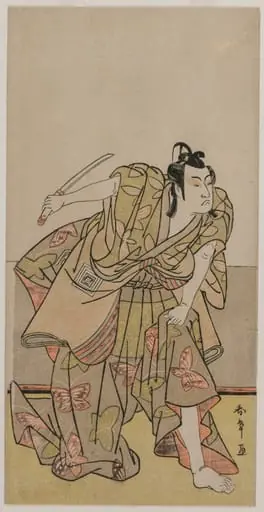 Ichikawa Monnosuke II as Soga no Goro
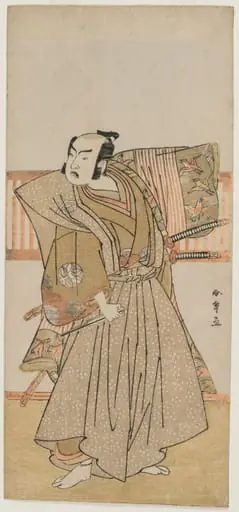 Ichimura Uzaemon IX as Soga no Juro
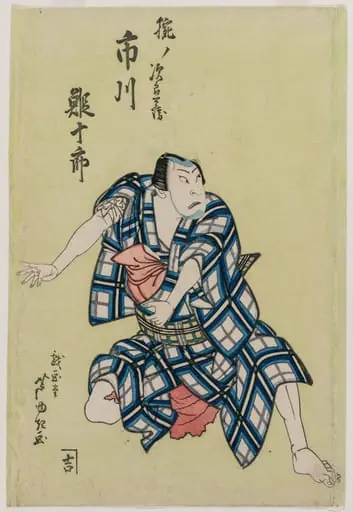 Ichikawa Ebijuro II as Ude no Jirobei
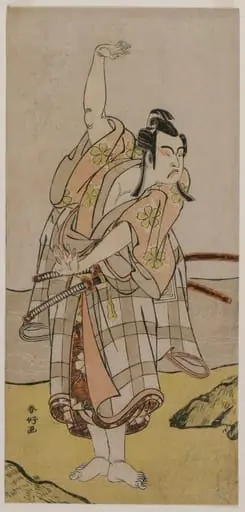 Actor Ichikawa Yaozō II as Sakuramaru
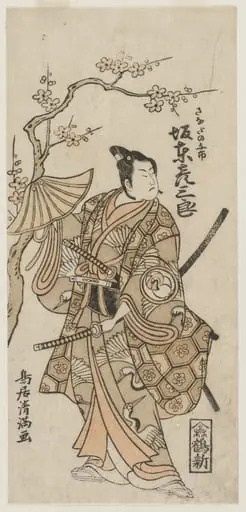 Bando Hikosaburo II as Sanada no Yoichi
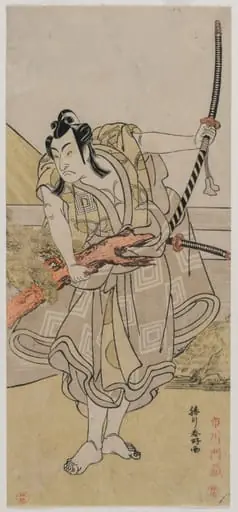 Ichikawa Monnosuke II as Soga no Gorō
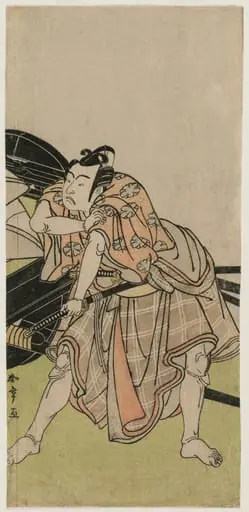 Ichikawa Yaozo II as Sakuramaru
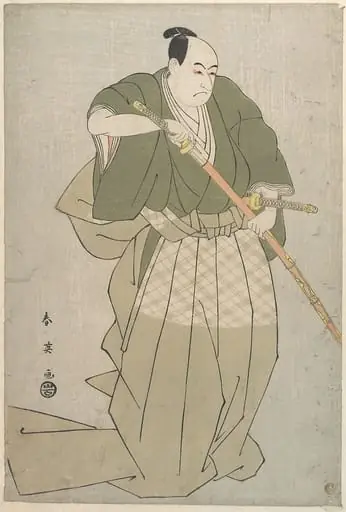 初代市川 男女蔵の桃井若狭之助|The Actor Ichikawa Omezō I as the Young Daimyo Momonoi Wakasanosuke
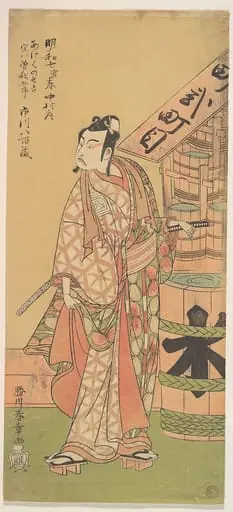 二代目市川八百蔵|Kabuki Actor Ichikawa Yaozō II
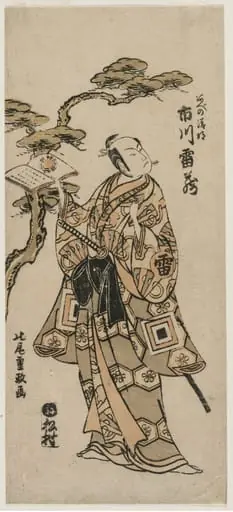 Ichikawa Raizo as Abe no Seimei
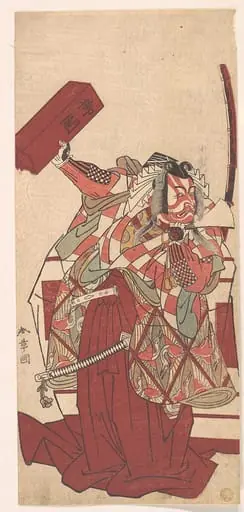 三代目市川海老蔵の篠塚伊賀守定綱|The Actor Ichikawa Ebizō III as Shinozuka Iga no kami Sadatsuna in a Shibaraku Scene
 The Actor Ichikawa Danjuro as a Samurai