Artwork
Ichikawa Ebijuro II as Ude no Jirobei
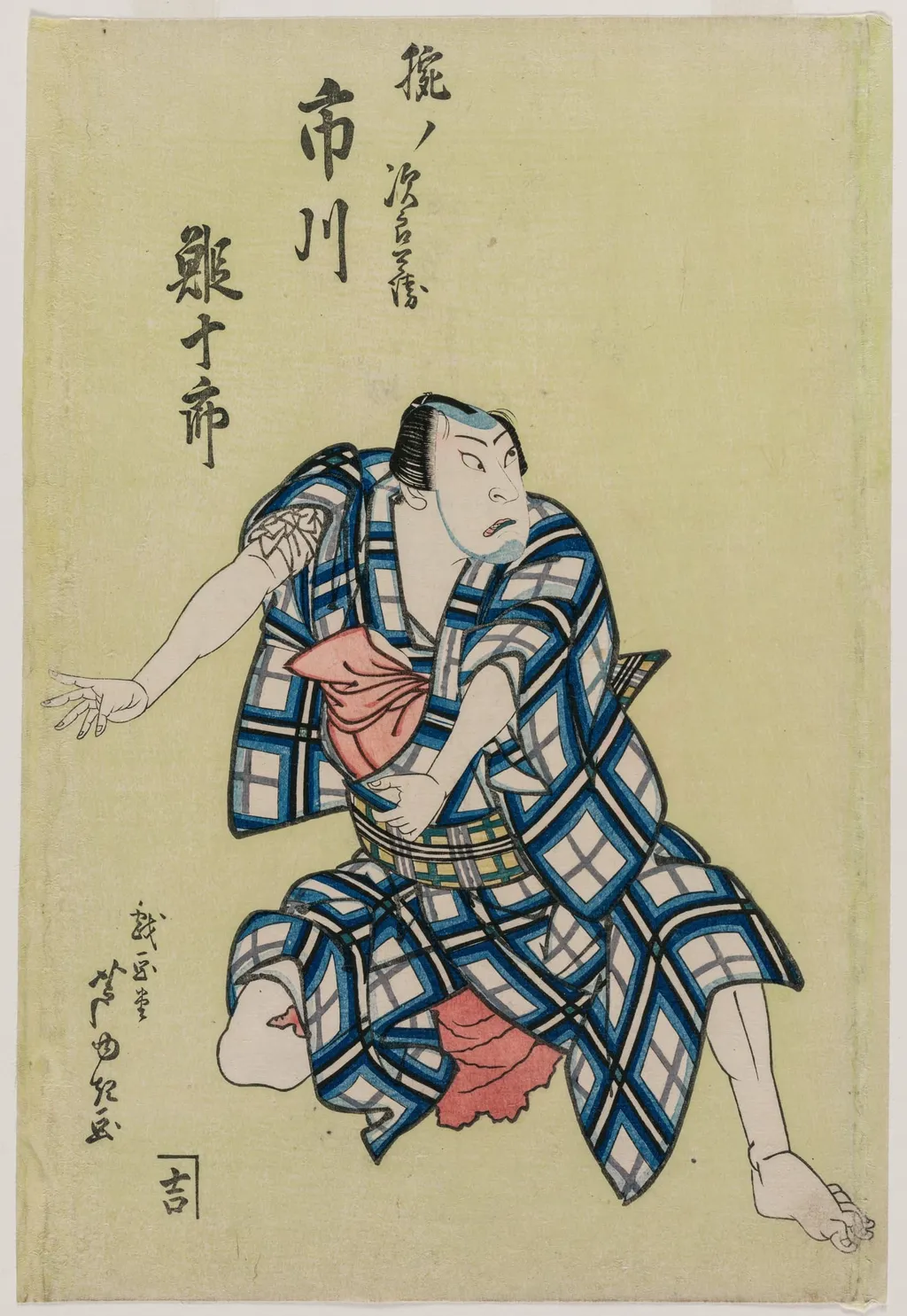
Ichikawa Ebijuro II as Ude no Jirobei is a print by the Romanticist artist Gigadō Ashiyuki. It dates from 1824 and is held in the collection of the Cleveland Museum of Art.
About this work
Overview
This woodblock print, created around 1824 by Gigadō Ashiyuki, depicts the kabuki actor Ichikawa Ebijūrō II in the role of Ude no Jirobei. It is part of a series of actor portraits popular in early 19th-century Japan. The print is currently held in the collection of The Cleveland Museum of Art, where it represents the ukiyo-e tradition of capturing theatrical performance through printmaking.
Subject & Meaning
The actor’s seated posture and intense facial expression convey a moment of calculated stillness, typical of roles requiring psychological depth.
The figure portrays Ude no Jirobei, a character from kabuki drama known for his cunning and resilience. The actor’s seated posture and intense facial expression convey a moment of calculated stillness, typical of roles requiring psychological depth. The red fan and distinctive robe signal his status and role within the narrative, while the reaching hand introduces narrative tension, suggesting an unseen interaction or threat.
Technique & Style
Gigadō Ashiyuki employed fine line work and layered color blocks typical of ukiyo-e. The actor’s face is rendered with stark white and blue highlights to emphasize dramatic expression, while the checkered robe uses precise patterns to denote theatrical convention. The black wig and subtle shading in the background ground the figure in a defined space, enhancing the illusion of depth without perspective.
History & Provenance
The print was produced during the late Edo period, a time when actor portraits were widely circulated among urban audiences. It entered the Cleveland Museum of Art’s collection through established channels of Japanese print acquisition in the 20th century. Its preservation reflects its significance as a documented example of kabuki performance culture and commercial print production of the era.
Context
During the 1820s, kabuki theater thrived in Edo, and actor prints served as both promotional material and collectible art. Designers like Gigadō Ashiyuki worked closely with theaters to capture popular performers in signature roles. The checkered robe and stylized makeup reflect established visual codes used to communicate character type instantly to audiences familiar with kabuki conventions.
Legacy
This print contributes to the broader understanding of how Japanese theater and printmaking intersected in daily life. It preserves the visual language of kabuki at a time when performance was ephemeral and print was the primary medium for its dissemination. Today, such works inform studies of performance, identity, and mass visual culture in pre-modern Japan.
Artist & collection

Artist
Gigadō Ashiyuki was a designer of ukiyo-e style Japanese woodblock prints in Osaka, who was active from about 1813 to 1833.

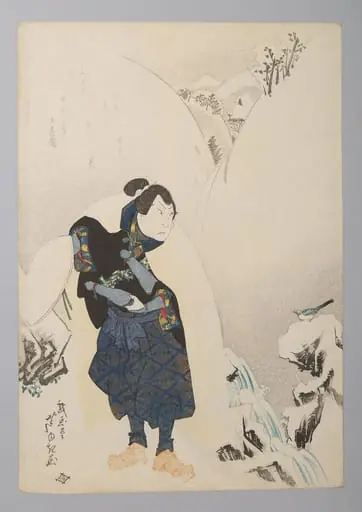
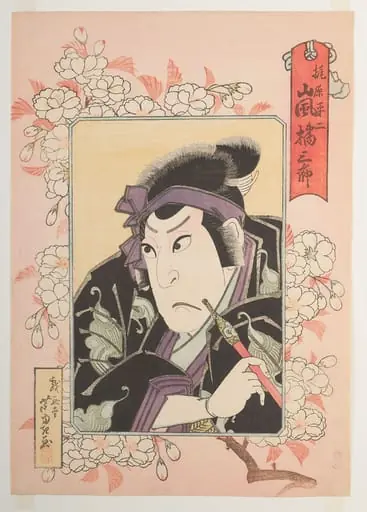
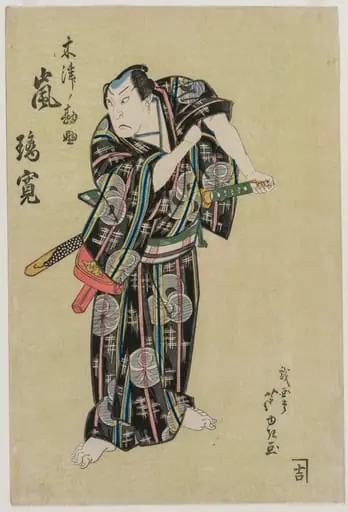
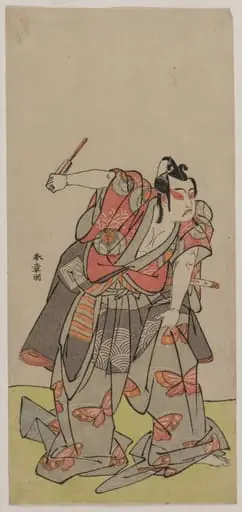 Ichikawa Yaozo II as Soga no Goro
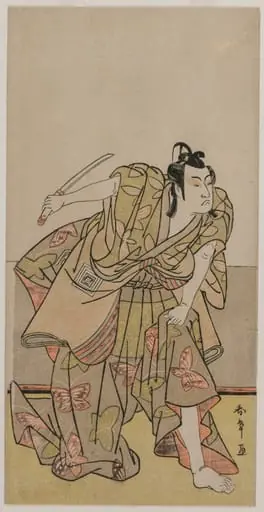 Ichikawa Monnosuke II as Soga no Goro
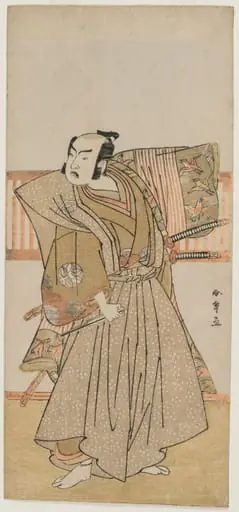 Ichimura Uzaemon IX as Soga no Juro
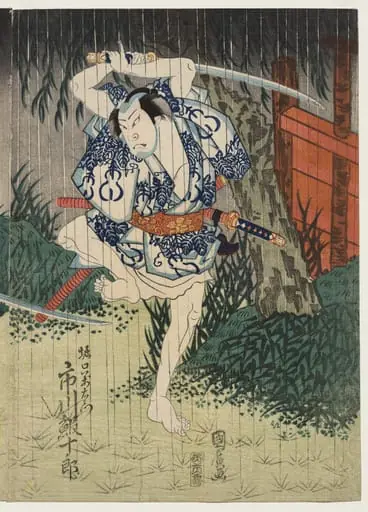 Ichikawa Ebijuro II as Horiguchi Manzaemon
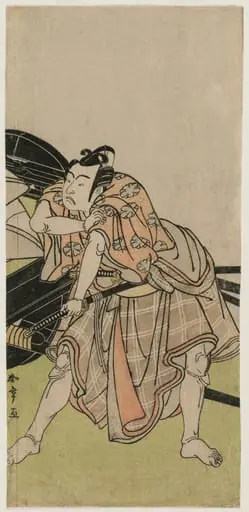 Ichikawa Yaozo II as Sakuramaru
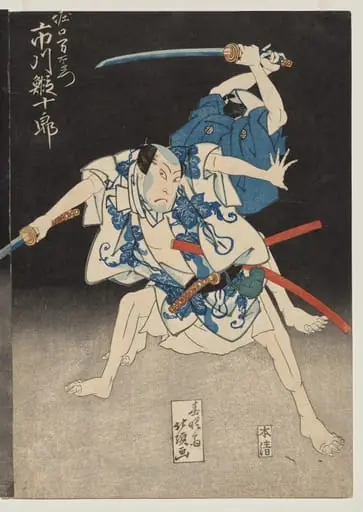 Ichikawa Ebijūrō II as Horiguchi Manzaemon from the Kabuki Play "Eight Views of the Kizu River by Boating Song"
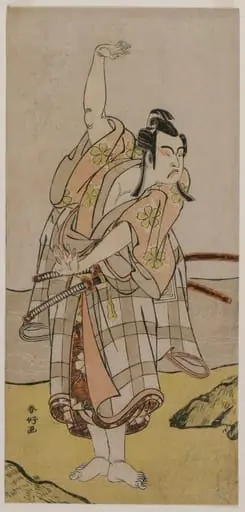 Actor Ichikawa Yaozō II as Sakuramaru
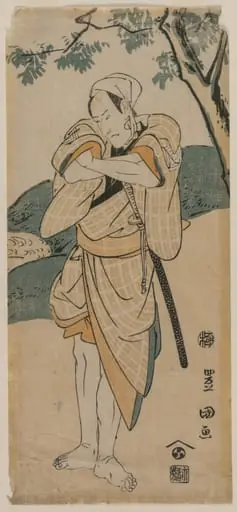 The Actor Ichikawa Danjuro as a Samurai
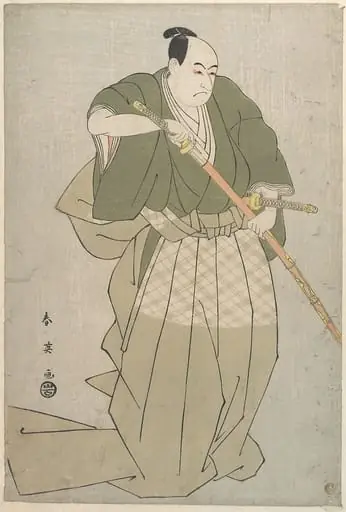 初代市川 男女蔵の桃井若狭之助|The Actor Ichikawa Omezō I as the Young Daimyo Momonoi Wakasanosuke
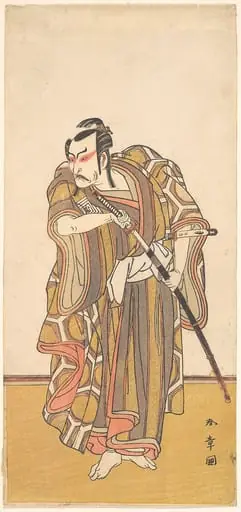 四代目市川團蔵|Kabuki Actor Ichikawa Danzō IV