Artwork
Dancer with a Maple Branch
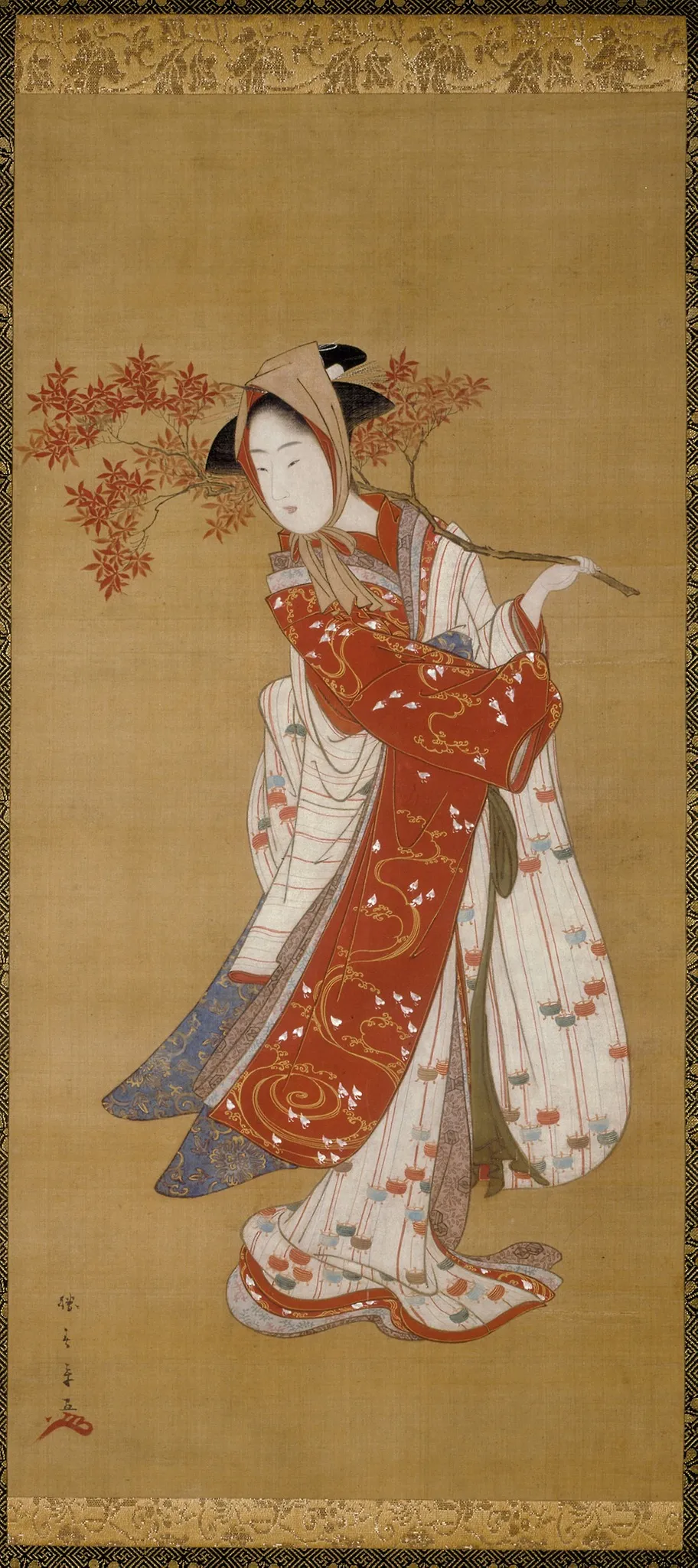
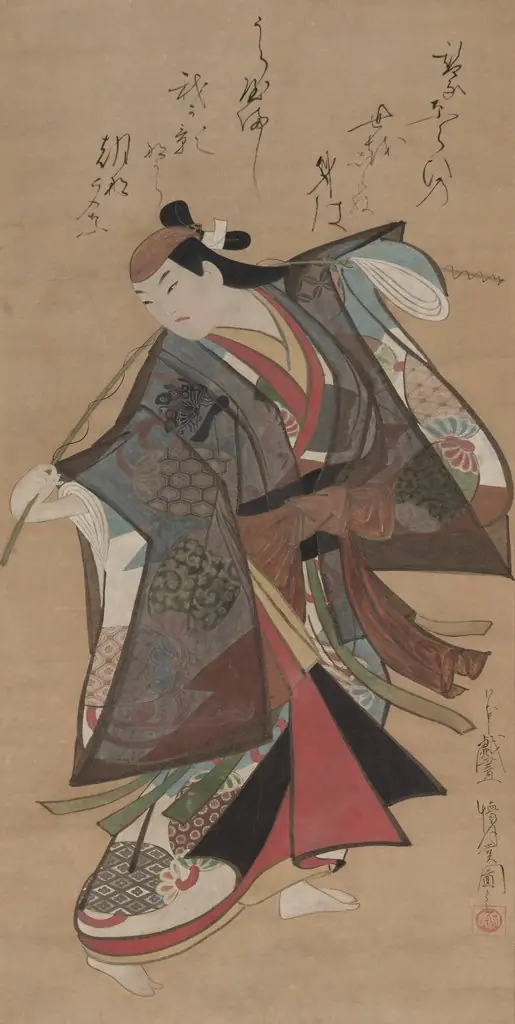
Dancer with a Maple Branch is an unspecified painting by the Ukiyo-e artist Katsukawa Shunshō. It dates from 1769 and is held in the collection of the Art Institute of Chicago.
About this work
Overview
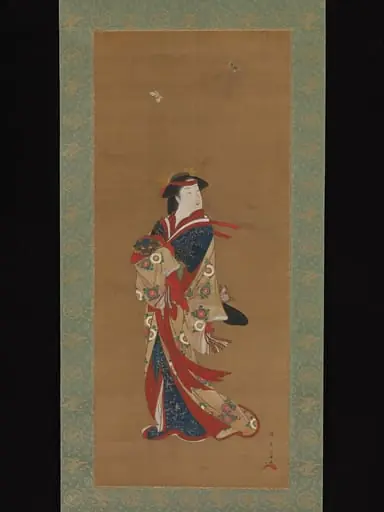
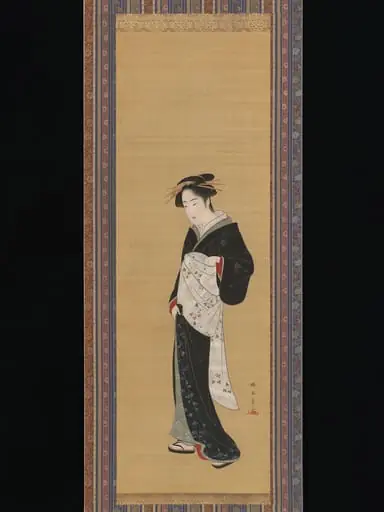
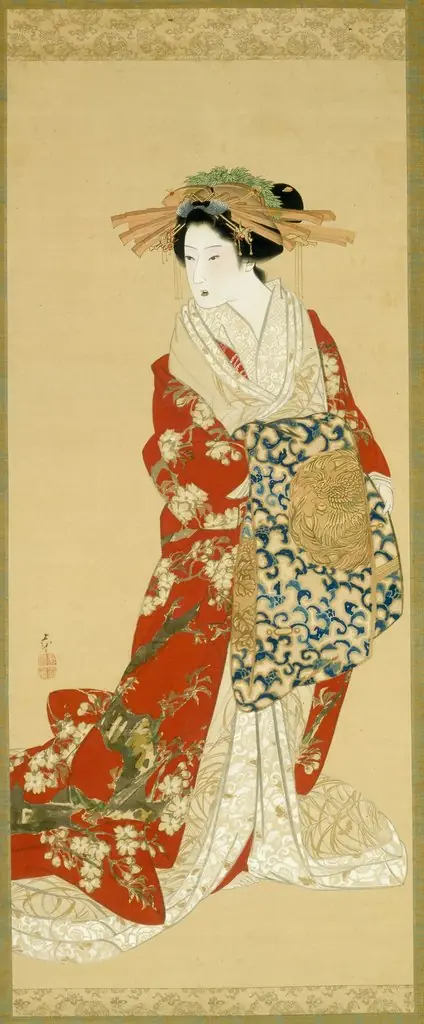
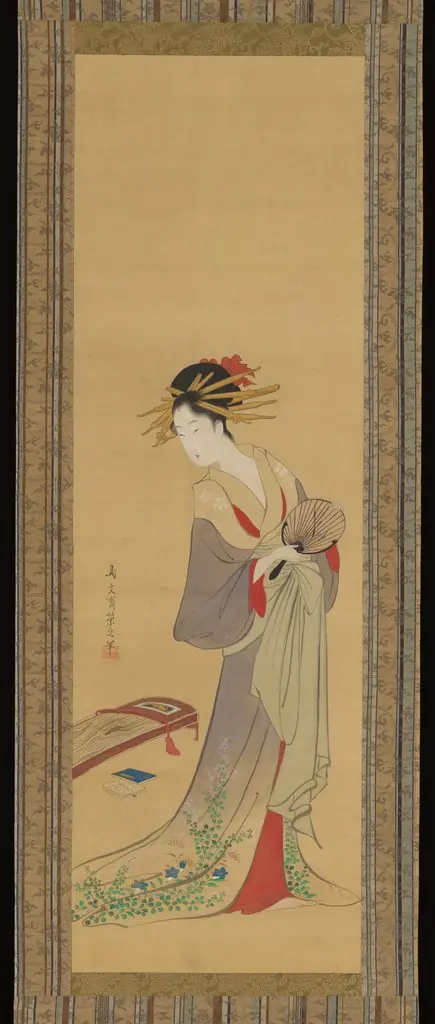
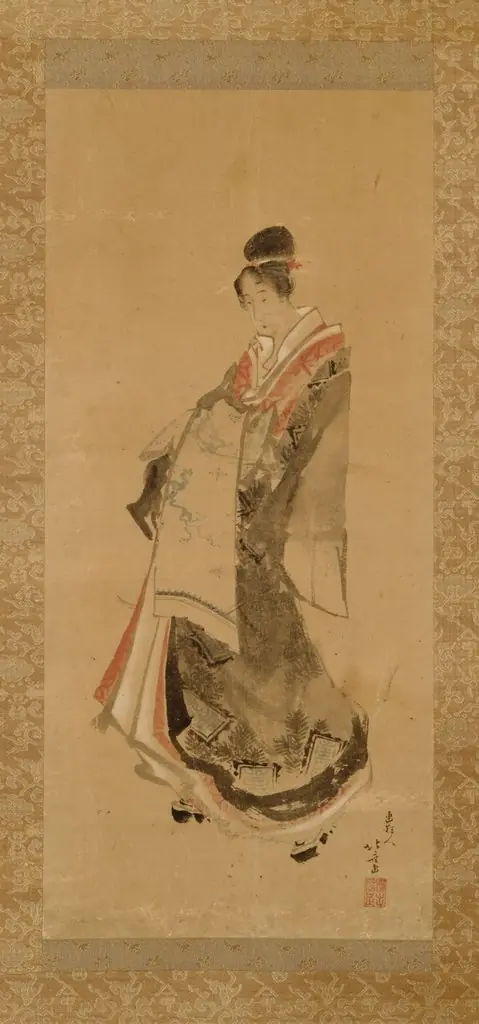
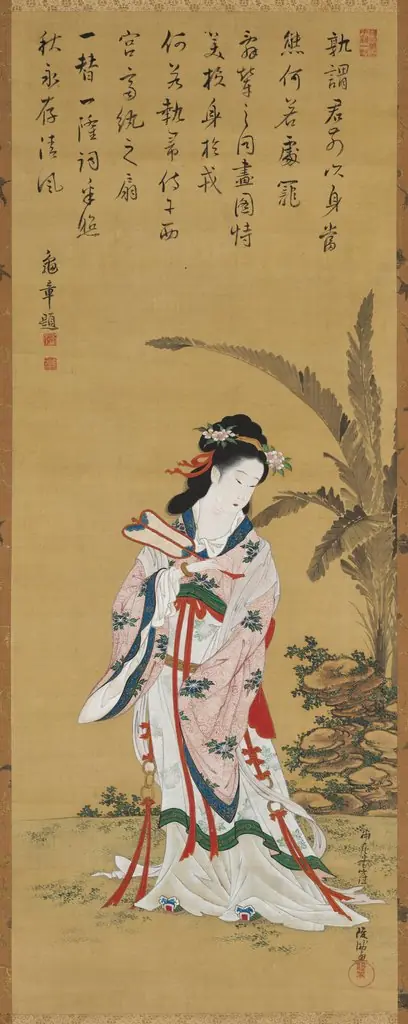
Dancer with a Maple Branch, created around 1769 by Japanese artist Katsukawa Shunshō, is a painting featuring a solitary female figure prominently holding a branch against a plain gold background.
Subject & Meaning
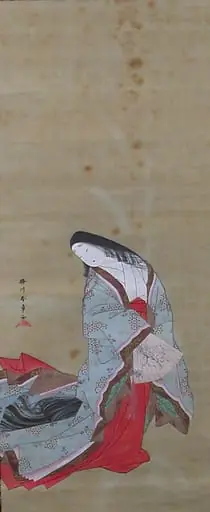
The subject, a woman in traditional attire, conveys serenity through her calm expression and poised stance. The maple branch with red leaves, symbolic of autumn, may imply a seasonal or poetic theme, though the specific narrative or character remains unspecified.
Technique & Style
Executed in a style characteristic of 18th-century Japanese ukiyo-e, the painting emphasizes flat, vibrant colors and clear outlines. The gold background, a luxury item at the time, heightens the subject's prominence and adds a sense of elegance.
History & Provenance
Katsukawa Shunshō, a founder of the Katsukawa school of ukiyo-e, was known for portraits of actors and beauties. This work, now part of the Art Institute of Chicago's collection, reflects his contribution to the development of Edo-period woodblock prints and paintings.
Context
Created during the Edo period, the piece embodies the aesthetic preferences of the time, including the appreciation of nature (as seen in the maple branch) and the depiction of idealized female beauty in traditional clothing.
Legacy
While not widely discussed in broad art historical narratives outside of ukiyo-e specialists, 'Dancer with a Maple Branch' contributes to the understanding of Shunshō's influence on subsequent generations of Japanese artists, particularly in the portrayal of female subjects and seasonal themes.
Artist & collection
Artist
Katsukawa Shunshō spent his life in Edo (now Tokyo), where the city’s teahouses and theaters buzzed with energy.