Artwork
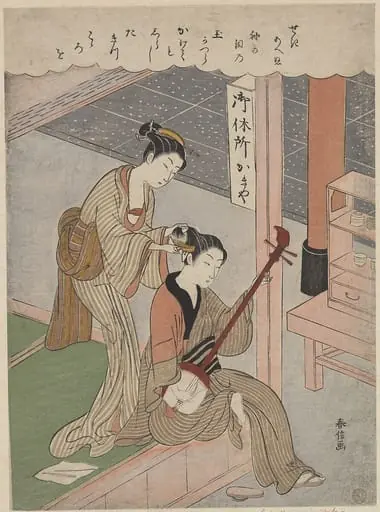
青楼美人合|The Courtesans, from the Series, "Seiro Bijin Awase Carver End Shigoro" (sic.)
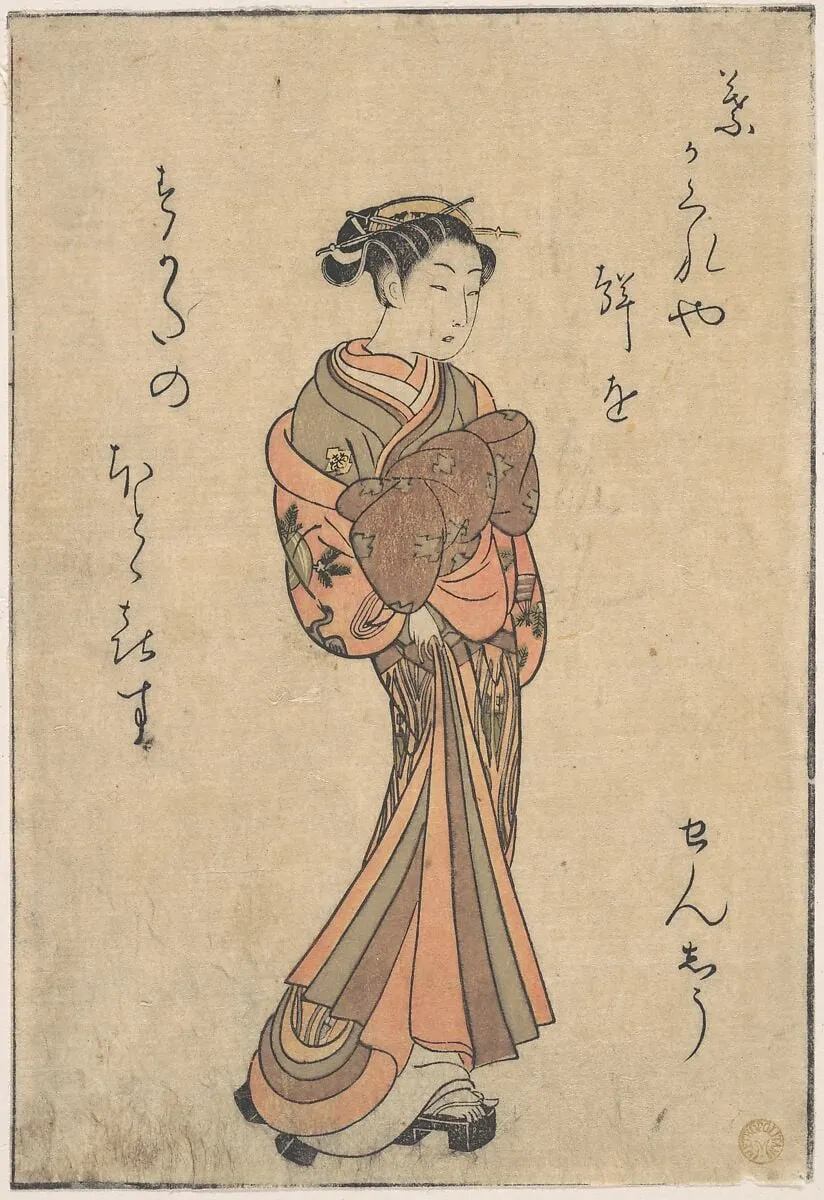
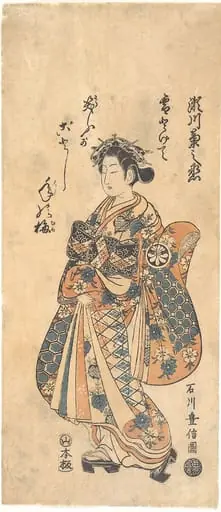
青楼美人合|The Courtesans, from the Series, "Seiro Bijin Awase Carver End Shigoro" (sic.) is an ink print by the Romanticist artist Suzuki Harunobu. It dates from 1765 and is held in the collection of the Metropolitan Museum of Art.
About this work
Overview
Created around 1765 by Suzuki Harunobu, this woodblock print belongs to a series that depicts courtesans. The work is part of the Metropolitan Museum of Art’s collection and exemplifies the ukiyo-e genre that flourished in mid‑eighteenth‑century Japan.
Subject & Meaning
The image centers on a single woman dressed in a long, flowing robe rendered in muted pinks and greys. Her hair is neatly arranged beneath a black headpiece, and she holds a folding fan, a common attribute of courtesan portraiture that hints at elegance and refined leisure.
Technique & Style
Harunobu employs fine, linear drawing and broad, flat areas of color, hallmarks of the early ukiyo-e aesthetic. The composition is uncluttered, with a plain background that directs attention to the figure’s delicate features and the subtle tonal shifts of the garment.
History & Provenance
The print was produced in the Edo period, a time when woodblock publishing expanded to meet the demand for images of fashionable urban life. It entered the Metropolitan Museum of Art’s holdings through acquisition in the twentieth century, though specific details of its earlier ownership remain undocumented.
Context
During the 1760s, Harunobu pioneered a softer, more lyrical approach to portraiture, moving away from the bold outlines of earlier prints. His works often included Japanese script that identified the sitter’s name or role, reflecting the commercial and narrative functions of such images.
Artist & collection

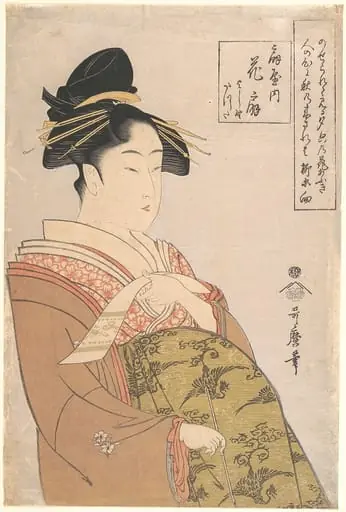 「扇屋内花扇図」|The Courtesan Hanaōgi of the Ōgiya Brothel in Yoshiwara (Ōgiya uchi Hanaōgi, Yoshino, Tatsuta)
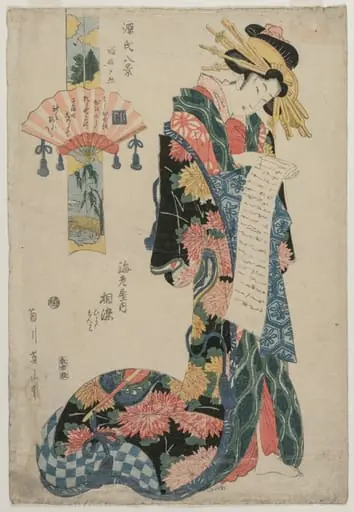 The Courtesan Aizome of the Ebiya (From the series Eight Views of the Tale of Genji)
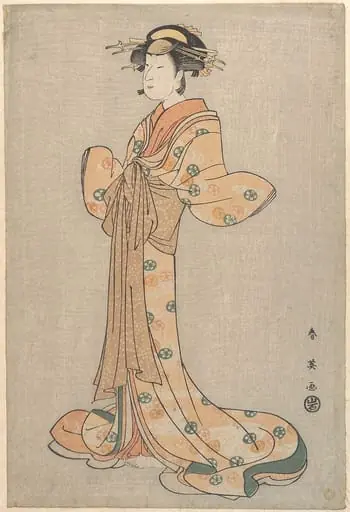 二代目中村二代目中村野塩のお軽|The Actor Nakamura Noshio II as the Courtesan Okaru
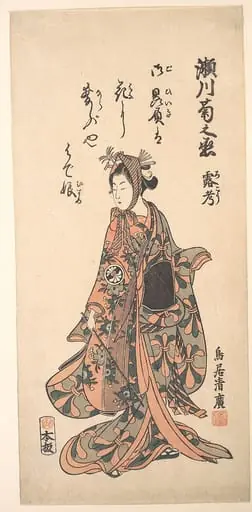 Untitled
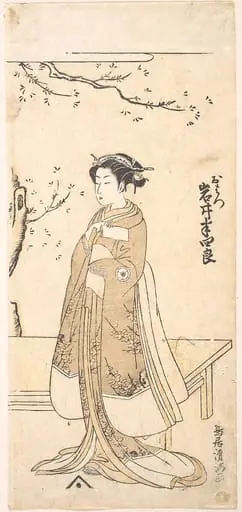 Untitled
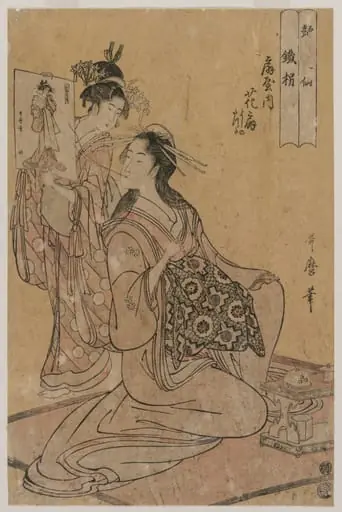 The Courtesan Hana-ogi of Ogiya as the Sennin Tekkai (from the series Eight Immortals of Sensuality)
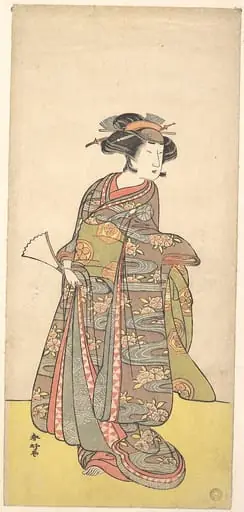 Untitled
 Untitled
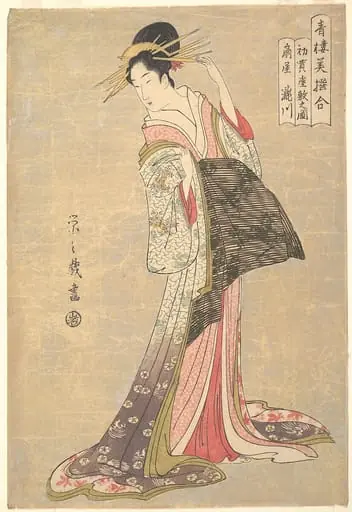 鳥文斎栄之画 「青楼美撰合 初売座敷之図 扇屋滝川」|Takigawa of the Ōgiya Brothel: The First Reception Room Appointment of the New Year (Hatsu-uri zashiki no zu: Ōgiya Takigawa), from the series A Comparison of Selected Beauties of the Pleasure Quarters (Seirō bisen awase)