Artwork
Untitled
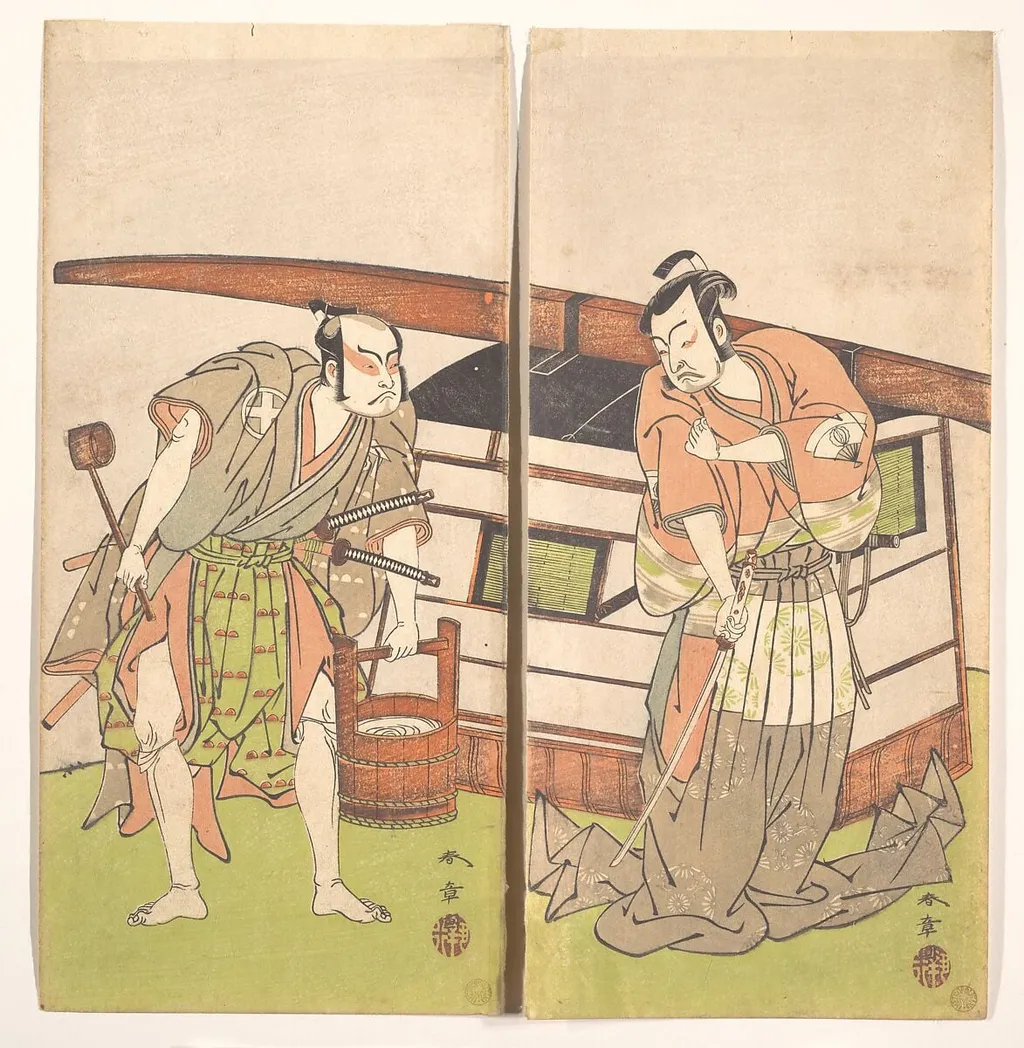
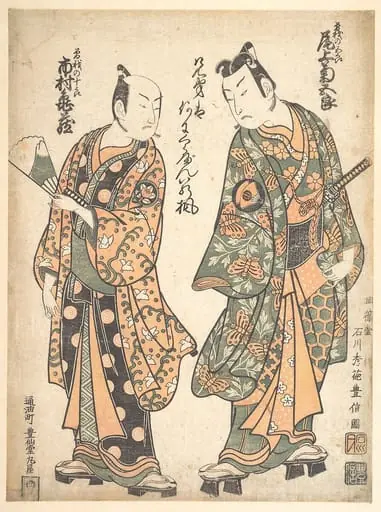
Untitled is an ink print by the Romanticist artist Katsukawa Shunshō. It dates from 1778 and is held in the collection of the Metropolitan Museum of Art.
About this work
Overview
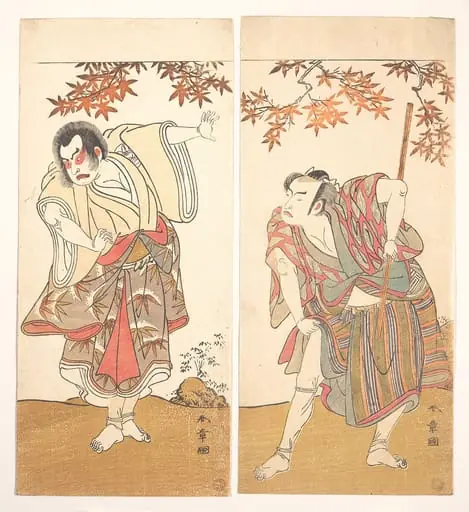
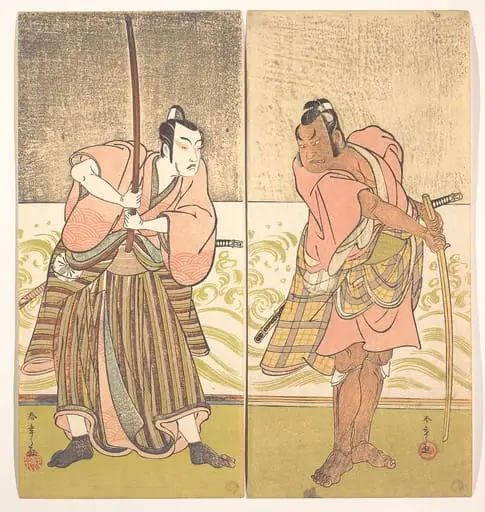
This diptych, created around 1778 by Katsukawa Shunshō, consists of two woodblock prints on paper, executed in the nishiki-e technique.
This diptych, created around 1778 by Katsukawa Shunshō, consists of two woodblock prints on paper, executed in the nishiki-e technique. Each panel presents a solitary male figure in a moment of tension, set against minimal architectural elements. The work is part of The Metropolitan Museum of Art’s collection and exemplifies the Edo-period print tradition, emphasizing narrative stillness over elaborate detail.
Subject & Meaning
The two figures appear to depict a moment of confrontation or aftermath, possibly drawn from a theatrical or literary source. The left figure, holding a hammer and sword, stands rigidly before a well, while the right, clutching a sword and slumped against a wall, suggests exhaustion or defeat. The absence of clear context invites interpretation, but the pairing implies a narrative link—perhaps a duel, punishment, or ritual act.
Technique & Style
Shunshō employed the nishiki-e method, using multiple carved blocks to layer ink and color with precision. Bold outlines define the figures, while restrained palettes of green and orange ground them in visual contrast. The compositions are tightly framed, with minimal background elements directing focus to posture and gesture. The prints balance formal restraint with expressive tension through subtle shifts in posture and line.
History & Provenance
The diptych was produced during Shunshō’s mature period, when he was a leading designer of actor prints and narrative scenes. It entered The Metropolitan Museum of Art’s collection through established acquisition channels, likely as part of a broader 19th- or early 20th-century influx of Japanese prints into Western collections. Its provenance prior to museum acquisition remains undocumented in public records.
Context
Created in the late 18th century, the work reflects the popularity of ukiyo-e prints depicting dramatic scenes from kabuki theater or historical tales. While many prints of the era celebrated actors or beauties, this diptych aligns with a lesser-known subset focused on male figures in moments of moral or physical crisis. Its diptych format echoes theatrical staging conventions, suggesting a staged, two-part narrative.
Legacy
Though not widely reproduced or cited in major scholarship, the diptych contributes to understanding the range of Shunshō’s output beyond actor portraits. It illustrates how Edo-period artists explored psychological tension through composition and gesture, laying groundwork for later narrative prints. Its preservation offers insight into the diversity of themes pursued in woodblock printing beyond popular genres.
Artist & collection
Artist
Katsukawa Shunshō spent his life in Edo (now Tokyo), where the city’s teahouses and theaters buzzed with energy.

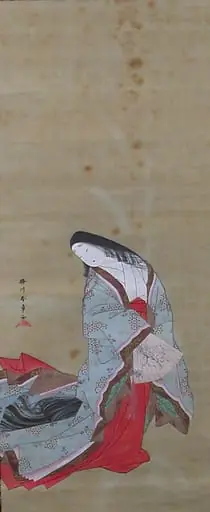
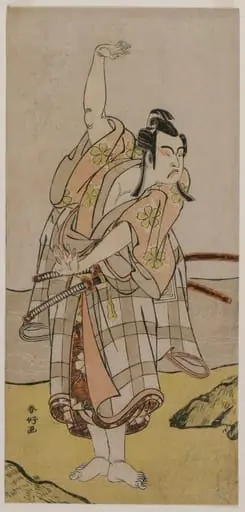 Actor Ichikawa Yaozō II as Sakuramaru
 Untitled
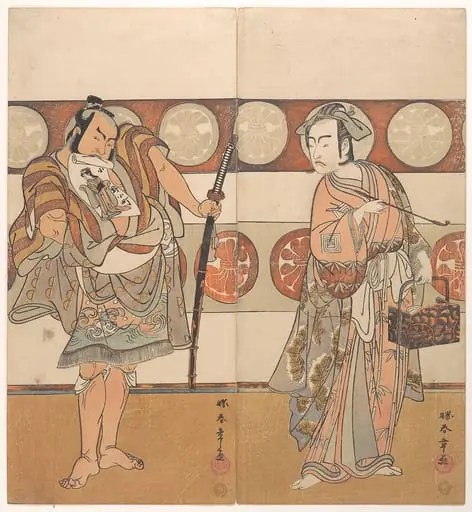 Untitled
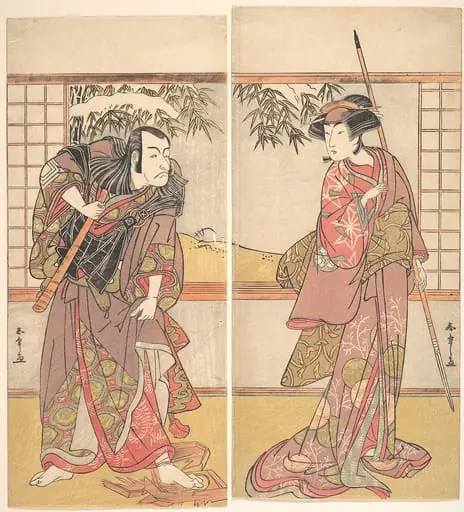 勝川春章画 二代目小佐川常世・五代目市川団十郎|Kabuki Actors Osagawa Tsuneyo II and Ichikawa Danjūrō V
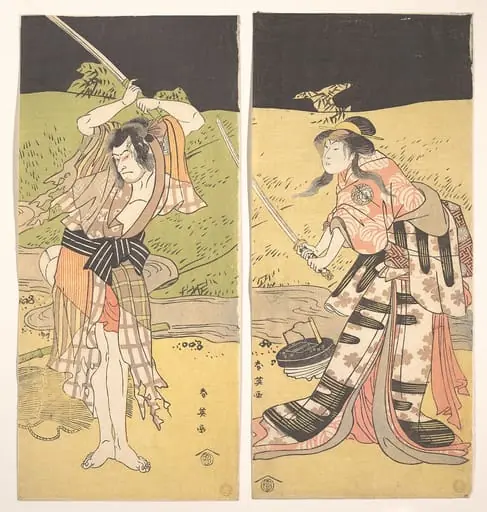 Untitled
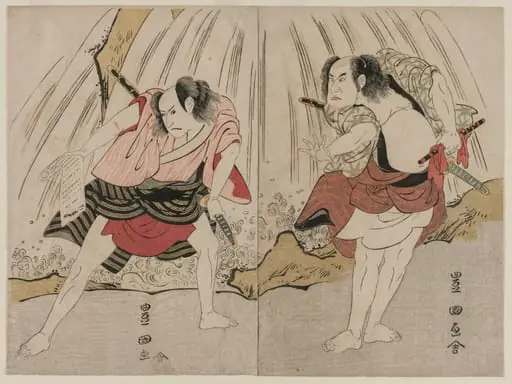 Kataoka Nizaemon VII and Ichikawa Yaozo III in a Confrontation Beside a Waterfall
 Untitled
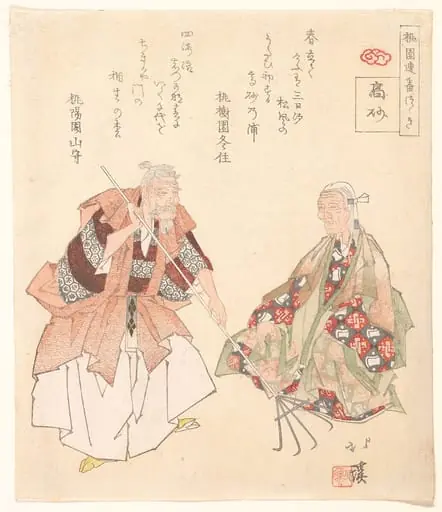
 Untitled
 Untitled
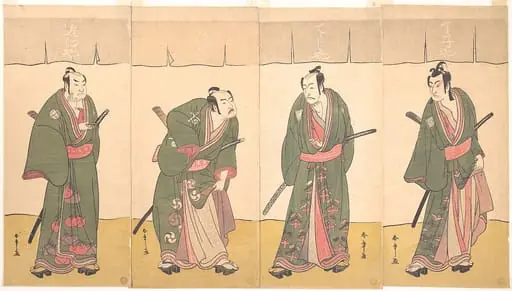
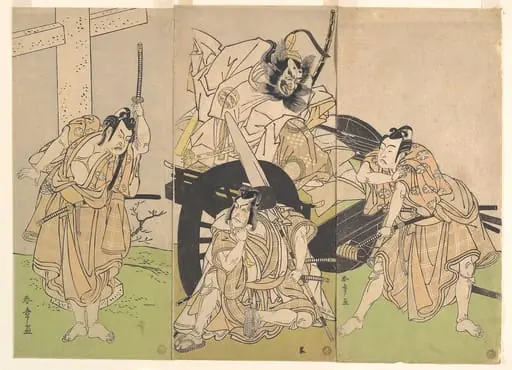 二代目市川八百藏・二代目中島三甫右衛門・三代目市川海老藏・九代目市村羽左衛門|Kabuki Actors Ichikawa Yaozō II, Nakajima Mihoemon II, Ichikawa Ebizō III, and Ichimura Uzaemon IX in the Play Sugawara’s Secrets of Calligraphy (Sugawara denju tenarai kagami)
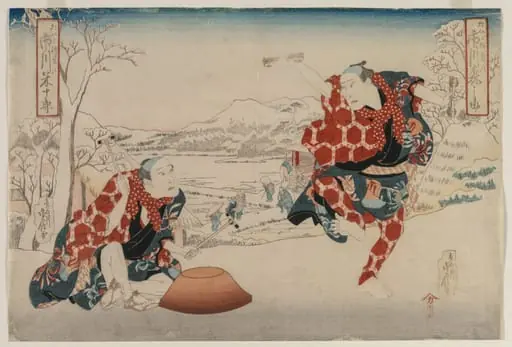 Ichikawa Norinosuke and Ichikawa Yonejuro as Morihachi and Yonehachi, Two Comedians
 Untitled