Artwork
Untitled
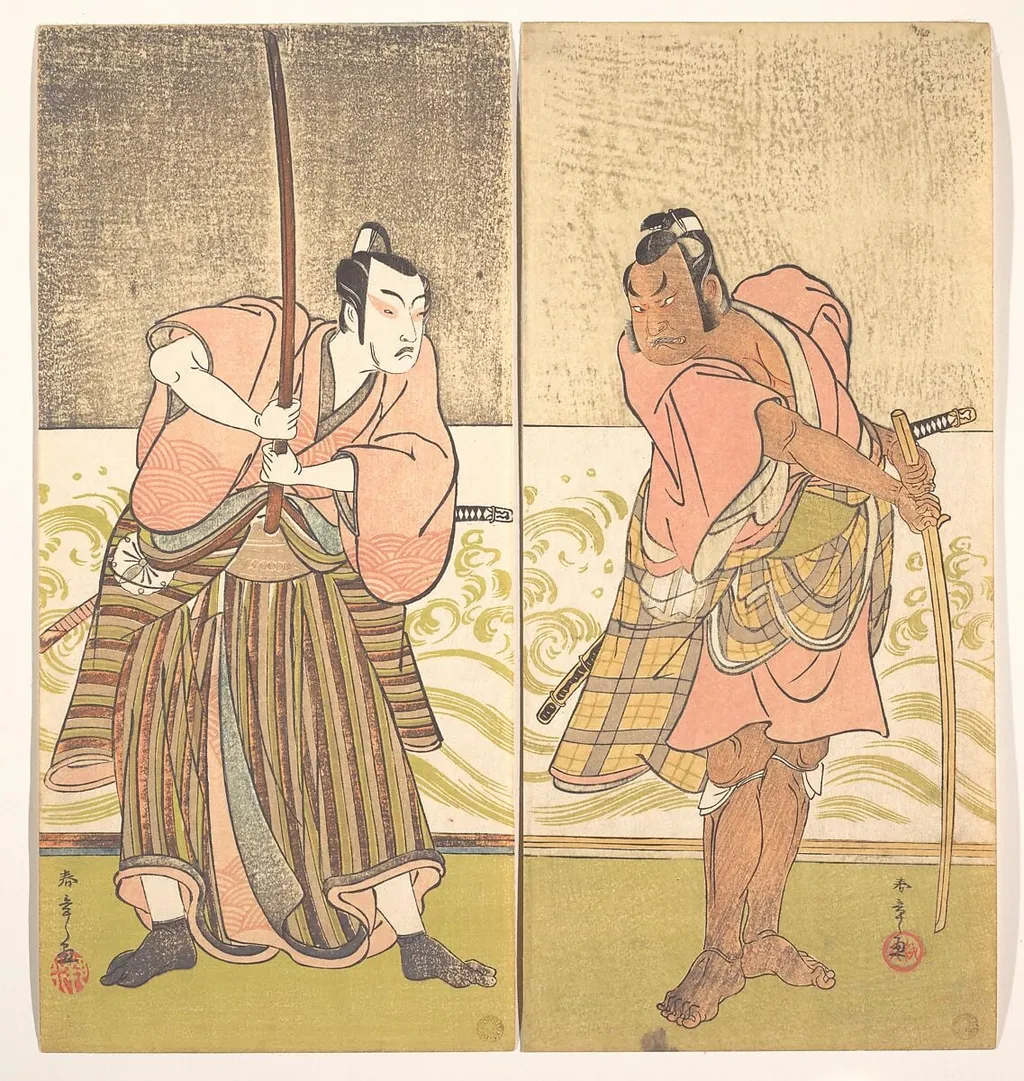
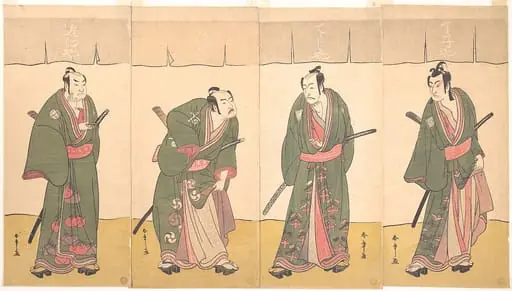
Untitled is an ink print by the Baroque artist Katsukawa Shunshō. It dates from 1759 and is held in the collection of the Metropolitan Museum of Art.
About this work
Overview
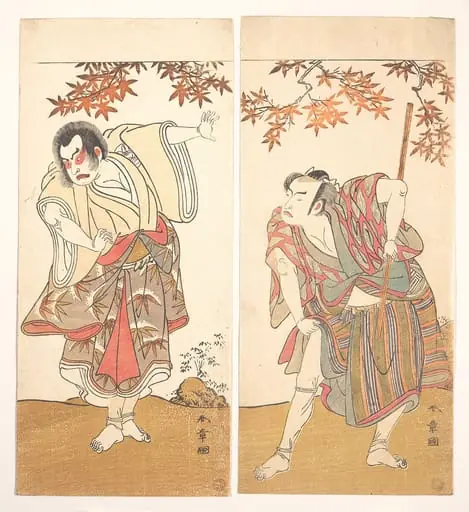
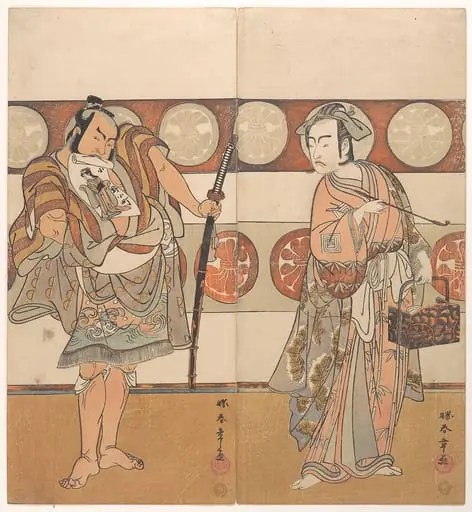
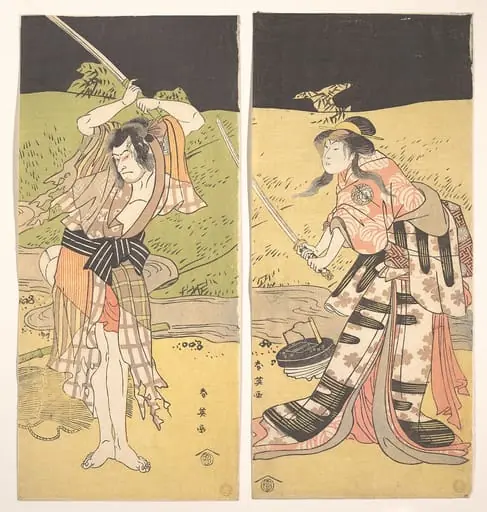
This diptych, created in 1759 by Katsukawa Shunshō, consists of two woodblock prints on paper, executed in ink and color. It is part of the collection at The Metropolitan Museum of Art. The work belongs to the nishiki-e tradition, known for its vibrant hues and detailed linework. Each panel presents a figure in dynamic posture, suggesting theatrical performance rather than static portraiture.
Subject & Meaning
The two figures are depicted as actors in dramatic roles, likely from a kabuki play, distinguished by their elaborate makeup and weaponry—a spear and a sword.
The two figures are depicted as actors in dramatic roles, likely from a kabuki play, distinguished by their elaborate makeup and weaponry—a spear and a sword. Their exaggerated expressions and poses reflect the stylized conventions of Edo-period theater. The imagery does not depict historical events but captures the heightened emotion and physicality characteristic of stage performance, emphasizing the artifice of the actor's craft.
Technique & Style
Shunshō employed flat areas of color bounded by sharp, clean outlines, typical of ukiyo-e woodblock printing. The robes feature intricate, repeating patterns rendered with precision, while the background uses minimal swirling lines to imply motion without spatial depth. The use of bold, stylized facial makeup and towering black hats enhances the theatricality, prioritizing symbolic representation over naturalism.
History & Provenance
Created in 1759 during the height of Edo-period print production, this diptych was likely commissioned for public consumption, reflecting the popularity of kabuki actors among urban audiences. It entered the collection of The Metropolitan Museum of Art through documented acquisitions, preserving its original condition and attribution to Shunshō, a leading designer of actor prints in the mid-18th century.
Context
In mid-18th century Edo, actor portraits were mass-produced as collectible prints, serving as both advertising and fan memorabilia. Shunshō was instrumental in refining the genre, moving away from earlier, more rigid styles toward expressive, individualized portrayals. These prints connected theater culture with popular visual media, making stage personas accessible beyond the kabuki house.
Legacy
Shunshō’s approach influenced generations of printmakers who followed, particularly in the depiction of actor likenesses with psychological nuance. This diptych exemplifies the transition from generic representations to more personalized portrayals in ukiyo-e. Its preservation allows ongoing study of how performance, identity, and print technology intersected in Edo society.
Artist & collection
Artist
Katsukawa Shunshō spent his life in Edo (now Tokyo), where the city’s teahouses and theaters buzzed with energy.

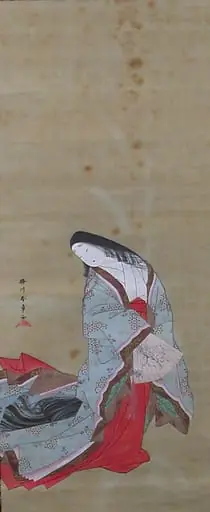
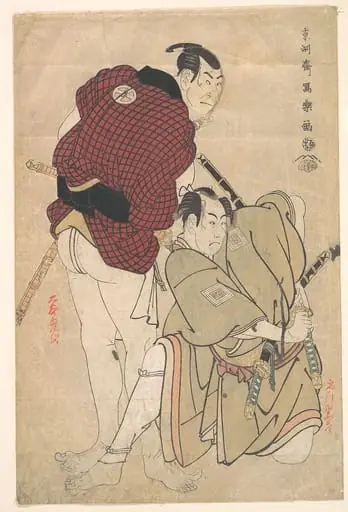 Untitled
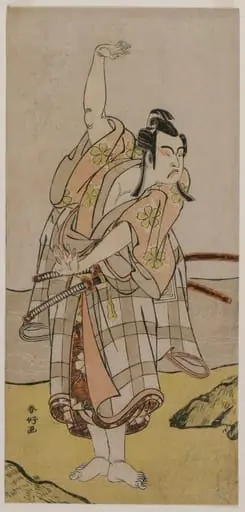 Actor Ichikawa Yaozō II as Sakuramaru
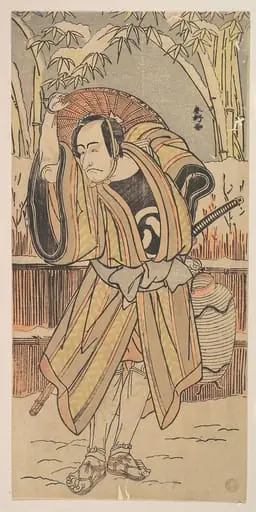 Untitled
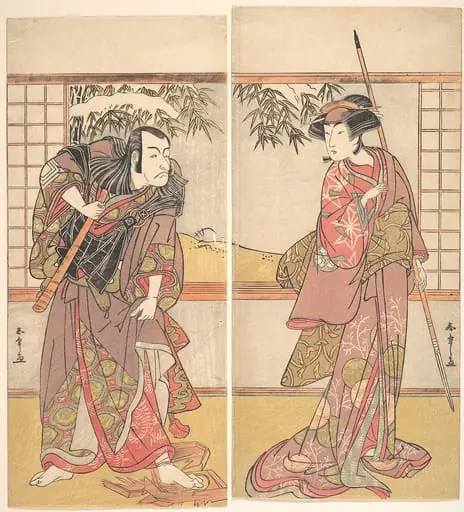 勝川春章画 二代目小佐川常世・五代目市川団十郎|Kabuki Actors Osagawa Tsuneyo II and Ichikawa Danjūrō V
 Untitled
 Untitled
 Untitled
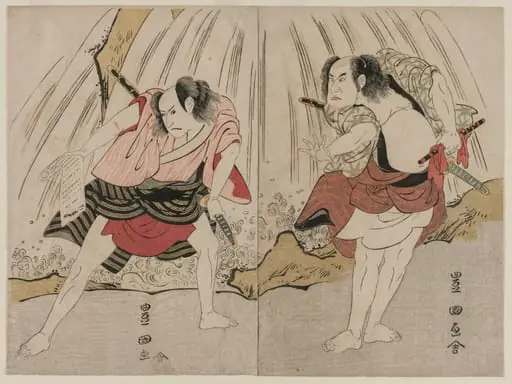 Kataoka Nizaemon VII and Ichikawa Yaozo III in a Confrontation Beside a Waterfall
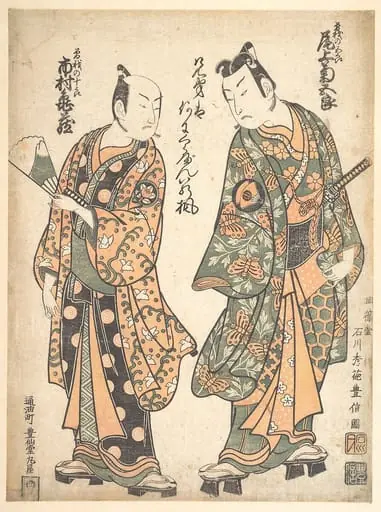 Untitled
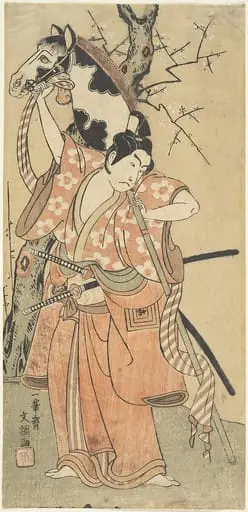 Untitled
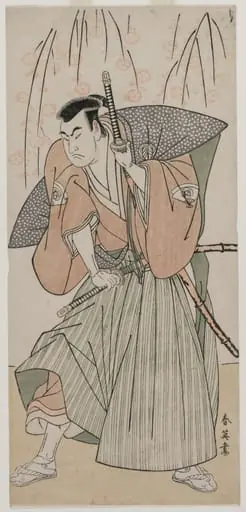 Onoe Matsusuke I as a Samurai Standing Beneath a Cherry Tree
 Untitled