Artwork
Untitled
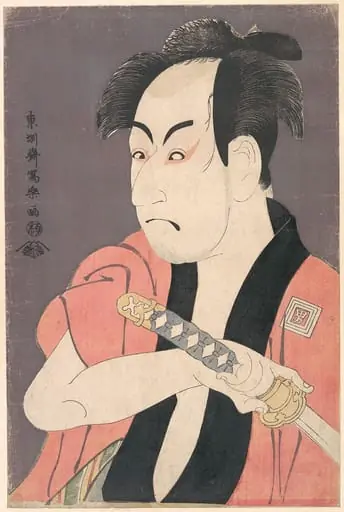
Untitled is an ink print by the Romanticist artist Tōshū. It dates from 1794 and is held in the collection of the Metropolitan Museum of Art.
About this work
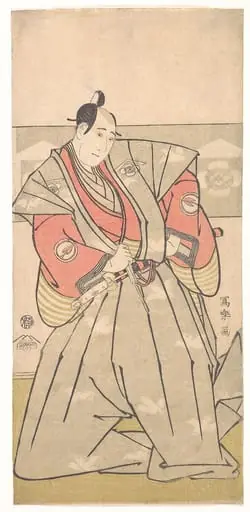
You see a fierce actor in full makeup, gripping a sword. His eyes bulge, lips pressed tight—every muscle looks ready to explode.
Sharaku made these prints for just ten months in 1794–95, then vanished. No one knows why he stopped or who he really was. The white mica background makes the ink glow like stage lights.
Look up other prints of Ichikawa Omezō I to spot the same actor in different roles.
Overview
The composition centers on a dramatically costumed actor, his expression fierce, eyes wide and lips tightly drawn, clutching a sword.
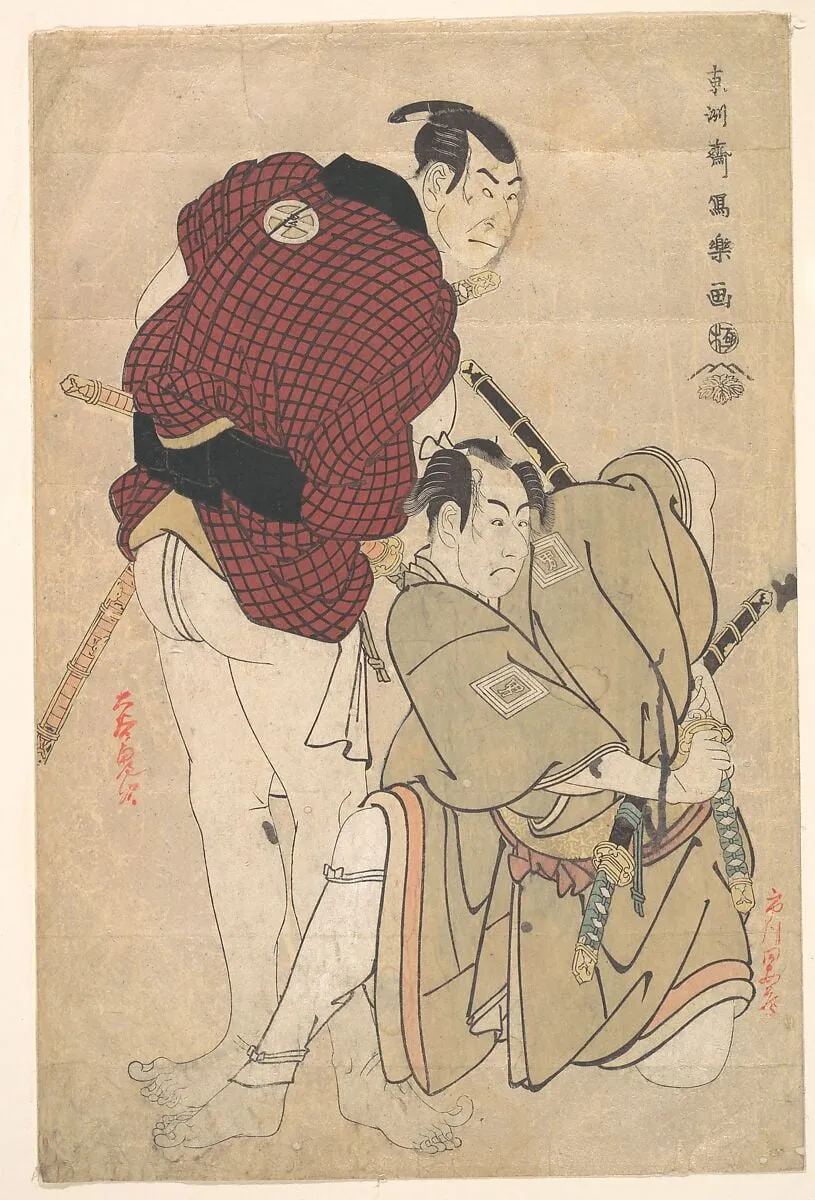
Created in 1794, this woodblock portrait by the enigmatic ukiyo‑e artist Tōshūsai Sharaku presents three figures on a paper sheet coated with a white mica ground. The composition centers on a dramatically costumed actor, his expression fierce, eyes wide and lips tightly drawn, clutching a sword. The other two individuals are identified as the actors Ichikawa Omezō I and Nakamura Nakazō II, suggesting a theatrical grouping.
Subject & Meaning
The central figure embodies the heightened intensity of kabuki performance, his exaggerated pose and facial tension conveying a moment of imminent action. By placing two well‑known actors alongside the masked warrior, Sharaku emphasizes the collaborative nature of the stage, while also highlighting the individual charisma each performer brought to their roles.
Technique & Style
Sharaku employed traditional woodblock carving, applying ink and vivid pigments over a mica‑infused background. The reflective mica surface amplifies the contrast between the dark outlines and the bright areas, giving the image a luminous quality reminiscent of stage lighting. The crisp line work and bold coloration are characteristic of Sharaku’s brief but striking output.
History & Provenance
Sharaku’s career spanned only ten months between 1794 and 1795, after which he vanished from the publishing world, leaving his true identity a matter of speculation. This print, like his other works, was produced for commercial distribution in Edo, though specific ownership records for this sheet are not documented.
Context
The portrait reflects the late‑eighteenth‑century popularity of actor‑focused prints, which catered to theater‑going audiences eager to collect images of their favorite performers. Ichikawa Omezō I and Nakamura Nakazō II were prominent actors of the period, and their inclusion situates the work within the broader tradition of celebrating kabuki stars through ukiyo‑e.
Artist & collection