Artwork
Untitled
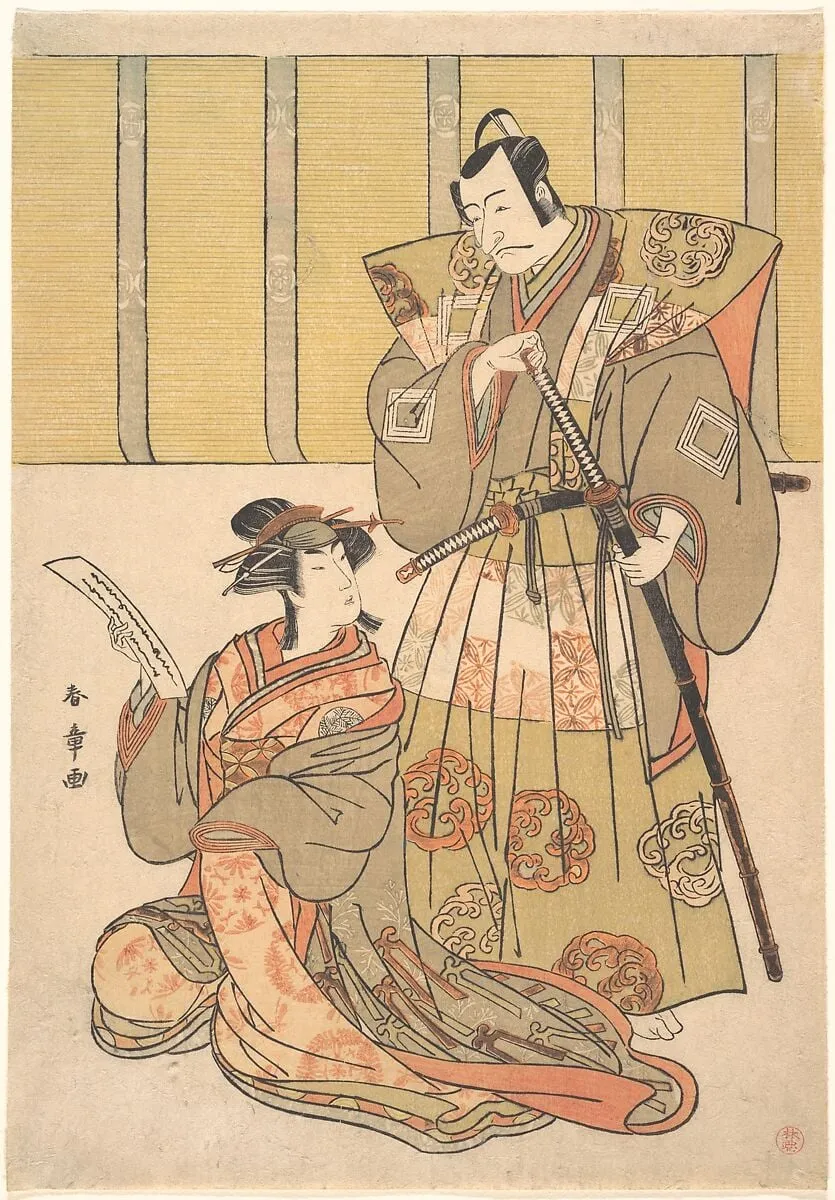
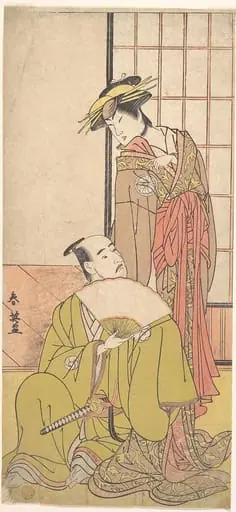
Untitled is an ink print by the Baroque artist Katsukawa Shunshō. It dates from 1750 and is held in the collection of the Metropolitan Museum of Art.
About this work
Overview
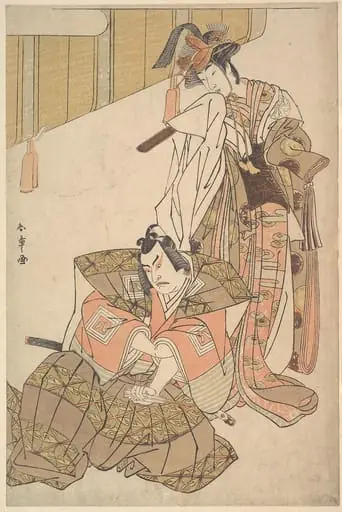
This woodblock print, dated around 1750, is attributed to Katsukawa Shunshō, a prominent artist in the ukiyo-e tradition. Executed in nishiki-e style, it uses ink and color on paper to depict two figures in a modest interior. The work is part of the collection at The Metropolitan Museum of Art, representing the early phase of Edo-period printmaking focused on portraiture and theatrical subjects.
Subject & Meaning
Neither figure is named, leaving their relationship open to interpretation, possibly reflecting social or theatrical archetypes of the time.
The print portrays two individuals in a quiet, indoor space, their postures suggesting a moment of contemplation or formal exchange. The standing figure, adorned with a patterned robe and sword, may indicate status or role, while the kneeling figure, dressed in soft pink and white, responds with restrained grace. Neither figure is named, leaving their relationship open to interpretation, possibly reflecting social or theatrical archetypes of the time.
Technique & Style
Shunshō employed the nishiki-e technique, using multiple woodblocks to apply flat, saturated colors with clean outlines. Details are minimized; facial features are subtle, and the background consists of plain wooden panels to emphasize form and costume. The emphasis on clothing texture and gesture, rather than spatial depth, aligns with the conventions of early Edo-period printmaking, prioritizing stylized representation over naturalism.
History & Provenance
Created in the mid-18th century, the print reflects the growing popularity of actor and figure prints during Shunshō’s early career. It entered the collection of The Metropolitan Museum of Art through documented acquisition, though its specific early ownership remains unrecorded. As a work from a prolific period of print production, it contributes to the understanding of how ukiyo-e evolved from single-sheet designs into broader visual culture.
Context
During the 1750s, ukiyo-e prints were increasingly produced for a literate urban audience in Edo, often depicting actors, beauties, or historical figures. Shunshō, known for his portraits of kabuki actors, was refining a style that emphasized elegance and posture over dramatic expression. This print fits within that trend, capturing the refined aesthetics favored in theater-influenced imagery of the era.
Legacy
Shunshō’s work laid groundwork for later ukiyo-e masters by elevating figure composition and costume detail. Though this particular print is unsigned and untitled, its stylistic choices influenced the development of actor prints and portraiture in woodblock art. Its preservation in a major museum underscores its role as a representative example of mid-18th-century printmaking practices in Japan.
Artist & collection
Artist
Katsukawa Shunshō spent his life in Edo (now Tokyo), where the city’s teahouses and theaters buzzed with energy.

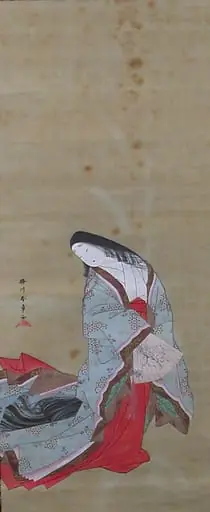
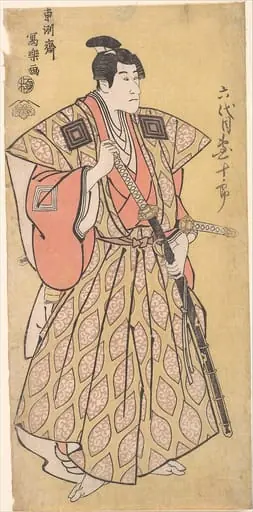 Untitled
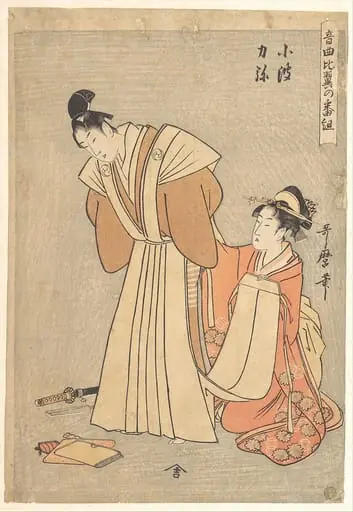 音曲比翼の番組 小波 力弥|Rikiya and Konami, from the series A Program with Music about Loving Couples (Ongyoku hiyoku no bangumi)
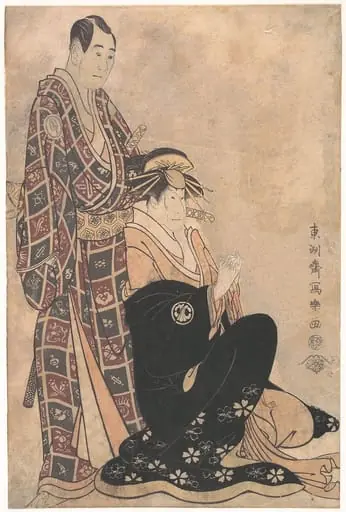 Untitled
 Untitled
 Untitled
 Untitled
 Untitled
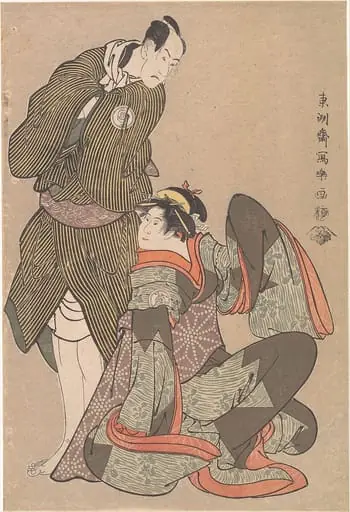 東洲斎写楽画 三代目坂東彦三郎の帯屋長右衛門と四代目岩井半四郎の信濃 屋お半 『二本松陸奥生長』|Bandō Hikosaburō III in the Role of Obiya Chōemon and Iwai Hanshiro IV in the Role of Shinanoya Ohan, from the Play “Nihonmatsu Michinoku sodachi”
 Untitled
 Untitled
 Untitled
 Untitled