Artwork
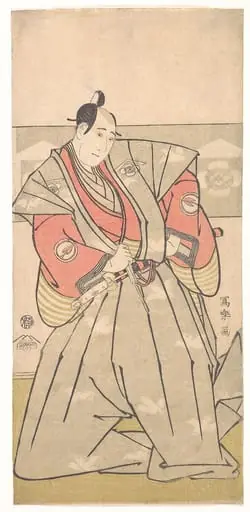
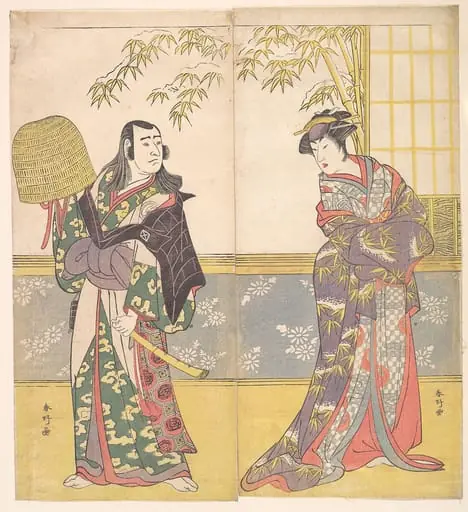
東洲斎写楽画 三代目坂東彦三郎の帯屋長右衛門と四代目岩井半四郎の信濃 屋お半 『二本松陸奥生長』|Bandō Hikosaburō III in the Role of Obiya Chōemon and Iwai Hanshiro IV in the Role of Shinanoya Ohan, from the Play “Nihonmatsu Michinoku sodachi”
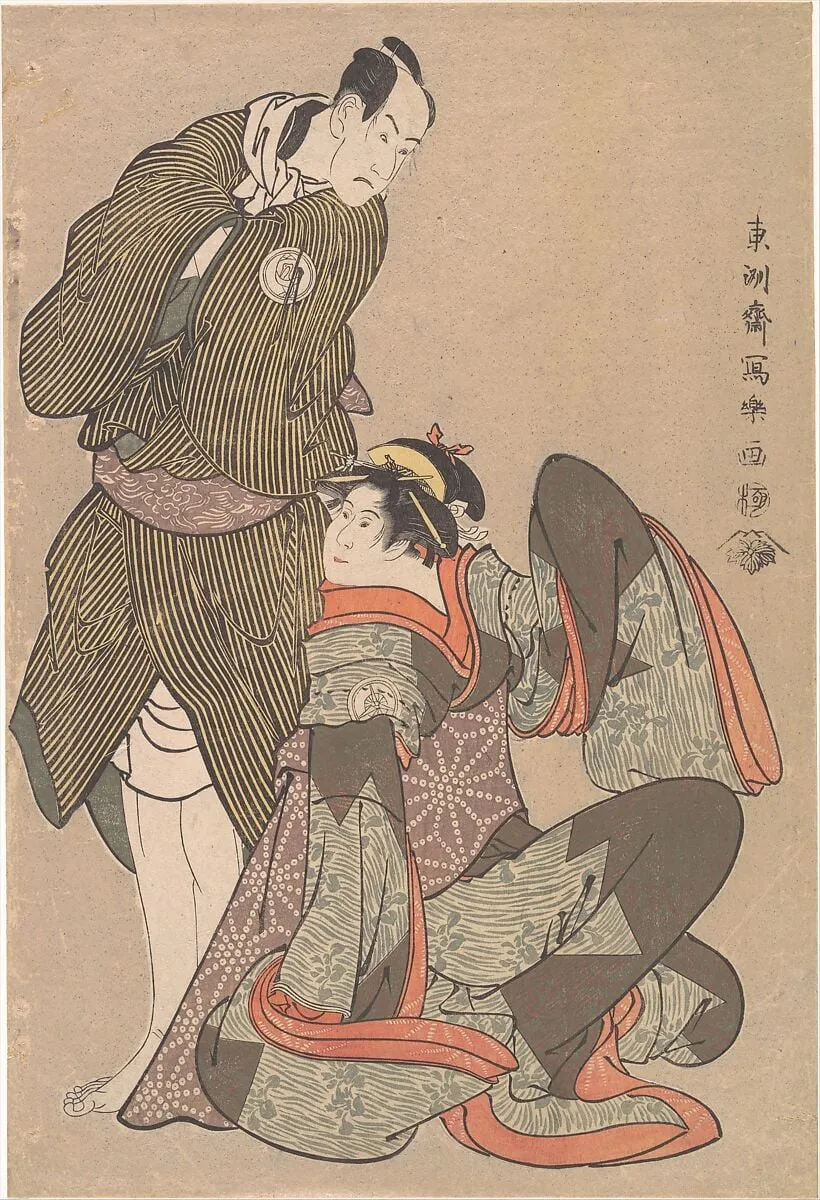
東洲斎写楽画 三代目坂東彦三郎の帯屋長右衛門と四代目岩井半四郎の信濃 屋お半 『二本松陸奥生長』|Bandō Hikosaburō III in the Role of Obiya Chōemon and Iwai Hanshiro IV in the Role of Shinanoya Ohan, from the Play “Nihonmatsu Michinoku sodachi” is an ink print by the Romanticist artist Tōshū. It dates from 1794 and is held in the collection of the Metropolitan Museum of Art.
About this work
If you like how the bold lines shape the faces, look up other works in the subject: men, actors, japan.
This print shows two actors in full stage makeup and elaborate kimonos. One man grips a fan, the other clutches a folded paper—tiny details that hint at a dramatic moment.
Sharaku made these prints for only ten months in 1794–95, then vanished. No one knows why he stopped or where he went. The faces here feel almost too real, as if the actors paused mid-scene.
If you like how the bold lines shape the faces, look up other works in the subject: men, actors, japan.
Overview
This 1794 woodblock print, executed by the enigmatic ukiyo-e artist Tōshūsai Sharaku, portrays two celebrated kabuki performers in costume. Rendered with ink, color and a white mica background on paper, the image captures a moment from the play “Nihonmatsu Michinoku sodachi,” presenting the actors in vivid detail.
Subject & Meaning
The figures represent Bandō Hikosaburō III in the role of Obiya Chōemon and Iwai Hanshirō IV as Shinanoya Ohan. Their elaborate makeup and costumes signal a dramatic confrontation, while the fan and folded paper they hold suggest specific gestures within the theatrical narrative.
Technique & Style
Sharaku employs stark, expressive line work to define the actors’ faces, contrasting sharply with the richly patterned kimonos. The use of a white mica ground adds a luminous sheen, enhancing the visual impact of the pigments and emphasizing the intensity of the performers’ expressions.
History & Provenance
Created during Sharaku’s brief but prolific period of activity in 1794–95, the print belongs to a series of actor portraits produced in a ten‑month span before the artist vanished from the record. The work’s provenance traces through early Edo‑period collections, though its exact ownership history remains partially undocumented.
Context
The print belongs to the ukiyo-e tradition of actor portraiture, a popular genre that catered to kabuki audiences eager to commemorate their favorite performers. Sharaku’s approach diverged from contemporaries by emphasizing psychological depth, rendering the actors with a realism that was unusual for the time.
Legacy
Although Sharaku’s career was fleeting, his striking portraiture, exemplified by this image, has influenced later generations of Japanese and Western artists. The work continues to be studied for its bold composition and its insight into late‑eighteenth‑century kabuki culture.
Artist & collection


 Untitled
 Untitled
 Untitled
 Untitled
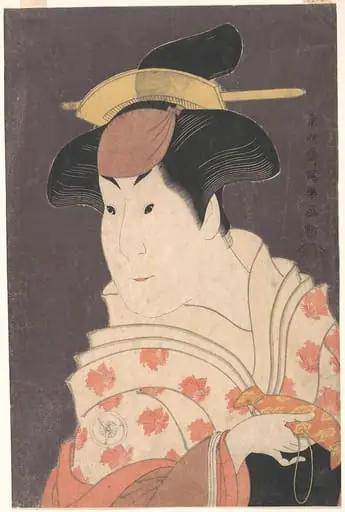 東洲斎写楽画 四代岩井半四郎の重の井 『恋女房染分手綱』|Iwai Hanshirō IV as Shigenoi in the Play "Koinyōbō Somewake Tazuna"
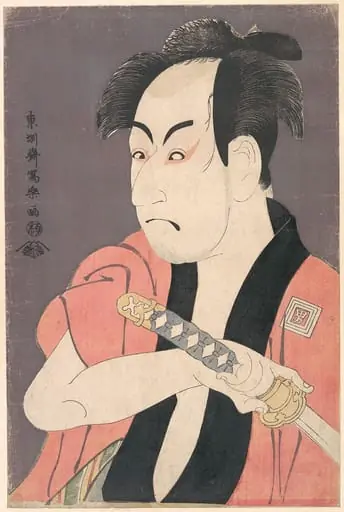 東洲斎写楽画 初代市川男女蔵の奴一平 『恋女房染分手綱』|Ichikawa Omezō I in the Role of Yakko Ippei from the Play "Koinyōbō somewake tazuna"
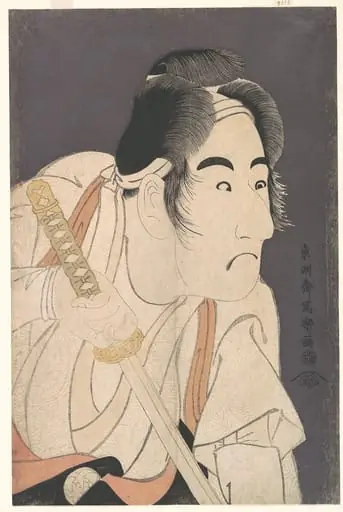 東洲斎写楽画 二世坂東三津五郎の石井源蔵 『花菖蒲文禄曽我』|Bandō Mitsugorō II as Ishii Genzō in the Play "Hana-ayame Bunroku Soga"
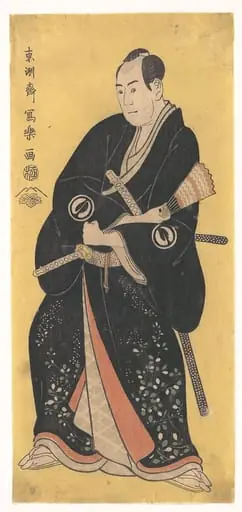 Untitled
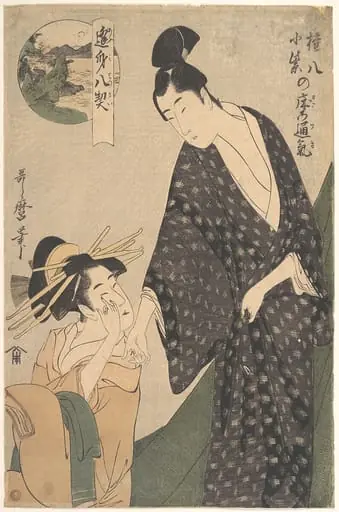 逢身八契 権八小紫の床の通気|Gonpachi ni Komurasaki no Toko no Tsuki
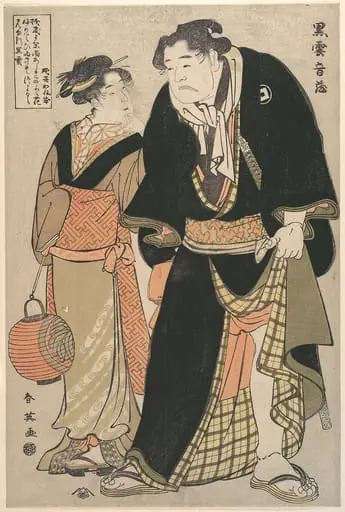 Untitled
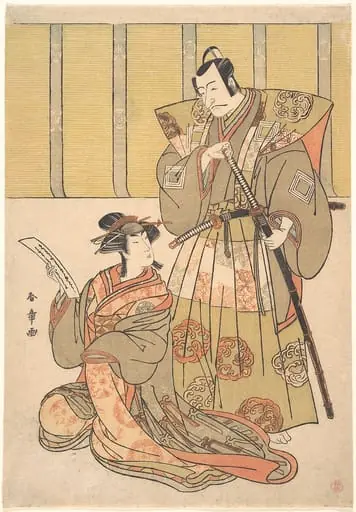 Untitled
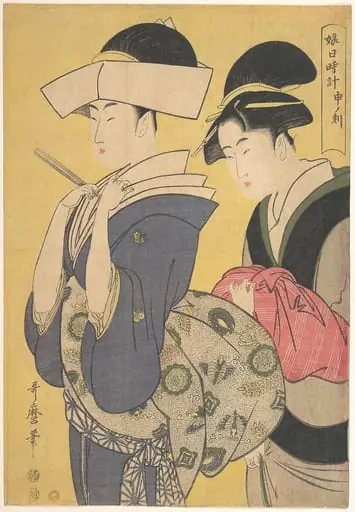 娘日時計 申ノ刻|Seru no Koku
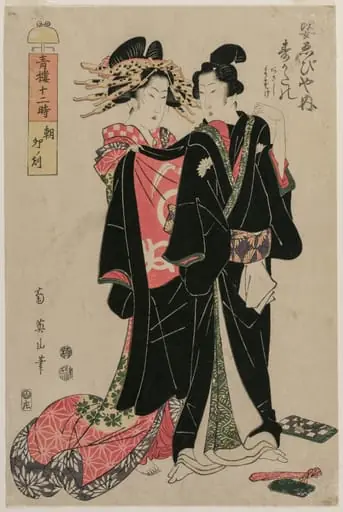 Sugatano of Sugata Ebisuya in the Morning, Hour of the Rabbit, from the series The Twelve Hours in the Pleasure Quarters
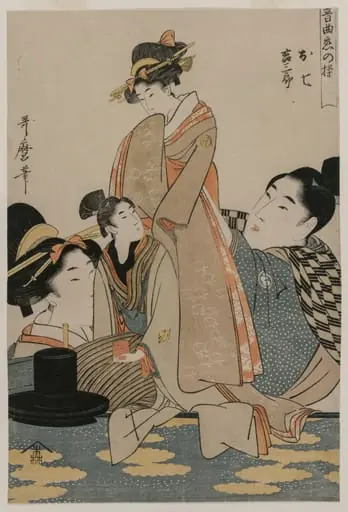 Oshichi and Kichisaburo (from the series Music on the Theme of Constancy in Love)
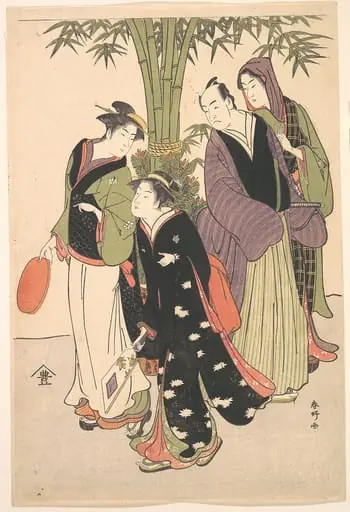 勝川春好画 三代目瀬川菊之丞・二代目市川門之助|Kabuki Actors Segawa Kikunojō III and Ichikawa Monnosuke II and Two Courtesans Celebrating the New Year
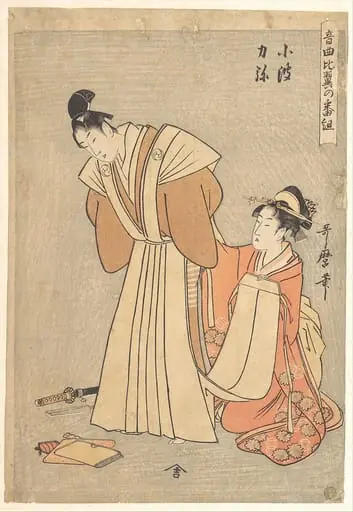 音曲比翼の番組 小波 力弥|Rikiya and Konami, from the series A Program with Music about Loving Couples (Ongyoku hiyoku no bangumi)
 Untitled
 Untitled
 Untitled
 勝川春好画 三代目澤村宗十郎 三代目佐野川市松 |Kabuki Actors Sawamura Sōjūrō III and Sanogawa Ichimatsu III in "A Courtesan’s Mirror for the Eastern Provinces" (Keisei Azuma kagami)